Clients ask for discreet volume, natural movement, and longer wear. Salon owners ask a different question: will this method stay secure without creating complaints during installation, daily wear, or removal?
K Tip hair extensions are individual keratin-bonded strands attached to small sections of natural hair with controlled heat. They are discreet, customizable, and long-wearing when the strand weight, keratin bond, placement, and aftercare are handled by trained professionals.
For salons and hair extension brands, K Tips are not just another extension method. They are a precision service. The result depends on hair quality, keratin consistency, gram weight, installation skill, client suitability, and removal control.

U want certainty before adding any new method to your menu. Read on. I will explain the method in plain steps, flag the risks, and share factory-backed tips so U deliver predictable results at scale.
What Are K Tip Hair Extensions?
K Tip hair extensions, also called keratin tip extensions, are pre-bonded individual strands. Each strand has a small keratin tip that is softened with heat and shaped around a small section of natural hair.
The bond cools and hardens quickly, creating a compact attachment that can look very discreet when the strand weight and placement match the client’s natural hair density.
Some buyers also call them U tip, nail tip, or keratin bond extensions. The naming may change by supplier, but the core logic is the same: a small keratin bond attaches one extension strand to one natural hair section.

Clear definition
A K Tip extension is a single strand of human hair with a pre-formed keratin bond. The stylist softens the keratin, wraps or shapes it around natural hair, and allows it to cool into a small bond.
The goal is a bond that feels smooth, flat, and secure without sharp edges or excess bulk.
Why stylists pick this format
The system works well when U want precision. U place bonds where U need volume or length. U can mix shades, lengths, and densities strand by strand. U can fill sides without overloading the crown. U can lift face-framing areas with lighter grams and keep nape areas stronger.
Material notes from a factory point of view
For K Tips, two parts matter: the keratin bond and the hair itself.
The keratin should soften at a controlled temperature, flow cleanly, and cool without brittle edges or white residue. If the keratin is unstable, the bond may crack, shed, or become difficult to remove.
The hair quality matters even more after real wear. Full cuticle hair is more stable after washing, brushing, heat styling, and re-tipping. Lower-grade coated hair may feel soft at first but can become dry or tangled after a few washes.
Quick spec snapshot
| Component | Better Standard | Why It Matters |
|---|---|---|
| Bond material | Cosmetic-grade keratin | Cleaner melt, smoother bond, easier removal |
| Strand weight | 0.5–1.0 g options | Helps match density and reduce tension |
| Hair quality | Full cuticle human hair | Better softness, movement, and reuse potential |
| Bond shape | U tip, flat tip, nail tip | Affects footprint and styling comfort |
| Color work | Stable professional coloring | Reduces mismatch and after-wash complaints |
Buyers who want to understand long-term hair performance can read our guide to full cuticle hair.

How Do K Tip Extensions Work?
K Tip installation is simple in theory, but it needs control. The stylist must match strand weight to natural hair density, soften the keratin properly, form a smooth bond, and avoid too much tension near the root.
Section cleanly. Pick strand weight to match the client’s density. Soften the keratin tip with a fusion tool. Wrap and press around a small hair section. Roll or clamp flat. Repeat in bricklay pattern, then blend and finish.
Tools and setup
U need a temperature-controlled fusion iron or a clean fusion heater, protective finger guards, sectioning clips, a fine comb, tail comb, heat shield, and small silicone pads. U also need alcohol wipes and bond de-stick solution for quick cleanup. Keep a color ring and multiple gram weights ready.
Sectioning and strand mapping
Start with a clean, dry scalp and hair. Avoid heavy oils before install. Map rows in a bricklay pattern. Keep perimeter and part lines free for concealment. Adjust rows to avoid pressure points. Use thinner strands for finer zones. Use normal strands for denser back areas. Do not overload one area.
Heat, wrap, and set
Set the tool to the manufacturer’s recommended range. Do not guess. Soften the tip, not the client’s hair. Place the tip slightly below the root to allow free rotation. Wrap the soft keratin around the natural hair section. Press evenly. Roll gently to form a smooth cylinder or clamp flat with shielded pliers. Let it cool fully before tug testing.Let it cool fully before tug testing.
The bond should not feel sharp, white, cracked, or bulky. If it does, the keratin temperature, dwell time, or molding pressure needs adjustment.
Finishing and blending
After each row, do a light tug test. Remove any bond that slips and redo it with a fresh tip. After full install, cut and blend. Use minimal heat styling on day one. Advise the client to keep bonds dry for 48 hours so keratin sets.
| Step | Goal | Common Mistake | Better Fix |
|---|---|---|---|
| Mapping | Even weight and hidden rows | Rows too close to parting | Use bricklay pattern and leave clean perimeter |
| Melting | Smooth keratin flow | Overheating or burning keratin | Use controlled temperature and shorter dwell time |
| Molding | Flat, comfortable bond | Bulky or sharp edges | Roll or press evenly before cooling |
| Tug test | Confirm secure bond | Testing before bond cools | Let keratin harden first |
| Finish | Natural movement | Over-thinning or uneven blend | Blend gradually and check movement |
K Tip Hair Extensions Pros and Cons
Every extension method has trade-offs. K Tips are strong, discreet, and customizable, but they also require more installation time, controlled heat, and professional removal.
For salons, this section is important because it helps prevent buyer’s remorse. A client who understands the pros and cons before installation is less likely to complain later.
Pros: discreet bonds, custom placement, strong wear, water- and workout-friendly.
Cons: heat tool needed, time-intensive install, bond-by-bond removal, not ideal for very fragile scalps or severe shedding.
Advantages that matter in salon operations
K Tips give precision. U can micro-target sides and crowns. U can blend shades strand by strand. The bonds handle sweat and daily washing after the first 48 hours. Clients who swim or work out like the security. The finish is flat and hides in many hair types. With full cuticle hair, clients can style hot tools with care and still keep polish. The wear window is solid when the install is clean.
Constraints and how to manage them
Time is the first trade. A full head can take longer than tape or weft. Removal is bond-by-bond. It takes acetone-free removers and patient technique. Heat is part of the system, so U need temperature control. Very fragile hair or active shedding is not ideal. In those cases, consider a lower-tension method or delay until the scalp improves.
| K Tip Pros | Why It Helps Salons |
|---|---|
| Discreet strand-by-strand placement | Better blending around sides, layers, and density changes |
| Strong keratin bond | Good for active clients after the 48-hour set window |
| Custom color mixing | Stylists can blend shades strand by strand |
| Natural movement | Bonds move more freely than some wider attachments |
| Long wear time | Often 12–16 weeks per install with proper care |
| Re-tip potential | Good-quality hair can often be reused after professional removal |
| K Tip Cons | How Salons Should Manage It |
|---|---|
| Longer installation time | Quote service time clearly |
| Heat tool required | Use temperature-controlled tools |
| Bond-by-bond removal | Charge and schedule removal properly |
| Not ideal for active shedding | Screen clients before installation |
| Risk of tension on fine hair | Use lighter grams and wider spacing |
| Aftercare matters | Teach brushing, washing, and sleep protection |
Who Are K Tip Extensions Best For?
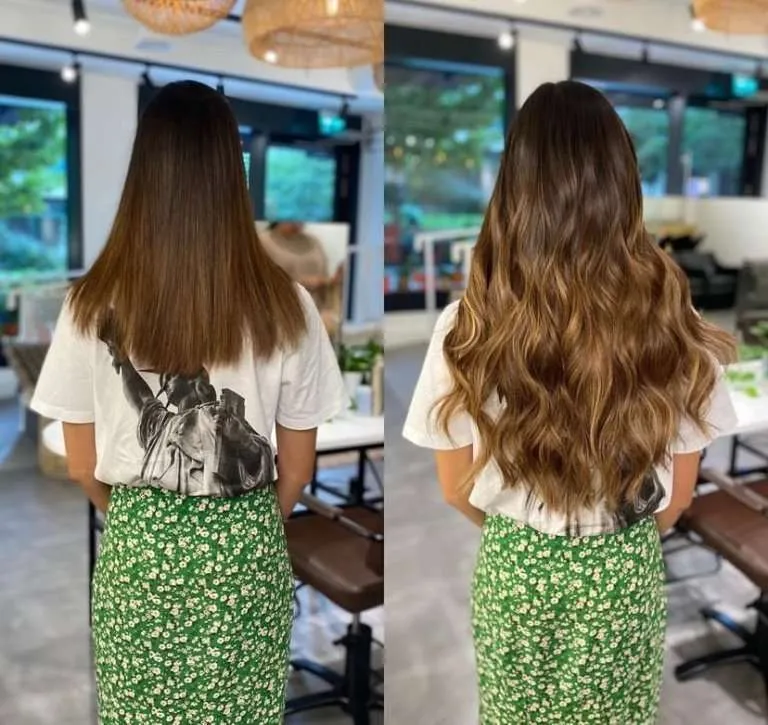
K Tip extensions are best for clients who want discreet, long-wearing, strand-by-strand results and are willing to follow professional aftercare.
They often work well for clients who want flexible placement, color blending, face-framing volume, or secure wear during daily activity. They may not be the best first choice for clients with active shedding, very fragile hair, severe scalp sensitivity, or poor maintenance habits.
| Client Type | K Tip Fit | Salon Note |
|---|---|---|
| Active clients | Good | Wait 48 hours before heavy sweat or washing |
| Color-blend clients | Good | Mix shades strand by strand |
| Fine hair clients | Possible | Use 0.5 g strands and wider spacing |
| Very fragile hair | Usually not first choice | Consider lower-tension options |
| Clients wanting fast install | Not ideal | Tape-ins or wefts may be faster |
| Clients wanting long wear | Good | Explain removal and maintenance upfront |
The safest client is not always the client who wants K Tips most. The safest client is the one whose natural hair can support the method.
Do K Tip Extensions Damage Hair?
K Tip extensions should not damage natural hair when the strand weight, heat, placement, removal, and aftercare are controlled. They can cause breakage or tension problems when the bonds are too heavy, too close to the scalp, overheated, removed roughly, or used on unsuitable hair.
The real risk sources
Damage relates to traction and heat. Traction happens when bond weight exceeds the strength of the section or when bonds cluster too close. Heat damage happens when tools overheat or sit too long. Friction damage happens when clients brush bonds aggressively or sleep without protection.
How I control variables in production and at install
From the factory side, I keep strand weights consistent. I control keratin composition so it flows at a narrow temperature band. From the salon side, U can match 0.5 g strands to finer hair and 0.8–1.0 g to denser hair. U can keep bonds 5–8 mm from the scalp. U can use shields to protect adjacent hair and skin. U can cool each bond before tension testing.
Aftercare that prevents problems
Teach clients to brush with a loop brush starting at ends. Tell them to support roots with a hand when brushing. Suggest a silk pillowcase or silk bonnet. Keep oils and conditioners away from bonds. Book checks every 8–10 weeks to remove shed hair buildup.
| Risk | Cause | Prevention |
|---|---|---|
| Traction | Bonds too heavy for the section | Match grams to density and widen spacing |
| Heat stress | Tool too hot or held too long | Use calibrated fusion tools |
| Slippage | Oils or poor bond formation | Clarify before install and keep oils away from bonds |
| Matting | Shed hair trapped near bonds | Schedule check-ins and proper removal |
| Breakage | Rough brushing or removal | Teach aftercare and remove professionally |
| Scalp discomfort | Bonds too close to scalp | Keep safe distance and allow movement |
If the client has active shedding, scalp soreness, or severe breakage, the safer decision is to pause the service or choose a lower-tension temporary option.
How long do K Tip extensions last?
Service life drives ROI. Clients plan budgets around wear time. Clear timelines reduce disputes and refunds.
K Tips typically last 3–4 months per install, depending on growth and aftercare. With high-quality full cuticle hair and gentle removal, the hair can be re-tipped and reused for 1–2 years under professional care.
Install cycle vs. hair life
There are two clocks. The bond clock runs 3–4 months. Hair grows, so bonds move down and need removal or re-install. The fiber clock is different. Full cuticle hair lasts much longer. With clean washing, gentle brushing, and moderate heat, the same hair can serve multiple cycles. Re-tipping restores neat, flat bonds.
Factors that change wear time
Lifestyle matters. Daily swimmers, intense gym users, and frequent high-heat stylers shorten the cycle. Scalp oil levels vary. Oil can soften bonds faster in some clients. Section size and gram matching matter too. A well-matched install resists twist and traction for longer.
Timeline guide for client promises
| Item | Typical Window | What Salons Should Explain |
|---|---|---|
| First set window | 48 hours | Keep bonds dry and avoid heavy sweat |
| Wear per install | 12–16 weeks | Depends on growth, aftercare, and scalp oil |
| Check-in | 6–8 weeks | Inspect bonds and remove trapped shed hair |
| Removal | 12–16 weeks | Do not leave bonds too long |
| Hair lifespan | 12–24 months | Possible with full cuticle hair and careful re-tipping |

I Tip Hair Extensions vs K Tip Extensions
Choosing between beads and bonds can stall a sale. A fast comparison helps U match method to lifestyle and hair type.
I Tip uses a bead to hold the strand. K Tip uses melted keratin. I Tip is quick to remove and adjust. K Tip is flatter and more water-stable. Choose by density, lifestyle, and desired maintenance.
Core differences
I Tip strands attach with a small metal micro bead or nano bead. There is no heat. The bead clamps the natural hair with the extension tip inserted. K Tip uses heat to soften a keratin bond and mold it around the natural hair. The result is a seamless, flat bond.
Practical impacts
K Tip hides well under many partings because the bond footprint is small and can be shaped. It resists water once set. I Tip is easier to remove and adjust because U simply open beads. For very sensitive scalps, the no-heat nature of I Tip can feel safer. For very active clients, the set-and-forget nature of K Tip often wins.
Side-by-side table
| Feature | I Tip Extensions | K Tip Extensions |
|---|---|---|
| Attachment | Micro or nano bead | Heat-softened keratin bond |
| Heat required | No | Yes |
| Best strength | Easier adjustment | Flatter, more secure bond |
| Installation speed | Usually faster | Slower, more detailed |
| Removal | Open bead and slide out | Bond-by-bond softening |
| Fine hair | Good with nano beads | Good with lighter grams |
| Active lifestyle | Good when beads hold well | Strong after 48-hour set window |
| Buyer check | Bead size and coating | Keratin quality and strand weight |
For buyers comparing bonded methods, our keratin hair extensions page can help you review U Tip, V Tip, Flat Tip, and related pre-bonded options.
When I recommend each
For frequent adjusters or clients who want rapid move-ups, I Tip helps. For travelers, swimmers, or clients who want low-fuss daily life after set, K Tip helps. For thin hairlines, both can work with the right mapping. Test a small zone if in doubt.
What Should Salons Test Before Buying K Tips?
K Tip samples should not be judged only by softness in the package. The real test starts when the bond is melted, shaped, worn, removed, and re-tipped.
| Quality Factor | Why It Matters | What Buyers Should Test |
|---|---|---|
| Keratin flow | Affects bond shape and comfort | Melt test with salon tool |
| Bond hardness | Affects cracking and removal | Cool, bend, and inspect the bond |
| Strand weight consistency | Affects tension control | Weigh random strands |
| Full cuticle hair | Affects softness after washing | Wash, brush, and heat-style samples |
| Color stability | Affects salon matching | Wash and compare under daylight |
| Re-tipping potential | Affects reuse value | Remove and re-tip sample strands |
| Bulk consistency | Affects repeat orders | Compare sample and bulk shipment |
For wholesale buyers, sample-to-bulk consistency is just as important as the first sample. A good K Tip supplier should keep strand weight, keratin behavior, color, and hair quality stable across repeat orders.
K Tip Maintenance and Salon Pricing Notes
Margins depend on time, materials, and re-use. Clear pricing rules and care scripts protect profit and client results.
Price by grams and time. Plan removal time in quotes. Teach bond-safe washing and brushing. Schedule checks at 6–8 weeks and removal at 12–16 weeks. Re-tip quality hair to extend ROI.
Pricing framework U can adapt
Set a base install fee plus a per-gram or per-strand rate. Include consultation, mapping, cutting, and blending time. Quote removal time upfront because K Tip removal is bond-by-bond. If U use full cuticle hair, plan a re-tip service. That service adds revenue without re-buying all the hair. Track average install time by head size and density so U quote with confidence.
Retail and education
Send clients home with a loop brush, a gentle sulfate-free shampoo, and a bond-safe conditioner applied mid-length to ends only. Provide a one-page card that shows wash steps, brush technique, and sleep protection. Ask them to avoid oils and heavy masks on bonds. Encourage light braiding or a silk bonnet for sleep. Ask them to wait 48 hours before washing after install. This small guidance prevents slippage and matting.
Operational checklist
| Item | Salon Guidance | Why It Matters |
|---|---|---|
| Consultation | Check density, lifestyle, and hair condition | Prevents unsuitable installs |
| Pricing | Quote install, removal, and re-tip separately | Protects margins |
| Care kit | Brush, gentle shampoo, bond-safe conditioner | Reduces callbacks |
| Check-in | 6–8 weeks | Catch matting or bond issues early |
| Removal | 12–16 weeks | Prevents overgrown bond stress |
| Re-tip service | Offer for good-quality hair | Improves reuse value and client loyalty |
My View
I see K Tips as a precision method, not a shortcut method.
They work best when salons use stable keratin, full cuticle hair, consistent strand weights, and careful mapping. They are strong for clients who want discreet movement and long wear, but they are not the right answer for weak scalps, active shedding, or clients who cannot follow aftercare.
For salon owners and hair brands, the business value is not only the install result. It is whether the hair can be removed cleanly, re-tipped well, and reordered with the same standard.
FAQ
What are K Tip hair extensions?
K Tip hair extensions are individual strands with a small keratin bond. A stylist softens the bond with heat and shapes it around a small section of natural hair.
What are the pros and cons of K Tip hair extensions?
The main pros are discreet placement, strong wear, color blending, and natural movement. The main cons are longer installation time, heat tool use, bond-by-bond removal, and the need for professional aftercare.
Are K Tips safe for thin hair?
They can be safe for some thin hair clients when lighter strands, wider spacing, and careful placement are used. Very fragile hair or active shedding may need a lower-tension option.
How long do K Tip extensions last?
K Tips usually last 12–16 weeks per installation. Good-quality full cuticle hair may last longer and can often be re-tipped under professional care.
Can clients swim with K Tips?
Yes, after the 48-hour set window. Clients should rinse after pool or sea water and avoid oils or heavy conditioners near the bonds.
Can K Tip hair be reused?
Yes, if the hair quality is strong and removal is gentle. The hair usually needs to be re-tipped before the next install.
What should wholesale buyers test before ordering K Tips?
Buyers should test keratin flow, bond hardness, strand weight consistency, full cuticle hair quality, color stability, shedding, and re-tipping performance.
Conclusion
K Tip hair extensions can give discreet, durable, strand-by-strand results when the keratin, hair quality, gram weight, placement, and aftercare are controlled.
For salons, they are best treated as a precision service. For hair extension brands and wholesale buyers, they should be tested beyond the first touch. Melt the bond, shape it, wash the hair, remove it, re-tip it, and compare the sample with bulk orders.
You can contact Hibiscus Hair to request K Tip samples, keratin bond testing support, or wholesale price guidance before placing a larger order.