Want to customize your hair wefts but fear damaging them? A wrong move can be a costly mistake. I’ll guide you on how to color and style them safely and effectively.
Yes, you can color and style 100% human hair wefts. We always recommend a professional handles the coloring process. Synthetic wefts, however, cannot be colored or heat-styled. The quality of the human hair will determine how well it holds up to these treatments.

So, the short answer is yes, but with some big exceptions. It’s not just about grabbing a box of dye from the store. The type of hair, the coloring process, and the quality of the wefts all play a huge role. Let’s break down exactly what you need to know to get beautiful, lasting results without destroying your investment. I want you to feel confident when you or your clients want a new look.
What Kind of Hair Wefts Can You Actually Color?
Confused about which wefts are safe for coloring? Choosing the wrong type can lead to a melted, tangled mess. Let’s clarify the difference between what works and what absolutely doesn’t.
Only wefts made from 100% human hair can be colored. Synthetic hair fibers, like kanekalon or toyokalon, do not have a cuticle to absorb dye and will be destroyed. Always check your product specifications. For best results, use high-quality Remy or full cuticle human hair.

The ability to color hair comes down to its basic structure. As a manufacturer with 28 years of experience, I’ve seen the science behind this firsthand. Human hair has a protective outer layer called the cuticle. When you apply color, the chemicals open up this cuticle layer, allowing the color molecules to penetrate and bond with the hair shaft.
Synthetic hair is completely different. It’s essentially a type of plastic filament made in a factory. It has no cuticle. Trying to apply hair dye to it is like trying to dye a plastic water bottle. The chemicals in the dye can’t be absorbed and will likely melt or destroy the synthetic fibers, leaving you with a ruined weft.
Human Hair vs. Synthetic Hair
| Feature | 100% Human Hair | Synthetic Hair |
|---|---|---|
| Structure | Has a natural cuticle layer | A man-made plastic fiber |
| Coloring Ability | Can absorb and hold color | Cannot be colored; will melt |
| Heat Styling | Can be styled with heat | Melts under high heat |
| Result | Natural, even color | Damaged, unusable product |
Even within the “human hair” category, quality matters. The best hair for coloring is full cuticle hair, where all the cuticles are intact and aligned. This ensures the color applies evenly and the hair remains smooth.
How Should You Properly Color Hair Wefts?
Ready to color your wefts but worried about a bad outcome? DIY coloring can lead to uneven patches and damage. Here’s the professional approach to ensure a perfect result every time.
For the best results, have a licensed stylist color your wefts. Always do a strand test first. Use professional-grade color and developer. We strongly advise against bleaching or lightening the extensions, as it can severely compromise the hair’s integrity. It’s always safer to deposit color and go darker.
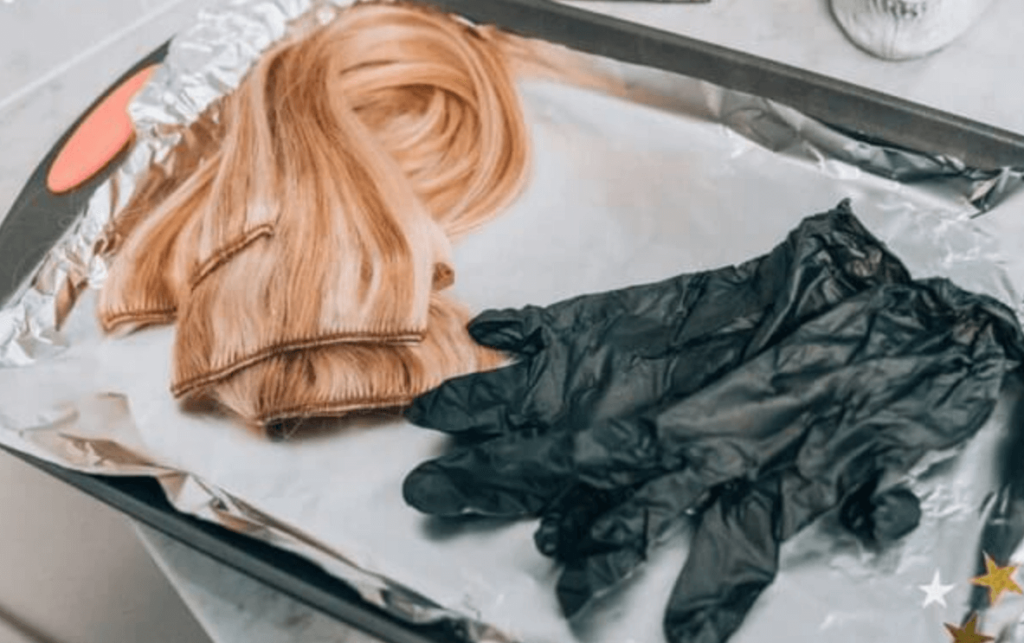
Over our 15 years of exporting, we’ve learned one crucial rule: it’s much safer to go darker than to go lighter. Our hair extensions are already processed to achieve a specific color. Trying to lift that color with bleach is an extremely harsh process. Bleach strips the hair’s cuticle, which can cause permanent damage, extreme dryness, and terrible tangling.
Step 1: Always Perform a Strand Test
Before coloring the entire weft, test a small, hidden section. This shows you exactly how the hair will react to the color and what the final shade will be. It’s a simple step that prevents big mistakes.
Step 2: Use Professional Products
Box dyes from a drugstore are not formulated for professional extensions. They can contain harsh metallic salts and unpredictable chemicals. A professional stylist will use high-quality salon-grade colors that are gentler and provide more predictable, even results.
Do’s and Don’ts of Coloring Wefts
| Action | Recommendation |
|---|---|
| DO | Go 1-2 shades darker than the weft’s current color. |
| DON’T | Bleach or attempt to lighten the hair. |
| DO | Have a licensed professional perform the service. |
| DON’T | Use cheap box dye from the supermarket. |
| DO | Perform a strand test before coloring the full weft. |
| DON’T | Skip a deep conditioning treatment after coloring. |
Following these professional guidelines will protect the hair’s health and ensure the longevity of your investment.
Does Hair Quality Affect Coloring and Styling Results?
Ever wonder why some extensions look great after coloring while others become brittle? The initial quality of the hair is the single biggest factor. Don’t let poor-quality hair ruin your look.
Absolutely. High-quality, full cuticle hair extensions handle coloring and styling much better. Their intact cuticles ensure even color absorption and better heat resistance. Lower-grade hair is often pre-stripped and coated with silicone, which leads to patchy color and quick damage.

In our factory, we specialize in one thing: high-end, full cuticle hair. This means that when we source the raw hair, we ensure the protective cuticle layer of each strand remains intact and aligned in the same direction. This is the secret to hair that looks and feels natural, and more importantly, performs well.
When you try to color lower-grade, non-Remy hair, you run into problems. This hair often has its cuticles stripped away with an acid bath because they are misaligned. To make it feel smooth, it’s coated with a layer of silicone. This silicone coating blocks hair dye from penetrating evenly, resulting in a patchy, unnatural color. After a few washes, the silicone rinses off, revealing dry, damaged hair that tangles easily.
Full Cuticle Hair vs. Standard Processed Hair
| Feature | Full Cuticle Hair (Our Specialty) | Standard Human Hair |
|---|---|---|
| Cuticle Integrity | 100% intact and aligned | Stripped or damaged |
| Color Absorption | Even and predictable | Patchy and uneven |
| Durability | Lasts 1-2+ years with care | Lasts a few months |
| Post-Color Feel | Remains soft and smooth | Becomes dry and brittle |
Investing in premium, full cuticle hair from the start means your extensions can withstand coloring and styling, and they will continue to look beautiful for a very long time. It’s the difference between a product that lasts a year and one that’s ruined after one color service.
What Are the Best Practices for Heat Styling Hair Wefts?
Love using heat tools but scared of frying your expensive wefts? One wrong move can cause permanent frizz and breakage. Let’s cover the best way to style without causing damage.
Always apply a quality heat protectant spray before using any hot tools. Use the lowest effective temperature setting, typically below 350°F (180°C). Avoid holding heat on one spot for too long. Like coloring, higher-quality human hair wefts will withstand heat styling much better over time.
Just like your natural hair, human hair extensions can be damaged by excessive heat. But you can absolutely use flat irons, curling wands, and blow dryers if you do it correctly. Remember, synthetic hair will melt instantly, so these tips only apply to 100% human hair.
Always Use a Heat Protectant
This is the most important step. A good heat protectant creates a barrier between the hair and the hot tool, which helps to minimize moisture loss and damage to the hair’s cuticle. Never skip this.
Control Your Temperature
You don’t need maximum heat to get great results. For most styling, a temperature under 350°F (180°C) is plenty. High-quality hair styles well at lower temperatures. Start low and only increase the heat if necessary.
Heat Styling Guide for Hair Wefts
| Tool | Recommended Temp | Best Practice |
|---|---|---|
| Flat Iron | 300-350°F (150-180°C) | Pass over each section smoothly. Do not stop. |
| Curling Wand | 300-350°F (150-180°C) | Hold for 5-8 seconds per section. |
| Blow Dryer | Medium heat, low speed | Use a nozzle for control. Keep it moving. |
By using a heat protectant and keeping the temperature in a safe range, you can style your hair wefts to match any look you desire without compromising their health. This ensures they stay soft, shiny, and beautiful for as long as possible.
Conclusion
In short, you can color and style human hair wefts. Success depends on using high-quality hair, professional coloring, and safe styling practices to protect your beautiful, long-lasting investment.