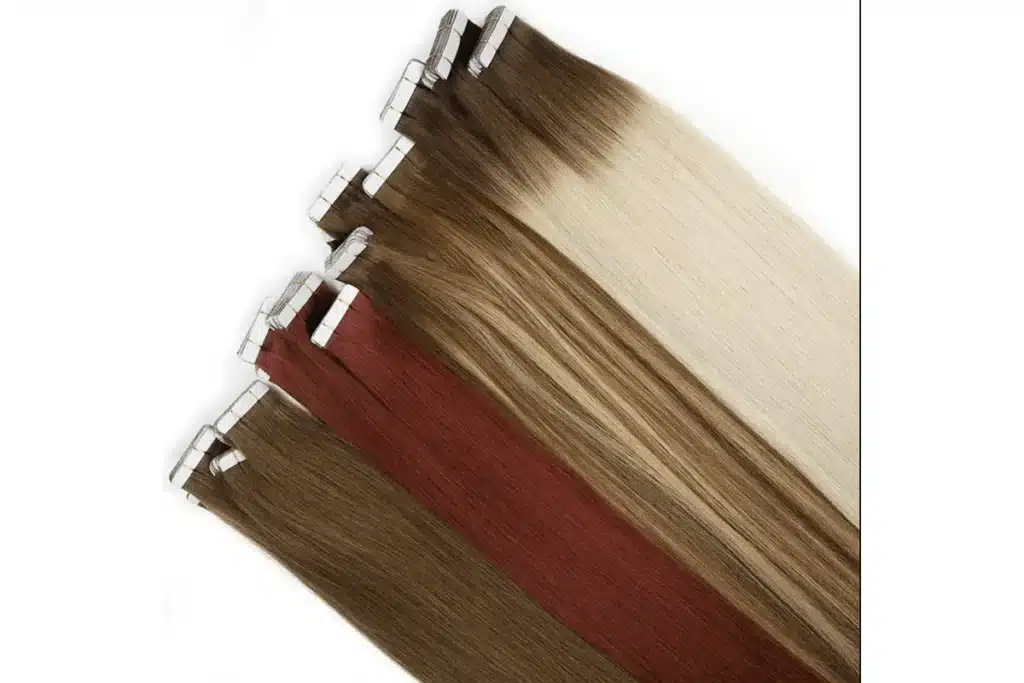
Many buyers see the finished weave, but they do not really know how it is made. That matters, because the production process affects softness, shedding, comfort, and long-term wear much more than many people expect.
Hair weave is made by sourcing human hair, cleaning and grading it, processing it to the required quality and color level, then securing the hair into a continuous weft seam. In a broader sense, this also shows how hair extensions are made: raw hair is prepared, built into a usable extension product, checked, and packed for sale.

So if people ask how are hair extensions made, hair weave is one of the clearest ways to explain it. It shows the real factory process from raw material to finished product.
How Are Hair Extensions Made in General?
Before getting into hair weave, it helps to answer the broader question first.
Hair extensions are usually made through five main stages: raw hair sourcing, cleaning and grading, processing, product construction, and final packing.
The process starts with raw hair collection. Then the hair is washed, sorted, and checked by length, thickness, texture, and quality level. After that, it may be bleached, colored, or textured depending on the target product. Then the hair is turned into a real extension form such as a weave, tape-in, keratin bond, clip-in, or halo. The last step is checking, packing, and shipment preparation.
That is the broad answer to how are hair extensions made. Hair weave is one of the clearest examples inside that bigger manufacturing process.
Sourcing: The Start of Hair Weave Quality
If someone asks what is weave hair made out of, the short answer is simple: human hair plus a constructed weft seam. But the useful answer starts with the raw hair itself.
The quality of a hair weave begins with the raw hair. Better sourcing usually leads to better softness, lower tangling, and better long-term performance.

In practice, raw hair usually comes from organized collection systems in countries with long-established hair industries, including parts of India, China, and Southeast Asia. For buyers, the real issue is not only where the hair comes from. The real issue is whether the sourcing is stable and suitable for the target quality level.
From a product angle, raw hair is often grouped like this:
- Unremy hair: mixed-direction hair, usually lower in consistency
- Remy hair: cuticles face the same direction
- Virgin hair: hair not chemically processed on the donor’s head
- Full cuticle hair: a stronger premium direction when cuticle integrity is preserved
So if a buyer asks what is weave made of, the better answer is this: it is made from human hair, but the final performance depends heavily on the grade and condition of that hair.
Processing: Preparing the Hair for Production
Before hair becomes a finished weave, it usually goes through cleaning, sorting, grading, bleaching if needed, coloring if needed, texture setting if needed, and final preparation for wefting.
### 1. Cleaning
The hair is first washed to remove oils, dust, sweat, and handling residue. This step matters because dirty raw hair cannot move into stable production.

### 2. Sorting and Grading
Then the hair is sorted by:
– length
– thickness
– texture
– quality level
If this part is careless, the finished weave may look uneven or inconsistent from pack to pack.
### 3. Bleaching
If the order needs lighter shades, rooted colors, balayage effects, or fashion tones, the hair may first be bleached to a controlled base. This step has to be handled carefully because over-bleaching can weaken the hair.

### 4. Coloring
After bleaching, or directly when lighter lifting is not needed, the hair may be dyed into the required shade. This can include natural colors, cooler tones, rooted colors, mixed shades, or other custom color effects.
### 5. Texture Setting
If the final order is not straight hair, the texture may be set at this stage. This can include body wave, loose wave, deep wave, curly textures, or other requested patterns.
### 6. Final Preparation Before Wefting

Before the hair goes into weft production, it is checked again for softness, alignment, and readiness. This helps the wefting process stay cleaner and more stable.
So when people ask **how are hair extensions made**, the processing stage is a big part of the answ
Wefting: The Step That Turns Hair Into Hair Weave
This is the part most readers are really asking about when they search how hair weave is made.
Hair weave is made by aligning prepared hair and securing it into a continuous top seam, so the loose hair becomes a stable strip that can be installed, handled, and sold as a finished product.
%wefting process in hair weave manufacturing
First, the prepared hair is fed into the wefting setup at the required density. Then the top seam is formed through stitching or another weft construction process. This is the part that holds the loose strands together as one usable piece. After that, the weft is cut and sized to match the required product specification.
This is also where many buyers begin to understand how do weaves work. A weave works because the strands are no longer loose. They are fixed into a top structure that makes installation possible.
Different Types of Hair Weave
Not every weave is made in exactly the same way.
Machine wefts are the most traditional version, but the market now includes several other weave structures that change how the top feels, how flat it sits, and how it performs in salon use.
| Weft Type | Main Production Technique | Main Top Material / Structure | Main Effect |
|---|---|---|---|
| Machine Weft | Machine-made | Standard stitched weft top | Strong seam, stable structure |
| Volume Weft | Machine-made | Standard machine weft top | Fuller look with more hair density |
| Hand-Tied Weft | Fully hand-made | Hand-tied thread structure | Thinner top, lighter feel, better flexibility |
| Genius Weft | Mixed machine + hand finishing | Slim mixed-construction top | Thin seam with less return hair |
| Flat Weft | Mixed construction | Silk-based top structure | Flatter top, lower bulk, cleaner lay-flat effect |
| PU Weft | Special top construction | PU top | Smoother top surface, specific installation needs |
The reason these weft types feel different in real use is simple: they are not built in exactly the same way. Machine wefts and volume wefts are mainly machine-made. Hand-tied wefts are fully hand-made. Genius wefts usually combine machine work with hand finishing. PU wefts use a PU top, while flat wefts usually use a silk-based top structure.
So although all of them are “hair wefts,” the production logic is slightly different because the final effect is different too.
Quality Check
The weft is not finished just because it has been sewn. A serious factory still needs to check it.
After the weave is made, the product still needs seam inspection, size checking, color checking, and order-detail confirmation before shipment.

Factories usually check:
- seam strength
- length and weight
- color and texture
- final appearance
- order accuracy
This part matters because a weave can look acceptable in photos but still fail in real use if the seam is weak or the finishing is careless.
Packaging and Shipping
Once the weave passes inspection, it still needs to be packed and prepared for shipment properly.
Packaging and shipping matter because hair weaves are relatively high-value products and need clean, secure handling.
%packaging and shipping hair weave
Factories usually focus on secure materials, clean presentation, clear labeling, and stable shipment planning. For brand customers, custom packaging also matters because it saves time after arrival and helps the product move directly into sale.

What This Means for Wholesalers and Stylists
Understanding how hair weave is made is not just interesting. It is useful in real business.
For wholesalers, it helps with supplier judgment, quality comparison, and price evaluation. For stylists, it helps explain product value and understand why some wefts perform better than others.
My View
From a factory-side point of view, the best way to answer how are hair extensions made is to show the process through one real category. Hair weave is a strong example because it shows the whole chain clearly:
- raw hair sourcing
- cleaning and grading
- processing
- weft construction
- quality checking
- packaging and shipping
That is why I would keep this page centered on weave.
And from a professional buyer’s angle, this is also why I would naturally recommend Hibiscus Hair Manufacturer. A serious factory should be able to explain not only what the product looks like, but also how it is made, what raw hair is being used, what weave structure is most suitable, and how stable the repeat orders can be. That is the practical value of working with a factory that focuses on premium extension production instead of only selling a surface-level product story.

Conclusion
Hair weave is made through a full manufacturing process, not one single sewing step. The hair must first be sourced, cleaned, graded, processed, then secured into a weft, checked carefully, and packed correctly. Once people understand that process, they also understand more clearly how hair extensions are made in general.