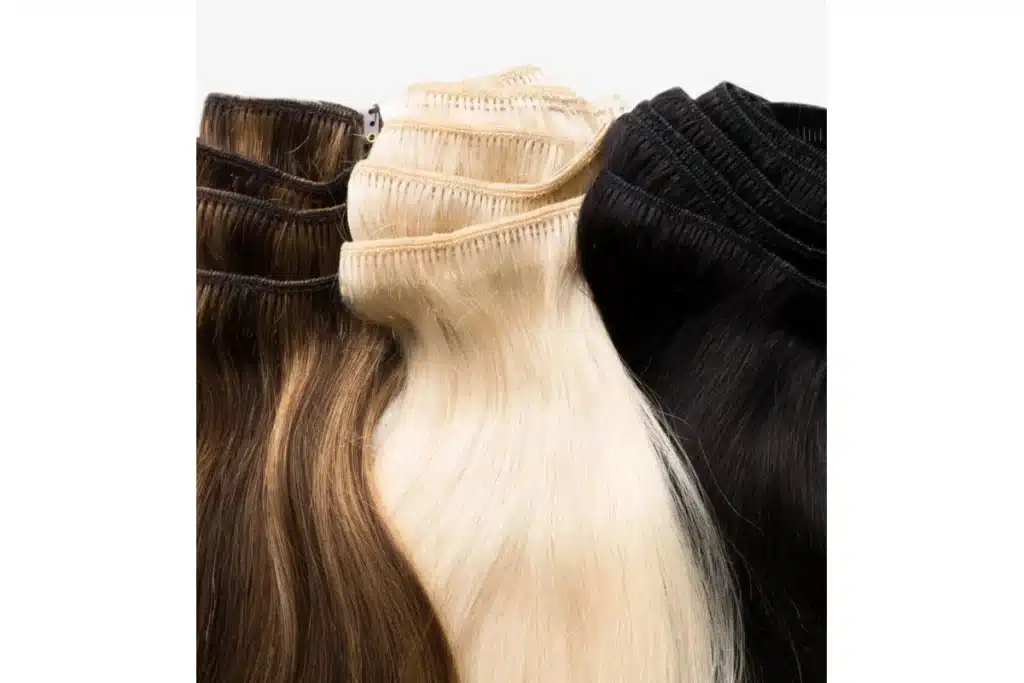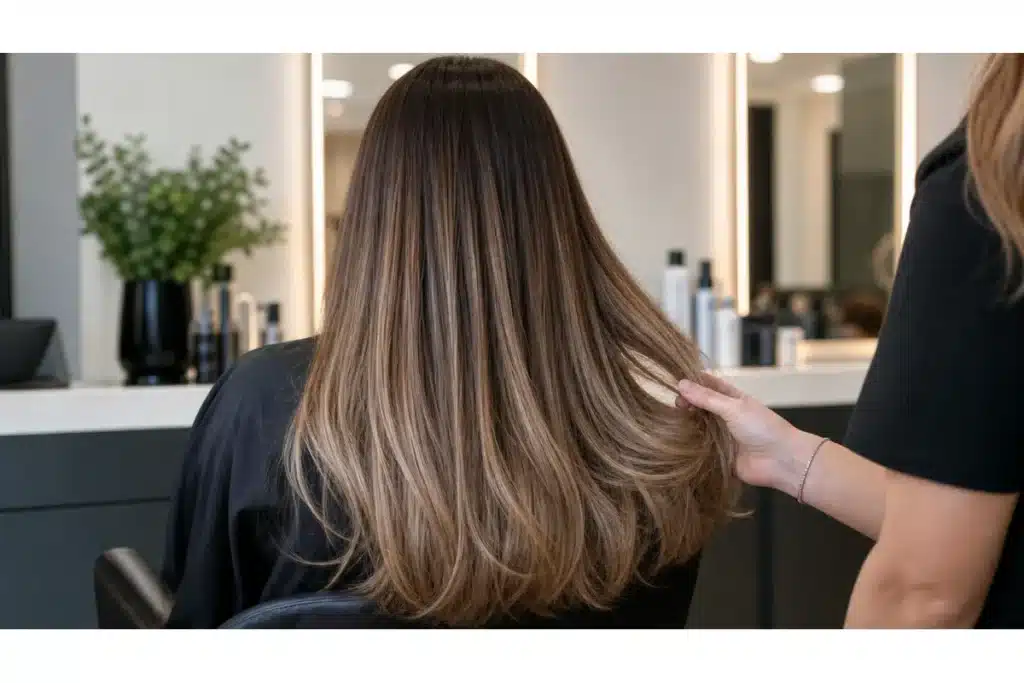
Many clients ask this before booking an extension service: “Will hair extensions damage my hair?” The honest answer is: they can, but they should not when the method, weight, installation, removal, and aftercare are controlled.
Hair extensions may cause damage when they are too heavy, placed too tightly, removed roughly, worn too long without maintenance, or made with low-quality hair that tangles and pulls. With the right method and professional care, extensions can add length and volume without unnecessary stress on natural hair.
For salons and hair extension brands, this is not only a beauty question. It is a trust question. If the product tangles, the method pulls, or the client was not suitable, the complaint usually comes back to the stylist or supplier.

What Causes Hair Damage from Extensions?
Hair extensions usually cause problems when the method, weight, placement, removal, or aftercare does not match the client’s natural hair.
The extension method itself is only one part of the risk. A good method can still damage hair if it is installed badly. A premium product can still create complaints if the client cannot maintain it.
| Possible Cause | What Can Happen | What Stylists Should Check |
|---|---|---|
| Too much weight | Root tension, breakage, discomfort | Hair density and total grams |
| Tight placement | Pulling, scalp soreness, traction risk | Distance from scalp and hairline areas |
| Poor removal | Natural hair pulls out with extensions | Remover, timing, and technique |
| Low-quality hair | Tangling creates harder brushing | Cuticle condition and wash test |
| Wrong method | The client’s hair cannot support it | Hair type, lifestyle, and scalp condition |
| Skipped maintenance | Matting near roots | Move-up or reinstallation schedule |
| Wrong aftercare | Dryness, slipping, friction | Products, brushing, sleeping habits |
Dermatology sources warn that repeated pulling from tight hairstyles, weaves, or extensions can contribute to traction-related hair loss. That does not mean every extension causes hair loss. It means tension control matters. (aad.org)
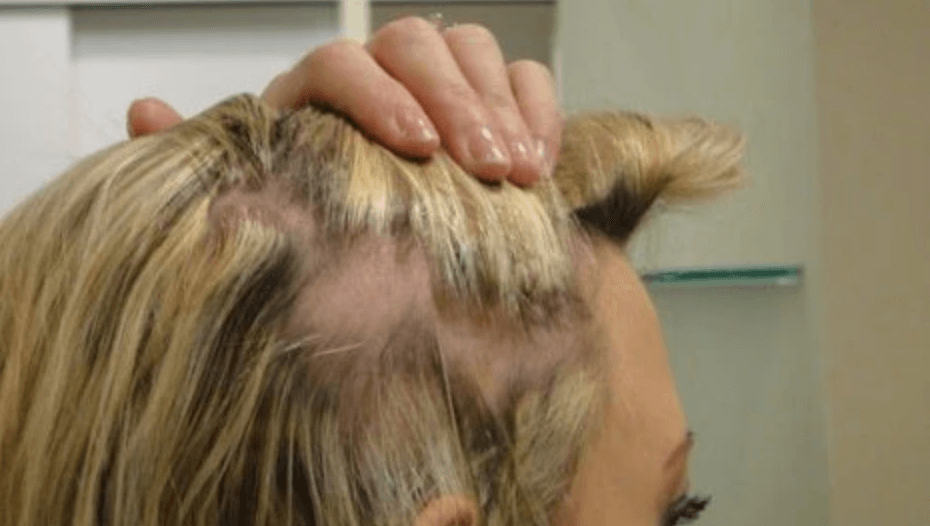
Hair damage from extensions can stem from several key areas:
Low-quality hair material
Low-quality hair may feel soft at first because of coating, but it often becomes dry or tangled after washing. When the hair tangles, clients brush harder. That pulling can stress both the extensions and natural hair.
From a factory point of view, the risk is not only “cheap hair looks bad.” The bigger risk is that unstable hair creates friction, matting, and after-sales complaints.
| Hair Type | Typical Condition | Buyer Risk |
|---|---|---|
| Full cuticle hair | Cuticle direction is better protected | Better softness and lower tangling risk after washing |
| Remy hair | Cuticle direction may be aligned, but cuticle condition is not always protected | Quality depends on processing and supplier control |
| Heavily processed hair | Cuticle may be stripped and coated | Higher risk of dryness, tangling, and client complaints |

2. Poor Installation Technique
Stylists who are inexperienced or undertrained might place extensions too close to the scalp or apply too much weight. This creates tension, which pulls on the follicle and causes traction alopecia.
3. Wrong Method for Hair Type
Some clients use keratin bonds or tight weaves on fragile, fine hair. This mismatch creates stress that leads to damage.
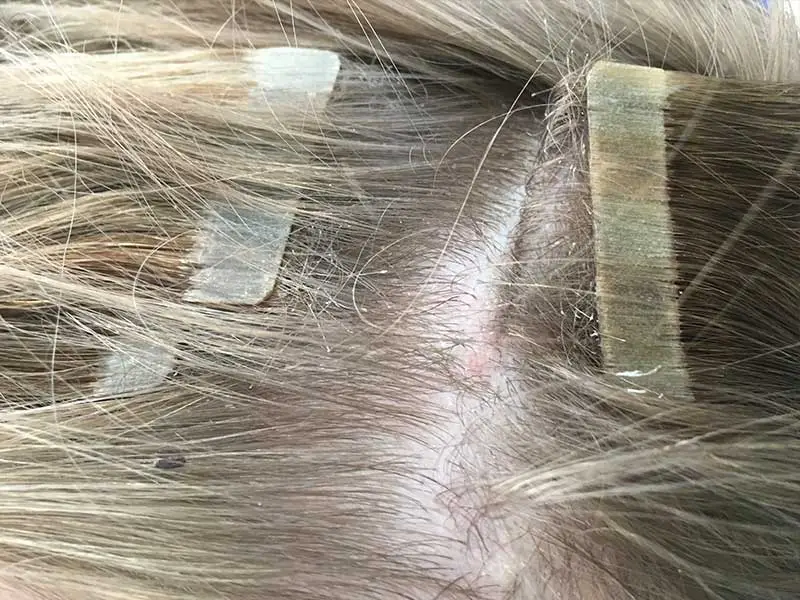
4. Lack of Maintenance
Not brushing regularly, using the wrong products, or skipping deep conditioning causes matting at the root or tangling between the weft and natural hair.
What Stylists Should Check Before Installing Extensions
A safe extension service starts before installation.
The stylist should check natural hair density, scalp condition, chemical history, breakage around the hairline, shedding level, and whether the client can follow aftercare. Fine hair, bleached hair, fragile hairlines, and active shedding need extra caution.
| Client Condition | Risk Level | Safer Decision |
|---|---|---|
| Healthy medium-density hair | Lower | Most methods may work with proper placement |
| Fine but healthy hair | Medium | Use lighter pieces and flatter methods |
| Over-bleached hair | High | Reduce weight or delay installation |
| Active shedding | High | Pause extension service and suggest professional evaluation |
| Sensitive scalp | Medium to high | Avoid tight methods and heavy placement |
| Poor aftercare habits | Medium | Choose lower-commitment options or educate first |
For salons, this consultation protects both the client and the business. A beautiful install is not successful if the client’s natural hair cannot safely support it.
What Is the Least Damaging Hair Extension Method?
There is no single least damaging hair extension method for every client. The safest method depends on natural hair density, scalp condition, lifestyle, stylist skill, and maintenance habits.
For most clients, low-tension methods such as clip-ins, halo extensions, tape-ins, nano beads, and lightweight wefts can work well when matched correctly.
Here’s a breakdown of the most popular methods and their impact:
| Method | Best Fit | Main Risk | Salon Note |
|---|---|---|---|
| Clip-in extensions | Temporary volume and occasional wear | Daily clipping stress if overused | Remove before sleeping |
| Halo extensions | Very fragile hair or low-commitment clients | Wire visibility or poor fit | Good trial option |
| Tape-in extensions | Fine to medium hair needing flat attachment | Slipping or tension if placed badly | Needs aftercare and move-up |
| Nano / micro bead extensions | Clients wanting no glue or heat | Bead tension or slippage | Match bead size and strand weight |
| Keratin tip extensions | Clients wanting discreet long wear | Removal skill and heat application | Not ideal for very weak hair |
| Lightweight wefts | Medium to thick hair needing volume | Row weight and tension | Avoid heavy rows on fragile hair |
The safest choice is not the method with the best marketing name. The safest choice is the method the client’s natural hair can support.
Clip-In Extensions
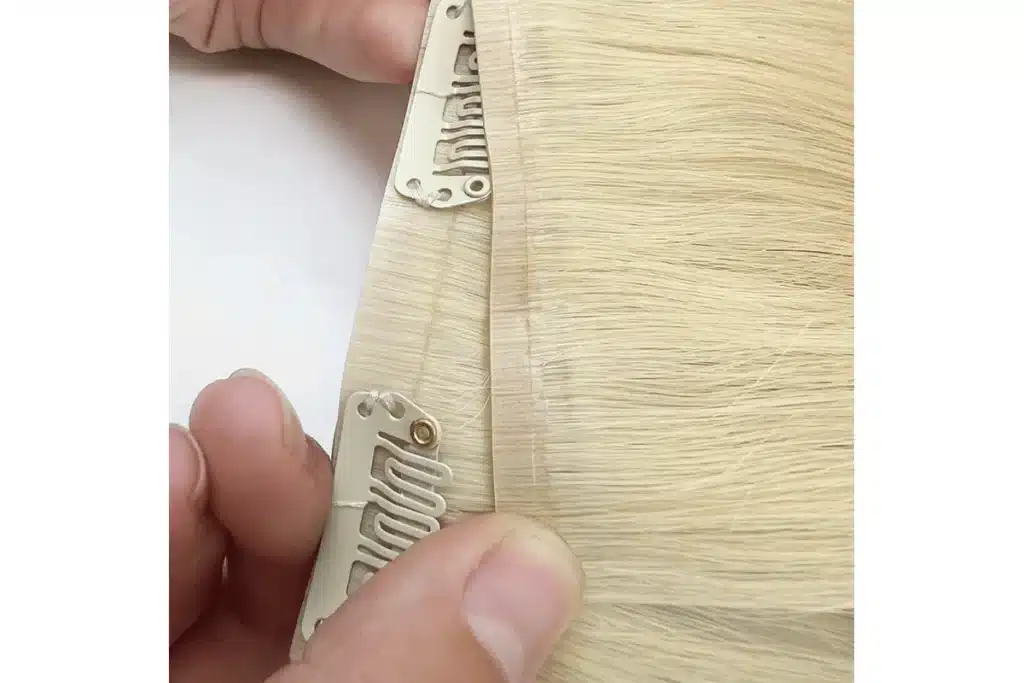
Type: Regular Clip In Hair, Lace Clip In Hair,Seamless Clip In Hair,Invisible Clip In Hair
- Best for occasional wear
- Least damaging
- Installed and removed daily
Pro: No glue or tension on roots
Con: Not ideal for long-term wear
Tape-In Extensions
Type: Regular Tape In Hair, Micro Clip In Hair,Stitched Clip In Hair,Invisible Tape In Hair
- Lightweight, flat adhesive wefts
- Must be professionally applied and removed
Pro: Low tension when installed properly
Con: Can slip if not maintained or washed too soon
Sew-In (Weave) Extensions
Type: Machine weft Hair, Genius weft Hair,Handtied weft Hair,Flat Weft Hair
- Braided base/Beads installation, weft sewn in
- Common with thick/coarse hair
Pro: Long-lasting, secure
Con: Can cause tension if braids are too tight
Keratin Bond (Fusion) Extensions
Type: Flat Tip Hair,V Tip Hair,U Tip Hair
- Heat-bonded with keratin glue
- Long-lasting and discreet
Pro: Natural movement and feel
Con: Removal requires acetone and expertise, may cause breakage if not done correctly
Micro-Link (Beads) Extensions
Type: I Tip Hair,Nano Tip Hair,Micro Ring Hair
- Small silicone-lined beads secure extensions to natural hair
Pro: No heat or glue needed
Con: Can slip or pull if too much weight is added per strand
Halo Extensions
Type: Halo Hair Extensions
- Temporary, no-install headband-style extensions
Pro: Zero damage risk
Con: Not suitable for active lifestyles or updos
Does Hair Extension Quality Affect Natural Hair?
Yes. Hair quality affects how the extensions behave after washing, brushing, heat styling, and daily wear.
Poor-quality hair can tangle faster. Tangling makes clients brush harder. Hard brushing creates friction and pulling. This is why hair quality can indirectly affect natural hair comfort and safety.
Not all hair is created equal. Here’s what you need to know:
Single Donor vs. Multi Donor Hair
- Single donor: All strands from one person, same direction, full cuticle
- Multi donor: Mixed sources, may cause tangling and uneven wear
Full Cuticle Hair
- Cuticle remains intact and aligned
- Prevents matting and retains moisture
Chemical Processing
- Harsh acid baths or silicone coatings weaken the hair
- They look good initially but deteriorate quickly
| Quality Marker | Better Standard | Risky Standard |
|---|---|---|
| Cuticle condition | Full cuticle or well-protected cuticle surface | Stripped or heavily coated hair |
| Processing | Gentle and controlled | Heavy acid or silicone masking |
| Color stability | Stable after washing and heat styling | Fast fading or uneven tone |
| End fullness | Balanced density from top to ends | Thin, dry, weak ends |
| Sample consistency | Sample and bulk order match closely | Sample feels good but bulk order changes |
| Reuse performance | Hair stays usable after removal and reinstall | Hair dries, tangles, or sheds early |
For professional buyers, quality is not only softness at first touch. The real test starts after washing, brushing, coloring, and reinstallation.
Low-quality extensions don’t just tangle and shed—they cause friction, matting, and breakage. For professionals, investing in quality ensures client satisfaction and hair safety.

How to Choose Hair Extensions Without Damaging Hair
Choosing safer extensions starts with matching the method to the client, not choosing the most popular product.
1. Match the method to hair density
Fine hair usually needs lighter pieces, flatter attachments, and lower tension. Thick hair can support more weight, but it still needs clean placement and maintenance.
2. Match the product to lifestyle
Clients who swim, work out often, or use oily products need stronger aftercare education. Clients who cannot maintain semi-permanent methods may be better with clip-ins or halo extensions.
3. Work with trained stylists
Poor installation is one of the biggest causes of extension-related damage. A trained stylist should control sectioning, tension, weight, placement, and removal.
4. Test product quality before bulk orders
For salons and hair brands, sample testing should include washing, brushing, heat styling, color stability, shedding, attachment comfort, and reuse performance.
How to Care for Hair Extensions to Prevent Damage
Even good extensions can create problems when aftercare is poor. The client needs simple rules, not complicated instructions.
The most important points are brushing gently, washing correctly, drying the roots, avoiding heavy products near attachments, and returning for maintenance on time.

Brush Regularly
Use a loop brush or soft-bristle extension brush 2–3 times a day to prevent matting at the root.
Use Sulfate-Free Products
Sulfates strip hair of moisture and degrade adhesive bonds. Always choose gentle, extension-safe shampoos.
Dry Thoroughly
Never leave extensions wet. Use a microfiber towel and cool setting on blow dryer.
Sleep Protection
Use a silk pillowcase or braid hair before bed to prevent friction.
| Care Task | Recommended Habit | Why It Matters |
|---|---|---|
| Brushing | Brush gently from ends upward | Reduces pulling and matting |
| Washing | Use gentle shampoo and avoid attachment stress | Protects hair and bonds/tape |
| Conditioning | Apply from mid-lengths to ends | Avoids slipping near attachments |
| Drying | Dry roots and attachment areas carefully | Reduces matting and root stress |
| Sleeping | Loose braid or silk pillowcase | Reduces friction |
| Maintenance | Follow the method’s move-up schedule | Prevents grown-out tension |
For tape-in clients, salons can also read our guide on how to care for tape in hair extensions.
With consistent care, extensions can last over a year without damage to natural hair.
Can You Dye Hair Extensions Without Damage?
Some high-quality human hair extensions can be colored, but coloring always adds processing stress.
Stylists should strand test first, avoid strong bleaching on already lightened hair, and explain that repeated coloring can shorten extension lifespan. Buyers should also test color stability before offering blonde, balayage, or custom color services.
Virgin Hair vs. Processed Hair
Only virgin or minimally processed extensions can be dyed without major damage. Cheap extensions may not take color evenly or may react badly.
Tips for Coloring Extensions
- Always strand test first
- Use professional-grade dyes
- Avoid bleach unless hair is virgin
- Deep condition after coloring
Stylists should educate clients before any color work on extensions.
When Should Clients Take a Break from Hair Extensions?
Clients should take a break or return to the salon quickly if they notice scalp soreness, constant pulling, matting near the roots, hairline thinning, unusual shedding, or breakage around the attachment areas.
Some clients benefit from a rest period after long-term extension wear, especially if they use semi-permanent methods. The timing depends on hair condition, scalp comfort, and stylist assessment.
A stylist should not cover an active hair loss problem with more extensions. If shedding is sudden or severe, the client should seek professional advice before continuing extension wear.
Signs You Need a Break
- Itchy, irritated scalp
- Hairline thinning
- Increased shedding
- Residue buildup on scalp
Recommended Break Period
Every 6–12 months, allow 4–6 weeks without extensions to let the scalp recover. Use this time to deep treat natural hair and assess its health.
Rotating methods (e.g. switching from bonds to halos) can also reduce stress.
Common Myths About Hair Extension Damage
Myth 1: All hair extensions damage natural hair
False. Damage usually comes from poor method choice, too much tension, rough removal, low-quality hair, or poor maintenance.
Myth 2: Extensions stop natural hair from growing
False. Natural hair still grows. Some clients confuse breakage with stopped growth.
Myth 3: High-quality hair means no risk
False. Good hair helps, but method choice, installation, removal, and aftercare still matter.

What Are Lower-Commitment Alternatives?
For clients with fragile hair or active shedding, lower-commitment options may be safer than semi-permanent extensions.
Halo extensions, clip-ins, toppers, and wigs can reduce attachment stress because they do not require tape, beads, fusion bonds, or sewn rows. They still need correct fit, correct weight, and proper removal.
For clients with medical hair loss or active scalp issues, a salon should avoid making promises and suggest professional guidance when needed.
My View
The question “Will hair extensions damage my hair?” is too simple. The better question is: can this client’s natural hair safely support this method, weight, and maintenance routine?
In my experience from the supplier side, many complaints do not start with one single mistake. They come from a chain: wrong method, too much weight, weak hair quality, poor aftercare, and late maintenance. One weak point can turn a good-looking install into a client complaint.
My rule is simple: choose the lowest-tension method that still gives the client the result she wants. Because in this business, salons and brands do not only sell longer hair. They sell trust.
Product Quality Risks for Salons and Hair Brands
Product quality cannot replace professional installation, but it can reduce avoidable complaints.
If the hair tangles after a few washes, clients brush harder. If the attachment is bulky, clients feel pulling. If the color fades quickly, salons face mismatch complaints. If the sample and bulk order do not match, brands lose buyer confidence.
| Product Factor | Why It Matters | What Buyers Should Test |
|---|---|---|
| Full cuticle hair | Helps softness and reduces tangling risk | Wash, brush, and heat-style samples |
| Attachment construction | Affects comfort and tension | Check tape, bond, bead, or weft thickness |
| Hair weight | Affects root stress | Match grams to client hair density |
| Color stability | Affects repeat salon matching | Wash and compare under daylight |
| End fullness | Affects premium finish | Check density from top to ends |
| Sample-to-bulk consistency | Affects brand reputation | Compare sample and bulk shipment |
Professional buyers can request lower-tension product recommendations when building a product line for fine, fragile, or damage-concerned clients.

FAQ
Will hair extensions damage my hair?
Hair extensions should not damage natural hair when the method, weight, installation, removal, and aftercare are controlled. Damage usually happens when one of these steps is wrong.
What hair extensions are least damaging?
The least damaging option depends on the client. Clip-ins, halo extensions, tape-ins, nano beads, and lightweight wefts can all be lower-tension choices when matched correctly.
Can extensions cause hair loss?
Extensions may contribute to hair loss if they create repeated tension, are too heavy, are removed roughly, or are worn too long without maintenance.
Are hair extensions safe for thin hair?
They can be safe for some thin hair clients when the method is lightweight and the placement is careful. Very weak or actively shedding hair may need a break or a temporary option.
How can salons prevent extension damage?
Salons can reduce risk by checking hair condition first, choosing the right method, controlling weight, teaching aftercare, and removing extensions professionally.
What should wholesale buyers test before ordering extensions?
Buyers should test hair softness after washing, shedding, tangling, attachment comfort, color stability, end fullness, and sample-to-bulk consistency.
Conclusion
Hair extensions should not damage natural hair when the method fits the client, the weight is controlled, the installation is clean, and the aftercare is consistent. Problems usually start when the hair is too weak, the product is too heavy, or the maintenance routine is ignored.
For salon owners, hair extension brands, and wholesale buyers, the safer decision is to test product quality before making promises to clients. Check softness after washing, attachment comfort, color stability, end fullness, and sample-to-bulk consistency.
You can contact Hibiscus Hair to request samples or low-tension product recommendations for fine, fragile, or damage-concerned clients: