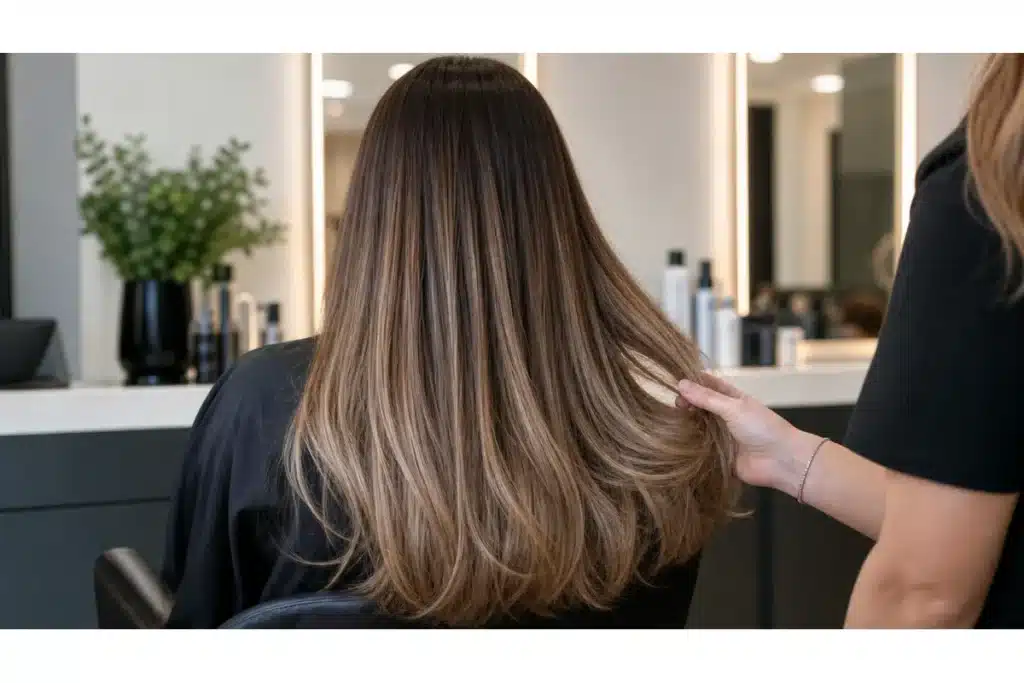
Introducing a new hair extension menu should drive revenue, not overload inventory. Purchasing extensive color rings and multiple application systems before booking a single client ties up capital in slow-moving stock.
A functional starter kit must strictly align with the salon’s immediate service offerings. Rather than buying an entire manufacturer catalog, salons should focus on physical hair samples, standardized shade references, and the precise technical tools required for fitting, maintenance, and removal.
Defining the Starter Kit: Service-First Curation
Select one certified method first, then curate the exact hair specifications and technical inventory required to deliver and maintain that specific service.
Map the Complete Client Journey
Before placing an initial order, define the exact service scope: Tape-In Volume Fill, Hand-Tied Weft Installation, or Retail Clip-In Consultation. A extension menu must account for the entire service lifecycle—including follow-up maintenance and safe removal—rather than just the initial installation photo.
| Kit item | Tape-in service | Clip-in retail fitting |
|---|---|---|
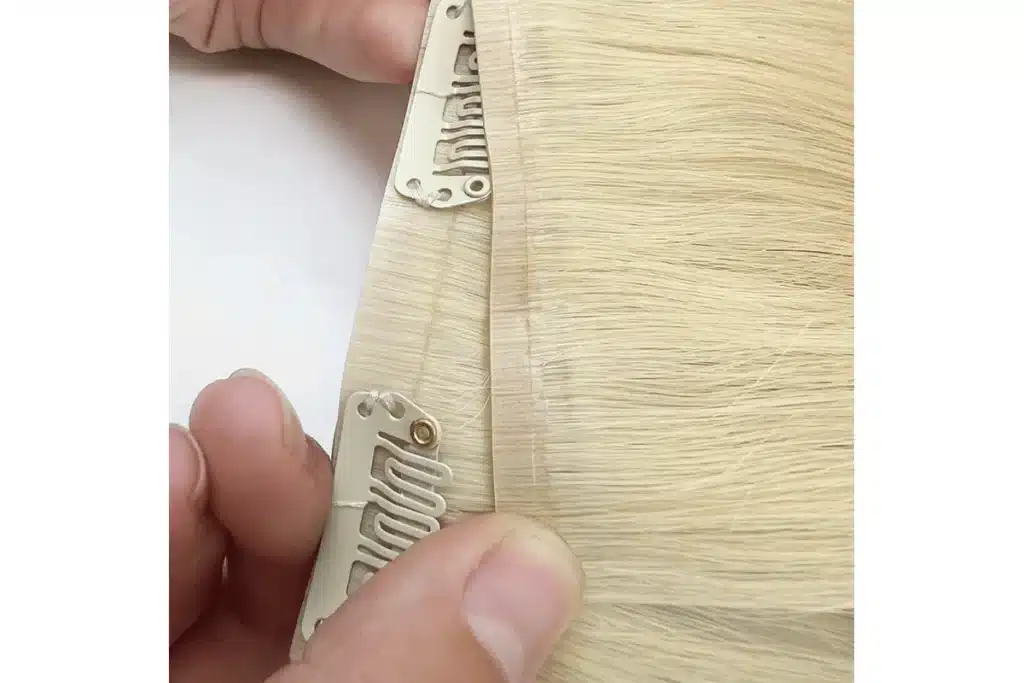
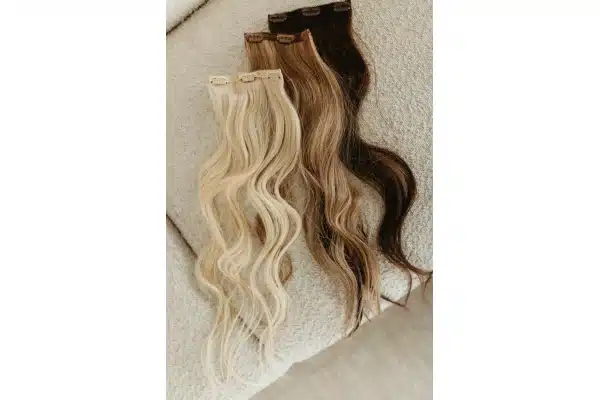
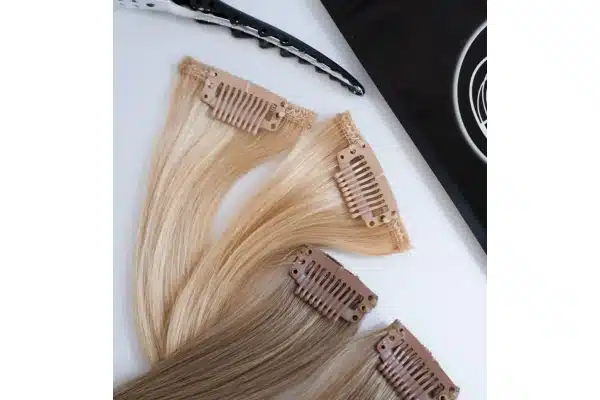
| Hair sample | Finished tab in the chosen pack format | Finished set with actual clips and widths |
| Color reference | Physical swatch beside the finished tape piece | Physical swatch beside a full-width piece |
| Service supply | Approved tape and remover for later visits | Fitting, care and storage instructions |
| Aftercare check | Attachment-safe brush demonstration | Detangling and removal demonstration |
Note: Always verify bundled tool specifications with suppliers prior to ordering commercial inventory, as technical accessories often require separate sourcing.
Shade Selection: Data-Driven Color Inventory
Stock only the high-demand shades that the team can match with confidence and replenish reliably.
Consultation-Based Color Mapping
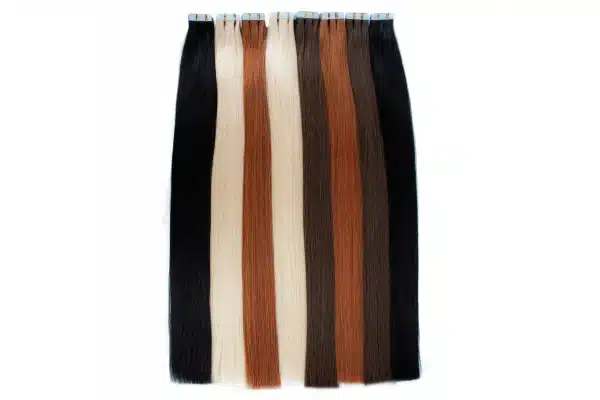
Analyze recent client color profiles rather than ordering arbitrary shade bundles from digital screens. While a standard color ring narrows shade families, a full-spec finished sample is essential to evaluate root blending, dimensional lowlights, and end density under daylight.
- Avoid Over-Ordering: Screen images rarely reflect daylight tonality. Evaluate physical swatches directly against the client’s mid-lengths and ends during consultations.
- Rationalize Specifications: Focus opening inventory on standardized lengths (e.g., 18″ or 20″) and popular pack weights (e.g., 50g vs. 100g). Do not assume identical shade codes will render seamlessly across different application formats.
System Separation: Training Assets vs. Billable Inventory
Keep education tools strictly separated from billable client stock.
Separate teaching samples from client stock
A multi-method sample board—featuring loose tape tabs, weft tracks, and keratin bonds—is a valuable consultation tool for demonstrating weight distribution and attachment comfort. However, this does not justify stocking commercial inventory across three different application methods on day one.
If the styling team is certified in tape-ins but still developing weft maintenance protocols, purchase a single weft demo piece for internal training. Expand commercial inventory only after technical proficiency and client demand are fully established.
Reorder Protocols and Quality Control
Establish a post-installation audit to track inventory velocity, reduce idle stock, and optimize future purchase orders.
Standardize Internal Tracking
Document exact installation metrics for every client service:
- SKU / Product Code
- Finished Length & Pack Weight
- Shade Code & Batch/Lot Number
- Total Grams Installed
Retain one approved, unused physical sample beside the quality control file. If a client raises a shade or wearability concern, photograph the installation and cross-reference batch details prior to adjusting the supplier specification.
Demand Clear Supplier Specifications
Reorders should be placed against precise technical specifications—including usable weft width, gram weight, clip layout, and tape tab dimensions—rather than generic descriptors like “premium grade.”
Executive Summary
A successful salon extension starter kit is built on operational clarity, not catalog volume. By starting with a single mastered application system, validating physical shade samples, maintaining accurate installation logs, and separating educational tools from billable stock, salons can launch a profitable, scalable extension menu while keeping inventory overhead lean.
Frequently Asked Questions
Can we start with only color samples?
Yes, for consultation planning. Before offering the service, also test a finished product with the real attachment and pack format so stylists know what they will fit or sell.
Should the first kit include every length?
No. Choose the lengths your first service needs and ask how quickly other lengths can be supplied. Keep a physical example of the length and end fullness you approve.
Is a training kit the same as sellable stock?
No. Practice pieces help a team learn the method. Sellable stock must match the promised hair quality, shade, weight, attachment and packaging for the client order.
Conclusion
A hair extensions kit for a new salon menu should be small enough to understand and complete enough to support the whole service. Choose one trained method, test finished samples, keep physical color references, and expand stock only after the first fittings show what the salon truly needs.