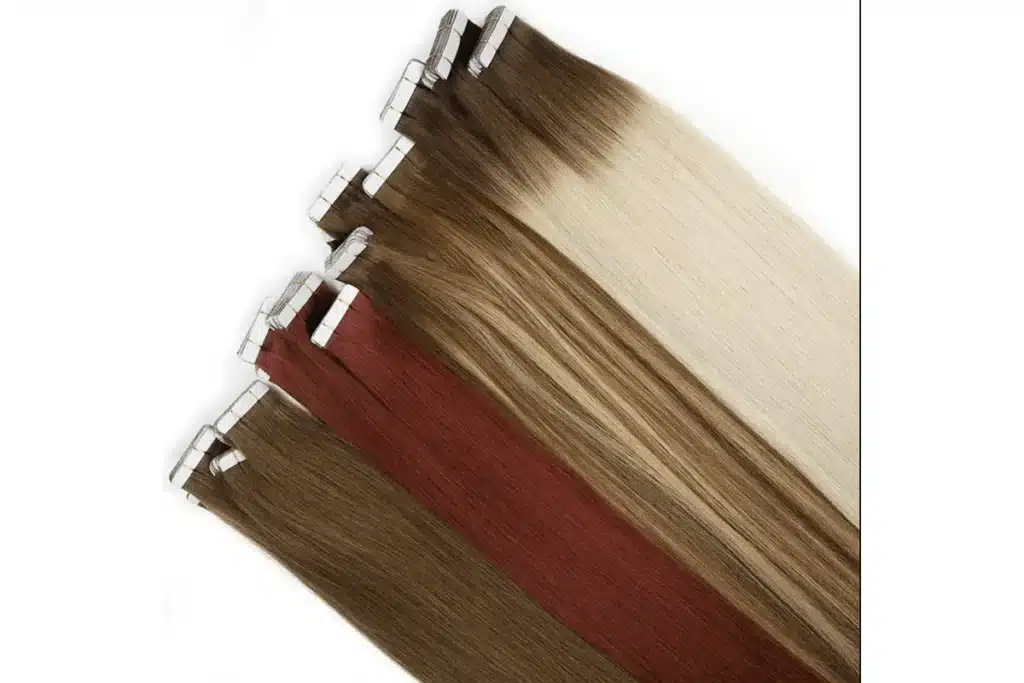
Sticky roots and residue can turn a routine tape-in removal into a slow, frustrating salon appointment and a preventable after-sales question.
Tape-in residue is often linked to product buildup, incomplete remover use, rushed cleanup, adhesive transfer, or retaping before the hair and tab are clean. A good review checks the removal process, root products, placement, and retaping steps before blaming the tape itself.
For salons and wholesale buyers, residue is a service-process issue as well as a product issue. The goal is not to promise a residue-free tape in every condition. The goal is to select a suitable tape system and follow a repeatable removal and cleanup routine.
What can cause sticky roots and tape residue?
Sticky roots and residue can result from root-product buildup, adhesive transfer during removal, insufficient cleaner, rushed drying, or a tab that is retaped before it is fully clean.
| Possible cause | What to check | Service consequence |
|---|---|---|
| Root products | Oil, serum, dry shampoo, or silicone-heavy buildup | It can affect tape hold and make cleanup harder |
| Removal process | Remover contact time and separation technique | Rushing can spread adhesive across the hair |
| Cleanup | Residue removal before shampoo and retaping | Remaining adhesive can affect the next tab application |
| Placement | Tab location, pressure, and client movement | It can change how product and moisture collect near the root |
In after-sales reviews, we usually ask whether the residue appeared during removal or after a new retape. This helps separate old adhesive cleanup from a new application issue. It also avoids treating every sticky root as the same problem.
Record the tape type, remover, root products, wear time, cleanup steps, and retaping method before deciding what needs to change.
Request a tape-in specification checkHow should salons prevent buildup before removal?
Salons should explain which root products to avoid near the tape tabs and should check buildup before beginning the removal service.
Clients often use oils, dry shampoo, or leave-in products close to the scalp. Those products can collect around the attachment area and make removal less predictable. A clear maintenance message is usually more useful than blaming the adhesive after the fact.
The tape-in maintenance timeline can help salons set a service schedule and give clients practical guidance between appointments. The exact interval still depends on natural growth, the client’s routine, and the placement plan.
What does a careful removal process look like?
A careful removal process gives the remover time to work, separates the tabs gently, cleans the old adhesive, and checks the hair before retaping.
Avoid pulling a tab apart when it resists
If a tab resists, the salon should pause and apply the appropriate remover rather than pull on the client’s natural hair. The American Academy of Dermatology warns that tight extension styles and repeated pulling can damage hair and may contribute to traction alopecia [1]. That medical guidance does not prescribe a specific remover, but it supports a low-tension, careful service approach.
After separating the tab, remove adhesive from both the hair and the extension before washing or retaping. Rubbing old adhesive through the lengths can spread residue and create more cleanup work.
Why can residue return after a retape?
Residue can return after a retape when the old tab was not fully clean, the hair was not dry, root products remain near the placement area, or the new tape does not match the service routine.
From the factory side, we usually recommend a small retape test before a salon changes its tape or cleaner across an entire client base. This lets the stylist review the tab finish, cleanup process, and hold in its own service conditions.
The tape-in extensions slipping guide can help a salon compare residue and buildup issues with placement or hold questions. These problems can appear together, but they do not always have the same cause.
What should salons document when residue becomes a complaint?
Salons should document the tape type, wear time, remover, root products, placement, photos, and cleanup steps before requesting supplier support.
This record can show whether the issue is isolated to one client, one batch, one remover, or one service habit. It also gives the supplier enough detail to compare the concern with the approved tape specification.
The American Academy of Dermatology advises that extension styles should not feel painful or too tight [2]. If a client reports pain, scalp irritation, or hair-loss concerns, the salon should stop treating the issue as a normal residue question and recommend appropriate professional medical advice.
My View
From our factory perspective, sticky roots are usually easier to prevent than to correct after several rushed services. We usually suggest that salons match the tape, remover, root-product guidance, and retaping routine before they set a standard service offer. The right tape can still leave a difficult cleanup situation when a client has heavy buildup or when the old adhesive is spread through the hair during removal. A short written process and one controlled retape test give the salon better information than changing products after every complaint. This approach also keeps the discussion focused on service conditions instead of making universal adhesive claims.
Frequently Asked Questions
Is tape-in residue always a product defect?
No. Residue can be affected by root products, removal technique, cleanup, retaping, and wear conditions. The tape should be reviewed with the complete service process.
Should salons retape before washing the extension hair?
The extension hair and tab should be fully cleaned and dried before a new tape is applied. The exact routine should follow the tape and remover supplier’s instructions.
What should a client avoid near tape tabs?
Clients should follow the salon’s product guidance and avoid applying oils, heavy serums, or other buildup-prone products directly near the tabs unless the stylist has approved the routine.
Conclusion
Tape-in residue is best managed through a clear removal, cleanup, and retaping process. When salons review buildup, remover use, placement, and tab preparation together, they can reduce sticky-root questions and make supplier support more useful when a real product concern appears.