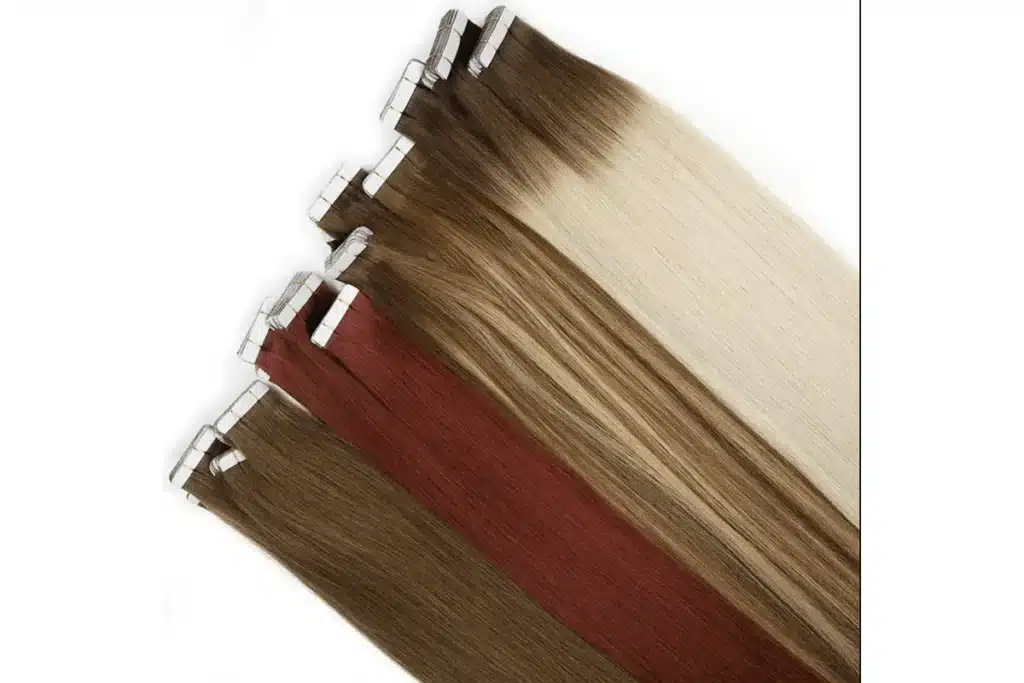
Clip in extensions can look good for an evening and still become difficult to manage if they are worn overnight. Sleep adds friction, pressure on clips, and tangling that can shorten the useful life of the set.
Clients should usually remove clip in extensions before sleeping. Leaving clips in overnight can increase tangling, stress the attachment points, flatten the wefts, and make the set harder to brush the next day. The risk depends on clip placement, hair texture, sleep movement, and the condition of the natural hair.
For salons and retailers, this is a simple care message with a practical effect on returns and after-sales questions. The client needs to understand that clip ins are removable hair pieces, not a continuous-wear attachment method.
Why can sleeping in clip ins create problems?
Sleeping in clip ins can create friction and pressure that affect both the extension hair and the natural hair held by the clips.
Movement against a pillow can pull on a small natural section. It can also press a clip into the scalp or create knots near the weft. The client may wake with hair that feels tangled, but the problem often began with the overnight wear choice rather than the hair alone.
| Overnight issue | What happens | Buyer consequence |
|---|---|---|
| Clip pressure | Clips press against small natural sections | Discomfort or unnecessary tension |
| Pillow friction | Lengths move and rub during sleep | More tangling and frizz |
| Twisted wefts | Set shifts under the head | Harder detangling next day |
| Delayed removal | Client skips proper storage | Reduced set condition over repeated wear |
For first-time buyers, the sales message should be direct: remove the set, detangle it, and store it before sleep. A small care instruction can prevent a large number of avoidable problems.

What should clients do before bed?
Clients should remove clip in extensions carefully, release clips one by one, detangle the set, and store it clean and flat or in a suitable holder.
The set should not be pulled out from the lengths. Open each clip, support the weft, and remove it with controlled handling. Then brush from the ends upward before storage. This clip in detangling guide gives a practical method for reducing knots before the next wash.
In customer support, we often find that a set starts tangling faster because it is returned to a drawer without detangling. Storage is part of the care routine, not an optional extra.

How does overnight wear affect natural hair?
Overnight wear can affect natural hair when clip pressure and sleep movement repeatedly pull on the same small sections.
The risk can be higher when a client has fine hair, a sensitive scalp, or clips placed too close to the hairline. A set that feels fine for a short event may not feel comfortable after several hours against a pillow.
Retailers should avoid suggesting that clips fit every client in the same way. A lighter set or fewer pieces may work better for a fine-haired client. A fuller set may need more careful placement to avoid a visible or heavy result.
What care rules help a set last longer?
Removing the set before sleep, detangling it before storage, using controlled heat, and avoiding product buildup can help the hair remain more manageable over repeated wear.
The client should store the set in a clean, dry condition and avoid crushing it under other items. Heat styling should be matched to the hair condition. A salon can also explain that washing frequency depends on product use and wear, not only on a calendar.
For a broader care plan, buyers can use the clip in lifespan guide to connect handling and storage with realistic reuse expectations.

My View
From our factory perspective, clip-in longevity depends heavily on how the customer handles the set between wears. We usually suggest that brands and salons include removal and storage guidance with every set, especially for first-time buyers. The product should be presented as a flexible, removable option. This helps the client choose it for the right use case and reduces avoidable tangling or clip-pressure complaints.
Frequently Asked Questions
Can a client nap in clip in extensions?
It is safer to remove the set first. Even a short nap can create pressure, tangling, or an uncomfortable clip position.
Can a client braid clip ins before sleeping?
Braiding does not remove the pressure from the clips or the risk of sleeping on the attachment points. The set should still be removed.
What if a client accidentally sleeps in clip ins once?
Remove the set carefully, check the clips and wefts, and detangle the hair before the next wear. Repeated overnight wear creates the greater risk.
Conclusion
Clip in extensions should be removed before sleep. Careful removal, detangling, and storage protect the clips, wefts, and natural hair while helping the set stay easier to manage over repeated use.