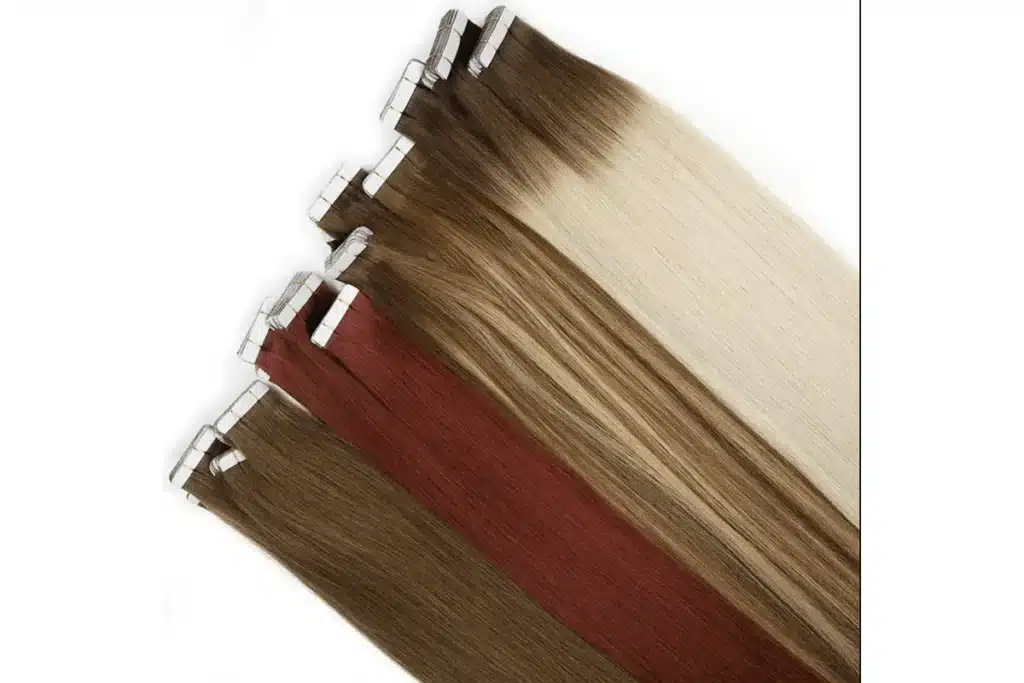
A genius weft can look flat in the package but feel bulky or tight after installation. The problem often comes from row planning, section size, fold placement, or total weight rather than one obvious product fault.
Genius weft rows usually feel bulky or tight when the weft is placed too close to the perimeter, the natural sections are uneven, the row carries too much weight, or the installer uses a fold that the client cannot cover. A flatter result needs a suitable weft width, balanced anchors, and enough natural hair above the row.
For salon owners and wholesale buyers, the useful question is not whether genius weft is flat in general. It is whether the selected construction and installation plan fit the client’s density, head shape, normal parting, and maintenance ability.
What usually makes a genius weft row feel bulky?
Bulk usually comes from stacked weft material, an unnecessary fold, thick anchor sections, or too much total hair in a small coverage area.
A genius weft can offer a low-profile top seam, but it does not remove the need to plan width and weight. If the stylist folds the weft where a clean cut would be suitable for that construction, the side area can become thicker. If several wefts are stacked near the same point, the row may feel full through the ends but heavy near the scalp.
| Installation factor | What to check | Possible client result |
|---|---|---|
| Weft width | Whether the seam can be cut or needs a fold | A thick side section or visible bump |
| Total grams | Weight planned for each row | Heavy feeling or weak natural coverage |
| Anchor size | Natural hair held by each support point | Uneven pressure along the row |
| Row position | Distance from perimeter and crown | Visible seam during movement |
In sample installations, we often see a salon choose a heavier weft because the client wants volume, then try to solve the resulting bulk by moving the row higher. This can make the row more visible. A better first check is whether the client needs fewer grams, a wider distribution, or a different row plan.

Why can a genius weft row feel tight?
A row can feel tight when the anchor points pull unevenly, the row is too close to the scalp, or the total weft weight exceeds what the natural sections can support comfortably.
Tightness is not always caused by the weft itself. The stylist should first ask where the client feels pressure and whether it changes when the client turns the head, looks down, or lifts the top layers. One tight point can indicate an uneven anchor. Pressure across the whole row can indicate a heavier-than-suitable plan.
For fine hair, a lower total weight and careful spacing are often more useful than adding another narrow weft. The row also needs enough natural hair above it. This weft extensions for fine hair guide explains why a flat seam alone does not guarantee a hidden or comfortable installation.
The salon should correct real tension at the appointment instead of asking a client to wait for it to settle. Discomfort can lead to brushing changes, early removal, and avoidable complaint risk.
When does cutting or folding change the seam profile?
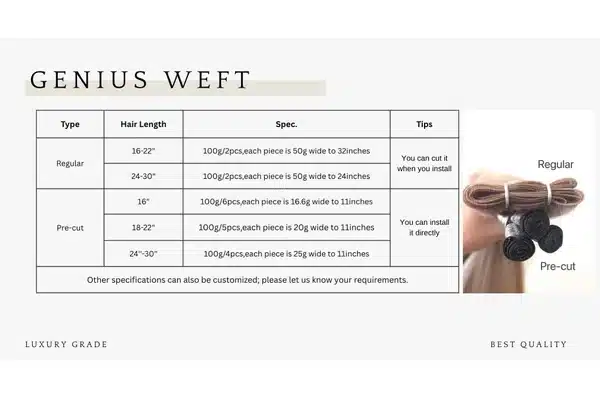
Cutting or folding changes the seam profile when it adds material to one area or when the chosen genius weft construction needs a specific finishing method.
Genius weft products are often selected because they can offer more customization than a traditional hand tied edge. Buyers should still confirm the exact cutting guidance with a representative sample. A product name does not prove that every seam has the same reinforcement or behaves the same after trimming.
For salons that need custom row widths, a controlled cut test can show whether the edge stays stable after washing and brushing. This genius weft cutting guide gives a practical framework for checking the seam before a repeat order.
From the production side, we usually suggest recording the approved width and finishing method in the order specification. This gives the salon a clearer reference if a later batch feels thicker or needs a different placement plan.
What should buyers test before a bulk order?
Buyers should test seam thickness, cut response, row comfort, end fullness, and wash behavior in the same installation method the salon plans to sell.
A loose hair sample is not enough to show how the weft will behave under a complete row. The test should include the intended length, grams, color, anchor method, and a client profile similar to the salon’s usual service. The stylist should check the row after normal head movement and again after a light wash.
The buyer should also separate a construction issue from an installation issue. If the seam looks thick only at a folded end, the response may be a width adjustment. If the full row feels thick on several clients, the product specification or total weight may need review.
How can salons reduce follow-up complaints?
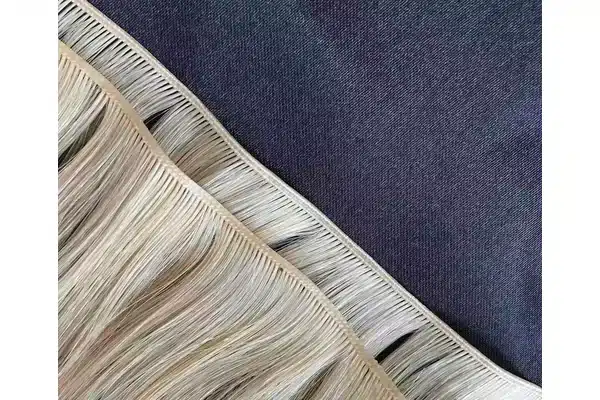
Salons can reduce follow-up complaints by mapping the row before installation, checking tension before the client leaves, and documenting the approved grams, width, and placement method.
The consultation should include the client’s normal parting, up-style needs, scalp sensitivity, and maintenance plan. A client who regularly wears high ponytails may need different perimeter spacing from a client who normally wears the hair down. The service record should note which weft construction and row weight produced a comfortable result.
For salon buyers comparing constructions, the machine weft vs hand tied weft guide can help explain why seam profile and customization limits should be considered before selecting a standard menu item.
My View
From our factory perspective, genius weft is useful when a salon needs a flat seam with controlled customization, but it should not be treated as a universal answer to bulk or tension. We usually suggest starting with the client’s coverage area and target volume, then matching the grams and width to that condition. A sample install should test the full row, not only the loose weft. This gives the buyer a practical way to see whether the seam stays hidden, whether the chosen width fits the head shape, and whether the row feels balanced after normal movement.
Frequently Asked Questions
Can genius weft be too heavy for fine hair?
Yes. A flat seam may still feel heavy if the total grams or row weight exceed what the natural hair can support. The stylist should reduce weight or change the distribution rather than relying on seam thinness alone.
Should a stylist remove a tight genius weft row immediately?
The stylist should inspect and correct clear tension promptly. Waiting can increase discomfort and make the client change brushing or styling habits in a way that affects the row.
Does a bulky row always mean the weft quality is poor?
No. Bulk can come from folding, stacking, placement, anchor size, or total weight. A sample review should separate these factors before the buyer judges the construction.
Conclusion
Genius weft rows usually become bulky or tight when width, weight, anchors, or placement do not match the client’s natural hair. Before a salon standardizes a genius weft service, test the complete row and document the conditions that produce a flat, comfortable result.