K tip extensions can look seamless, but the wrong strand weight or bond size can make the service uncomfortable and hard to maintain. The consultation should happen before the order and before the install.
K tip extensions are pre-bonded strands that a trained stylist installs in small sections. A good consultation matches strand weight, bond shape, hair density, length, and the client’s daily routine. The goal is a balanced result that the natural hair can support.
What a K Tip Consultation Should Decide
K tip hair extensions are not one fixed product. Buyers can choose different strand weights, lengths, colors, textures, and keratin bond shapes. A salon should decide the plan before it selects the final pack count.
In many programs, strand weights can range from about 0.5g to 2g. A common full-head order may use 100g, but the strand count changes when the grams per strand change. For example, 100g can be divided into many lighter strands or fewer heavier strands.
Strand weight changes the placement plan
Lighter strands can give more control around fine areas and face-framing sections. Heavier strands can cover more quickly, but they may not suit every client. The stylist needs to match each extension strand to a natural section that can support it.
Bond size changes comfort and visibility
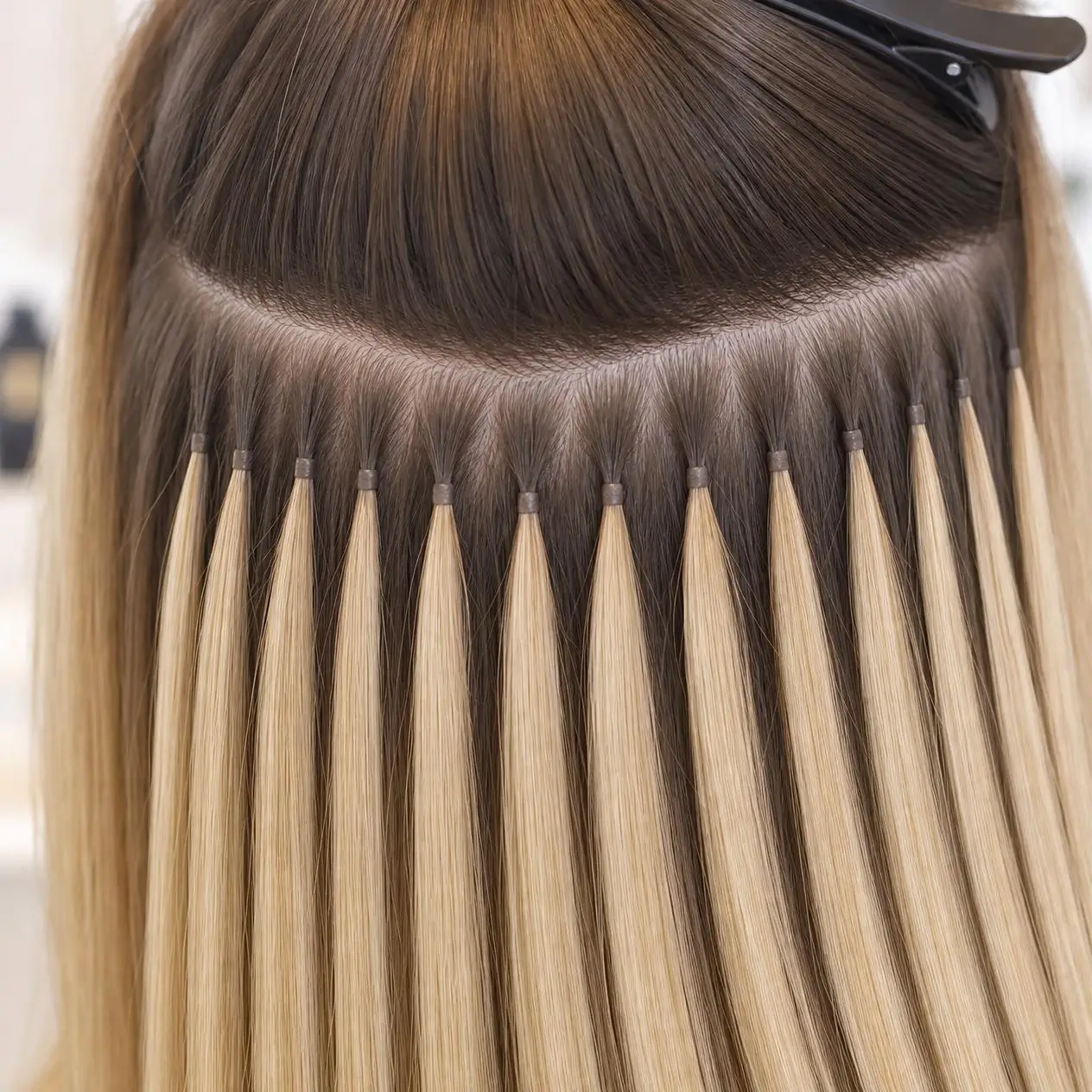
The bond should be secure, but it should not be oversized for the natural section. Large bonds can be harder to hide in fine hair. Very small bonds can work for detailed placement, but they require careful sectioning and a clear service plan.
| Consultation factor | What the stylist checks | Why it affects the order |
|---|---|---|
| Natural hair density | Fine, average, or thick sections | Helps set a suitable strand weight and total quantity |
| Target length | How much longer the finished hair will be | Longer lengths often need more fullness through the ends |
| Bond shape and size | How the bond sits near the scalp | Changes comfort, hiding power, and placement flexibility |
| Color and texture | Blend with natural hair in daylight | Reduces visible separation after installation |
How We Match Strand Weight to Hair Density
We recommend matching the strand weight to the support available in the client’s natural hair, not choosing the heaviest option for faster coverage.
Fine hair
Fine hair often needs smaller, lighter sections and careful spacing. The stylist should avoid placing bonds where the client already has weak or fragile hair. The consultation should also discuss whether a temporary method or a lighter weft method would better fit the client’s goal.
Average-density hair
Average-density hair gives the stylist more options, but the plan still needs balance. A full-head service can use a mix of placements instead of one repeated strand size everywhere. The nape, sides, and crown may need different decisions.
Thick hair
Thick hair can need more total volume to blend, especially for a major length change. But extra quantity should not become a reason to use oversized bonds. The stylist should plan enough strands for the blend while keeping the sections clean.
Share the target length, color, grams per strand, bond shape, and service goal. We can help you organize a clearer K tip order request.
Questions That Help Prevent a Poor Fit
Is the client suitable for a bonded method?
The consultation should ask about the client’s current hair condition, sensitivity, recent chemical work, and daily styling habits. K tip extensions need professional installation and professional removal. A salon should not treat them like a quick temporary set.
Does the client want length, fullness, or both?
The answer changes the pack plan. A client who only needs fullness may not need the same total length or strand count as a client who wants a major transformation. A small color effect also needs a different layout from a full-head blend.
Can the client follow the maintenance routine?
The client needs to understand brushing, sleeping, washing, heat use, and return appointments. A good product cannot solve a maintenance plan that does not fit the client’s routine.
Stylist Note: match the sample to the bulk order
When a salon buyer checks a K tip sample, we suggest confirming more than the hair feel. The buyer should record the strand weight, bond shape, color code, length, and pack count. This makes the repeat order easier to compare and helps prevent a situation where the bulk order looks different from the approved sample.

Buyer Check Before a Wholesale K Tip Order
For a salon or distributor order, confirm:
- Hair length, texture, and color range
- Total grams and grams per strand
- Bond shape and bond color
- Number of strands per pack
- Whether the hair is intended for length, fullness, or color effect
- Sample approval points for hair feel, end fullness, and bond consistency
Buyers who offer other bonded methods can compare Keratin Hair Extensions with micro-link extensions before they decide which method fits their salon menu.
Our View
We see the K tip consultation as a product-matching process. Strand weight, bond size, and density are connected. A heavy strand can give fast coverage, but it is not a good answer for every head of hair. A smaller strand can be more flexible, but it also needs the right placement and enough total hair for a full blend.
From a buyer side, a clear consultation sheet also makes sourcing easier. It gives the salon and supplier the same language for strand size, bond shape, pack weight, and target result. That can reduce avoidable changes after the sample has already been approved.
Frequently Asked Questions
How many K tip extensions are needed for a full head?
The number depends on the total weight and the grams per strand. A 100g order can contain very different strand counts, so salons should plan the service by both weight and placement.
Are smaller K tip bonds better for fine hair?
Smaller bonds can be easier to hide and place on fine sections. The stylist still needs to assess the client’s hair condition and avoid placing extensions on weak areas.
Can K tip extensions be removed at home?
Professional removal is the safer choice. A trained stylist can use the correct method and check the natural hair during the removal process.
Conclusion
K tip extensions need a consultation that covers density, strand weight, bond size, length, color, and maintenance. The best plan is not the heaviest or the smallest option. It is the one that gives the client a balanced blend while keeping the installation suitable for the natural hair.