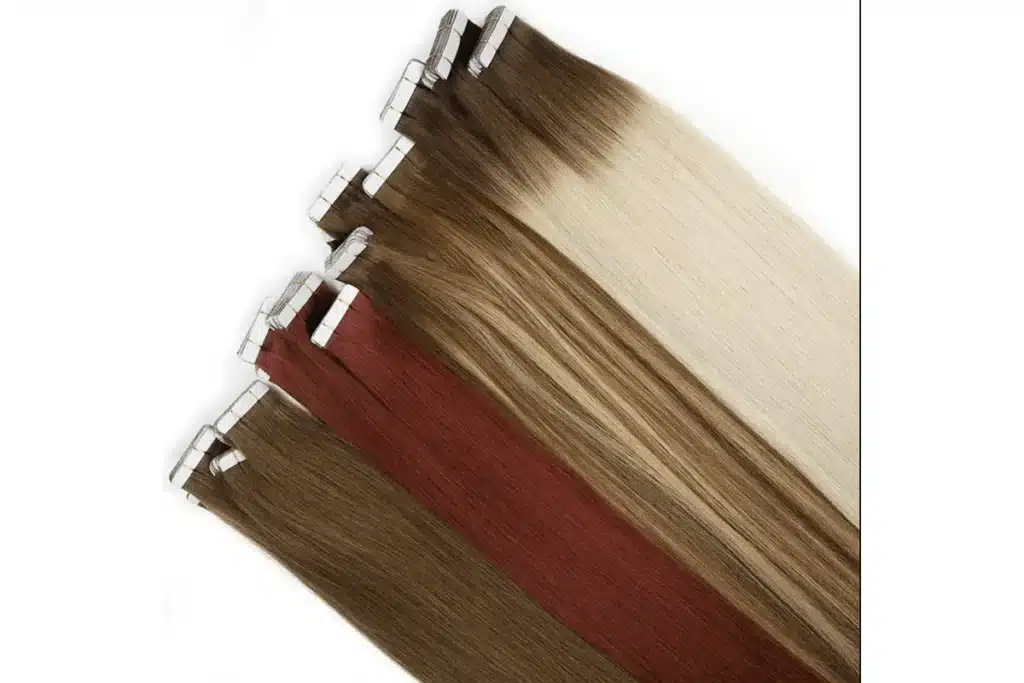
Hair extension trends move fast, but not every “new” launch really changes the market. Some products are just fresh names on old ideas. Some actually solve real salon problems.
The newest hair extensions in 2026 worth watching are Butterfly Wefts, Twin Tab hair extensions, Long Tape Weft hair extensions, and V-light hair. What makes them important is not only that they are newer. It is that they answer current demand for flatter finishes, faster installs, cleaner sectioning, and better support for fine or delicate hair areas.

I do not want this article to be a short trend list. I want it to help salon owners, stylists, and professional buyers understand why these methods matter, where they fit, and what they say about the direction of the 2026 extension market.
Why “Newest Hair Extensions” Matters in 2026
A lot of buyers hear “new” and think “marketing.” Sometimes that is true. But in the extension world, new methods usually appear because older systems did not solve everything.
The strongest new directions in the market are moving toward:
- thinner and lighter tops
- faster salon installs
- flatter and more invisible results
- more flexibility inside row-based systems
- better solutions for fine hair or thinning areas
That is why these four methods matter. They are not random product names. They reflect the real direction of the market.
What Makes a Hair Extension “New” in 2026?
Not every new extension method is completely invented from zero. In most cases, “new” in 2026 means one of four things:
1. A flatter version of an older system
This is the logic behind many newer tape and weft upgrades. The category is not new, but the top structure is thinner, softer, or more discreet.
2. A faster version of an older system
Some products are trying to cut salon time without giving up too much finish quality. That is why workflow matters so much in newer weft design.
3. A more specialized version of an older system
This is where V-light becomes important. It is not trying to replace every classic install. It is trying to solve a more specific problem that broader systems do not solve well.
4. A hybrid version of two older systems
Long Tape Weft is a good example of this. It combines broader weft coverage with tape-based speed logic. That is exactly the kind of hybrid thinking the market is pushing toward now.
I think this is useful because it stops the article from becoming a simple list of names. It helps explain why these names appeared at all.
Newest Hair Extensions in 2026
1. Butterfly Wefts
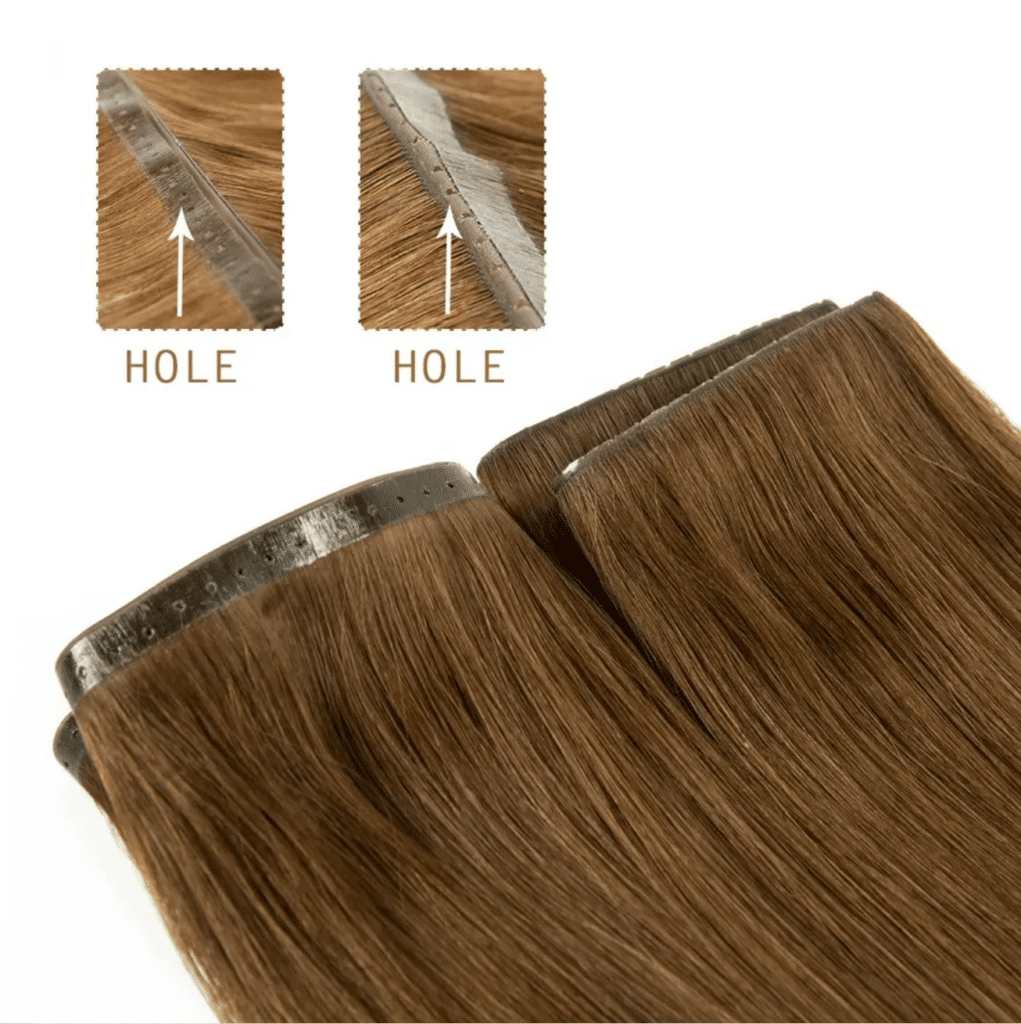
Butterfly Wefts are one of the most interesting newer weft directions because they improve function, not only appearance. The most talked-about feature is the line of guide holes across the weft strip, which helps the stylist pass through more easily during installation and supports a faster, more organized row process.
Why Butterfly Wefts are getting attention
I think Butterfly Wefts are getting attention for a simple reason: they solve a salon pain point. A lot of newer extension products focus mostly on invisibility. Butterfly Wefts do care about a flatter result, but they also focus on install efficiency. That is a big deal in real salon work.
This matters because many salons do not only need a pretty finished look. They also need a method that makes sense during the service itself. If a method can reduce time, improve control, and still keep a more modern finish, that makes it much easier to adopt.
What makes them different from older wefts
Butterfly Wefts are not the same as classic machine wefts, and they are not exactly the same as hand tied or genius wefts either. They belong to the newer engineered weft space.
The difference is less about “more hair” or “less hair” and more about the design of the top strip. Their structure is built to make passing through and sewing cleaner and faster. That gives them a workflow identity, not only a visual identity.
Best fit
I think Butterfly Wefts make the most sense for:
- salons already comfortable with row-based work
- stylists who want a more efficient weft service
- clients wanting fuller installs with a flatter feel
- premium service menus that value speed and neatness
Pros
- faster install logic
- lower-bulk modern weft direction
- familiar weft result with newer structure
- strong appeal for salons focused on efficiency
Limits
- still a row-based method
- not the same as ultra-targeted detail methods
- best used by stylists already comfortable with weft work
| Method | Main idea | Best for |
|---|---|---|
| Butterfly Wefts | Weft with guide-hole structure | Faster row installs and flatter workflow |
2. Twin Tab Hair Extensions
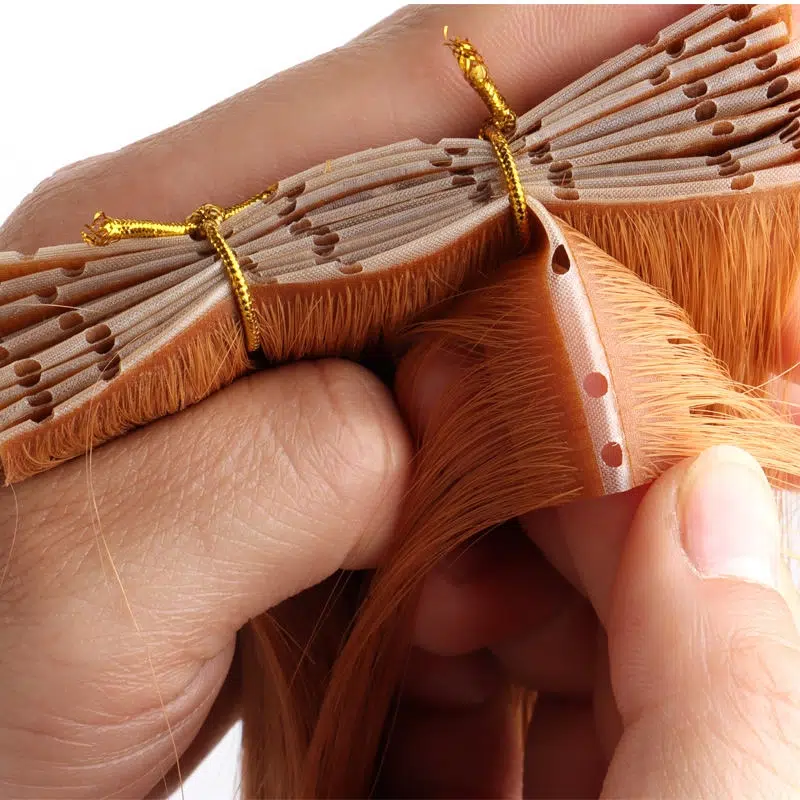
Twin Tab hair extensions are interesting because they do not fit neatly into an old category. They are not classic tape-ins. They are not a standard sewn weft. Their real value is structured sectioning and organized fast application.
Based on the install process, the extension is positioned along the section line, the tabs are opened and secured with clips, the client’s hair is pulled through guide holes, and silicone rings are used to lock the system into place. That gives Twin Tab a different identity from ordinary tape or ordinary row methods.
Why Twin Tab feels new
I think Twin Tab feels new because it is solving a process problem more than a material problem. It is asking:
- how can the sections stay cleaner?
- how can the install feel more organized?
- how can a salon speed up the service while keeping it neat?
That is why I do not like describing Twin Tab as just another tape variation. That misses the point. The real value is structure, repeatability, and faster execution.
Why salons may care about it
Premium salons care about finish, but they also care about workflow. A method that creates a more repeatable system is easier to train, easier to scale, and easier to build into a high-end menu.
I think Twin Tab has value because it speaks to this business side of extensions. It is not only “does it look good?” It is also “can the service be delivered cleanly and consistently?”
Best fit
I think Twin Tab fits best for:
- salons wanting faster premium installs
- buyers interested in hybrid modern systems
- teams that value organized sectioning
- extension menus built around clean structure and speed
Pros
- organized install logic
- cleaner sectioning
- neat hold through ring locking
- strong workflow angle
Limits
- not a classic entry-level method
- needs clear training and process understanding
- may be less intuitive for buyers used only to standard tapes or standard wefts
| Method | Main idea | Best for |
|---|---|---|
| Twin Tab Hair | Guide-hole system with silicone-ring locking | Organized and fast salon installs |
3. Long Tape Weft Hair Extensions
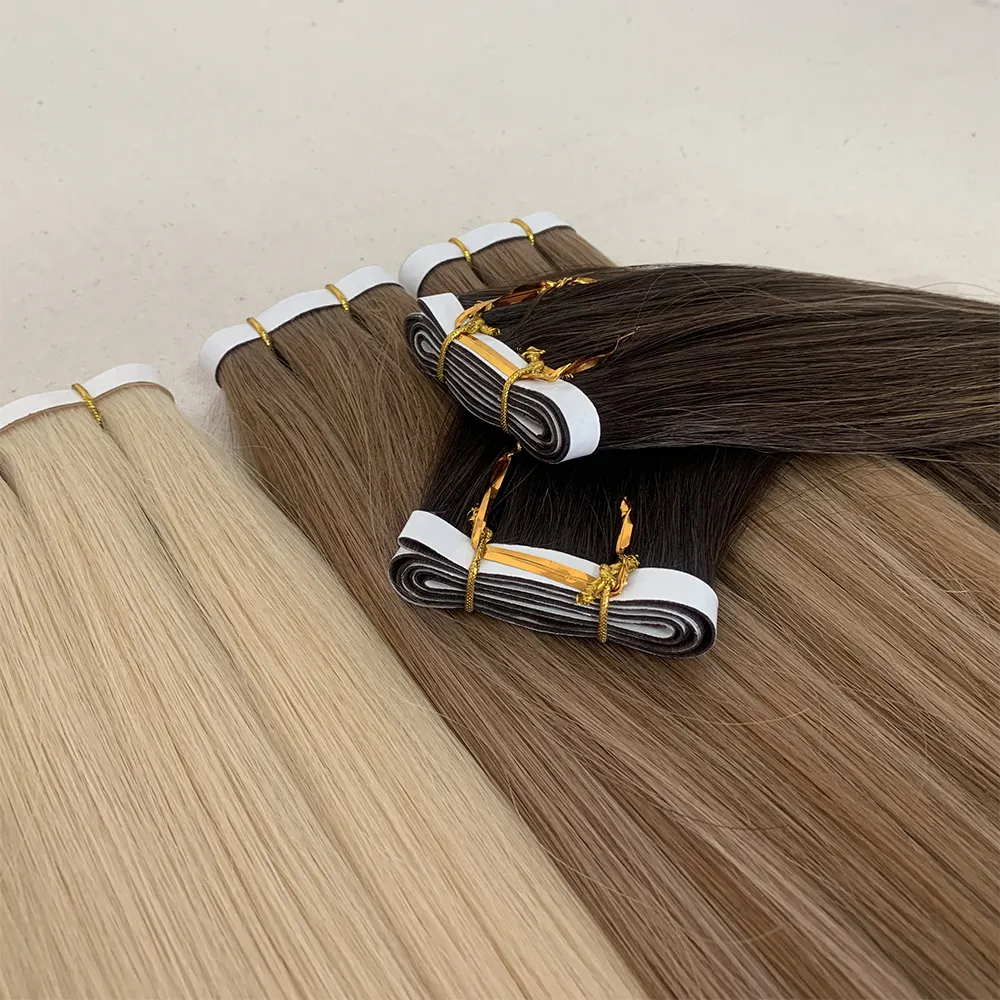
Long Tape Weft hair extensions are part of the bigger move toward hybrid systems. They take weft-style coverage and combine it with tape-based application logic. The result is a speed-focused category designed for broader, cleaner, and faster full-head application.
Why Long Tape Weft matters
I think Long Tape Weft matters because it reflects one of the strongest shifts in the current market: buyers no longer want categories to stay pure if purity slows them down. They want systems to borrow strengths from each other.
That is exactly what Long Tape Weft does. It keeps the broad coverage feeling of a weft, but it borrows the application speed logic of tape systems. That is a very modern kind of product thinking.
Why this is attractive to salons
Time matters. A lot. If a salon can reduce application time while keeping a fuller finished look, that changes both service profitability and client experience.
This is why Long Tape Weft is more than a product variation. It is part of a salon-efficiency trend. Newer weft systems are being pushed not only as prettier products, but as faster products. That is a major reason they are being noticed.
Best fit
I think Long Tape Weft works best for:
- fast-paced salons
- service menus focused on speed and fuller looks
- buyers who want a newer hybrid category
- clients wanting broad coverage with less chair time
Pros
- broader coverage than classic tape tabs
- speed advantage
- modern hybrid identity
- useful for full-head installs
Limits
- not as targeted as strand-by-strand systems
- still needs the right density match and quality hair
- may not suit every fine-hair detail area
| Method | Main idea | Best for |
|---|---|---|
| Long Tape Weft Hair | Weft-style coverage with taped application | Faster full-head installs |
4. V-light Hair
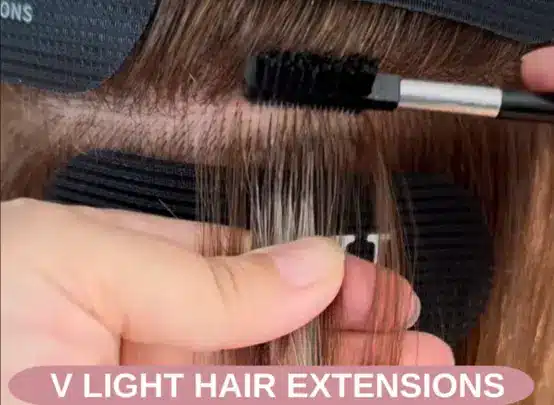
V-light hair is probably the most talked-about of these four because it answers a very specific and very modern problem: how to work in very fine, sparse, or difficult areas without relying on traditional broad systems.
Recent guides describe V-light as a lightweight, detail-focused method that uses a transparent adhesive bond cured by light. It is commonly positioned for fine hair, thinning areas, temple work, part-line correction, and sparse zones where larger systems may be too visible or too heavy. Guides also commonly describe it as a shorter-wear method, often around 4 to 6 weeks per install, because it is built for precision support rather than broad full-head replacement.
Why V-light matters so much in 2026
I think V-light matters because it shows how the extension market is becoming more specialized. Older systems were often designed around full-head logic. V-light is not built like that. It is more targeted, more precise, and more problem-focused.
That makes it important for:
- fine hair
- thinning zones
- breakage areas
- hairline detail work
- smaller correction services
This is a major shift. It means the market is not only chasing glamour anymore. It is also chasing precision and support.
Why this is different from broader methods
A tape-in, a weft, or a bonded strand system can all be excellent in the right context. But they are still broader systems. V-light is more localized. It is not trying to replace a full row or a full-head install. It is trying to solve the small, difficult places that traditional methods often leave behind.
Best fit
I think V-light fits best for:
- fine-hair clients
- thinning or breakage support
- sparse crown or temple correction
- salons wanting a specialty detail service
- brands that want a true problem-solving category
Pros
- very lightweight
- highly targeted placement
- strong fit for delicate areas
- very current and specialized service angle
Limits
- not the most efficient method for full-head density
- shorter wear than broader long-wear systems
- requires clear skill and expectation setting
| Method | Main idea | Best for |
|---|---|---|
| V-light Hair | Light-cured lightweight detail bonding | Fine hair, sparse areas, discreet support |
What These Four New Methods Say About the 2026 Market
When I look at these four methods together, I do not just see four product names. I see four market signals.
Signal 1: Salons want faster installs
Butterfly Wefts and Long Tape Weft clearly point in this direction. They are trying to reduce time without giving up a fuller or premium-looking result.
Signal 2: Buyers want thinner and flatter systems
Butterfly Wefts, Twin Tab, and Long Tape Weft all reflect this. The market keeps pushing away from bulkier tops and awkward structure.
Signal 3: Fine hair is becoming a bigger service category
V-light is the clearest sign of that, and current professional coverage also supports stronger focus on thinning support and topper education in the wider salon world.
Signal 4: Hybrid thinking is growing
Long Tape Weft and Twin Tab both reflect the same larger direction. The industry is less interested in rigid old category walls and more interested in systems that combine strengths.
Which of These New Methods Matter Most?
If I rank them by commercial role, I would think about them like this:
Strongest for broad salon demand
- Butterfly Wefts
- Long Tape Weft Hair Extensions
These fit wider salon menus and broader install demand.
Strongest for premium workflow innovation
- Twin Tab Hair Extensions
This method matters more from a process and structure angle.
Strongest for specialty demand
- V-light Hair
This is the most targeted and niche of the four, but also the clearest specialty service growth area.
How Salons and Buyers Can Use This Trend
I think the biggest mistake is to react to “new” products emotionally. A better move is to ask practical questions.
For salons
- Does this method save time?
- Does it help a client type I already serve?
- Does it create a premium upsell service?
- Can my team learn it well enough to deliver consistently?
For brands
- Does this category fill a gap in my range?
- Is it a real innovation or only a rename?
- Is there enough customer education value behind it?
- Does it fit my price position?
For wholesalers
- Is this method broad enough for repeat demand?
- Does it solve a visible problem for salons?
- Is the category growing because of workflow or because of hype?
I think those questions matter more than trend excitement.
My Opinion
I think the smartest way to write about newest hair extensions in 2026 is not to chase novelty for its own sake. The better question is: which new methods are solving real problems?
That is why these four make sense. Butterfly Wefts improve row workflow. Twin Tab improves structure and install organization. Long Tape Weft pushes hybrid speed. V-light opens the door for finer and more targeted support work.
To me, that is what “newest” should mean. Not just newer names, but newer answers.
FAQ
What are the newest hair extensions in 2026?
Some of the most talked-about newer methods include Butterfly Wefts, Twin Tab hair extensions, Long Tape Weft hair extensions, and V-light hair. These methods stand out because they focus on speed, flatter design, or more targeted support.
Why are Butterfly Wefts becoming popular?
Butterfly Wefts are gaining attention because their guide-hole design can make installation easier and faster while still keeping a modern flatter weft feel.
Is Twin Tab a tape method?
Not really in the classic sense. It is better understood as a structured system that uses guide holes and silicone rings for faster, cleaner installation.
What is V-light hair best for?
V-light hair is best for fine hair, sparse areas, breakage zones, and detail placement where broader methods may be too visible or too heavy.
What makes Long Tape Weft different?
Long Tape Weft combines broader weft-style coverage with tape-based speed, which makes it attractive for faster full-head services.
Conclusion
The newest hair extensions in 2026 matter because they reflect real market needs, not just new names. Butterfly Wefts, Twin Tab, Long Tape Weft, and V-light hair each show how the industry is moving toward faster, flatter, smarter, and more targeted extension solutions.