If U choose the wrong extension type, the final look can feel bulky, unnatural, or hard to maintain. That is why understanding the different types of hair extensions matters before U buy, sell, or install them.
Hair extensions come in five main groups: tape in hair, keratin hair, hair weft, temporary hair extensions, and hair bulk. Inside these groups, there are many sub-types. The best one depends on the client’s natural hair, target look, maintenance routine, and budget.
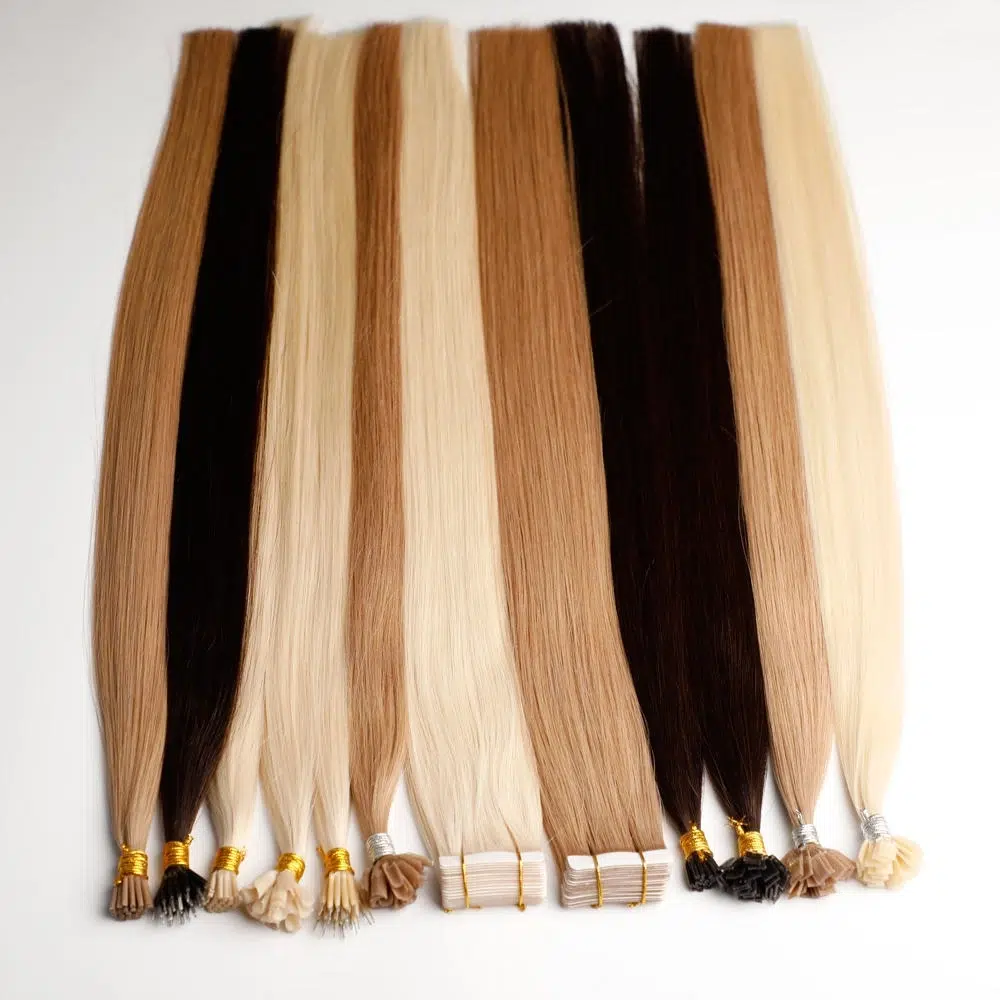
This is where the topic gets interesting. Most articles only mention clip-ins, tape-ins, and keratin hair. But the real market is much wider than that. If U serve salon owners, stylists, hair brands, or wholesale buyers, U need the full picture, not just the beginner version.
#1 Tape In Hair Extensions
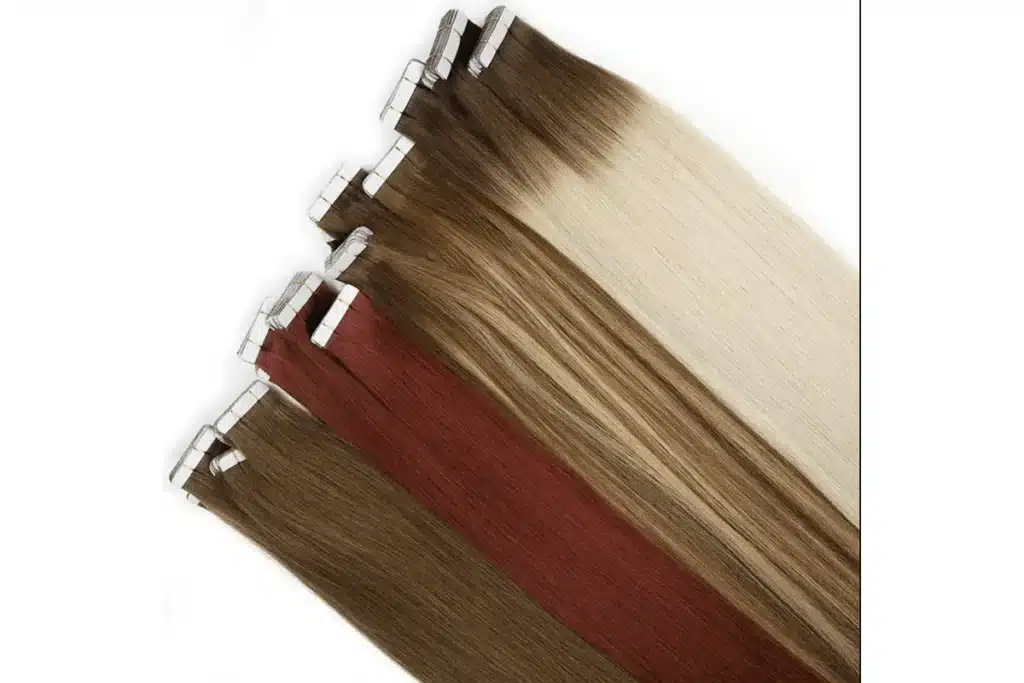
Tape in hair extensions are one of the most popular semi-permanent methods in the salon market. They are known for flat installation, fast application, and natural blending when the quality is good.
Tape in hair works by attaching extension pieces to natural hair with adhesive tape tabs. It is popular because it is lightweight, reusable, and suitable for many clients. But inside this category, there are many important sub-types.
1. Classical Tape In Hair
This is the standard tape-in method. The natural hair sits between two tape pieces in a sandwich structure. This creates a secure hold and a neat finish.
U can use classical tape-ins for adding length, volume, or color without a full chemical service. They are comfortable, practical, and easy to understand, which is why they remain a core wholesale category.
2. Invisible Tape In Hair
Invisible tape in hair is designed to hide the tape better. The hair is injected into a thin transparent PU base, so the top area looks more like hair growing from the scalp.
This is one of the best choices when U want a more discreet finish. It is especially useful for finer hair and for clients who care a lot about visibility at the root area.
3. Stitched Tape In Hair
Stitched tape in hair adds sewn reinforcement on the tape area. This improves strength and helps reduce shedding from the top.
If U want a tape-in option with a neater top and more durability, this is a strong upgrade from basic tape-ins.
4. Micro Tape In Hair
Micro tape in hair uses smaller sections and a different installation shape. The flower-like design can spread the hair more evenly and create a fuller look.
This type is useful when U want more placement control and a softer, less blocky result.
5. Mini Tape In Hair
Mini tape in hair uses smaller tape tabs than standard tape-ins. It is especially useful for fine or thinning hair because the sections are lighter and less visible.
This is a smart option for salons that serve many fine-hair clients and need a more delicate tape system.
6. Slim Tape In Hair
Slim tape in hair uses a narrower tape strip and a lighter construction. It is designed to feel thinner, flatter, and more flexible on the scalp.
This category fits clients who want very discreet wear but still want the convenience of tape-ins. It also suits fine and medium-density hair very well.
7. Invisible Tape Weft
Invisible tape weft combines tape speed with weft-like structure. It offers a sleek pre-taped strip and aims to save installation time while keeping a more hidden result.
This is one of the newer categories that matters for professional buyers because it blends efficiency and invisibility.
8. Long Tape Weft Hair Extensions
Long tape weft hair extensions use a longer pre-taped strip. The main benefit is faster full-head application.
If U want to reduce salon chair time and create cleaner section flow, this type deserves attention.
9. Twin Tab Hair Extensions
Twin tab hair extensions are designed for very fast install and easy refit. They are often positioned as cleaner to remove and easier to reapply.
For luxury salons, this kind of product can help shorten appointment time without giving up a smooth final look.
Why tape in hair matters
Tape-ins are not one single product. They are a whole family. That is important because many buyers still compare only “tape in vs keratin,” while the real choice may actually be “classical tape in vs invisible tape in vs slim tape in.”
| Tape In Type | Best For | Main Benefit |
|---|---|---|
| Classical Tape In | General salon use | Simple and proven |
| Invisible Tape In | Fine hair, hidden finish | Most discreet top |
| Stitched Tape In | Stronger hold | Extra durability |
| Micro Tape In | Flexible placement | Fuller spread |
| Mini Tape In | Fine or thinning hair | Smaller, lighter tabs |
| Slim Tape In | Fine to medium hair | Ultra-thin feel |
| Invisible Tape Weft | Fast salon installs | Tape speed + weft effect |
| Long Tape Weft | Full-head efficiency | Faster application |
| Twin Tab Hair | Quick refit systems | Easy install and removal |
#2 Keratin Hair Extensions
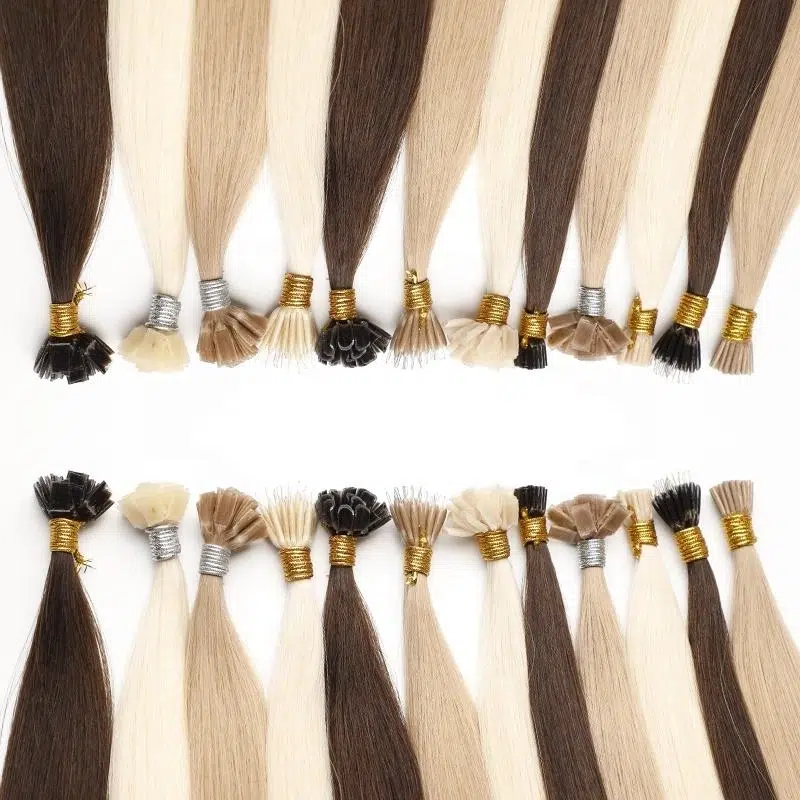
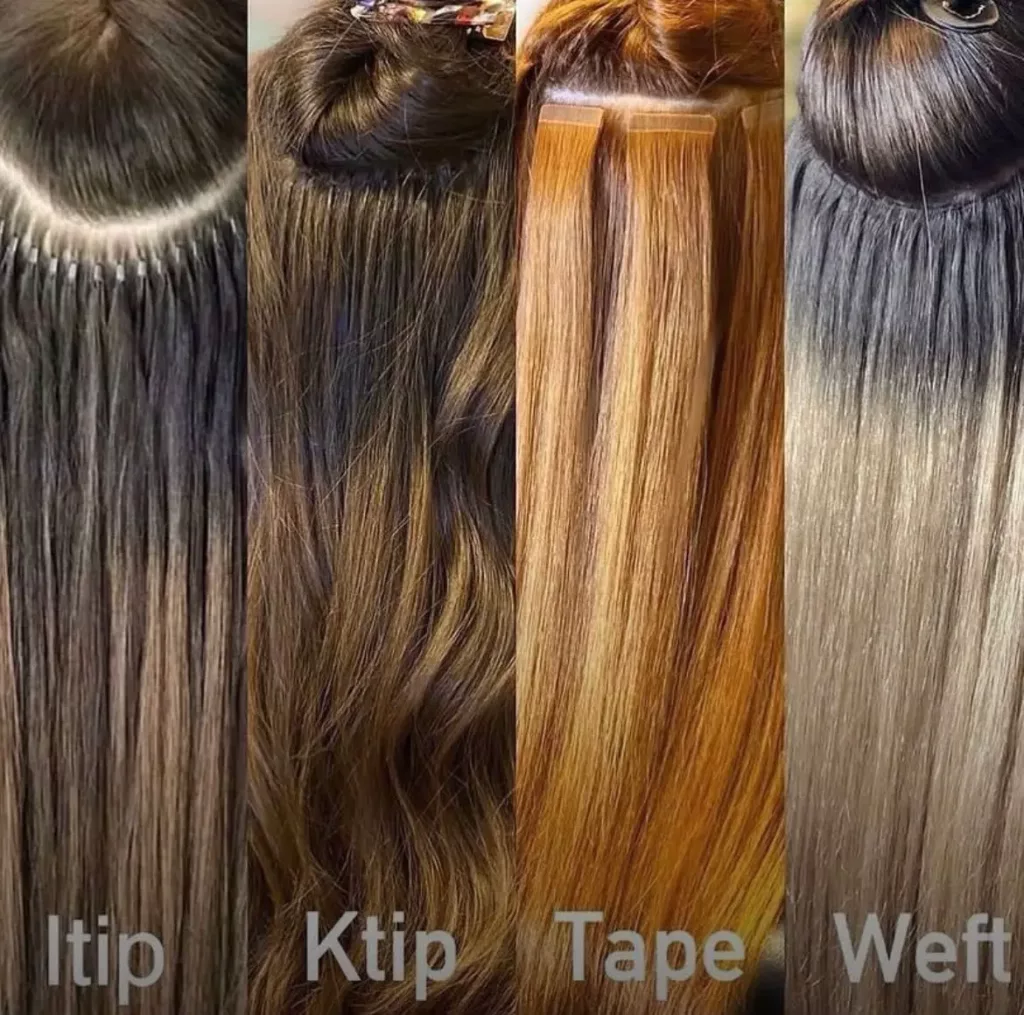
Keratin hair is one of the most established long-wear categories. It includes both heat-based and bead-based systems, depending on the tip design.
This family is popular because it allows strand-by-strand placement. That gives more flexibility around the head and more control for custom installs.
1. U Tip Hair
U tip hair uses a keratin bond shaped like a U or nail tip. The bond is melted with a heat tool and fused to the natural hair.
This is one of the classic keratin methods. It is strong, durable, and often chosen for clients who want a longer-wear bonded result.
2. V Tip Hair
V tip hair is similar to U tip hair, but the keratin bond is shaped like a V. The bond is usually smaller and more streamlined.
This can be a better fit for thinner or finer hair because the bond can look more refined.
3. Flat Tip Hair
Flat tip hair has a flat keratin bond. This shape gives a neat and comfortable attachment point, and it can often be customized during installation.
This is one of the most flexible bonded methods in the market and a very practical product for professional use.
4. I Tip Hair
I tip hair is installed without heat. The strand has a keratin stick tip, and it is secured with a micro ring or bead.
This method is popular because it offers 360-degree movement and avoids heat during application.
5. Nano Ring Hair
Nano ring hair uses a very small ring and a nano-sized tip. The attachment point is much smaller than a standard micro ring.
This gives a more discreet bond and is often chosen for clients who want bead-based installation with lower visibility.
6. F Tips Hair Extensions
F tip hair extensions use small micro beads with a discreet tip design. This method is often described as lightweight and low-visibility.
It is useful when U want a more hidden strand method but still want the practicality of bead-based application.
7. Micro Ring Hair
Micro ring hair, also called micro bead or micro loop hair, is another no-heat, no-glue method. The natural hair and extension are secured with a ring.
This is a strong choice for buyers who want a reusable and chemical-free attachment category.
Why keratin hair matters
Keratin hair is not only for one kind of client. It covers heat fusion, bead systems, and very detailed strand placement. That makes it one of the most versatile method families in the market.
| Keratin Type | Heat or No Heat | Main Benefit |
|---|---|---|
| U Tip Hair | Heat | Strong classic bond |
| V Tip Hair | Heat | Smaller refined bond |
| Flat Tip Hair | Heat | Comfortable flat attachment |
| I Tip Hair | No heat | Flexible strand movement |
| Nano Ring Hair | No heat | Smaller, more hidden bond |
| F Tip Hair | No heat | Discreet micro-bead effect |
| Micro Ring Hair | No heat | No glue, no heat, reusable |
#3 Hair Weft Extensions
Hair weft extensions are one of the biggest categories in the whole industry. They are widely used in salons, training, wholesale supply, and luxury extension services.
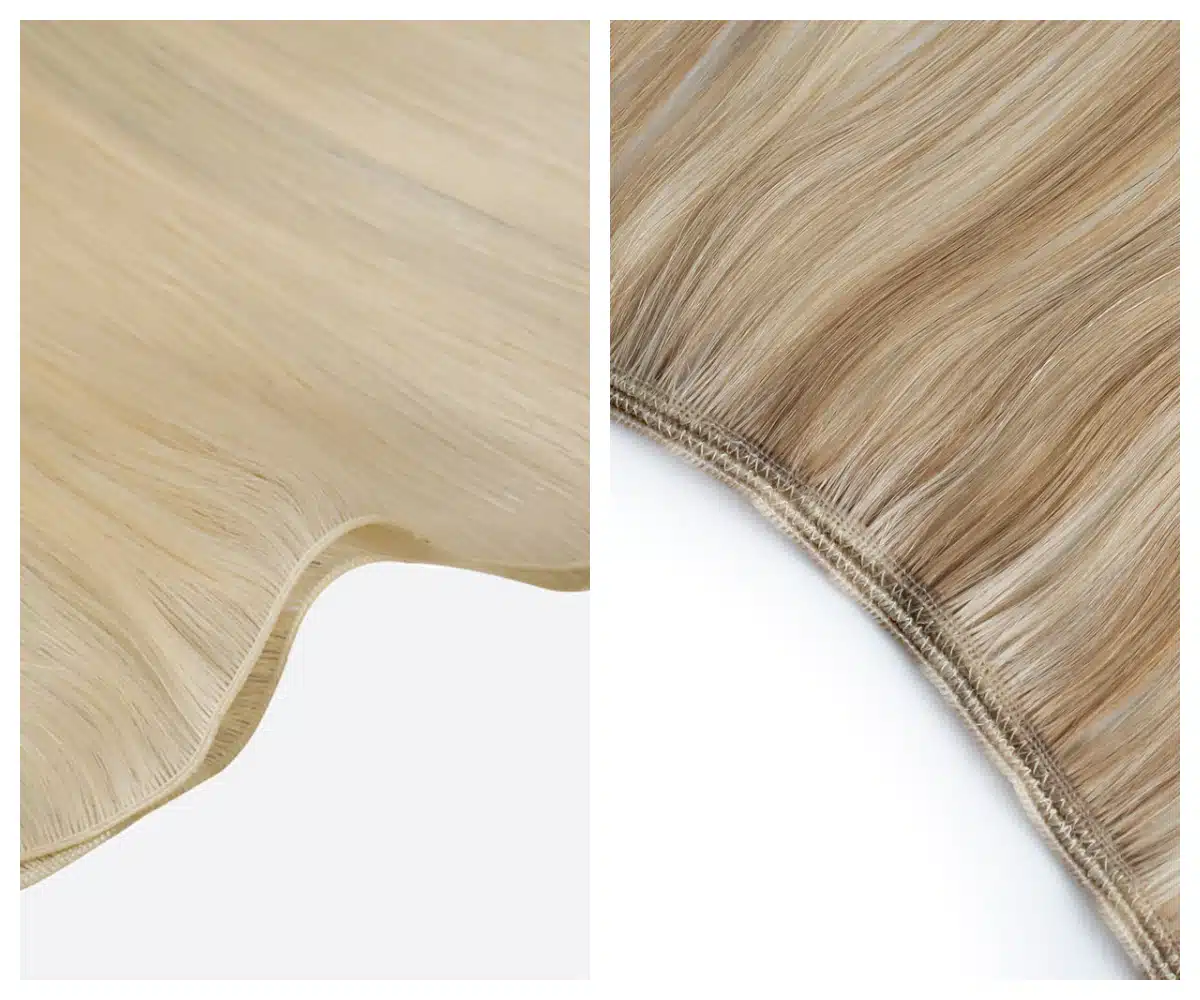
A weft is basically a curtain of hair joined at the top. But inside this family, the construction can change a lot.
1. Regular Machine Wefts
This is the traditional machine-sewn weft. It is strong, durable, and can usually be cut without too much shedding.
Regular machine wefts are practical, versatile, and still very relevant for wholesale buyers.
2. Volume Wefts
Volume wefts use more hair in the same-sized weft space. This gives more fullness with fewer pieces.
This is useful for clients who want a bigger result without needing too many rows or too many separate wefts.
3. Hand Tied Wefts
Hand tied wefts are made by hand and have a thinner, lighter top. They lay flatter and are less bulky than classic machine wefts.
This is one of the most important luxury weft categories. But they should not be cut casually, so planning matters more.
4. Genius Wefts
Genius wefts combine the thin top of hand tied wefts with the cuttable flexibility of machine wefts. They are designed to feel more comfortable and solve many of the old weft problems.
This is one of the biggest weft innovations in recent years, especially for high-end salons.
5. Flat Wefts
Flat wefts are thinner, neater, and more flexible than traditional wefts. They sit flatter to the scalp and can usually be cut safely.
This type works well when U want a cleaner top with less bulk.
6. Volume Genius Wefts
Volume genius wefts combine the fullness of volume wefts with the invisible feel of genius wefts. They are designed for buyers who want thickness and comfort together.
This is a useful category for premium salons and brands serving clients who want dense results.
7. Butterfly Wefts
Butterfly wefts use evenly spaced holes across the weft strip. These holes make it easier for a needle to pass through during installation.
The main value here is speed and convenience. It can reduce installation time and improve workflow.
8. Invisible Tape Weft
This type appears in both tape and weft discussions because it blends both ideas. It uses a sleek weft strip with pre-taped installation and aims for a more invisible look.
This is one of the newest and most commercially interesting crossover products.
9. Long Tape Weft Hair Extensions
Long tape weft hair also sits in this crossover category. It is designed for faster install and more efficient full-head work.
This is useful when U want speed without moving fully into classic tape-in structure.
Why wefts matter
If U only tell readers “there are machine wefts and hand tied wefts,” U miss most of the real market. The weft category has changed a lot, and newer sub-types now matter just as much as the classic ones.
| Weft Type | Best For | Main Benefit |
|---|---|---|
| Regular Machine Weft | General salon use | Strong and versatile |
| Volume Weft | Fuller installs | More density with fewer pieces |
| Hand Tied Weft | Luxury services | Thin and lightweight |
| Genius Weft | Premium salons | Thin top + cuttable |
| Flat Weft | Lower bulk | Flexible and neat |
| Volume Genius Weft | High-density premium installs | Thick yet comfortable |
| Butterfly Weft | Faster sewing installs | Easier needle pass-through |
| Invisible Tape Weft | Fast and hidden installs | Tape-weft hybrid |
| Long Tape Weft | Efficient full-head installs | Time saving |
#4 Temporary Hair Extensions
Temporary hair extensions are important because not every client wants a long-term method. Some clients want change without commitment.
This family includes clip-ins, ponytail pieces, halo hair, and more advanced temporary systems.

1. Classical Clip In Hair
This is the standard clip-in method. It is easy to apply, easy to remove, and ideal for quick volume or length.
It remains one of the most important retail categories in the market.
2. Lace Clip In Hair
Lace clip-ins use lace as the base. This creates a softer and more natural blend.
This is a more refined version of traditional clip-ins.
3. Seamless Clip In Hair
Seamless clip-ins use a thin PU strip. The hair is injected into the strip so the top lies flatter against the scalp.
This is one of the strongest temporary options for clients who want a more hidden finish.
4. Invisible Clip In Hair
Invisible clip-ins take the seamless idea further. The hair is injected into an ultra-thin PU strip for a very discreet top area.
This is one of the most advanced clip-in categories in the temporary market.
5. Ponytail Hair
Ponytail hair is designed to wrap around or attach to the client’s own ponytail. It adds instant volume, length, and style.
This is a strong category for event wear, e-commerce, and beauty retail.
6. Halo Hair
Halo hair uses an invisible wire around the crown. It does not need clips, glue, or sewing.
This is one of the gentlest temporary methods and a strong choice for clients who want very easy daily use.
Why temporary hair matters
Temporary hair is not “low level.” It simply serves a different need. For many brands and salons, temporary products are a key revenue line because they are easy to retail and easy to understand.
| Temporary Type | Best For | Main Benefit |
|---|---|---|
| Classical Clip In | Quick changes | Easy and familiar |
| Lace Clip In | Softer blend | More natural base |
| Seamless Clip In | Fine hair, hidden top | Flat PU strip |
| Invisible Clip In | Maximum discretion | Ultra-thin injected top |
| Ponytail Hair | Instant styling | Fast glam effect |
| Halo Hair | Low commitment | No clips, glue, or sewing |
#5 Hair Bulk
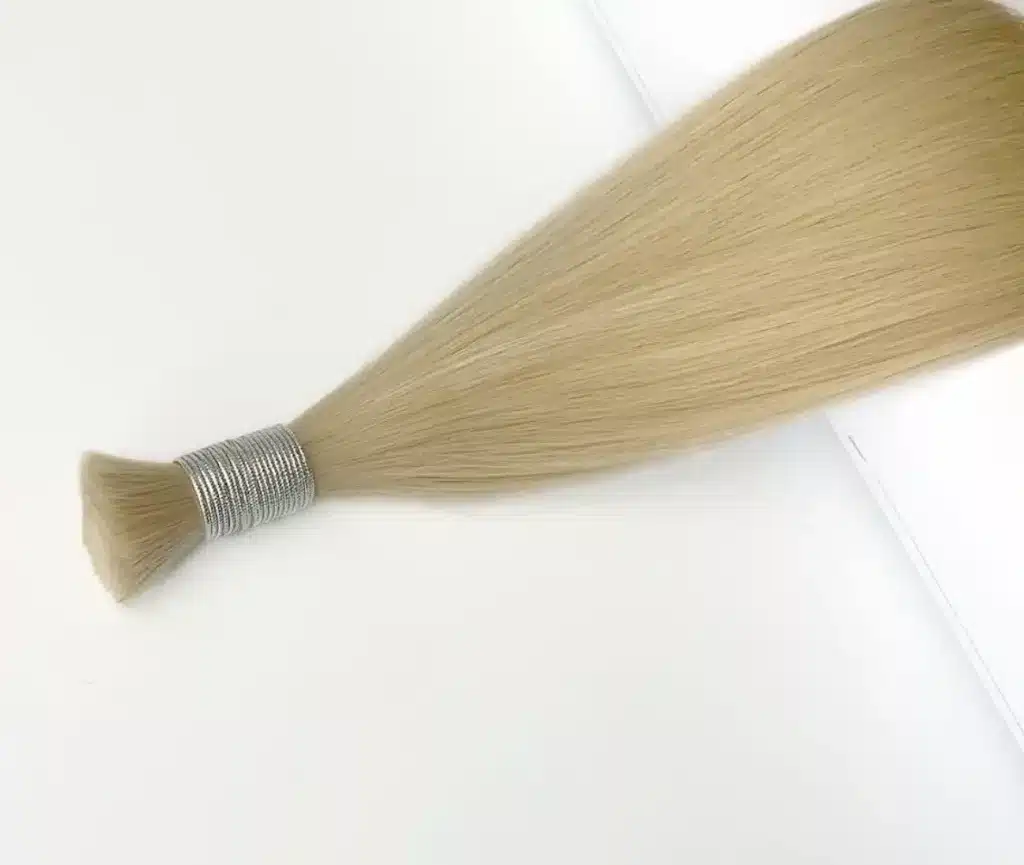
Hair bulk means loose hair, not pre-made into wefts, tips, or clips. This category matters because it gives more installation freedom.
Instead of buying a finished extension method, U buy the hair material itself and apply it in different ways.
1. Cotton String Method
This method uses cotton string to tie the bulk hair to the natural hair. It is a more handcrafted installation style.
This is not the most mainstream method, but it still matters as part of the hair bulk category.
2. V-Light Hair
V-light hair uses glue-based application. This is one of the most talked-about newer methods for very light and detailed placement.
It is often used for finer, more delicate work, especially when visibility matters.
3. Zero Feeling Hair Method
This method installs hair by knotting hair to hair directly. It is designed to feel lighter and more seamless.
This is a niche but interesting direction because it shows how the market keeps developing beyond classic method families.
Why hair bulk matters
Hair bulk is important because it is the most flexible category. It does not lock U into one structure. For professional buyers, it also opens the door to custom systems and future method innovation.
| Hair Bulk Method | Main Feature | Why It Matters |
|---|---|---|
| Cotton String | Tied by string | Traditional custom install |
| V-Light Hair | Glue-based | Detailed light placement |
| Zero Feeling Hair Method | Hair-to-hair knotting | Very light custom feel |
#6 How These Types Fit Different Clients
Knowing the names is useful. But real buying decisions happen when U match the type to the person.
This is where many readers need more guidance. Because the real question is often not “What types exist?” The real question is “Which type makes sense for this client?”
Best for fine or thin hair
For fine or thin hair, lighter and flatter systems usually make more sense. That includes:
- mini tape in hair
- slim tape in hair
- invisible tape in hair
- seamless clip in hair
- invisible clip in hair
- nano ring hair
Best for thick hair
For thick hair, U often need more density and stronger blend support. That includes:
- volume wefts
- hand tied wefts
- genius wefts
- volume genius wefts
- U tip hair
- I tip hair
Best for fast salon installs
If speed matters most, the strongest categories are:
- classical tape in hair
- invisible tape in hair
- invisible tape weft
- long tape weft hair extensions
- twin tab hair
Best for low commitment
If the client does not want semi-permanent wear, the best categories are:
- classical clip in hair
- seamless clip in hair
- ponytail hair
- halo hair
#7 What This Means for Buyers
This article is not only for end users. It also matters for professional buyers.
If U are a salon owner, educator, wholesaler, or brand, U should not treat “hair extensions” as one simple product line. The market is far too segmented for that.
%hair extensions buyer guide by category
A stronger way to think about it is this:
- tape in hair = fast and flat systems
- keratin hair = strand-by-strand long-wear systems
- hair weft = density and row-based systems
- temporary hair = retail and low-commitment systems
- hair bulk = custom and advanced installation systems
Once U see the market this way, product planning becomes much easier.
My Opinion
If U ask which category matters most, I would not give only one answer. I would say the market now has five real families, and each one solves a different need.
Tape in hair is strong for speed and comfort. Keratin hair is strong for strand-by-strand work. Hair weft is strong for density and salon luxury services. Temporary hair is strong for flexibility and retail sales. Hair bulk is strong for customization and future method development.
But I think one thing stays the same across all of them: method does not decide quality by itself. Hair material still matters most. If the hair is poor, even the most advanced extension type will not perform like a premium product.
FAQ
What are the main types of hair extensions?
The main types of hair extensions are tape in hair, keratin hair, hair weft, temporary hair extensions, and hair bulk.
What is the most popular type of hair extensions?
Tape in hair, hand tied wefts, genius wefts, U tip hair, and clip-ins are among the most popular categories, depending on the market and client type.
What is the difference between temporary and permanent hair extensions?
Temporary hair extensions can be removed daily, like clip-ins and halo hair. Permanent or semi-permanent methods stay in for weeks or months, like tape-ins, keratin hair, and wefts.
Which type of hair extensions is best for fine hair?
Mini tape in hair, slim tape in hair, invisible tape in hair, seamless clip in hair, and nano ring hair are strong options for fine hair.
What are the newest types of hair extensions?
Some newer types include invisible tape weft, long tape weft hair extensions, twin tab hair, butterfly wefts, volume genius wefts, V-light hair, and zero feeling hair method.
Conclusion
The different types of hair extensions are much broader than most people think. Once U understand the five main families and their sub-types, U can choose more clearly, sell more professionally, and build a stronger extension product line.