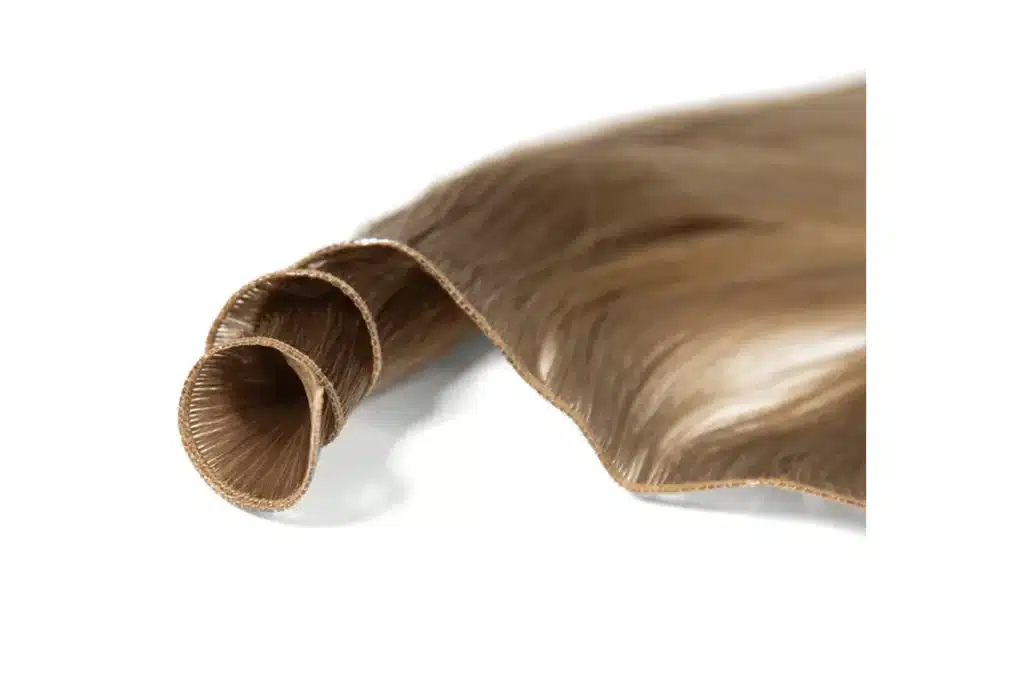
Do you keep scrolling nano hair extensions before and after photos and wonder if your hair can look that natural? Do you want more volume without bulky bonds? You can get a clean result, but you need the right nano method first.
Nano hair extensions can create a very natural before and after because the attachment point is tiny and sits close to the hair. The best results come from correct strand weight, correct placement, and steady maintenance. If you pick the right nano tip style and follow root-safe care, the “after” can look like real hair growth.

I will explain the correct nano definition, how it works, what the before and after means, how long it lasts, who it fits, who should avoid it, and how you care for it without stress.
What are nano hair extensions?
Have you heard “nano” and thought it means a tiny ring on top of the extension? Do you feel confused because some brands show a plastic tip, while others show a tiny flat metal ring? You are not alone.
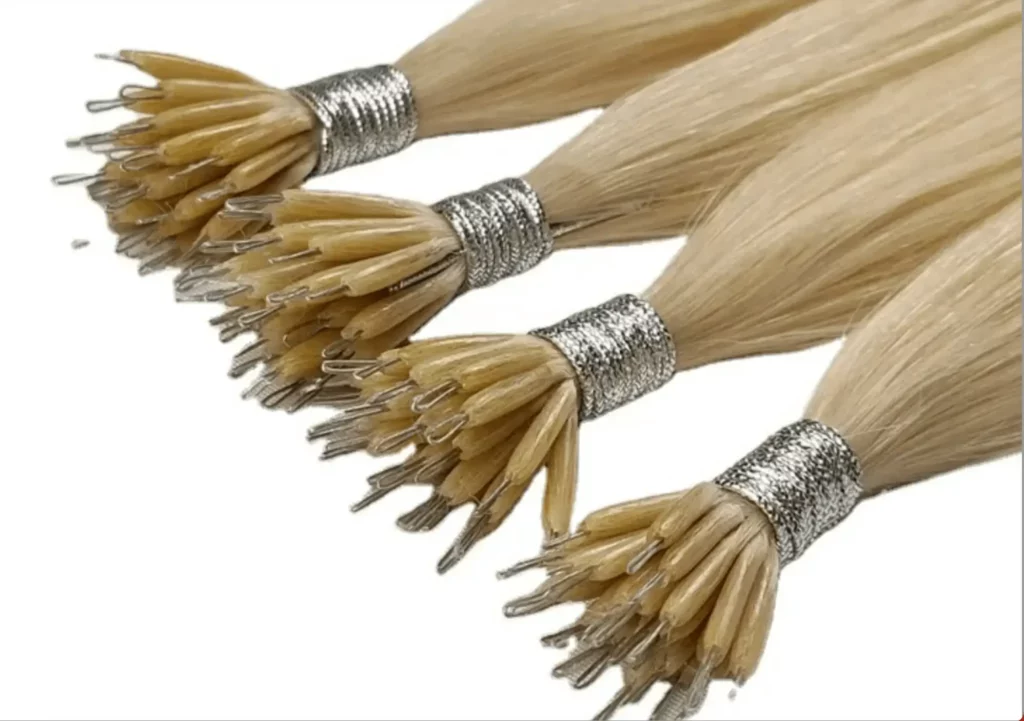
Two common nano tops you will see in salons
1) Plastic nano tip ( F tip hair)
This is a small plastic tip at the top of each strand. Your stylist uses a tiny nano ring to clamp the tip together with your natural hair. The ring is the fastener. The tip is the insert.

2) Metal flat Nano ring
This is a tiny flat metal ring already on the extension strand. Your stylist threads your natural hair into that flat ring and clamps it. Many clients like the flat profile because it can sit neatly when mapped well.
A simple “feel” expectation
Nano should feel light when the strand weight matches your hair. Nano should not feel like heavy pulling.
| Nano type | What you see on the extension top | What secures it | What you should expect |
|---|---|---|---|
| Plastic nano tip | Small plastic tip | Nano ring clamps tip + hair | Very discreet when sized right |
| Metal flat ring | Tiny flat metal ring | Flat ring clamps hair | Flat profile when placed well |
How do nano hair extensions work?
Do you want to know what holds the hair in place day after day? Do you worry the strands will slip out? The hold is mechanical, and the method depends on precision.
Nano hair extensions work by securing an extension strand to a small section of your natural hair using a tiny clamped connection point. If your set uses a plastic nano tip, the stylist inserts the tip into a nano ring with your hair and clamps it. If your set uses a metal flat ring, the stylist threads your hair into the flat ring and clamps it. In both cases, the grip comes from the clamp and the balance of hair section size and strand weight.
What a good install is trying to achieve
A good install is trying to do three things at the same time:
- Your natural hair section supports the extension strand
- The connection sits close to the scalp without pinching
- The clamp is firm without crushing hair
Why people get problems
Most problems come from one mismatch. A mismatch can be section size, ring size, clamp pressure, or placement.
What you can ask your stylist before the first strand goes in
You can ask:
- Are you using plastic nano tip or metal flat ring?
- What strand weight will you use for my hair density?
- How often will I need a move-up?
| Install variable | If it is correct | If it is wrong | What you may notice |
|---|---|---|---|
| Section size | Matches strand weight | Too small or too big | Tightness or slipping |
| Placement height | Close but comfortable | Too high or too low | Itch, poke, or twisting |
| Clamp pressure | Secure and smooth | Too loose or too hard | Fallout or breakage risk |
| Strand weight | Feels light | Feels heavy | Soreness or stress |
A safety note I always share
You should not try to clamp or adjust rings at home. A small wrong squeeze can cut hair. A quick salon check is safer.
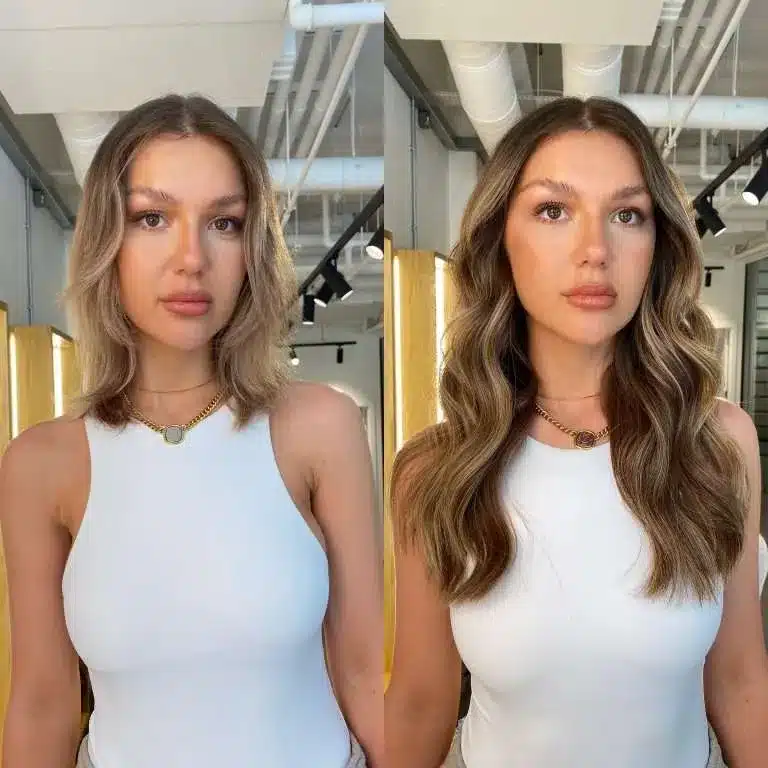
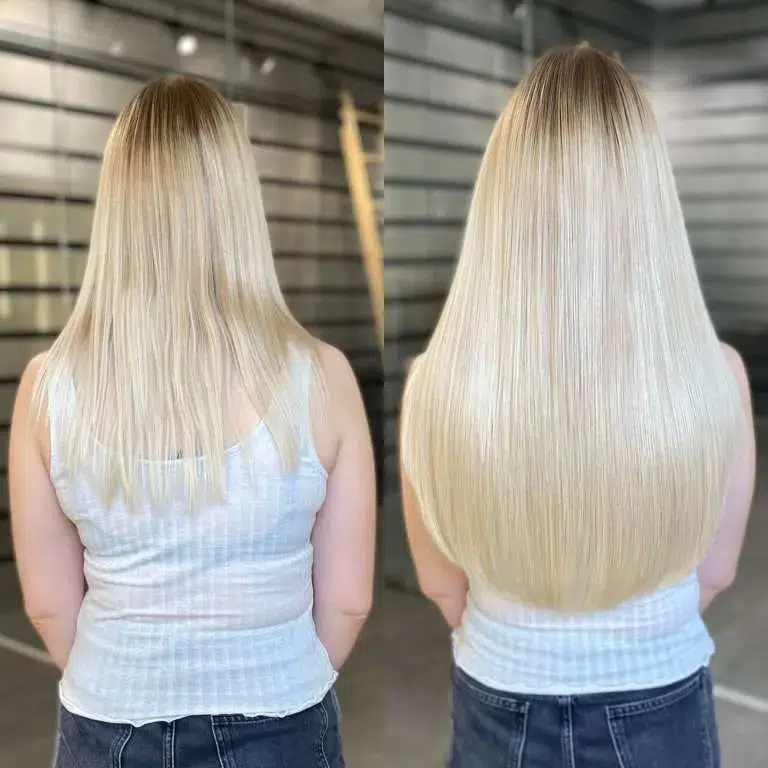
Nano hair extensions before and after
Do you want your “after” to look like you, just upgraded? Do you want the ends to look full, not see-through? A realistic before and after is about shape, density, and blend.
Nano hair extensions before and after usually shows fuller ends, more volume through the mid-length, and a smoother overall outline. The best after result looks natural because the connection points are tiny and the mapping follows your head shape. The after should not look bulky. The after should not look like a helmet. The after should look like healthy hair, with a stronger silhouette.


How long do nano hair extensions last?
Do you want a clear schedule so you can plan your life? Do you want to avoid the “sudden matting” surprise? Nano is wearable for weeks, but you still need regular maintenance.
Nano hair extensions often last around 6–10 weeks before most people need a move-up. Your natural hair grows, so the connection point moves down. When it moves down, it can twist more and collect shed hair near the root area. If you wait too long, tangles can become mats. That makes removal harder and more stressful.
What changes over time
- Week 1–2: the set feels new, and you adjust to brushing
- Week 3–5: the set feels normal, and routine matters more
- Week 6–8: twisting risk increases, and move-up timing matters
- Week 9–10+: matting risk increases, and comfort can drop
What controls your real timeline
Your timeline is not the same as your friend’s timeline. It depends on:
- Hair growth speed
- Scalp oil level
- Workout and sweating
- Brushing habits
- Strand weight and mapping quality
| Factor | If it is high | What can happen | What you can do |
|---|---|---|---|
| Fast hair growth | Yes | Rings drop faster | Move-up earlier |
| Oily scalp | Yes | More slip risk | Keep root area clean |
| Heavy workouts | Yes | More tangles | Brush more and dry roots |
| Fine hair | Yes | Higher tension risk | Use lighter strand weight |
A timing tip that protects your hair
If you feel more twisting at the roots, you should not wait. You should book a check before the knots form.
Who is most suitable for nano hair extensions?
Do you want discreet points and flexible styling? Do you want a method without tape and without melting keratin? Nano can be a great match, but only when your hair can support it and your routine is stable.
Nano hair extensions often suit clients who want natural movement, a refined look, and strand-by-strand customization. Many clients with fine to medium density like nano because the connection can be small and neat. Clients who can follow brushing and maintenance do well. Clients who want a “low effort” method often struggle.
Best fit profile
- You want volume, length, or both, with a natural blend
- You can brush daily in sections
- You can dry your roots after washing
- You can book move-ups on time
- You want a discreet method
Best fit hair types
Nano can work on many textures. Your stylist should match texture and strand weight to your hair. You should not try to “overfill” fine hair.
| You are a good match if | Why it works | What you should confirm |
|---|---|---|
| You have healthy fine hair | Tiny points can blend | Light strand weight plan |
| You have medium density hair | Easy support and comfort | Mapping for your head shape |
| You style your hair often | Flexible movement | Heat-safe styling rules |
A question you can ask yourself
Can you commit to maintenance as part of your beauty routine? If yes, nano can feel worth it.

Who is not suitable for nano hair extensions?
Do you have a very fragile hairline? Do you hate brushing and move-up appointments? Do you use scalp oils daily and you will not change that habit? Nano may not be your best option.
Nano hair extensions may not suit clients with fragile hair, active scalp problems, or clients who will delay maintenance. The connection is small, so it needs a clean grip and balanced tension. If your hair is weak, a point connection can stress it. If you skip move-ups, twisting and matting can build fast.
Common “avoid” situations
- Very weak hairline or traction history
- Active scalp irritation, sores, or strong sensitivity
- Severe bleach damage and elastic breakage
- High shedding phases
- You plan to do home adjustments or removal
Routine red flags that matter
- You often sleep with wet hair
- You do not brush daily
- You avoid salon maintenance visits
These habits increase matting risk.
| Risk situation | What can happen | What you should do instead |
|---|---|---|
| Fragile hairline | Breakage risk | Ask about lower-tension methods |
| Very oily scalp | Slip risk | Discuss methods that tolerate oil better |
| Skipping move-ups | Matting and hard removal | Choose a method you can maintain |
| DIY mindset | Hair loss from pulling | Keep all adjustments professional |
A calm truth
A method is not “bad.” A mismatch is bad. When you pick the match, results become easier.
How to care nano hair extensions?
Do you want your nano set to stay smooth for weeks, not just day one? Do you want fewer tangles and fewer slipped strands? Your care routine is the main control you have.
To care for nano hair extensions, you should brush daily in sections, keep the root area clean, dry your roots after washing, and secure hair for sleep. You should also avoid heavy oils and masks near the connection points. The goal is simple: less slip, less twist, less matting.
Brushing rules that protect your roots
- You should brush ends first, then move upward
- You should hold the hair near the root while brushing
- You should brush before washing and before sleep
This reduces pulling on the connection.
Washing and drying rules
- You should shampoo the scalp gently
- You should rinse longer than you think you need
- You should not rub roots aggressively with a towel
- You should dry roots after washing
Wet roots and friction create knots faster.
Product placement rules
- Conditioner belongs on mid-length and ends
- Oils belong on ends only
- You should keep heavy product away from the connection area
| Care habit | What it prevents | Why it works |
|---|---|---|
| Section brushing daily | Root knots | Shed hair does not collect |
| Dry roots after wash | Matting | Damp hair tangles faster |
| No oils near connections | Slipping | Grip stays stronger |
| Sleep braid or low pony | Twisting | Hair stays aligned overnight |
A quick sleep checklist
- Hair is fully dry
- Hair is loosely secured
- Pillowcase is smooth if possible
This alone can reduce many problems.
My opinion
I see the best nano hair extensions before and after results when the method is explained clearly before install. You should know if your set is plastic nano tip or metal flat ring. You should also know your maintenance schedule before you pay. Nano can look very refined because the connection is small, but small connections need good habits. If you want a discreet look and you can commit to move-ups and brushing, nano can be a smart choice.
FAQ
Do nano hair extensions damage your hair?
They can if the strand weight is too heavy, sections are too small, or maintenance is delayed. They can be safe when the fit and routine are correct.
How often will I need a move-up?
Many clients plan around 6–10 weeks, but hair growth and lifestyle can change the timing.
Can I use hair oil with nano extensions?
You can use oil on ends. You should avoid oil near the connection points because it can increase slipping.
Why do I get tangles near the roots?
The most common reasons are sleeping with damp hair, not brushing daily, and waiting too long for maintenance.
Can I swim with nano hair extensions?
You can, but you should rinse after swimming, detangle gently, and keep roots clean and dry after.
Conclusion
Nano hair extensions can create a natural before and after with fuller ends and better shape, but the method must be correct and the routine must be steady. When you match nano type and care to your lifestyle, the result can look very real.