You love how your extensions look. Then bedtime arrives, and the scalp starts to ache. Have you ever thought, “Why does sleeping with hair extensions hurt so much?”
Sleeping with hair extensions hurts when there is too much tension, poor sectioning, bulky placement, or you sleep directly on the attachment points. The pain should ease in 1–3 days for most people. If pain is sharp, causes headaches, or feels worse each night, your stylist should check the install.

This is not a “just deal with it” problem. You can fix it. In the next sections, you will see the real reasons behind the pain, how long it should last, and what you can do tonight to feel better.
Why Sleeping With Hair Extensions Hurts?
When extensions hurt at night, the pain usually comes from pressure or pull. Night time makes it worse because your head presses on the scalp for hours. Your hair also shifts when you turn, so attachments can tug in small repeated movements.
Why sleeping with hair extensions hurts usually comes down to one of four things: install tension, wrong placement, too much weight for your hair density, or sleeping habits that create pulling. Mild tenderness can be normal. Strong pain is not something you should accept.
Dive deeper
Pain is information. Your scalp is telling you that something is pulling too hard or pressing too much. Night time turns small issues into big discomfort because the pressure lasts for hours. The first step is to identify which “pain type” is happening.
1) Pressure-point pain
Pressure-point pain feels like a sore spot when you lay on one side or on your back. This is common with beads, knots, or thicker wefts. The attachment itself may be fine, but your sleep position presses right on it. This pain often changes when you move your head to a different position.
2) Tension pain
Tension pain feels like a constant pulling, sometimes with a headache feeling. This can happen when sections are too tight, braids are too tight, or the stylist took too much natural hair into one point. It can also happen when you tie your hair too tight before bed. Tension pain is the most important type to catch early.
3) Weight mismatch pain
Weight mismatch happens when your natural hair is fine, but the extension weight is heavy. Your scalp carries that load. At night, your head presses the weight into the scalp even more. This can also create soreness at the perimeter and crown.
4) Friction and shifting pain
Friction does not feel like “pain” at first. It feels like tugging. When you toss and turn on a cotton pillow, the hair catches and pulls in micro-movements. After hours, the scalp can feel sore. This is why silk or satin matters.
This table helps you identify the root cause quickly:
| Pain feeling | What it often means | What you should notice |
|---|---|---|
| Sore only when you lay on it | Pressure point | One side hurts more |
| Constant pulling or headache | Too much tension | Feels worse when hair moves |
| Tender everywhere | Weight mismatch or tight styling | Whole scalp feels “loaded” |
| Worse at nape | Friction and tangling | Knots form near collar |
If you feel sharp pain, numbness, or strong headache, you should not wait it out. A quick install check can prevent hair stress and scalp irritation.
How Long Does It Take For Extensions To Stop Hurting?
You might hear people say “it always hurts for a week.” That is not a good rule. Mild tenderness can happen, but strong pain should not be normal.
For most people, extensions stop hurting in 24–72 hours as the scalp adjusts. Some methods can take up to 5–7 days to feel completely normal. If pain gets worse after day two, or if headaches continue, the install likely needs an adjustment.
Dive deeper
Your scalp can adapt, but only if the install is within a safe tension range. So the time frame depends on two things: the method and the quality of the install. Your hair density also matters. Fine hair usually needs lighter weight and more careful placement.
Typical adjustment timeline
Most clients report this pattern:
- Night 1: feels tight, feels “new,” pressure is noticeable
- Day 2: feels better, less pulling, easier to sleep
- Day 3: feels mostly normal
A small amount of tenderness can still show up when brushing or when you lay directly on a bond. That can be normal.
When the timeline is longer
Some installs can take longer to settle:
- thick sew-in braid bases can feel firm at first
- beaded rows can feel bumpy at first
- very full installs can feel heavy at first
Even then, the pain should trend down, not up.
When pain is a red flag
Pain is a red flag when it has these signs:
- headache that builds each night
- burning sensation at the scalp
- numbness or tingling
- pain in one spot that feels sharp
- bumps or swelling
These signs can suggest too much tension, poor sectioning, or pressure on sensitive areas. You should contact your stylist. A small adjustment in the first week is common and can save the experience.
This table shows “normal” vs “needs help”:
| Time after install | Normal feeling | Needs stylist check |
|---|---|---|
| First 24 hours | Mild tenderness, awareness | Strong headache or sharp pain |
| 48 hours | Getting better | Not improving or worse |
| 72 hours | Mostly comfortable | Burning, numbness, swelling |
| 5–7 days | Fully settled | Ongoing pain and pulling |
If you are asking “how long does it take for extensions to stop hurting” because sleep is painful, you should treat that as a sign to get a check. Comfort is part of a professional install.

How To Relieve Pain From Hair Extensions Overnight?
Pain at night feels urgent. You want something that helps right now. The good news is that many cases improve with simple changes, as long as the install is not dangerously tight.
You can relieve pain overnight by reducing tension and reducing pressure points. You should switch to a silk pillowcase, loosen any tight braid or ponytail, and change sleep position so you do not lay on the attachments. If pain is sharp or causes headache, you should contact your stylist the next day.
Dive deeper
Overnight relief is about two actions: reduce pulling and reduce pressure. You do not need many products. You need smart positioning and gentle handling.
1) Loosen your sleep style
If your hair is tied tight, your scalp cannot relax. You should switch to a loose low braid or a loose low pony. The word is loose. Your scalp should not feel lifted.
2) Switch your pillow surface
Cotton grips. Silk or satin slides. If you do not have silk, you can place a satin scarf over your pillow for the night. This reduces tugging from turning.
3) Move the pressure away from the sore zone
If beads or weft points hurt when you lay on them, you should change position. You can try sleeping slightly more forward or slightly more back, so the painful zone is not the “contact point.” A small neck pillow can help some people stay in a comfortable position.
4) Do a gentle scalp calm-down
A cool compress can reduce the “hot tight” feeling. You should keep it short. You should not soak the attachment points. You should not apply heavy oils at the root because oils can cause slip for some methods.
5) Stop brushing aggressively
When your scalp hurts, aggressive brushing makes it worse. You should detangle the lengths gently, then stop. You should hold the hair near the roots when brushing to avoid pulling.
This table shows quick overnight actions:
| Problem at night | What usually helps fast | What you should avoid |
|---|---|---|
| Pressure point pain | Change position + silk | Sleeping directly on beads |
| Tension pain | Loosen style | Tight braid or bun |
| Headache feeling | Stop pulling + call stylist | “It will pass” mindset |
| Nape pulling | Loose braid | Hair left fully loose |
| Hot tight scalp | Cool compress | Heavy root oils |
If pain is severe, you should not force sleep through it. You should contact your stylist. A safe install should feel comfortable at night.

What Sleeping Habits Make Extension Pain Worse?
Sometimes the install is fine, but night habits create the pain. The same install can feel okay in the day and hurt at night because night habits add pressure and friction.
Pain gets worse when you sleep with wet hair, use tight styles, sleep on cotton, or sleep directly on thick attachment zones. These habits create pulling and pressure for hours, and the scalp cannot recover.
Dive deeper
Night habits can turn small tension into real pain. The good part is that habits are easy to change. If you fix these, you often feel better the same night.
Wet hair makes everything harder
Wet hair tangles. Wet hair also tightens as it dries. That tightening pulls at attachments. Wet hair also makes you brush more in the morning, which increases pulling. You should dry the roots and attachment areas fully before bed.
Tight styles pull all night
A tight ponytail or tight top bun adds tension for hours. Extensions already add weight. Tight styles add extra force. You should switch to low-tension styling like a loose braid.
Cotton creates friction
Cotton grabs hair. If you turn at night, the hair catches and pulls. That pull repeats many times. Silk reduces this.
Sleeping directly on attachment zones creates pressure pain
Beads, knots, and thicker wefts can feel painful if you sleep right on top of them. You may need a different sleep position for the first week. Side sleepers often feel this more.
This table gives simple swaps:
| Habit | Why it hurts | Better option |
|---|---|---|
| Wet hair at night | Tightens and mats | Dry fully |
| Tight ponytail | Constant pull | Loose braid |
| Cotton pillow | Grabs and tugs | Silk or satin |
| Hair loose | Nape tangles and pull | Secure gently |
| Heavy oil at roots | Slip and buildup | Keep oils on ends |
You do not need perfect sleep. You just need less pull and less pressure.
Which Extension Types Hurt More When Sleeping?
Not every method feels the same at night. Some methods create more pressure points. Some create more tension risk. Knowing the method helps you know what to adjust.
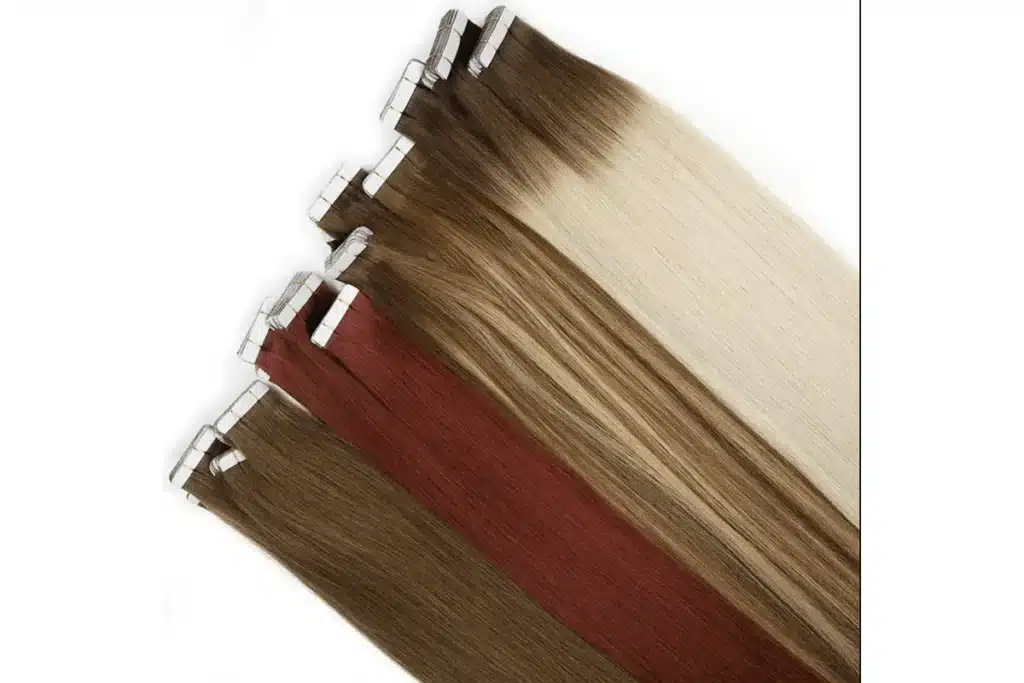
Beaded methods and thick sew-in bases often feel more noticeable at night because they create small pressure points. Tape-ins usually feel flatter, but they can still hurt if they twist or if the hair is pulled tight. Any method can hurt if the install is too tight.
Dive deeper
Method matters, but install quality matters more. A good tape-in install can still hurt if it is placed in a pressure zone. A good beaded row can still feel fine if weight is correct and placement is smart.
Beaded extensions
Beads are hardware. Hardware can press into the scalp. A new bead row often feels bumpy for a few nights. If beads feel sharp, that is not normal. A stylist can adjust bead placement and tension.
Sew-in extensions
Sew-ins rely on a braid base. If the braid base is tight, sleep pain is common. The crown and edges can feel especially sore. A wrap and low friction help, but tension needs a stylist fix.
Tape-in extensions
Tape-ins sit flat, so they usually sleep well. The common issue is twisting and pulling. Another issue is sleeping with hair oily or damp. That can cause shifting and discomfort.
Fusion/keratin tips
Keratin bonds are small but firm. They can poke when you lay on them, mainly in the first week. A loose style and a silk pillowcase reduce the poking feeling.
This table gives a simple comfort view:
| Method | Common sleep issue | What helps most |
|---|---|---|
| Beads | Pressure points | Silk + position change |
| Sew-in | Tight braid base | Wrap + tension check |
| Tape-in | Twist and pull | Loose braid + dry roots |
| Fusion | Poking bonds | Silk + loose style |
If you do not know your method, you can still follow the same rule: reduce pressure, reduce pulling, keep hair dry.
When Should Pain Mean You Need A Stylist Check?
A little tenderness can be normal. But your body has clear warning signs. Those signs should not be ignored.
You should see a stylist if pain is sharp, causes headaches, gets worse after 48 hours, or comes with numbness, swelling, or bumps. These signs can point to excessive tension or incorrect placement, and early adjustment protects your natural hair.
Dive deeper
Many clients hesitate to call a stylist. They worry they are being difficult. But pain is not a small complaint. Pain can be an early sign of tension stress. Tension stress can lead to breakage or thinning if it continues.
Signs that mean “call now”
- headache that does not stop
- pain that wakes you up repeatedly
- sharp pain in one spot
- numbness or tingling
- burning feeling
- bumps, redness, or swelling
These signs are not “normal adjustment.” These signs often point to tension, sectioning issues, or placement in a sensitive area.
Why early adjustment matters
The first week is the easiest time to adjust. A stylist can:
- loosen a too-tight bead or braid area
- replace a tape tab that folded
- re-section a heavy area
- remove and reinstall a problem piece
These changes can turn a painful install into a comfortable one quickly.
This table shows a simple decision:
| Symptom | Wait or check? | Why |
|---|---|---|
| Mild tenderness | Wait 24–72 hours | Scalp adapts |
| Pressure pain only in one position | Try position change | Pressure point |
| Sharp pain | Check now | Risk of stress |
| Headache | Check now | Tension sign |
| Numbness/swelling | Check now | Not normal |
You should feel confident saying this: a luxury look should also feel comfortable.

My opinion
Sleep pain is usually not a mystery. It is usually tension or pressure. The best fix starts with a simple routine. Hair should be dry. Hair should be detangled. Hair should be secured loosely. Silk should replace cotton.
If pain stays strong after two nights, a stylist check is the smartest move. A small adjustment early is better than weeks of discomfort. Comfort protects both your scalp and your natural hair.
FAQ
Why sleeping with hair extensions hurts more at night than in the day?
Night adds hours of pressure and movement. Your head presses on attachments, and turning creates repeated pulling.
How long does it take for extensions to stop hurting?
Most people feel better in 1–3 days. Some methods can take up to a week to feel fully normal. Pain should trend down.
How to relieve pain from hair extensions overnight?
You can loosen your sleep style, use silk, change sleep position, and keep hair dry. You should contact your stylist if pain is sharp or causes headaches.
Is it normal to have a headache after extensions?
No. A headache often suggests too much tension. A stylist should check the install.
Can sleeping with wet hair make extension pain worse?
Yes. Wet hair tangles and tightens as it dries. This increases pulling at attachment points.
What is the best way to sleep to avoid pain?
A loose low braid on a silk pillowcase works well for most people. The style should feel secure but not tight.
Conclusion
Sleeping with hair extensions hurts when tension or pressure is too high. Most discomfort improves in 1–3 days, but sharp pain or headaches need a stylist check.