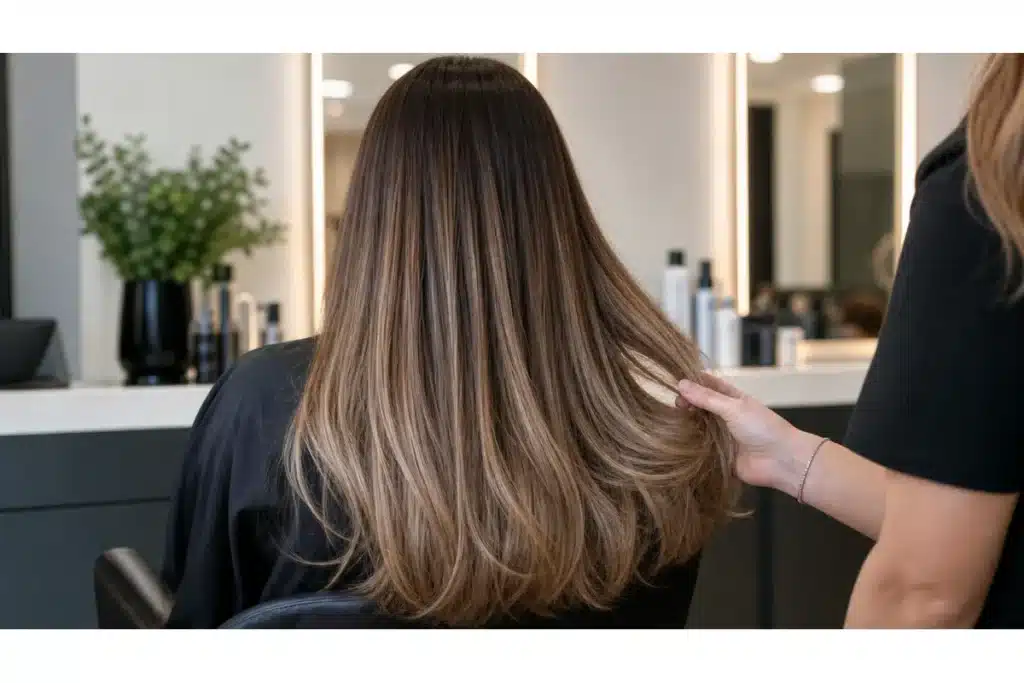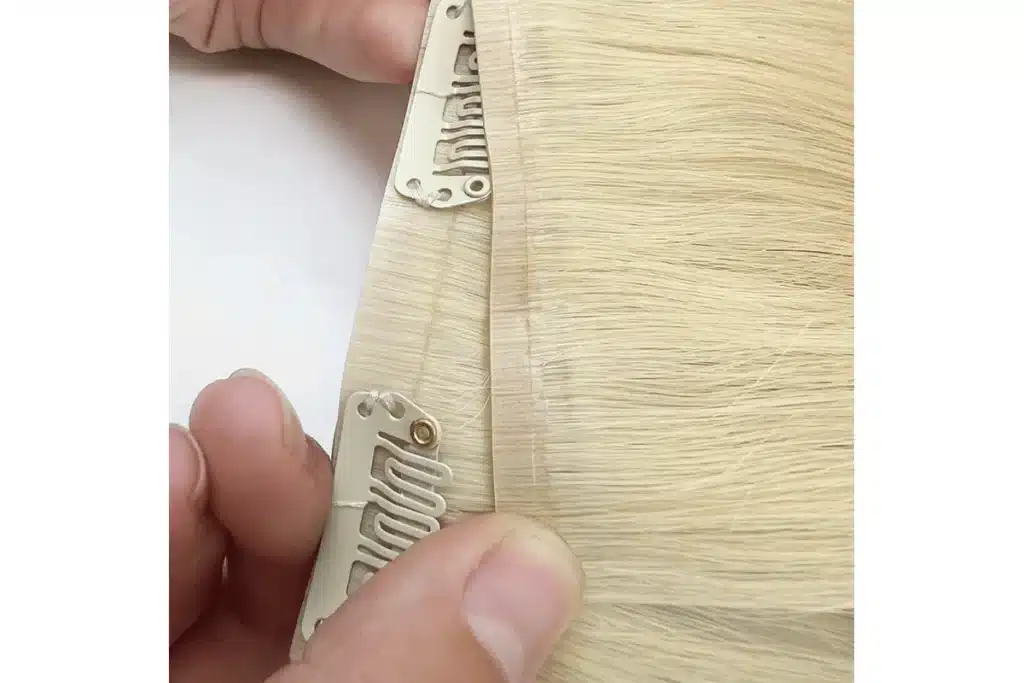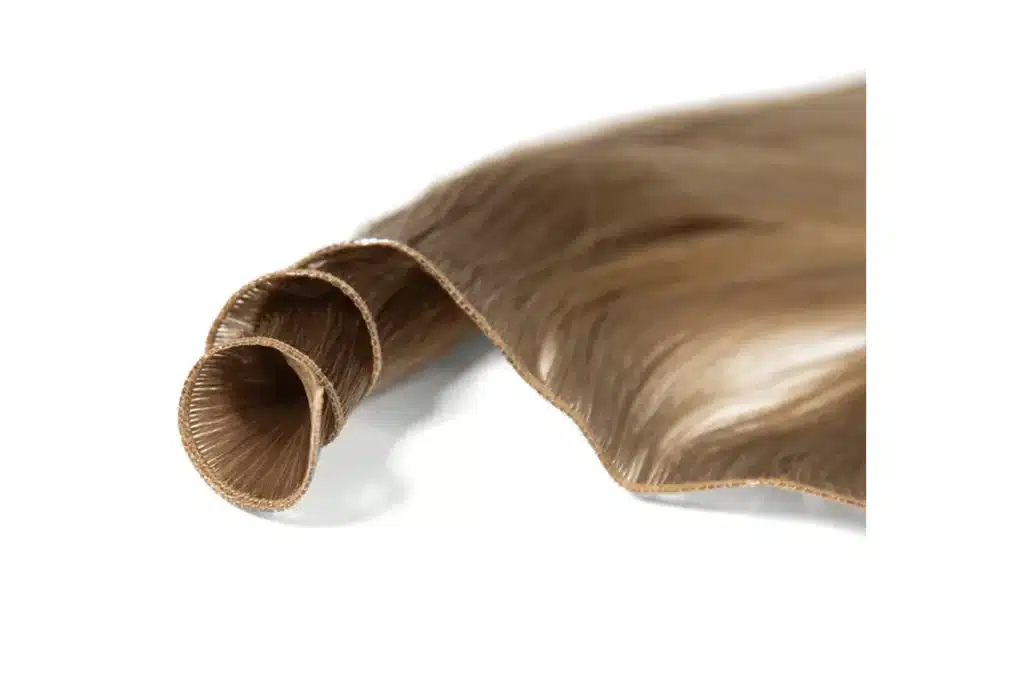
Tape hair can look great, but many salons struggle with the removal and maintenance workload. The sticky cleanup can eat chair time, and it can reduce the client’s comfort during refit appointments. Twin Tabs hair extensions were built to solve that exact pain point.
Twin Tabs hair extensions are a no-adhesive, no-heat extension method that uses a thin polyurethane top and a silicone-ring lock system. The tabs sit flat, install fast, remove cleanly, and allow quick refits. This makes Twin Tabs a practical service for salons that want a clean maintenance workflow and a different option than tape.
This guide explains the structure, the real pros and cons, and the correct install and removal steps that keep retention stable for professional use.
What are twin tabs hair?
Twin Tabs are often discussed in the same conversation as injection tapes and micro wefts because the top looks wide and flat. The attachment logic is different, and that difference changes the workflow.
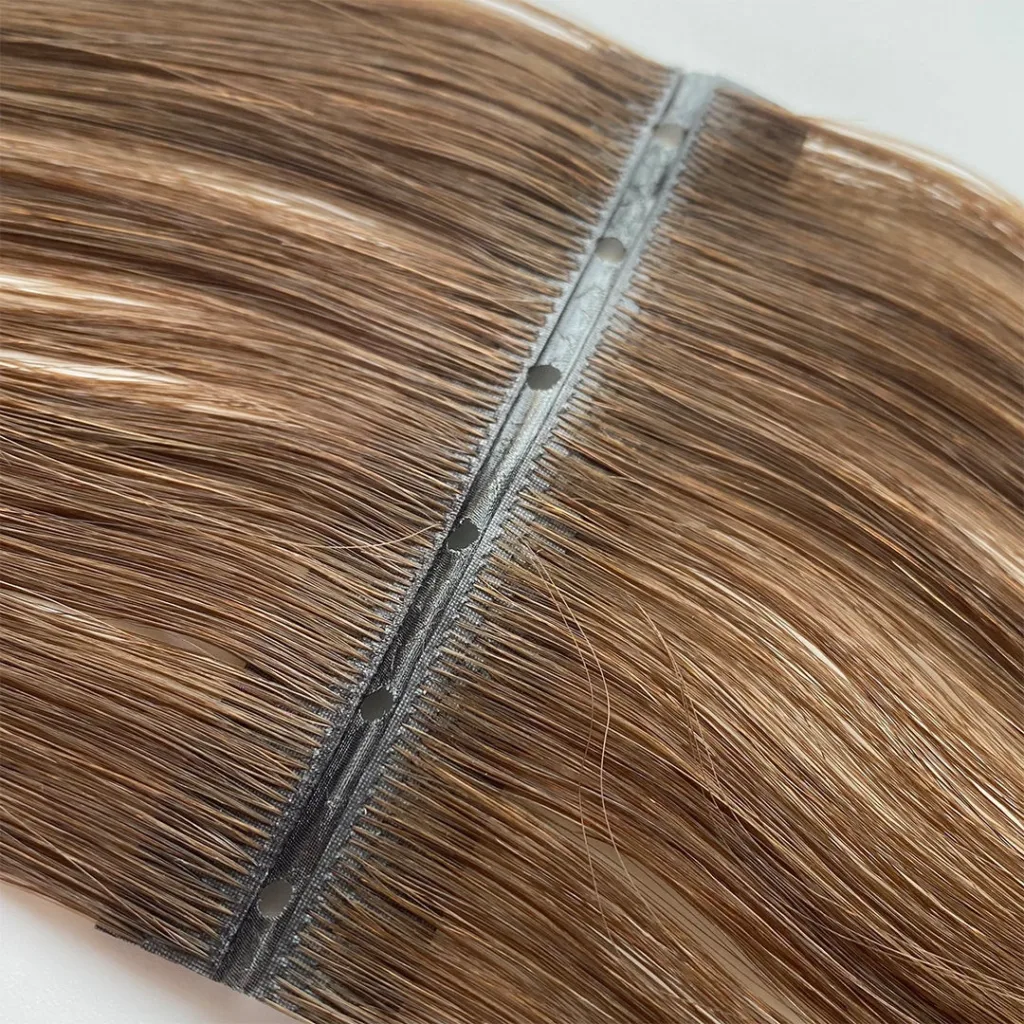
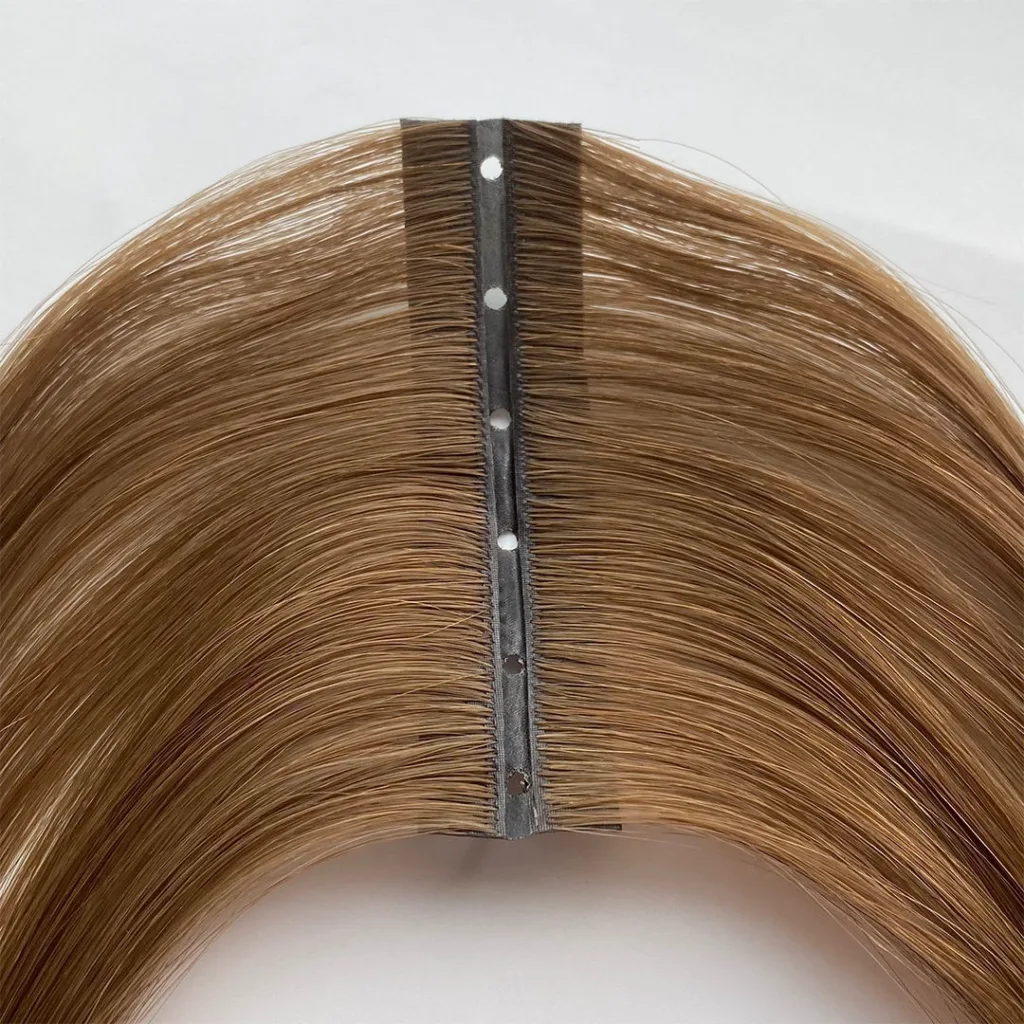
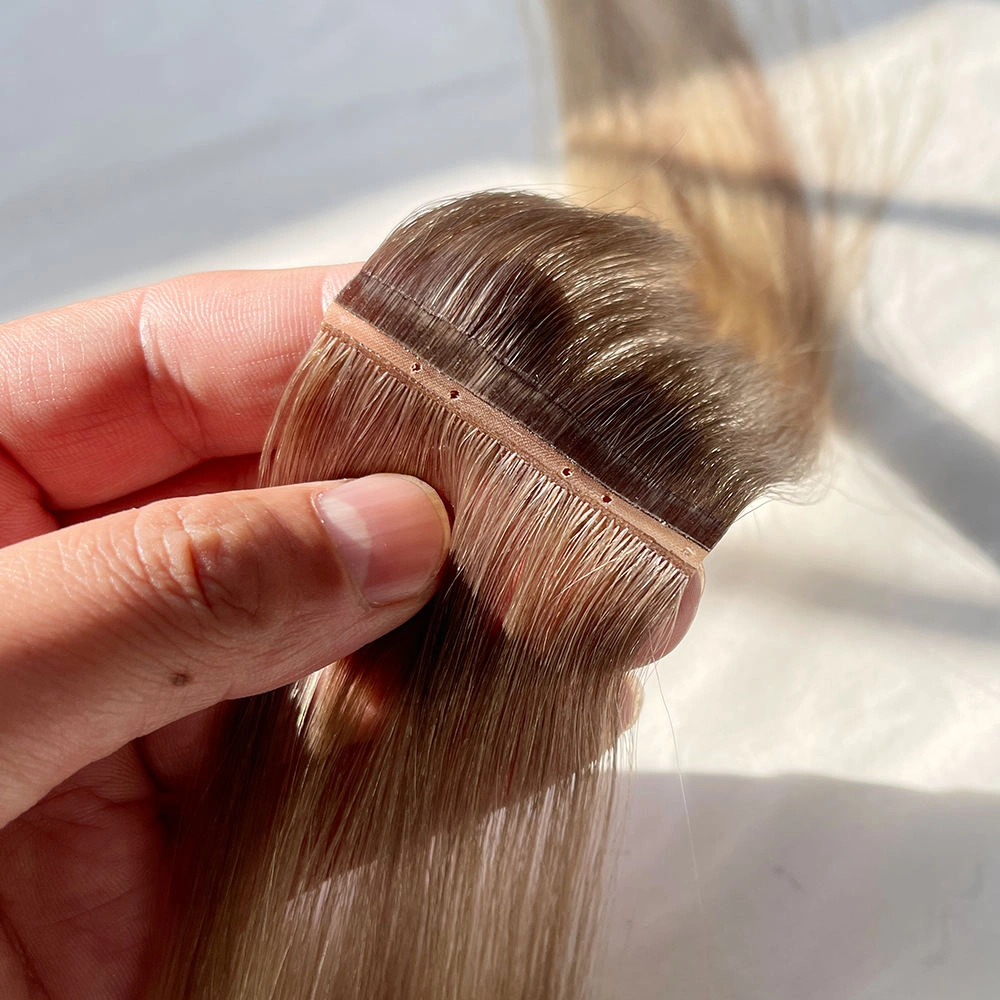
Twin Tabs hair are wide extension panels built on a super-thin polyurethane top with an injected surface that mimics hair growth. They attach to natural hair through pre-cut guide holes using silicone rings, so the hold is mechanical and clean.
The bond and top structure
The polyurethane top holds the hair securely to reduce shedding. The top stays flexible and thin against the head, which helps comfort and blending. The injection moulding on the outside mimics hair growth patterns, which makes the panel less visible inside the hair.
The guide holes and locking points
Many Twin Tabs designs include pre-cut circular guide holes. These holes exist for consistent placement and consistent tension. The holes also allow silicone rings to be positioned in a controlled way. This is the main reason Twin Tabs can be installed and removed quickly.
Panel width and weight planning
In many systems, each tab is about 6 cm wide. This matters for density planning. A wider panel can cover more area, so salons often achieve a full look with fewer pieces compared with narrow tape systems.
Where Twin Tabs fit in a salon menu
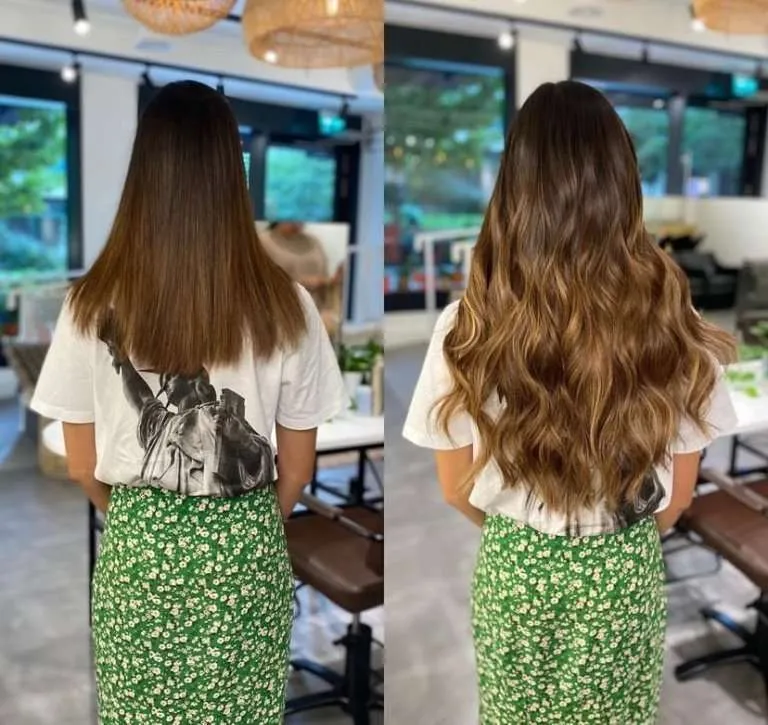
Twin Tabs are useful for quick transformations, volume boosts, and color flashes. They also suit clients who do not want adhesive contact. For clients who need long wear and predictable move-ups, tape-in or keratin systems may still be the better match.
| Item | Twin Tabs Hair | Injection Tape-In | Micro Ring Weft |
|---|---|---|---|
| Base/top | polyurethane panel | polyurethane tape base | sewn weft |
| Attachment | silicone rings through holes | adhesive bond | rings + weft |
| Maintenance mess | low | medium to high | low |
| Install speed | fast | medium | medium |
| Best use | clean refit, volume, color | flat daily wear | daily wear, strong hold |
Twin Tabs should be treated as a ring-lock panel system, not as “tape without tape.”
What are the advantages of twin tabs hair extensions?
Many salons adopt Twin Tabs to reduce maintenance friction. Less adhesive work often means smoother appointments and better client comfort.
Twin Tabs hair extensions offer clean application, clean removal, and fast refit. The flat polyurethane top also supports a discreet finish, and the wider panel can reduce the number of pieces needed for a full result.
Advantage 1: Cleaner maintenance than tape
Tape maintenance can be messy and slow because adhesive must be dissolved and cleaned. Twin Tabs avoid adhesive. That reduces sticky residue and reduces time spent on cleanup.
Advantage 2: Controlled and repeatable technique
Guide holes create fixed attachment points. This supports a repeatable method that is easier to teach across a salon team. Consistency improves when the same sectioning and ring rules are used.
Advantage 3: Flat, flexible feel
The polyurethane top stays thin and flexible. This helps the panel sit closer to the scalp, which improves comfort and blending.
Advantage 4: Wider coverage per unit
A wider panel covers more head area than narrow tapes. This can reduce how many extension units are needed to achieve a thick look, depending on the client’s density and goal.
Advantage 5: Strong use case for color and volume placement
Twin Tabs are very useful for color flashes and targeted volume boosts. The panel format makes placement clean and predictable.
| Advantage | Meaning for salons | Meaning for brands and wholesalers |
|---|---|---|
| no adhesive | less cleanup time | easier product positioning |
| guide holes | easier team training | simpler education content |
| flat top | clean blend | fewer “bulky” complaints |
| wide panel | fewer units per head | simpler inventory planning |
| creative placement | add-on services | more scenarios to sell |
Twin Tabs often win when a salon values speed, cleanliness, and a modern flat finish.
What are the disadvantages of twin tabs hair extensions?
Twin Tabs reduce tape problems, but they introduce new technical rules. Most complaints happen when sectioning, ring size, or placement is not controlled.
Twin Tabs hair extensions can slip if ring technique is weak, can show if placed too close to a part line, and can feel bulky on very fine hair if the panel width is not matched to density.
Disadvantage 1: Sectioning must be neat
The panel relies on clean tension distribution. Messy sections create uneven pull. Uneven pull reduces comfort and can lead to early movement.
Disadvantage 2: Ring choice controls retention
Retention depends on silicone ring diameter, hair section size, and clamp pressure. Under-clamping causes sliding. Over-clamping increases pinch and breakage risk.
Disadvantage 3: Fine hair needs a conservative plan
Fine hair may not hide a wide top well if placement is too high. Fine hair often needs fewer panels placed lower, plus stronger blending control.
Disadvantage 4: Some styles expose attachments
High, tight updos can expose attachment areas. Twin Tabs sit flat, but the panel still needs cover hair. Style planning matters.
| Risk factor | What happens | Practical fix |
|---|---|---|
| messy parting | uneven tension | build a clean grid |
| wrong ring size | slipping or tightness | match ring to section |
| weak clamp | early movement | standardize tool pressure |
| placement too high | panel visible | keep distance from part line |
| too much weight | discomfort | match grams to density |
Twin Tabs perform best when salons build clear rules for section size, placement map, and client aftercare.
How to install twin tabs hair extensions?
A clean Twin Tabs installation depends on preparation, mapping, and consistent locking. The method is fast when each step is controlled.
Twin Tabs hair extensions install by preparing clean hair, placing the panel at the section line, threading natural hair through guide holes, and securing the lock using silicone rings with consistent clamp pressure.
Step 1: Prepare the hair correctly
- Shampoo should remove oil and product build-up.
- Conditioner should stay off the root area.
- Hair should be fully dry before installation.
Step 2: Build a safe placement map
- The top layer should be thick enough to cover the panel.
- The part line and hairline should be protected.
- Row spacing should allow natural movement without exposure.
Step 3: Create a neat section line
- Section lines should be straight.
- Sections should be even across the row.
- Tension should stay consistent from left to right.
Step 4: Position and stabilize the Twin Tab
- The panel should sit flat against the head.
- Section clips can hold the panel in place during threading.
- Alignment should stay parallel to the section line.
Step 5: Thread hair through the guide holes
- The guide holes help control hair intake per lock point.
- The amount of hair pulled through should be consistent.
- Hair should not twist during threading.
Step 6: Lock with silicone rings
- A threader pulls hair through the silicone ring.
- The ring is clamped to close the lock.
- Clamp pressure should be firm but controlled.
Step 7: Secure the ends for a neat finish
- Many systems use outer guide hole zones at the ends.
- Small side sections can be added to these end points.
- End locks help keep the panel edges stable and tidy.
Step 8: Repeat and blend
- Panels are added row by row using the same map.
- Light blending may be done if needed.
- Styling should avoid heavy oils near the attachment.
| Install stage | What to control | Quick check |
|---|---|---|
| prep | clean, dry roots | no slippery roots |
| map | cover hair retained | no exposure at part |
| section | even and neat | consistent tension |
| threading | equal hair intake | holes filled evenly |
| clamping | correct pressure | no sliding on gentle tug |
| finishing | tidy edges | panel sits flat |
This approach keeps the install consistent across a team and improves retention.
How to remove twin tabs hair extensions?
Removal is one of the strongest selling points of Twin Tabs. It is clean and fast when locks are released correctly.
Twin Tabs hair extensions remove by releasing the silicone ring locks, sliding the panel down the hair, brushing through, and preparing the hair for immediate re-application if needed.
Step 1: Detangle before releasing locks
- Brush mid-length to ends first.
- Support the hair above the lock points.
Step 2: Release the silicone rings
- Locate each ring at the guide hole position.
- Release by gentle squeeze to open the ring.
- Avoid pulling before the ring is open.
Step 3: Slide the panel down and off
- The panel should move smoothly once locks are released.
- Resistance usually indicates a lock is not fully open.
Step 4: Brush and cleanse the root area
- Product build-up can still exist without tape.
- Clean, dry roots improve refit stability.
Step 5: Prepare for refit
- A refit can be done straight away if the hair condition is good.
- The same sectioning and ring rules should be used again.
| Removal stage | What not to do | Best practice |
|---|---|---|
| detangle | pull from root | support above lock |
| release | pry with force | open ring gently |
| slide | yank down | slide smoothly |
| cleanse | skip wash | clarify and dry |
| refit | rush sectioning | rebuild clean map |
This clean removal workflow is the reason many stylists prefer Twin Tabs over tape for maintenance-heavy clients.
How long do twin tabs hair extensions last?
Wear time depends on lifestyle, scalp condition, and technique. The method is often positioned as a clean refit system rather than a maximum-wear method.
Twin Tabs hair extensions often suit short to medium wear cycles. Retention improves when sectioning is neat, ring size matches the hair intake, and clients avoid oils near the roots.
Factors that reduce retention
- Oily scalp conditions reduce friction at the root.
- Heavy sweating can soften grip over time.
- Oils and conditioners near the roots increase sliding risk.
Factors that improve retention
- Clean scalp routine and dry roots.
- Correct ring diameter and clamp pressure.
- Controlled brushing patterns near the attachment.
How salons set correct expectations
Many salons position Twin Tabs as a method for clean maintenance, fast refits, and high comfort. This makes client expectations realistic and reduces complaints.
| Factor | Shortens wear | Extends wear |
|---|---|---|
| scalp oil | high | balanced |
| products | oils at roots | no root oils |
| lifestyle | heavy sweat | clean + dry routine |
| technique | weak clamp | consistent clamp |
This approach supports professional selling without over-promising.
Twin tabs hair vs tape-in: what is the real difference?
Twin Tabs and injection tapes both look flat. The difference is the attachment mechanism and the maintenance workflow.
Twin Tabs hair use silicone ring locks through guide holes on a polyurethane top. Tape-ins use adhesive bonding. This is why Twin Tabs can offer cleaner removal and faster refits for many salons.
Why maintenance feels different
Tape maintenance requires solvent, adhesive cleanup, and rebonding. Twin Tabs maintenance focuses on releasing locks and refitting. Chair time becomes more predictable when the team follows the lock workflow.
What skills matter most
Tape needs perfect bonding prep and clean sandwich pressure. Twin Tabs need neat sectioning, correct hair intake through guide holes, and consistent clamping.
Which clients fit each method
Tape suits clients who want flat daily wear and predictable move-ups. Twin Tabs suit clients who dislike adhesives and want a cleaner maintenance story.
| Topic | Twin Tabs Hair | Tape-In Hair |
|---|---|---|
| holding method | silicone ring lock | adhesive |
| removal | release and slide | solvent and slide |
| maintenance | clean refit | sticky cleanup risk |
| key skill | section + clamp | prep + pressure |
| best positioning | clean, fast refit | flat daily wear |
This comparison helps salons choose by workflow and client preference, not by appearance alone.
My opinion
Twin Tabs hair extensions make the most sense as a separate service category. They solve a real maintenance problem for teams that dislike tape removal. They also create new revenue lanes such as quick volume boosts and color flashes. The method performs best when a salon sets clear rules for placement map, section size, ring choice, and clamp pressure. When those rules exist, retention becomes stable and the client experience stays clean.
FAQ
Are twin tabs hair extensions tape-in extensions?
Twin Tabs are not tape-in. They use silicone ring locks through guide holes, not adhesive.
Do twin tabs hair extensions need heat?
Twin Tabs do not need heat. The attachment is mechanical.
Why do twin tabs slip?
Slipping happens when sectioning is messy, ring size is wrong, clamp pressure is weak, or oils are used near the roots.
Can twin tabs be used for color flashes?
Yes. Many salons use Twin Tabs for targeted color placement and volume boosts.
Are Twin Tabs comfortable?
The thin polyurethane top can feel flat and comfortable when the placement map is correct.
Conclusion
Twin Tabs hair extensions use a thin polyurethane top and silicone ring locks to deliver clean installs, clean removals, and fast refits. When sectioning and clamping stay consistent, the method becomes predictable and salon-friendly.
Hibiscus Hair Manufacturer has been dedicated to producing high-quality hair extensions for 25 years and is a recognized leader in the industry. If you are interested in finding a reliable hair extensions supplier and wholesale for your brand, please visit our website for more information: