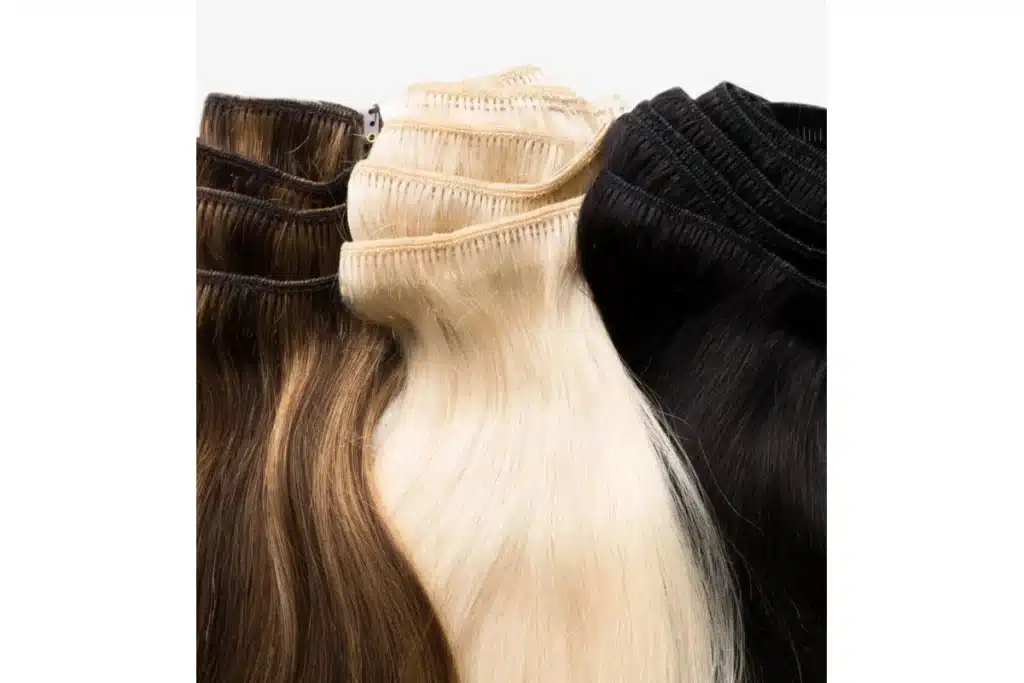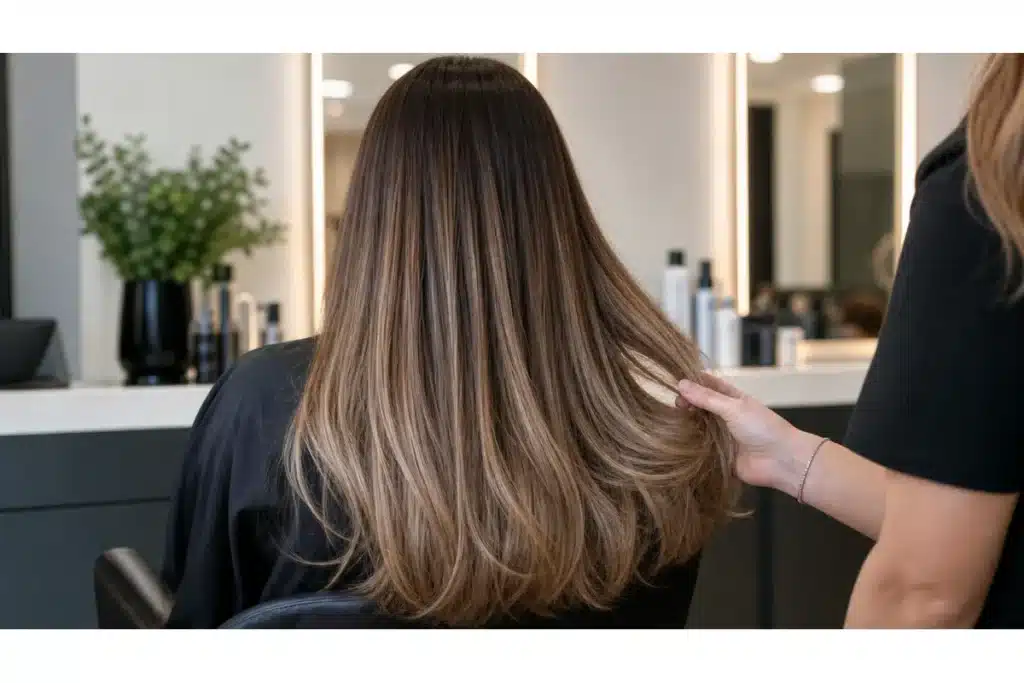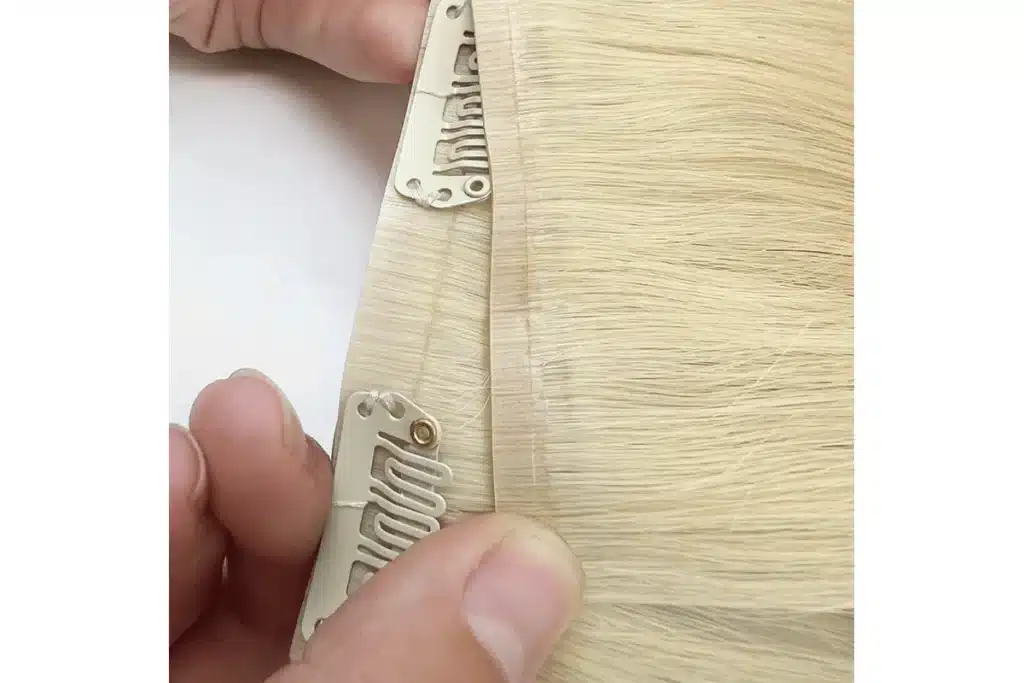
Have you seen extensions where the roots look slightly deeper than the rest? Do you wonder why they blend well at the part without extra salon color? Let’s unpack the idea in a clear, practical way.
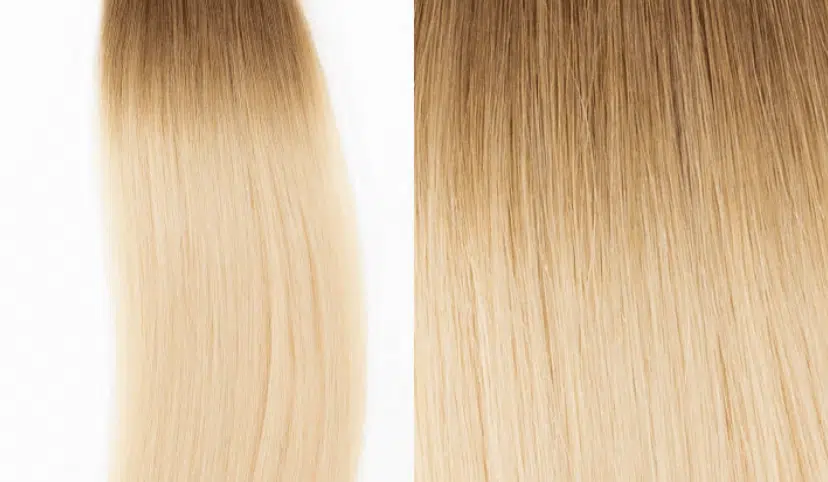
Rooted hair extensions use a modest, darker root zone—typically 2–3 inches—at the top of each piece. This subtle “rooted” area mirrors how natural roots are usually deeper than mids and ends. The effect is gentle, not a dramatic gradient.
This guide explains what “rooted” really means, where it differs from non-rooted, the core formats (tape, clip, weft, keratin), common color options, care suggestions, and ordering tips from a manufacturer’s perspective.
What do rooted hair extensions mean?
Rooted means the first 2–3 inches at the top are purposefully darker than the rest of the strand. The shift is slight. It is not an obvious ombré or a strong melt. The goal is to copy the typical depth you see at natural roots.
Rooted pieces help the base look more believable in parts and flips, because most people show a slightly deeper shade at the scalp.

From a manufacturing standpoint, I handle “rooted” with three simple controls: root length, root level, and tonal match. Root length stays within 2–3 inches in most markets. That length is long enough to soften the part line, but short enough to keep the overall shade profile clean. Root level is usually one to three levels deeper than mids/ends; going deeper than that can start to look like a fashion contrast, which is not the aim here. Tonal match means I keep the same undertone family between root and mids/ends. This prevents a visible shift that might read as an artificial transition. The color application is controlled and steady rather than dramatic; I avoid feathering far down the shaft. For buyers, this matters because it keeps reorders consistent and makes rooted extensions easier to pair with a wide range of clients. If a stylist later wants a touch more blend, they can always add a light toner at the salon, but the factory-rooted base remains restrained and tidy.
Types of Rooted Hair Extensions?
“Rooted” describes the color strategy at the top. The attachment system is a separate choice. The common options are rooted tape-ins, rooted clip-ins, rooted wefts, and rooted keratin strands.
Each format serves different wear habits, maintenance windows, and density goals. Below is a simple map before we go deeper.
Rooted tape in extensions

These pieces carry the slightly deeper root right across the tab edge. That helps the base look natural in a center or side part. I keep tab thickness slim and use stable adhesive. For clients with fine hair near the hairline, I suggest smaller tabs or micro tapes to reduce visual load.
Rooted clip in hair extensions
Clip-ins let wearers try rooted color without a service appointment. The darker top helps clips hide, especially in wind or movement. I recommend stacking lighter wefts rather than one heavy piece for comfort and better blend.

Rooted weft hair extensions
Wefts deliver even coverage and are useful when a salon wants predictable density per row. Rooting remains a neat 2–3 inches along the stitching line. Hand-tied wefts are ultra-flat; genius wefts are thin and cuttable with virtually no return hair; machine wefts pack the most hair per track. Selection depends on the density plan and row pattern.

Rooted keratin hair extensions

Strand bonds give the most control in small areas. The darker top sits on each strand, which helps the look at the part and crown. I suggest matching strand weight to the client’s hair caliber (for example, 0.5 g for fine, 0.7–1.0 g for medium to thick). Removal should be done with the correct solvent and tools.
| Type | Install approach | Typical wear window | Primary use case | Notes I suggest considering |
|---|---|---|---|---|
| Rooted tape in extensions | Two adhesive tabs sandwich a thin slice of natural hair | 6–8 weeks per cycle, then re-tape and reuse | Fast full heads with a flat feel at the base | Keep oils away from tabs; micro-tapes can help fine hair zones |
| Rooted clip in hair extensions | Clip on and off in minutes | Same-day wear; repeat use | Occasions, trials, flexible styling | Great for testing rooted color without commitment |
| Rooted weft hair extensions | Sew to beaded tracks/rows | 6–10 weeks between move-ups | Long-wear volume and controlled density | Choose hand-tied, genius, or machine base |
| Rooted keratin hair extensions | Bond individual strands with keratin tips | 3–4 months before removal | Precise fills and custom mixes | Needs professional removal with solvent and pliers |
What is the difference between rooted and non-rooted hair extensions?
Both add length and volume. The difference is the top 2–3 inches. Rooted has a slightly deeper top; non-rooted is one tone from top to bottom.
Rooted aims for a natural-looking base. Non-rooted gives a clean, uniform color from roots to ends.
| Factor | Rooted extensions | Non-rooted extensions |
|---|---|---|
| Base realism at the part | Slightly deeper top helps the part look natural | Uniform shade can look very clean and polished |
| Maintenance rhythm | Often pairs well with “lived-in” color routines | Pairs well with solid-tone wearers |
| Styling | Helpful for small flips and half-ups | Ideal for bold, even color looks |
| Color services | May reduce need for extra root toning | Simple to match when a client wears one shade |
A point worth noting: rooted is not a strong fade or a high-contrast ombré. It is restrained. If a client wants an obvious transition, that should be handled as a separate color effect, not as standard “rooted.” For many buyers, carrying both rooted and non-rooted SKUs covers most salon requests without over-complicating inventory.
Colors of Rooted Hair Extensions?
Rooted blonde hair extensions, rooted brown hair extensions, and rooted vivid hair extensions are common categories. In all cases, the root is only slightly deeper and usually limited to 2–3 inches. The aim is tidy realism at the base, not a dramatic melt.
Rooted blonde hair extensions
The most popular rooted hair color is blonde roots one to three levels deeper than the mids/ends, within the same undertone family. A neutral-cool root over beige or neutral mids prevents the base from flashing too bright in natural light. The rooted area stays short—about 2 inches—to hold brightness overall.

Rooted brown hair extensions
For brunettes, a small depth step at the base maintains a coherent look at the part. The mids/ends can be the same tone or a touch lighter for dimension. Because brunette undertones vary widely, I suggest aligning undertone first (warm, neutral, or cool), then setting the small depth step. The rooted segment remains compact.

Rooted vivid hair extensions
Even in fashion colors, a slightly deeper top can help the base look intentional. I keep the root within the same hue family—deeper violet above violet, navy above teal—and limit the deeper area to the same 2–3 inch zone. That supports a neat scalp line without turning the set into a bold gradient
To simplify reorders, I label codes with root level, undertone, and root length (for example, R-N6/2in over N9M). This keeps the definition of “rooted” consistent across batches.

how to care Rooted Hair Extensions?
The care goals are simple: protect the attachment, reduce friction, and keep the cuticle smooth. Small habits deliver most of the results.Use sulfate-free wash, keep oils away from tapes or keratin bonds, brush roots gently, control heat, and secure hair for sleep and sport.
Washing
Use lukewarm water. Apply sulfate-free shampoo with downward motions. Clean the scalp with fingertips. Keep conditioner off tapes and keratin bonds by stopping 2 inches from the base. Weft rows can tolerate conditioner closer to the track, but avoid soaking the stitching in heavy oils. Rinse thoroughly.
Brushing
Support the base with one hand and brush from ends to roots with a loop or soft-bristle brush. Separate rows with fingers after workouts or windy days. This prevents compacting at the base.
Heat and styling
Use a heat protectant. Keep tool temperatures moderate. Avoid direct heat on adhesives or bonds. A light bend or brush-out usually blends rooted pieces well since the root area is short and darker only by a little.
Lifestyle
Before swimming, dampen the hair with fresh water and add a light leave-in through mids and ends. Braid for control. Rinse after salt or chlorine. Sleep with a loose braid or silk scrunchie. A silk pillowcase reduces surface wear.
Maintenance cadence
Tape-ins typically need re-taping at 6–8 weeks. Wefts move up around 6–10 weeks. Keratin strands are usually removed at 3–4 months. Clip-ins should be stored flat and brushed after each wear. These rhythms are suggestions; stylists will set exact timelines based on growth and daily wear.

Who are rooted extensions best for?
Rooted helps when the scalp shows. It also helps when a wearer prefers a neat base without extra root toning.
People who part their hair plainly, wear simple flips, or like low-maintenance finishing often appreciate the small depth at the top.
First, how visible is the scalp in daily styling? Middle parts, straight finishes, and wind-exposed styles show the base more, so a short, slightly deeper root keeps the look tidy. Second, what is the shade habit? If the wearer likes natural-looking depth at the base or already has gentle dimension, rooted usually matches well. Third, what is the maintenance preference? Some clients enjoy frequent color services; others want to keep appointments simple. Rooted can reduce the need for additional root touch-ups on the extension hair itself. On the other hand, if a client loves a strong, single color from root to end (for example, full platinum or a solid fashion shade), non-rooted may be the better fit. Neither choice is “right” for everyone; I match the finish to daily habits and brand positioning, then stock SKUs accordingly.

My opinion
I view rooted extensions as a practical finishing choice rather than a show effect. The short, slightly deeper top makes the base look neat without calling attention to itself. For most salons and brands, stocking both rooted and non-rooted SKUs covers everyday needs with minimal complexity.
FAQ
Is rooted the same as balayage or ombré?
No. Rooted is a small depth step at the top (about 2–3 inches), not a long or dramatic fade.
Are rooted extensions only for blondes?
No. Brunettes and vivid shades also use a short, slightly deeper top for a tidy part.
Can a stylist add more blend later?
Yes. If someone wants a softer shift, a stylist can apply a light toner. The factory-rooted base remains subtle.
Do rooted tapes show less?
The darker top can help tabs sit quieter in the part. Good placement still matters.
What hair quality do you suggest?
Full cuticle, aligned hair supports longer wear and keeps surface smoothness.
Conclusion
Rooted hair extensions use a short, slightly deeper top—about 2–3 inches—to keep the base discreet and natural-looking. Choose the format that fits the wearer, keep specs consistent, and follow simple care to maintain a clean, realistic finish.