Hair extensions give clients confidence, but many still feel confused about the different types, installation methods, and long-term expectations. When your clients understand keratin extensions clearly, they trust your service more and commit to long-term maintenance.
Keratin hair extensions are pre-bonded human hair extensions attached to the natural hair using small keratin tips. Some types melt with heat, while others attach through beads. They are long-lasting, secure, and ideal for clients who want a natural, lightweight, and flexible look.
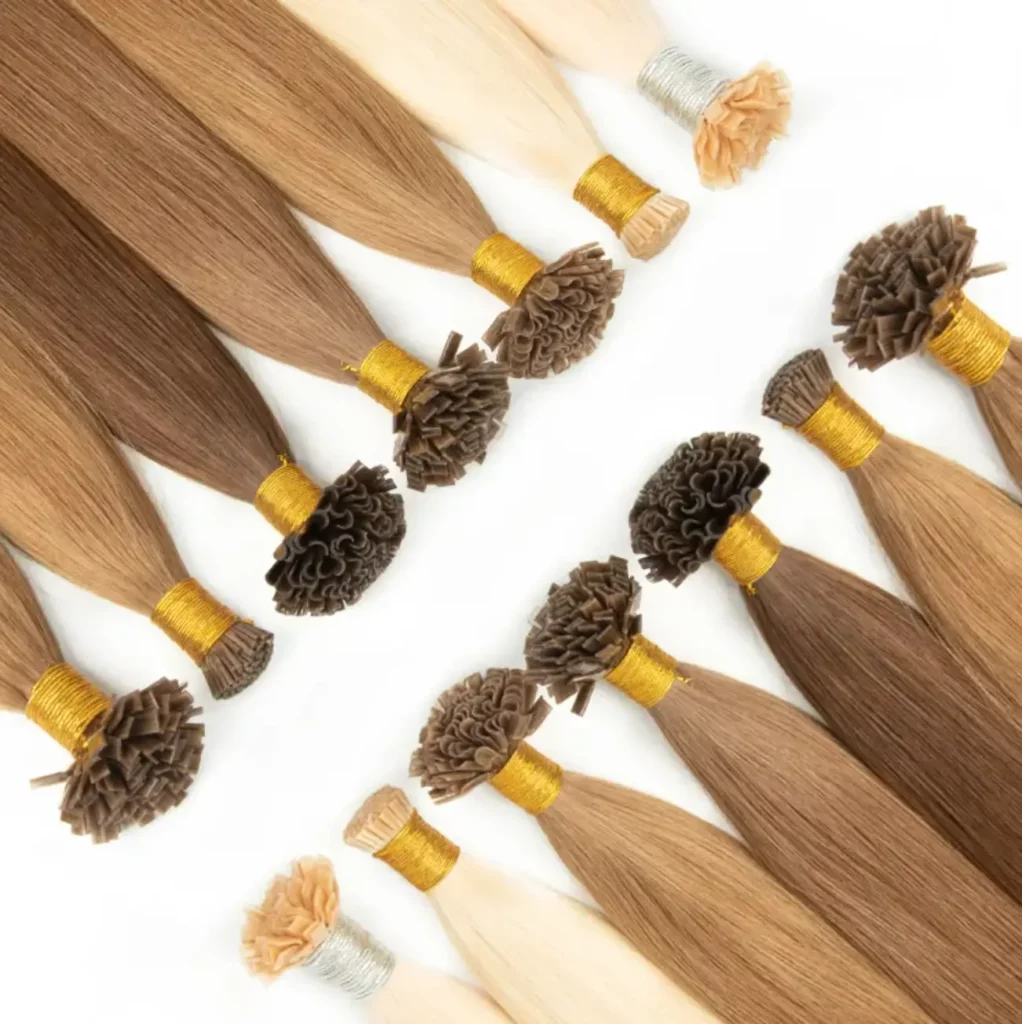
Keratin extensions remain one of the most professional and customizable methods in the hair industry. Let’s explore how they work, the different types, their benefits, risks, and everything stylists must know before offering them to clients.
What are keratin hair extensions?
Many clients want a seamless extension method that moves naturally, lasts long, and blends perfectly with their own hair. Keratin extensions meet all of these expectations when applied correctly.
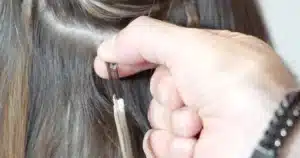
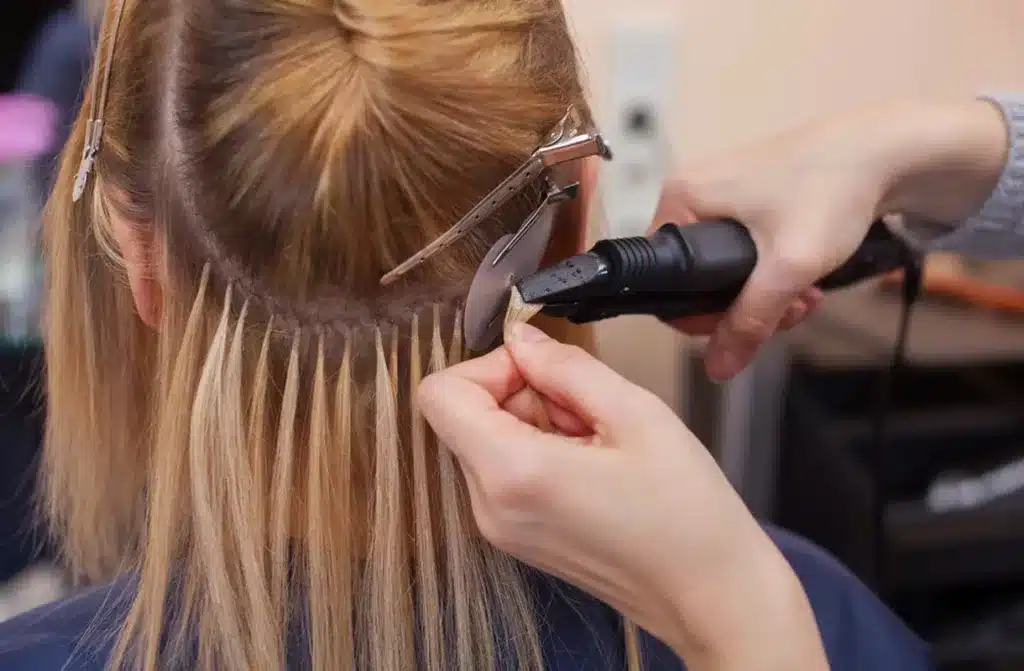
Keratin hair extensions are small strands of human hair pre-tipped with keratin. Some bonds melt with a heat tool, while others attach through microbeads or nano rings. Both create secure, natural-looking results when chosen correctly for the client’s hair type.
Keratin extensions remain popular because they balance durability, invisibility, and flexibility. Stylists can place each strand precisely according to the client’s density, growth pattern, and styling habits. This gives impressive control for shaping the final result.
Key Features of Keratin Hair Extensions
- Pre-tipped with keratin adhesive
- Applied strand by strand
- Installed using heat fusion or bead methods
- Long-lasting and lightweight
- Suitable for both fine and thick hair
- Offers 360-degree movement
Why Professionals Choose Keratin
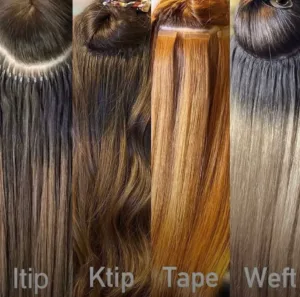
Keratin hair extensions are loved by stylists because they offer natural movement. Each strand attaches to a small section of natural hair, so the extensions move freely without a wide base like tape-ins or wefts.
Typical Clients for Keratin Extensions
- People with fine or thin hair
- Clients wanting a natural and flexible look
- Clients who prefer long-term extensions
- Clients who wear their hair in many different styles
Keratin extensions allow stylists to customize shape, density, and placement, creating a more bespoke appearance that clients appreciate.
What are the types of keratin hair extensions?
Keratin extensions come in several forms, each suited to different hair densities and installation needs. Some use heat fusion, while others use rings.
Understanding each type helps stylists select the right solution for every client. These differences also help wholesalers offer a complete product range.
1. U-Tip Hair Extensions
U-tip extensions are pre-bonded with keratin shaped like the letter “U.”
Key Points:
- Installed using a heat fusion tool
- Strong and durable bond
- Ideal for medium to thick hair
- Creates a round, secure attachment
2. V-Tip Hair Extensions
V-tip extensions have a “V” shaped keratin bond for a smaller, more discreet connection.
Key Points:
- Installed using heat fusion
- Lightweight, refined bond
- Great for fine or thin hair
- Flexible and natural movement
3. Flat Tip Hair Extensions
Flat tips include a flattened keratin bond that melts evenly.
Key Points:
- Installed with heat fusion
- Lightweight and flexible
- Can be reshaped with heat to fit each client
- Suitable for most hair types
4. I-Tip Hair Extensions
I-tip extensions use a keratin-tipped stick inserted into microbeads.
Key Points:
- No heat required
- Attached with beads/micro rings
- Gentle on natural hair
- Offers full movement and easy removal
5. Nano Tip Hair Extensions
Nano tips include tiny metal tips designed for nano rings.
Key Points:
- No heat required
- Smallest and most invisible attachment
- Perfect for very fine hair
- Light and discreet bonds
Types Comparison
| Type | Installation | Best For | Bond Size | Notes |
|---|---|---|---|---|
| U-tip | Heat fusion | Medium–thick hair | Medium | Strong, long-lasting |
| V-tip | Heat fusion | Fine hair | Small | Natural blend |
| Flat tip | Heat fusion | Most hair types | Medium-flat | Flexible and customizable |
| I-tip | Beads/no heat | Sensitive scalps | Small | Reusable, gentle |
| Nano tip | Nano rings/no heat | Thin hair | Very small | Most invisible |
Keratin hair extensions pros and cons?
All extension methods have benefits and limitations. Keratin extensions provide natural results but require proper skill and maintenance.
Keratin extensions offer a natural look, long wear time, and flexible movement, but installation takes longer and requires professional training regardless of heat or bead method.
Pros of Keratin Extensions
1. Most Natural Movement
Each strand moves freely, giving clients a realistic and comfortable experience.
2. Long-Lasting (3–4 Months)
Fusion or bead-based keratin strands stay secure for months when installed correctly.
3. Works for All Hair Types
Even fine hair clients can wear keratin extensions when matched with the right type.
4. Invisible Bonds
Small attachments blend seamlessly with natural hair.
5. Style Versatility
Clients can wear ponytails, buns, and curls without exposing bonds.

Cons of Keratin Extensions
1. Longer Installation Time
Strand-by-strand work takes more time than tape-ins or wefts.
2. Requires Professional Skill
Incorrect installation—whether heat or bead—can cause tension or discomfort.
3. Some Types Require Heat
Heat-based tips may not suit clients sensitive to heat.
4. Not Reusable (Fusion Types)
Heat fusion tips cannot be reused once removed.But if you are good at re-tipping,you can have a try.
Are keratin extensions damaging?
Clients often fear damage, but keratin extensions are safe when applied and maintained correctly.
Keratin extensions do not damage natural hair when installed by a trained stylist and cared for properly. Damage occurs only when bonds are too heavy, placed incorrectly, or handled poorly.
Keratin extensions remain safe when stylists choose the right tip type, weight, and placement for the client’s hair.
Common causes of damage include:
- Too much tension during installation
- Bonds placed too close to the scalp
- Using extensions that are too heavy
- Aggressive brushing or sleeping with loose hair
- Oils and conditioners applied on attachment points
Safe Practice Tips
- Use small, lightweight bonds for fine hair
- Leave space away from the scalp
- Brush gently with the right tool
- Tie hair before sleeping
- Keep heat away from fusion bonds
When installed correctly, keratin extensions remain one of the safest long-term options.
How long do keratin extensions last?
Keratin hair extensions last 3–4 months, depending on hair growth and maintenance. Bead-based versions may last slightly longer with adjustments.
Keratin extensions grow down with the natural hair. As they move further from the scalp, the weight distribution changes.
Factors That Affect Longevity
| Factor | Impact |
|---|---|
| Hair growth rate | Faster growth = earlier maintenance |
| Oil production | Oils soften fusion bonds |
| Heat exposure | Weakens keratin fusion bonds |
| Brushing habits | Poor technique causes shedding |
| Products | Oils near roots loosen bonds |
Typical Wear Time
- 3 Months: Thin or oily hair
- 4 Months: Standard
- 5 Months: Possible with careful maintenance
Keratin hair extensions before and after?
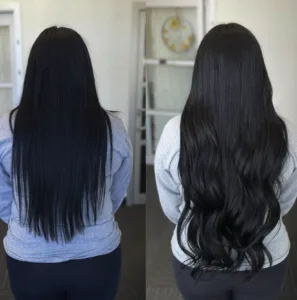
Before-and-after photos show how keratin extensions improve density, shape, and length while maintaining natural flow.
Keratin extension transformations offer fuller, smoother, and more balanced silhouettes.
Common “Before” Situations
- Thin or weak ends
- Uneven shape
- Limited styling options
- Flat sides
- Lack of volume

“After” Results
- Fuller mid-lengths and ends
- Better balance
- More styling freedom
- Seamless blend
- Natural movement
Why Keratin Works
Strand placement helps fill thin areas and improve shape. The precise placement is difficult to achieve with wide-base methods.
how to take care of keratin hair extensions
You maintain keratin extensions by using gentle hair products, brushing correctly, avoiding oils at attachment areas, and keeping heat away from fusion bonds.
Daily Maintenance Tips
- Brush gently using a loop or extension brush
- Support roots while brushing
- Avoid brushing when wet
- Use sulfate-free shampoo
- Apply conditioner only to mids and ends
Heat and Styling
- Keep heat away from fusion bonds
- Use heat protectant
- Medium heat only
Sleeping Routine
- Tie hair in a braid or low ponytail
- Use a silk pillowcase
Washing Routine
- Wash 1–2 times weekly
- Rinse thoroughly
- Keep products away from attachment points
With good habits, keratin extensions stay smooth and secure for months.

My opinion
Keratin extensions offer unmatched customization and natural finish. As a manufacturer, I see the best results happen when salons choose full cuticle, single-donor hair with clean, high-quality keratin tips. Great material paired with professional application builds long-term client loyalty.
FAQ
1. Are keratin extensions good for thin hair?
Yes. V-tip, flat tip, I-tip, and nano tip all work well depending on density.
2. Can clients wash keratin extensions?
Yes, 1–2 times weekly.
3. Can clients swim with keratin extensions?
Chlorine and saltwater weaken bonds; not recommended.
4. Are keratin extensions reusable?
Fusion types are not reusable; bead-based types sometimes can be.
5. Do keratin extensions fall out?
Some natural shedding is normal.
6. Can clients curl or straighten keratin extensions?
Yes, but avoid heating fusion bonds.
7. Do keratin extensions hurt?
No. Discomfort means incorrect installation.
8. Do keratin bonds turn white?
Excess heat or friction can cause whitening.
9. Can clients color their keratin extensions?
They can go darker, not lighter.
10. How long does installation take?
2–4 hours.
11. Are keratin extensions visible?
No, when installed correctly.
12. Can keratin extensions cause breakage?
Only from incorrect application or poor maintenance.
13. How many strands are needed?
100–200 strands depending on volume.
14. Are keratin extensions permanent?
No, they grow out with natural hair.
15. Do keratin extensions tangle?
Only with poor care.
Conclusion
Keratin extensions provide a natural, flexible, and long-lasting enhancement. With correct installation and consistent care, they remain one of the most professional and reliable options for long-term hair transformations.
Hibiscus Hair Manufacturer has been dedicated to producing high-quality keratin hair extensions for 25 years and is a recognized leader in the industry. If you are interested in finding a reliable hair extensions supplier and wholesale for your brand, please visit our website for more information: