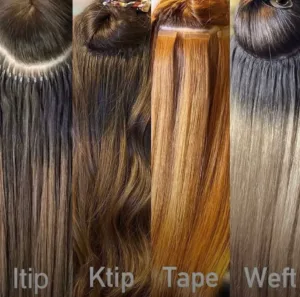
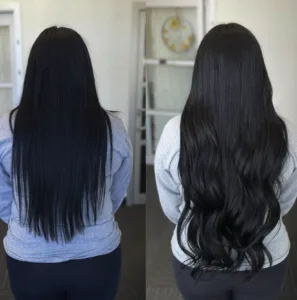
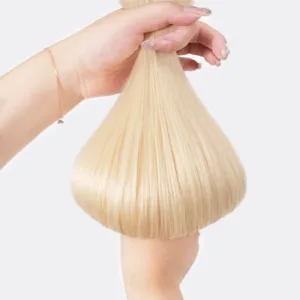
K-tip is one of the most searched terms in fusion extensions. Many clients ask for it by name. Many new stylists also ask the same thing: what exactly is a K tip, and why does it feel different from other bonded methods?
K tips are keratin bond hair extensions. Each strand has a keratin tip that is melted and fused to a small section of natural hair. When the hair quality is high and the installation is correct, K tips give a very natural look, strong hold, and long wear with flexible movement.

If you are choosing K tips for your salon menu or for wholesale stocking, this guide breaks down what they are, whether they damage hair, how long they last, and how they compare to I tips.
What are K tips?
Clients often hear “K tips” and think it is a special product. In reality, it is a simple name for keratin fusion extensions. The “K” usually points to keratin.
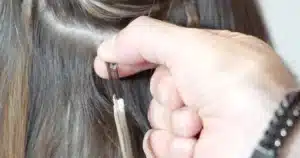
K tips are individual strands of human hair with a keratin tip attached at the top. A stylist uses a fusion tool to soften the keratin, then shapes it around a small section of the client’s natural hair. The result is a small bond that sits close to the scalp and moves with the hair.

Dive deeper
A K tip system has three parts: the hair, the keratin, and the bond shape. Many problems come from ignoring one of these parts.
Hair part: what the client actually wears
The strand hair can be different grades. A salon result depends on consistent cuticle direction and strong ends. Full cuticle hair keeps softness longer and tangles less. Lower grade hair can feel good at first, then dry out fast after a few washes.
Keratin part: what holds the strand
Keratin quality changes the bond behavior during fusion and during wear. A stable keratin tip softens evenly and forms a smooth bond. Poor keratin can turn brittle or sticky. That leads to early slipping or hard bonds that feel sharp.
Bond shape: what controls comfort and blending
A bond can be rolled into a small cylinder or flattened depending on technique. A good bond sits neat and does not poke. A bad bond sits bulky and can create tension points.
K tip basics table
| Item | What it means | Why it matters |
|---|---|---|
| strand method | one strand per section | supports precise placement |
| keratin tip | heat-softened bond material | decides hold and comfort |
| section size | hair taken from client | too big or too small can fail |
| placement map | where strands sit | controls blend and tension |
| removal | done with remover solution | correct removal protects natural hair |
K tips are not “one product.” They are a system. A salon should treat them as a method that needs correct selection and correct service steps.
Does K tips damage hair?
Many buyers ask this because they hear “heat” and assume damage. Heat can be safe when it is controlled, but the real risk usually comes from tension, poor sectioning, or incorrect removal.
K tips do not have to damage hair. Damage happens when bonds are too large, too tight, too hot, or left in too long. Damage also happens when removal is rushed or done without enough remover.
Dive deeper
This topic matters for salons and for wholesale buyers. A salon reputation depends on repeat clients. A wholesale brand reputation depends on consistent outcomes in real salons.
Where damage usually starts
Sectioning mistakes
If a stylist takes too much hair in one section, the bond becomes thick and stiff. That bond can pull during brushing. If a stylist takes too little hair, the strand can slide and create tangles.
Heat control mistakes
A fusion tool should soften keratin, not burn it. Overheating can create brittle bonds. Underheating can create weak bonds that slip.
Placement mistakes
If bonds sit too close to the hairline, the client can feel discomfort. If bonds sit on weak hair areas, the client can see breakage earlier.
Removal mistakes
Removal is the highest risk step. Correct removal needs enough remover and enough time. If a bond is forced off, natural hair breaks.
Risk control checklist for salons
| Risk | What it looks like | Best prevention |
|---|---|---|
| too much tension | pain, headaches, tight scalp | smaller sections, better mapping |
| overheating | white or brittle bond | controlled temperature + timing |
| slipping | bond slides down | correct section size, clean hair |
| matting | knots near bonds | proper home care + brushing plan |
| breakage at removal | short pieces around bonds | remover time + gentle release |
K tips can be a very safe method for the right client. A salon should still screen clients who have very fragile hair, heavy shedding, or scalp sensitivity.
How long does K tips last?
This is the business question. Clients want a timeline. Salons want a predictable maintenance schedule. Brands want repeat orders with stable expectations.
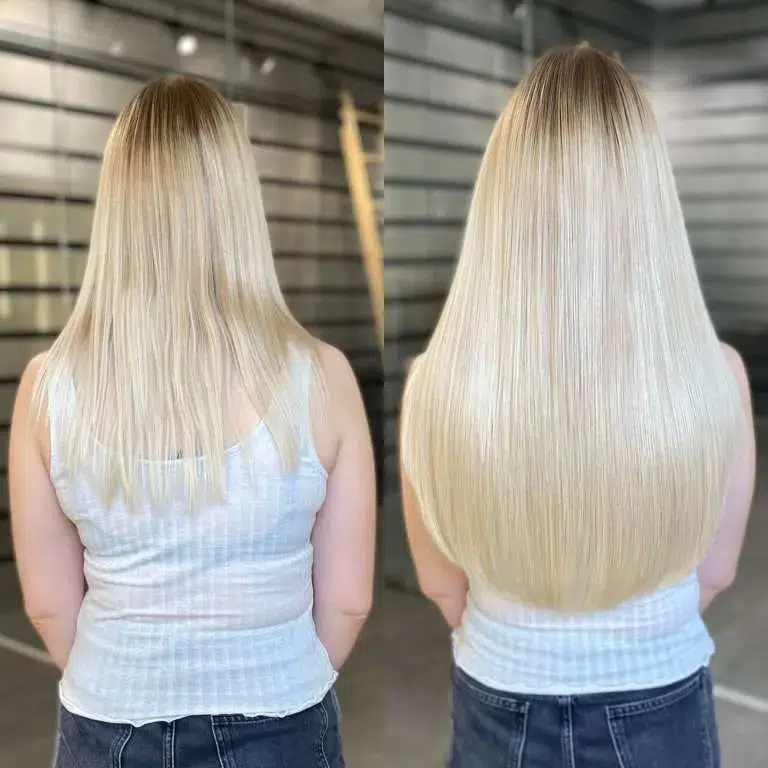
K tips usually stay in the hair around 3 to 4 months before removal and reinstall. The bond itself may still hold, but natural hair growth moves the bonds down. That shift changes comfort and increases tangling risk. Most salons schedule maintenance based on growth, not only on bond strength.
Dive deeper
There are two different “lifespans” that people mix together:
- wear time in the hair before removal
- usable life of the hair itself
Wear time in the hair
Most clients should remove or reinstall at 3–4 months. Past that point, bonds can sit too far down and can catch shed hair. That is how matting starts. A salon should set a clear policy so clients do not push too long.
Usable life of the hair
Hair quality decides whether strands can be reused. Full cuticle hair can often last 1–2 years with correct care. That does not mean the same bond stays in for 1–2 years. It means the hair can be retipped and reused in new installs.
What affects how long K tips last
| Factor | Impact | What to tell clients |
|---|---|---|
| natural hair growth | moves bonds down | book maintenance every 3–4 months |
| scalp oil level | can soften grip | avoid oils near roots, wash correctly |
| styling heat | can dry mid-length | heat protectant + controlled temperature |
| water quality | can cause dryness | add chelating when needed |
| hair grade | affects tangling | premium hair tangles less over time |
A salon can protect client satisfaction by quoting two timelines: “wear time” and “hair reusability.” That keeps expectations clean.
K tips vs I tips
This is a common comparison because both are strand-by-strand methods. They look similar in pictures. They behave differently in the chair.
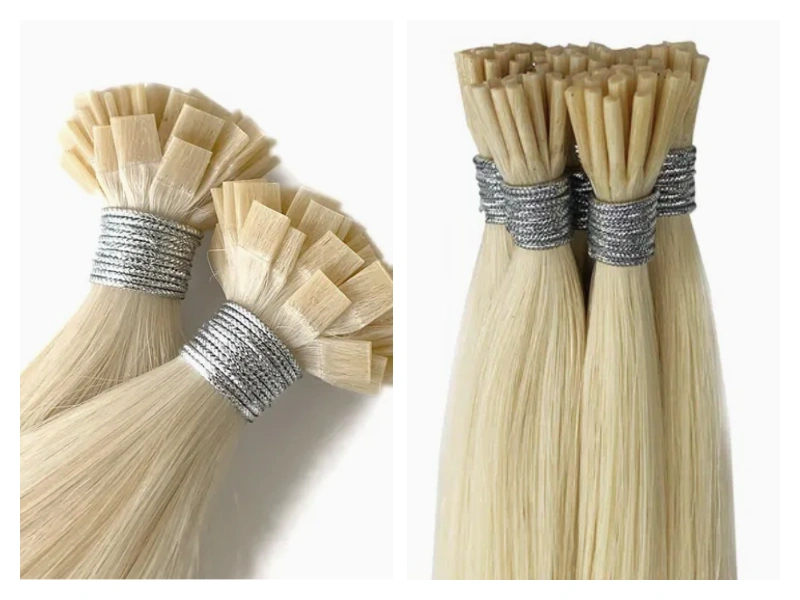
K tips are heat fusion with keratin bonds. I tips are installed with micro rings or beads and use no heat. K tips can feel more seamless and flatter when done well. I tips can be easier to adjust but may feel more noticeable on some clients because of the bead.
Dive deeper
A salon should not pick “the best” method. A salon should pick the best method for the client’s hair type, lifestyle, and maintenance habits.
Key differences that matter in real life
Bond type
- K tips: keratin bond, smaller profile when placed well
- I tips: ring clamp, depends on ring size and placement
Maintenance and adjustments
- K tips: removal and reinstall, no move-up without re-bonding
- I tips: can be moved up by opening rings and re-clamping
Comfort and visibility
Some clients feel beads more than keratin. Some clients do not feel a difference. Comfort depends on placement and tension control.
Quick decision table for salons
| Category | K tips | I tips |
|---|---|---|
| heat involved | yes | no |
| bead involved | no | yes |
| profile | very flat when done well | can be slightly more detectable |
| maintenance style | remove + reinstall | move-up possible |
| best for | clients who want seamless bonds | clients who want no-heat installs |
| risk points | overheating, removal mistakes | ring slippage, bead pressure |
A salon can offer both methods and use consultation to guide the choice. That approach increases conversion and reduces complaint risk.
Who should choose K tips?
Many salons add K tips for clients who want a very natural look and long wear. Still, not every client is a good match.
K tips fit clients who are consistent with aftercare, who can return for maintenance on time, and who want strand-level blending. K tips are not ideal for clients who skip brushing, sleep with wet hair, or delay maintenance appointments.
Dive deeper
A strong consultation protects both the salon and the client. It also protects the brand that supplies the hair.
Good candidate signals
- client wants a natural, strand-by-strand look
- client can commit to 3–4 month maintenance cycles
- client uses professional hair care products
- client can follow a dry roots rule after washing
Caution signals
- client has very fine, fragile perimeter hair
- client has scalp inflammation or sensitivity
- client has a habit of heavy oiling near roots
- client has a history of matting with extensions
Consultation checklist table
| Question | Why it matters | What it predicts |
|---|---|---|
| how often do you wash | affects bond stability | oil management risk |
| do you sleep with wet hair | increases matting | aftercare discipline |
| do you exercise daily | increases wash frequency | routine planning |
| do you color often | dryness risk | hair care needs |
| can you return in 3–4 months | avoids overgrown bonds | long-term success |
A salon makes more money when clients keep their hair healthy. K tips should be sold as a premium service with premium care.
My opinion
K tips are a high-end method when the hair grade is stable and the salon process is controlled. The best results come from clean sectioning, clean bonds, and clear maintenance rules.
FAQ
Are K tips the same as keratin bonds?
Yes. Many people use K tips to mean keratin fusion bonds.
Can K tips be reused?
The hair can be reused if the hair quality is high and the tips are replaced. The bond itself is not reused.
Do K tips work for thin hair?
K tips can work for thin hair, but placement and strand weight must be controlled. A salon should avoid heavy tension and avoid weak perimeter zones.
Can clients wash K tips normally?
Clients can wash normally with a careful technique. Clients should avoid conditioner at the bond area and should dry roots fully.
Are K tips good for active clients?
They can be, but active clients need a strong wash and dry routine and a solid maintenance schedule.
What is the biggest reason K tips fail early?
Early failure often comes from poor sectioning, oily roots, or incorrect heat and bond formation.
Conclusion
K tips are keratin fusion strand extensions. They can look seamless and last about 3–4 months per install when hair quality and salon technique stay controlled.
Hibiscus Hair Manufacturer has been dedicated to producing high-quality hair extensions for 25 years and is a recognized leader in the industry. If you are interested in finding a reliable hair extensions supplier and wholesale for your brand, please visit our website for more information: