Many salon owners see clients asking for bead methods but still face confusion about safety, longevity, and positioning. Wrong understanding often leads to slipping, damage, or poor retention.
Beaded hair extensions are extension methods that use small beads or rings to secure hair bundles or wefts without heat or glue. They include strand-based bead methods and beaded weft systems, and performance depends on hair quality, bead choice, and installation skill.

I have worked with beaded systems for many years in factory production and salon feedback. Before choosing or selling them, it is important to understand how each type really works.
What Are Beaded Hair Extensions?
Many professionals hear the term “beaded hair extensions” used loosely, which causes wrong expectations during installation and aftercare.
Beaded hair extensions are extensions attached by clamping small metal or silicone-lined beads onto natural hair. The beads hold either individual hair bundles or hair wefts in place without adhesive.
Definition of Beaded Hair Extensions
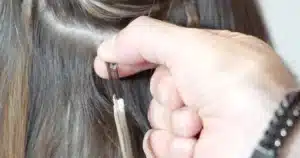
Beaded hair extensions rely on mechanical pressure. A bead is opened, natural hair and extension hair are placed inside, and the bead is closed to lock everything together. No glue is used. No heat is required.
From a factory view, this method reduces chemical risk. From a salon view, it allows faster removal and reinstallation. But it also means results depend heavily on bead size, bead lining, and strand tension.
1.Strand-Based Beaded Hair Extensions
Strand-based systems use small hair bundles. These bundles are usually pre-tipped or looped. Each bundle is installed with one bead.
Common examples include:
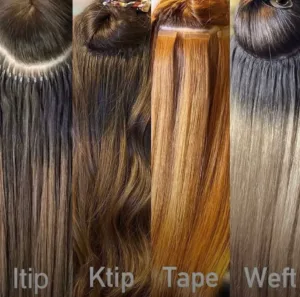
- I tip(Micro bead )extensions
- Nano tip extensions
- F tip extensions
These names often describe the same idea. The difference is branding, not structure.
Strand-based systems offer flexible placement and light weight. They work well for fine hair when installed correctly. But they require precise sectioning. Poor spacing often leads to slipping.

2.Beaded Weft Hair Extensions
Beaded weft systems attach a hair weft to natural hair using beads as anchor points. The weft may be sewn onto the bead row or clamped directly depending on the system.
Popular methods include:
- Beaded row installation
- Sew-in with beads
- Hand-tied or genius weft with beads
Beaded wefts spread weight better than strand methods. They are often preferred for medium to thick hair and full transformations.

Key Structural Differences
| Type | Attachment Unit | Weight Distribution | Skill Requirement |
|---|---|---|---|
| Strand-based | Single bundle | Point-based | High |
| Beaded weft | Hair weft | Line-based | Medium to high |
Understanding this difference helps avoid choosing the wrong system for the client.
Beaded Hair Extensions Pros and Cons?
Many buyers only hear “no glue, no heat” and assume beaded methods are always safer. That is not fully true.
Beaded hair extensions offer flexibility and reusability, but they also introduce risks related to tension and bead pressure if poorly installed.
Advantages of Beaded Hair Extensions
Beaded methods allow quick removal. This makes maintenance easier for salons. Clients also like the idea of reusable hair.
Another advantage is clean installation. There is no residue from adhesive. This keeps the hair easier to clean and recolor.
From a factory angle, beaded systems pair very well with full cuticle hair. High-quality hair can be reused many times without re-tipping.
Disadvantages of Beaded Hair Extensions
The biggest risk is tension. Beads create pressure points. If sectioning is wrong, hair breaks.
Slipping is another issue. Slipping often comes from:
- Wrong bead size
- Too smooth natural hair
- Poor bead lining
Noise and visibility can also bother clients. Thin hair clients often feel beads when touching their scalp.
Comparison Table
| Factor | Beaded Extensions | Tape or Keratin |
|---|---|---|
| Heat needed | No | Sometimes |
| Glue needed | No | Yes |
| Reusability | High | Medium |
| Tension risk | Medium to high | Lower if done well |
No method is perfect. Matching the method to hair type matters more than trends.
How to Install Beaded Hair Extensions?
Installation quality decides success more than the extension itself. Many failures blamed on hair quality are actually installation errors.
Beaded hair extensions are installed differently depending on whether they are strand-based or weft-based systems.
Installing Strand-Based Beaded Hair Extensions
For strand-based systems, sectioning is critical. Each section must match the bundle weight.
Steps usually include:
- Create clean, even sections
- Choose bead size that matches hair density
- Insert natural hair and extension hair
- Clamp bead flat and centered
If the bead is angled, it will twist. Twisting causes pulling and slipping.
I often see salons use beads that are too large. Large beads reduce grip and increase visibility.
Installing Beaded Weft Hair Extensions
Beaded weft systems start with bead rows. These beads act as anchors.
Steps include:
- Create horizontal partings
- Install beads evenly across the row
- Attach weft by sewing or clamping
- Check tension along the row
Spacing matters. Too wide causes sagging. Too tight causes discomfort.
Installation Comparison Table
| Step | Strand-Based | Beaded Weft |
|---|---|---|
| Section size | Very small | Medium |
| Bead count | High | Lower |
| Time needed | Longer | Faster |
| Error tolerance | Low | Medium |
Training and repetition are key. Beaded systems punish careless work.
How Long Do Beaded Hair Extensions Last?
Clients often ask this question without realizing there are two different timelines: wear time and hair lifespan.
Beaded hair extensions usually stay installed for 6 to 10 weeks per move-up, while the hair itself can last much longer depending on quality.
Wear Time Before Move-Up
Most beaded systems need maintenance every 6 to 8 weeks. Some clients push to 10 weeks, but tension increases with growth.
Delaying move-ups increases breakage risk. Beads move away from the scalp and pull unevenly.
Hair Quality and Lifespan
Hair quality defines how many reinstallations are possible.
| Hair Type | Typical Lifespan |
|---|---|
| Full cuticle hair | 1year with proper care |
| Regular Remy hair | 3 to 4 months |
| Non-Remy hair | 1 to 2 months |
Beaded systems are ideal for full cuticle hair because no glue damages the cuticle.
Client Care Impact
Daily habits matter. Clients who brush correctly and avoid bead twisting get longer results. Poor home care shortens lifespan more than installation method.
My Opinion
I have seen beaded hair extensions succeed and fail in every market. The method itself is not the problem. Expectations are.
Many salons treat beaded systems as beginner-friendly. I disagree. These systems require strong sectioning skills and discipline. When done well, they are clean, flexible, and profitable. When rushed, they create complaints.
From a factory side, I always recommend pairing beaded systems with high-grade full cuticle hair. Cheap hair and beads do not mix. Slipping and matting appear fast.
I also believe education matters more than product branding. The same beads sold under different names perform the same when installed correctly.
FAQ
Are beaded hair extensions damaging?
They are not damaging when installed with correct tension and spacing. Damage usually comes from poor technique.
Can beaded hair extensions be reused?
Yes. High-quality hair can be reused many times with proper care.
Are beaded extensions good for thin hair?
They can be, but bead size and sectioning must be precise.
Do beads show through the hair?
They can if spacing is wrong or hair density is too low.
Conclusion
Beaded hair extensions are versatile and reusable systems. Success depends on correct method choice, proper installation, and high-quality hair.