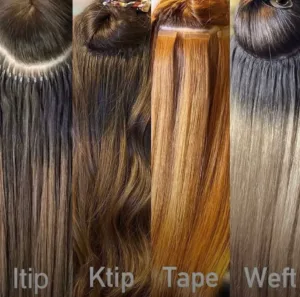
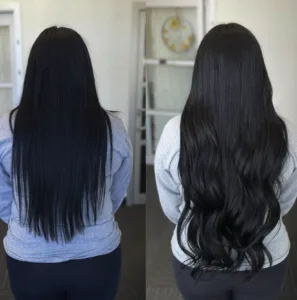
Have U heard people say “nano is always better”? Have U also heard another stylist say “micro is safer and easier”? Before U invest in inventory, tools, or staff training, I suggest U get a clear, practical comparison.
Nano ring extensions and micro ring extensions use the same core idea: a small ring clamps a strand to natural hair with no glue and no heat. Nano uses a smaller ring and smaller tip, so it can look more discreet but needs stricter sectioning and pressure control. Micro is larger, so it is easier to handle and more forgiving, but it can feel bulkier on fine hair.
I write this for salon owners, professional stylists, and wholesale buyers who need fewer redo appointments and fewer complaints. I also write it for teams who want a consistent service standard. I will break down definitions, pros and cons, and the decision logic that protects hair and profit.
What are nano ring extensions?
Do U see “nano ring” listed as a separate method on supplier catalogs? Do U want to know what is actually different from micro? I suggest U start with the definition and the parts.
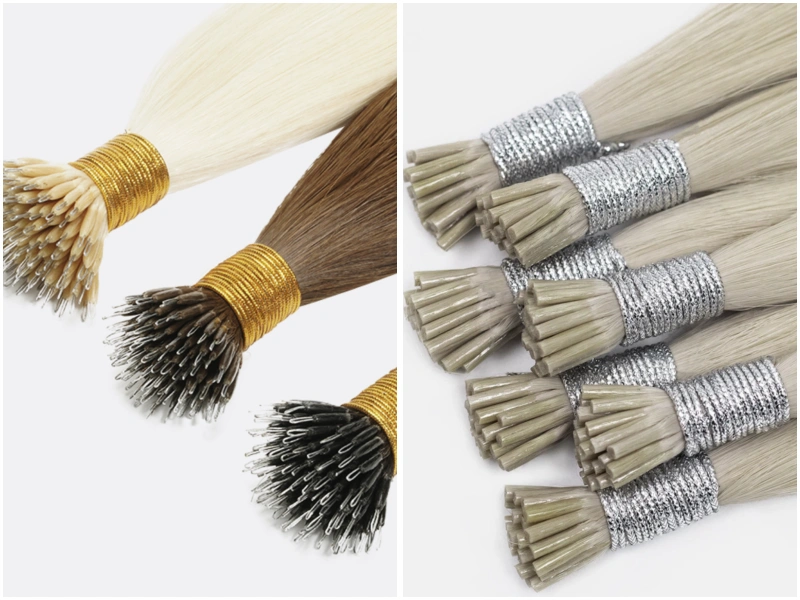
Nano ring extensions are strand-by-strand extensions installed with a very small metal ring (often called a bead) and a matching nano tip. A stylist pulls a small section of natural hair through the ring, inserts the extension tip, and then clamps the ring with pliers.

Definition in simple salon language
I describe nano rings as “micro rings, but smaller hardware.” The hair can still be full cuticle, Remy, or low grade hair. The “nano” label does not guarantee hair quality. The label mainly refers to ring size and tip size.
Pros of nano ring extensions
I suggest U consider nano rings when U need discreet bonds.
- The bond size can be smaller, so it can hide better in fine or medium density hair.
- The method is no glue and no heat, so it can fit clients who avoid adhesive and fusion.
- The bonds can move naturally because each strand is independent.
- The method can work for clients who sweat or wash often, since it is not adhesive-based.
Cons of nano ring extensions
I suggest U consider the precision cost.
- The smaller ring has less tolerance for sectioning errors.
- The ring can slip if the section is too big or too oily, especially with unlined rings.
- The ring can create pinch stress if the plier pressure is too strong.
- The method can take longer for a team that is not trained on clean sectioning.
What I suggest U confirm before U buy
I suggest U confirm the system, not only the hair.
- Tip consistency: I suggest U check that tips are the same size and feel smooth.
- Ring finish: I suggest U check edge smoothness and plating stability.
- Optional lining: I suggest U test silicone-lined rings for oily scalp clients.
- Tool match: I suggest U use pliers that close evenly, not pliers that crush.

Quick table for nano rings
| Item | What it means in practice | What I suggest U do |
|---|---|---|
| Smaller ring | More discreet, less forgiving | Train sectioning and pressure control |
| Smaller tip | Cleaner blend on fine hair | Choose stable tips, not brittle tips |
| No heat, no glue | Lower chemical exposure | Teach correct brushing and maintenance |
| Precision needed | Errors show faster | Use a service checklist |
What are micro ring extensions?
Do U see “micro ring,” “micro bead,” and “micro link” used as the same term? Do U want one clear definition to train staff and answer buyers? I suggest U simplify the language.
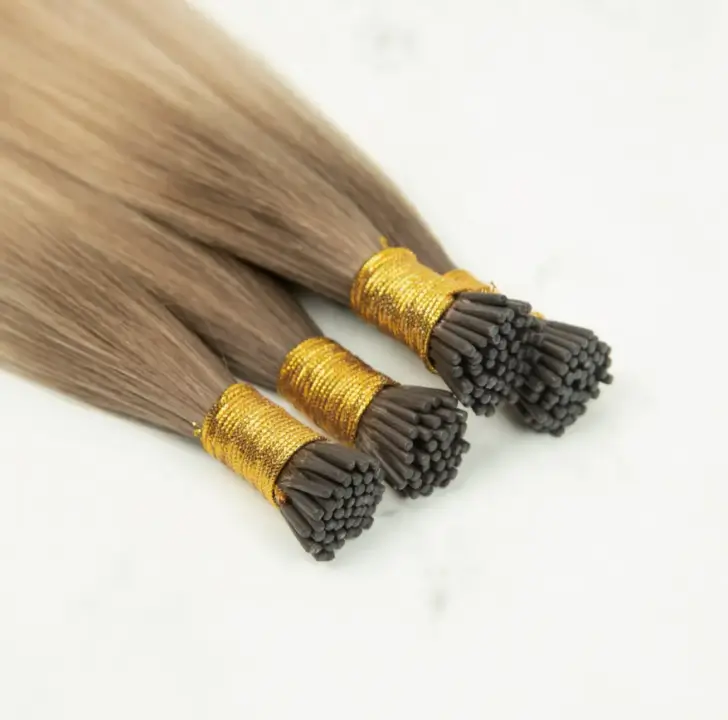
Micro ring extensions are strand-by-strand extensions installed by clamping a small ring around a section of natural hair and the extension tip. The ring is larger than a nano ring, so it is easier to handle and can hold a slightly larger section.
Definition in simple salon language
I describe micro rings as “standard bead install hardware.” Many salons start here because the ring size is easier to see and control. Many training programs also use micro first.
Pros of micro ring extensions
I suggest U consider micro rings when U need speed and tolerance.
- The larger ring is easier to pick up and clamp.
- The method is more forgiving when the section is not perfect.
- The grip can be stable for medium to thick hair clients.
- The method can be a good base skill for new bead technicians.
Cons of micro ring extensions
I suggest U consider visibility and bulk.
- The bond can look bulkier in fine hair.
- The ring can feel heavier for sensitive scalps.
- The ring can show if placement is too close to the hairline.
- The ring can still cause breakage if the clamp is too tight or the maintenance is late.
What I suggest U confirm before U buy
I suggest U confirm comfort and finish.
- Ring surface: I suggest U avoid sharp edges and unstable coatings.
- Ring size options: I suggest U stock more than one size for different hair types.
- Color options: I suggest U match ring color to root shades to reduce visibility.
- Tool quality: I suggest U use pliers that close evenly to avoid cutting hair.

Quick table for micro rings
| Item | What it means in practice | What I suggest U do |
|---|---|---|
| Larger ring | Easier handling | Use for training and speed |
| Larger section | Strong grip on thicker hair | Avoid using on fragile edges |
| More tolerance | Fewer slip issues from small errors | Still control pressure and timing |
| More bulk | More visible in fine hair | Use careful placement and color match |
Nano ring vs micro ring extensions?
Do U want the clean comparison that helps U pick inventory and service positioning? I suggest U compare size, tolerance, visibility, comfort, and maintenance risk, all in one view.
Nano ring vs micro ring is mainly a trade-off between discreetness and tolerance. Nano looks smaller and can blend better, but it needs stricter sectioning and better control. Micro is easier and more forgiving, but it can look bulkier on fine hair.
Size and visibility
Nano rings can hide better because the ring is smaller. That helps in thin hair and in high-contrast color situations. Micro rings can still hide well, but they need more strategic placement. Micro rings also benefit from root color matching.
Nano ring’s beads’ size are much smaller than micro rings’ beads.
Tolerance and training
Micro rings are easier for most teams. The ring is easier to see and clamp. Nano rings often require better sectioning habits and better plier control. If the team rushes, nano problems show fast.
Hair type fit
I suggest nano for fine to medium density hair when the client wants discreet bonds and can maintain appointments. I suggest micro for medium to thick hair, or for salons that want a faster service with fewer precision errors.
Maintenance and failure modes
Both methods can slip and both methods can cause breakage. The triggers differ.
- Nano slip often comes from sections that are too big for the ring, or oily scalp conditions with unlined rings.
- Micro visibility often comes from bulk and placement lines, especially around temples and crown.
- Both can cause breakage when over-crimped or moved up too late.
Direct comparison table
| Factor | Nano ring extensions | Micro ring extensions | What I suggest U do as a salon |
|---|---|---|---|
| Bond size | Smaller | Larger | Choose based on client density and concealment need |
| Visibility in fine hair | Often lower | Often higher | Nano for fine hair, micro for thicker hair |
| Training difficulty | Higher | Lower | Start micro for beginners, then nano |
| Slip risk | Higher if section is wrong | Medium | Use lined rings when slip is common |
| Comfort | Often lighter feel | Can feel bulkier | Use smooth finish rings for both |
| Service speed | Slower for many teams | Faster | Price service based on time and skill |
| Reuse potential | Depends on hair quality | Depends on hair quality | Use full cuticle hair for multi-use programs |
Decision checklist I suggest U use before stocking
- I suggest U list your top client hair types by density and texture.
- I suggest U track your team’s current bead skill level.
- I suggest U decide if U sell discreet luxury installs or fast standard installs.
- I suggest U stock both sizes if U serve mixed client profiles.
Is nano or micro better?
Do U want one short answer for clients, and another answer for business planning? I suggest U give both, because “better” depends on the goal.
Nano is better when discreetness is the top priority and the team can handle precision sectioning. Micro is better when speed, tolerance, and training simplicity matter more. Both can be safe when pressure and timing are controlled.
If U are choosing for a salon service menu
I suggest U start from client density and concealment need.
- If many clients have fine hair, nano can be a strong option.
- If many clients have thick hair, micro can be stable and efficient.
- If the team has mixed skill levels, micro can reduce errors.
If U are choosing for wholesale inventory
I suggest U stock based on reorder logic.
- Nano accessories may need more SKUs because ring size and lining options matter more.
- Micro accessories can be simpler, but color match and finish still matter.
- In both cases, hair quality decides repeat orders more than ring size.
If U are choosing for client safety outcomes
I suggest U focus on the real safety levers.
- Correct section size
- Correct clamp pressure
- Correct placement
- Correct move-up schedule
These levers matter more than the word nano or micro.
A short story placeholder
I once advised a new salon owner who wanted only nano because it sounded premium. Her team was new to bead installs. I suggested she start with micro for training, then add nano as a premium tier. Her redo rate stayed lower.
How can salons reduce slip and breakage with both methods?
Do U want fewer “it slipped in two weeks” messages? Do U want fewer “my hair broke near the root” complaints? I suggest U standardize process control.
Slip and breakage mainly come from wrong section size, wrong ring type for scalp, over-crimping, and late move-ups. A simple checklist can reduce most issues.
Section size rules I suggest U teach
I suggest U match the natural hair amount to the tip size and ring capacity. A too-large section leads to slip. A too-small section leads to traction. Both lead to unhappy clients.
Pressure rules I suggest U teach
I suggest U clamp to secure, not clamp to crush. Many breakage cases start with flat, sharp beads. A controlled close keeps hair safer.
Timing rules I suggest U set
I suggest U book move-ups early for fine hair clients. I also suggest U use shorter cycles for oily scalp clients. Late maintenance creates bead drag and matting.
Troubleshooting table
| Problem | What U often see | Likely cause | What I suggest U change |
|---|---|---|---|
| Slip in 1–3 weeks | Beads slide down | Section too big or oily scalp | Reduce section, use lined ring, improve cleansing |
| Soreness | Tight feeling | Section too small or placement too close | Increase section, adjust placement gap |
| Breakage near root | Short hairs around bond | Over-crimp or late move-up | Reduce pressure, move up sooner |
| Beads show | Visible lines | Placement pattern or bulk | Stagger rows, color match rings |

What should U check before buying nano or micro ring hair wholesale?
Do U only check softness in a sample? Do U also check tips, rings, and batch stability? Before U place a larger order, I suggest U check all parts that affect salon outcomes.
A strong wholesale program checks hair grade, tip consistency, ring finish, and reorder stability. These checks reduce complaints and protect brand reputation.
Hair quality checks I suggest U run
I suggest U wash the sample hair. I suggest U dry it naturally once. Coatings can hide dryness in a first touch. I suggest U check tangling after wash. I suggest U check if the cuticle direction stays aligned.
Tip and ring checks I suggest U run
I suggest U check tips for consistency. Mixed tips create slow installs and uneven grip. I suggest U check ring edges and plating. Sharp edges increase cuticle stress.
Batch stability checks I suggest U ask for
I suggest U ask for shade control and reorder policy. Salons need stable tones. Brands need consistent feel and thickness. A supplier should provide a stable system, not one good batch.
Wholesale evaluation table
| Check item | What I suggest U request | What U should look for | Why it matters |
|---|---|---|---|
| Hair grade | Process notes, source policy | Low tangling after wash | Reuse and client satisfaction |
| Tip consistency | Spec and internal QC | Even tips across bundles | Fewer slips, faster installs |
| Ring finish | Material and plating info | Smooth edges, stable color | Comfort and lower breakage risk |
| Shade stability | Shade card and reorder plan | Consistent tones | Brand trust and fewer returns |
| Support | Clear response process | Practical troubleshooting | Lower risk for your business |
My opinion
I see nano ring vs micro ring as a business choice, not only a technique choice. Nano can be a premium option because it is discreet. Micro can be a stable option because it is easier and faster. I suggest U decide which result U want to sell, then build the system.
I also think the hair quality matters more than the ring size for long-term client happiness. If the hair tangles fast, the client brushes harder. That adds stress to bonds. That stress can cause breakage. I suggest U build bead programs with high-grade hair, especially full cuticle hair, because it stays smoother and can support multi-use.
I suggest U avoid one-size-fits-all claims. I suggest U use a simple rule: nano for discreet work when the team is trained, micro for speed and tolerance when the service needs to scale.
FAQ
Are nano rings and micro rings the same method?
Yes. Both are bead methods with no glue and no heat. The main difference is ring size and tip size.
Which is better for fine hair?
Nano is often better for fine hair because the bond is smaller. The team still needs correct sectioning and timing.
Which is faster to install?
Micro is often faster because the ring is easier to handle and more forgiving.
Do nano rings slip more than micro rings?
They can slip more when the section is too big for the smaller ring or when the scalp is oily and the ring is unlined.
Do micro rings cause more damage?
Not by default. Damage comes from over-crimping, wrong section size, and late maintenance in both methods.
Can both methods be reused?
Reuse depends on hair quality and removal care. High-grade full cuticle hair supports better reuse.
How often do clients need move-ups?
Many clients need move-ups around 6–10 weeks. Fine hair and oily scalp clients often need earlier maintenance.
Should a salon stock both nano and micro?
I suggest U stock both if U serve mixed client profiles. It allows better fitting for different hair densities and budgets.
Conclusion
Nano is smaller and more discreet but needs precision. Micro is easier and faster but can be bulkier. A good system and good hair quality decide results.
Hibiscus Hair Manufacturer has been dedicated to producing high-quality hair extensions for 25 years and is a recognized leader in the industry. If you are interested in finding a reliable hair extensions supplier and wholesale for your brand, please visit our website for more information: