Dry, rough extensions frustrate clients and stress service schedules. Frizz ruins finish, tangles waste time, and photos suffer. I show fast, bond-safe resets you can teach and clients can follow at home.
You can make hair extensions soft again at home by removing buildup, restoring moisture, and sealing the cuticle—while protecting any adhesive or bead areas. Use a targeted routine for the extension type: removable (clip/halo) vs installed (tape/weft/keratin).

This guide keeps salon logic simple: diagnose the cause, choose the right reset, protect bonds, and set a weekly mini-routine. Share it with clients for fewer emergencies and smoother move-ups.
Why are my extensions frizzy and dry??
Clients feel straw ends and complain about tangles. Most reach for heavy oils that make bonds slip and lengths dull.
Extensions get rough from buildup, hard water minerals, heat misuse, friction, and low moisture. Identify the main cause first. Then treat with the least aggressive method that restores slip without hurting anchors.
The real reasons softness disappears
Extensions do not receive scalp oils, so they dry faster than natural hair. Daily heat, friction, and hard water speed this up. Styling products stack up on the surface and create a waxy film that blocks conditioner, so the fiber feels both greasy and rough. Meanwhile, tight elastics, cotton pillowcases, and yanking brushes lift the cuticle and create micro-tears that turn into split, white-dot ends.
Common causes and signals
| Cause | Signal at a Glance | What It Means |
|---|---|---|
| Product buildup | Heavy, coated feel; dull shine | Conditioner cannot penetrate |
| Hard water minerals | Squeaky when wet; stiff when dry | Calcium/magnesium on the shaft |
| Heat overuse | Ends whiten or fray; smell of hot hair | Cuticle melted or lifted |
| Friction | Matted nape; fuzz along mid-lengths | Pillow/coat rub raises cuticle |
| Wrong products at roots | Tabs/beads feel slippery; shedding | Oils/conditioner reached bonds |
A smart plan removes the blocker first (film or minerals), then adds moisture, then seals. Skipping order wastes time and products. For installed systems, every step must be bond-safe: never flood roots with oil, and keep strong cleansers off adhesives and keratin bonds.
Can you fix dry hair extensions at home safely?
Clients want a fast fix. Rushed “oil baths” make tabs slip and beads loosen. Results look worse a week later.
Yes, you can fix dryness at home with a bond-safe, three-part plan: gentle cleanse to open, targeted hydration to restore, and cuticle sealing to lock in slip—while keeping roots clean and adhesive areas untouched.

The bond-safe three-part framework
1) Open (remove what blocks moisture):
For removable hair, use a mild clarifying shampoo across mid-lengths to ends to break product film. For installed hair, shampoo only mid-to-ends; keep bonds clean with a quick root cleanse using extension-safe shampoo and your fingertips. If the client lives with hard water, plan a chelating step (next section) before deep conditioning.
2) Restore (replace what’s missing):
Hydrate with a silicone-free, glycerin/aminos/plant-oil blend mask from mid-to-ends. Focus on water-binding ingredients (glycerin, aloe, panthenol) and cuticle-supporting amino acids (arginine, serine). For very dry ends, add a pea-sized amount of a lightweight serum only on the last third. Avoid butters near anchors.
3) Seal (protect the cuticle):
Finish with a pH-balanced, lightweight conditioner or an acidic leave-in to smooth the cuticle. Air-dry to 70%, then blow-dry on low with a nozzle, brushing in a downward pass. End with a cool shot to lay the cuticle flat. Apply a micro-drop of silicone serum to ends for shine and slip.
Bond safety rules
| System | Keep Off-Limits | Safe Zone |
|---|---|---|
| Tape-in | Oils/conditioner on tabs | Mid-to-ends only |
| Keratin/U-tip | Direct oil/heat on bonds | 2–3 cm below bonds |
| Wefts/Beaded | Oil on beads/track | Below the row line |
| Clip/Halo | — (removable) | Full strand care |
How to soften clip-in and halo extensions at home?
Removable sets are easiest to rehab. Many clients still “deep oil” the hair and cause long-term stickiness.
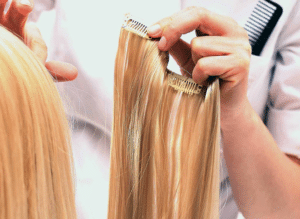
For clip-ins and halos, remove pieces, detangle gently, clarify mid-to-ends, chelate if needed, deep-condition, rinse cool, and air-dry flat. Finish with heat protection and a light serum on ends only.
Step-by-step reset for removable hair
Tools: wide-tooth comb, microfiber towel, extension-safe clarifier, chelating treatment (optional), moisturizing mask, heat protectant, light serum.
- Detangle dry: Hold the top of each piece and brush ends → mid → top to prevent weft stress.
- Clarify: Shampoo mid-to-ends. Work downward; avoid scrubbing. Rinse thoroughly.
- Chelate (if hard water): Apply a chelating treatment according to label on mid-to-ends. Rinse well.
- Mask: Apply a hydrating mask from mid-to-ends. Comb through with a wide-tooth comb. Leave for 10–15 minutes.
- Rinse cool: Close the cuticle with a cool rinse until water runs clear and strands feel sleek.
- Blot, don’t wring: Press in a microfiber towel. Lay pieces flat on a towel; reshape wefts straight.
- Dry: Air-dry to 70%. Finish with low heat and a nozzle, brushing downward.
- Seal: Apply a rice-grain amount of lightweight serum on ends only.
- Store right: Hang or lay flat, fully dry, away from sun. Keep clips closed to protect stitching.
Why it works: Clarifying removes film so hydration can enter. Chelating lifts minerals that make hair feel “squeaky” and stiff. An acidic rinse or cool water seals the cuticle. Light silicone on ends gives glide without heavy residue that grabs dust.
How to soften installed tape-in/weft/keratin extensions at home?
Installed systems need softness without bond failure. Clients often over-condition roots or cook bonds with irons.
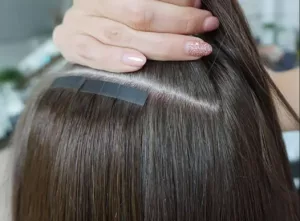
Use a roots-clean/mids-moisture workflow: cleanse scalp lightly, hydrate mid-to-ends, seal the cuticle, and dry roots completely. Keep oils and heavy conditioners off tabs, bonds, and beads.
Bond-aware home routine that improves slip
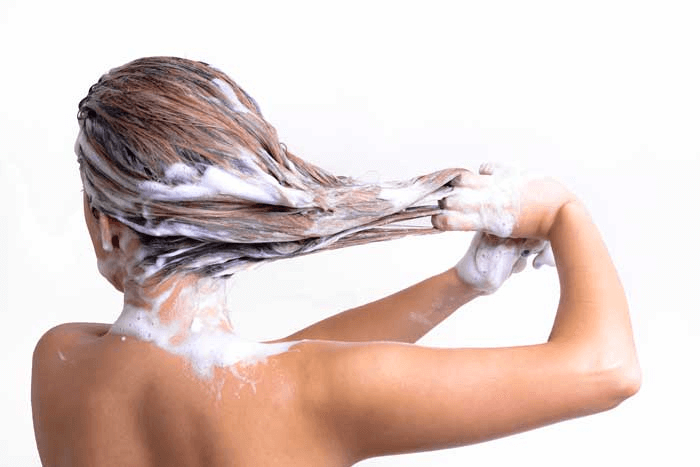
Cleansing: Use an extension-safe shampoo. Massage the scalp with fingertips; let suds pass through mid-lengths. Rinse thoroughly. If buildup is heavy on lengths, do a second gentle pass on mid-to-ends only.
Hydration: Apply a moisturizing conditioner or mask from mid-to-ends. Pin up lengths to avoid runoff over bonds. Wait 3–5 minutes; comb with a wide-tooth comb from ends upward while supporting the row with your other hand.
Rinse and seal: Rinse cool. A quick acidic leave-in (pH ~4–5) helps lay the cuticle. Avoid the root area.
Drying: Squeeze with a microfiber towel. Blow-dry roots first on low/medium heat with a nozzle to remove moisture around tabs/bonds/rows. Then dry the lengths while brushing downward. End with a cool shot.
Finishing: Use a heat protectant before hot tools. Keep irons/wands away from bonds. Add a drop of light serum to the last third only.
Row/system specifics
| System | Key Caution | Extra Tip |
|---|---|---|
| Tape-in | No oils/conditioner on tabs | Dry tab area fully before bed |
| Keratin/U-tip | No direct heat on bonds | Leave 2–3 cm “no-product zone” |
| Wefts/Beaded | Avoid heavy product on track | Support row with hand while brushing |
| Invisible/Seamless tapes | Keep heat minimal at edges | Single-side near parts needs extra care |
Do you need clarifying or chelating to make extensions soft?
Some dryness is not from lack of moisture but from mineral and product film. Many masks fail until you clear the barrier.
Yes. Clarifying removes product film. Chelating removes hard water minerals. Use clarifying monthly and chelating as needed in hard water regions to restore slip and shine.
When to clarify vs when to chelate
Clarifying (surfactant-focused): Best for hairspray, dry shampoo, silicone build, and styling residue. Signs: heavy feel, dullness, products stop working, strands feel coated. Use once every 3–4 weeks on lengths for installed hair; more often for removable sets that see frequent product.
Chelating (mineral-focused): Best for hard water deposits (calcium/magnesium), iron/rust. Signs: hair feels squeaky when wet but stiff when dry, blonde tones look brassy, masks “slide off.” Use as needed (every 4–8 weeks) on mid-to-ends. Always follow with a hydrating mask.
Decision mini-matrix
| Symptom | Likely Cause | Use |
|---|---|---|
| Coated, waxy feel | Product film | Clarify |
| Squeaky, stiff feel | Minerals | Chelate |
| Brass after showers | Iron/minerals | Chelate + purple/blue gloss (pro) |
| Products stop working | Film + minerals | Clarify, then chelate |
Bond protection: Keep both steps away from tabs/bonds/tracks. For installed hair, apply from a ponytail band downward. Rinse thoroughly and dry roots fully.
What weekly habits keep extensions soft longer?
Emergency “spa days” are costly and rare on busy weeks. Small daily habits extend softness and reduce service time.
Follow a “little and often” plan: gentle washing, smart conditioning, protective drying, low-friction sleep, heat control, and smart brushing. These keep cuticles flat and fibers smooth.
Simple routine clients will actually keep
Wash: 2–3× weekly with extension-safe shampoo. Support roots with one hand while the other hand smooths lengths. Over-washing dries fibers; under-washing leaves residue.
Condition: Mid-to-ends only. Use a lightweight daily conditioner and a richer mask once weekly.
Dry: After sweat or swim, rinse and dry roots. Do not leave moisture under rows or tabs.
Brush: Twice daily with a loop or boar-mix brush. Hold roots with one hand; brush from ends upward.
Sleep: Use a silk pillowcase or bonnet and a loose braid or low pony.
Style: Heat-protect every time. Keep irons and wands off bonds and weft tracks.
Add-ons: A pea-sized leave-in on mid-to-ends after washing keeps slip; a rice-grain of serum on ends before photos restores shine.
Weekly planner
| Day | Action | Why |
|---|---|---|
| Mon | Wash + condition mids/ends | Reset film; add light moisture |
| Wed | Brush AM/PM + cool blow on roots | Stop tangle seeds at nape |
| Thu | Mask mids/ends | Deep hydration bank |
| Sat | Quick rinse after activities | Sweat salts out; roots dry |
What mistakes make extensions rougher?
Good intentions often backfire. Some “hacks” create bigger problems within a week.
Avoid roots-to-ends oiling, conditioner on bonds, daily high heat, cotton friction, and aggressive brushing. Skip DIY protein overloads and strong vinegar soaks that can stress color.
Break these habits for instant improvement
Root oiling and bond flooding: Heavy oils migrate into tape and bead areas and cause slip and dust grab. Keep oils only on the last third of the hair.
Daily high heat: Repeated 400°F passes collapse cuticles and cook moisture out. Use moderate heat and fewer passes.
Cotton friction: Cotton pillowcases roughen fibers. Switch to silk.
Yank brushing: Pulling from roots tears near anchors. Always support roots with the other hand.
Protein overload: Stacking protein treatments without moisture creates a hard, brittle feel. Alternate moisture and protein, and use protein sparingly.
Vinegar/DIY acid baths: Strong acids can shift tone and weaken adhesives. Use pH-balanced salon products instead.
Skipping root dry: Leaving dampness near rows or tabs weakens edges and invites odor.
Quick reference
| Bad Habit | Replace With | Result |
|---|---|---|
| Oil at roots | Serum on ends only | Soft ends, safe bonds |
| High heat daily | Moderate heat + protectant | Less cuticle damage |
| Cotton pillow | Silk pillow/bonnet | Lower friction |
| Root yanking | Supported brushing | Fewer snaps |
| Weekly protein | Monthly light protein + weekly moisture | Balanced strength |

My opinion
Softness returns when you follow order: clear film or minerals, rehydrate, then seal—and always protect anchors. Removable sets deserve full resets; installed sets need bond-aware care. Simple weekly habits prevent emergencies and keep move-ups smooth.
FAQ
Can I use coconut or olive oil on extensions?
Use lightweight silicone or lightweight blends on ends only. Avoid cooking oils; they are hard to remove and grab dust.
How often should I clarify extensions?
About every 3–4 weeks on mid-to-ends, more often for clip/halo sets that see heavy product. Keep clarifiers off adhesive/bond zones.
Do I need a chelating treatment if water is hard?
Yes, every 4–8 weeks on mid-to-ends. Follow with a hydrating mask. Chelate first, then hydrate.
My ends look white and rough—what now?
Trim dust the tips, then run a hydrate-and-seal cycle. White-dot ends mean the cuticle is compromised; no product can glue it back.
Is heat bad for extensions?
High, frequent heat is. Use moderate heat with protectant and fewer passes. Keep tools away from bonds and tabs.
Can I sleep with wet extensions?
No. Dry roots and rows before bed. Moisture near anchors leads to odor, slip, and rough texture.
What brush is best?
Loop or boar-mix. Always hold roots with your other hand and brush ends → mid → top.
Do leave-in conditioners help?
Yes, if applied mid-to-ends. They add slip and moisture between washes without flooding bonds.
Will apple cider vinegar make extensions soft?
Strong vinegar soaks can shift tone and stress adhesives. Use a pH-balanced acidic leave-in or simply finish with a cool rinse.
Can I use purple shampoo on extensions?
Yes, on mid-to-ends and briefly. Avoid bonds. Always hydrate after toning; toners can be drying.
How do I fix nape matting?
Detangle gently, add a pea of leave-in, and sleep in a loose braid. During the day, watch scarves/hood friction.
Why do masks stop working?
Film or minerals block penetration. Clarify or chelate first, then rehydrate.
Can I use protein treatments?
Sparingly. Overuse creates stiffness. Pair with moisture and limit to monthly for weakened ends.
How long should a deep-conditioning session be?
10–15 minutes is enough once the strand is clean. Longer times do little if film remains.
Do silicones ruin extensions?
No when used lightly on ends. They add slip and shine. Heavy use builds film; rotate with silicone-free hydrators.

Conclusion
Clear film or minerals, rehydrate mid-to-ends, and seal the cuticle—while keeping bonds clean and dry. Follow simple weekly habits, protect anchors, and use light finishes on ends. Softness lasts when routines stay small, consistent, and bond-safe.
1