Clip-in hair extensions are one of the most popular temporary extensions. Many girls wear them for daily volume, quick length, and special events. But then the real problem shows up. Your natural hair feels too thin to cover the clips. Or you put your hair up and the clips keep peeking out. Does that sound familiar?
You can hide clip in hair extensions by placing clips only in “safe zones,” leaving enough top hair to cover every track, and using a grippy base so clips stay flat. Thin hair needs lighter sets and smaller clips. Upstyles need a “no-clip circle” around the ponytail base.

Let’s make this simple and real. The guide below shows the same steps stylists use to keep clip-ins invisible in daily wear, thin hair, very short hair, and ponytails.
How to hide clip in hair extensions?
You finish clipping in. You look in the mirror. You love it. Then you turn your head. A clip edge flashes. That moment can ruin your confidence fast.
Clip-ins stay hidden when your clips sit in dense hair areas, your partings are clean, and you keep enough natural hair over each track. A quick movement check under bright light helps you catch problems before you leave the house.
Dive deeper
Start with the base, because clip-ins only stay invisible when they stay in place. If your hair is very silky or freshly washed, clips can slide. If your roots are oily, clips can also move. A simple fix is to add a little grip. Many people use a light texture spray at the roots where the clips will sit. That gives “hold” without making hair feel sticky.
Next is sectioning. Clean sections matter more than people think. If your section line is messy, the hair above it will not cover evenly. A practical approach is to place the first weft around the mid-back of the head, not too low at the nape. Low wefts can show when you look down or when the wind lifts your hair. After that, build upward in balanced layers.
Now think about cover hair. Cover hair is the natural hair that sits on top of the clip line. If you do not leave enough, the clip edge can show when you move. Many people need more cover hair than they expect, especially if the hair is fine. Also check the clip closure. A clip that is not fully closed can lift and show.
Finally, do a simple test. Turn your head left and right. Look down. Shake your head lightly. Then check again in bright light. Indoor warm light can hide problems that daylight will show. A quick photo from the side and back also catches bumps.
| What you see | Why it happens | What to do |
|---|---|---|
| Clip edge shows near the top | The track is too high | Move the track down 1–2 cm and leave more cover hair |
| Bumps under hair | Too many clips or thick base | Use fewer clips or flatten the base with a smaller anchor |
| Track slides after a while | Roots are too silky | Add grip spray and a small anchor tease at the base |
| Blend looks “separated” | Texture does not match | Style your hair and clip-ins together as one |
This is the core rule set. If you get this right, most “clip showing” issues disappear.

How to hide clip in extensions in thin hair?
If your hair is thin, clip-ins can feel tricky. You want the volume. But you also worry the clips will print through and show.
Clip-ins hide best in thin hair when you use a lighter set, fewer tracks, smaller clips, and a flat weft. You also need more cover hair and smarter placement away from the crown and hairline.
Dive deeper
Thin hair needs a different mindset. More hair is not always better. More tracks can create more seams, and seams are what show. A better strategy is “less bulk, better blend.” Many people do best with fewer wefts, placed only where the hair is densest. That usually means the mid-back of the head instead of very high near the crown.
The anchor matters too. If you clip into very smooth roots, the clip can slide down. A small anchor tease right at the root line where the clip will sit can help. Keep it gentle. You do not need big teasing. You only need a small grip zone. A light grip spray can help too.
Placement should avoid high-risk areas. The crown often exposes clips because hair parts and moves there. The front hairline is also risky because the hair is usually finer. Keep most tracks in safer zones, then blend the sides with styling instead of adding big side wefts.
This is also where the keyword how to hide hair extension clips fits naturally. On thin hair, clips hide when the set sits flat and the weight is controlled. Bulky wefts and heavy grams make clips easier to see.
| Thin hair problem | What it looks like | Fix that feels natural |
|---|---|---|
| Scalp shows between wefts | You see “gaps” | Use fewer wefts and place them in dense zones |
| Clip outline shows | A shadow or edge appears | Use smaller clips and leave more cover hair |
| Clips feel painful | The roots feel pulled | Reduce grams and spread clips more evenly |
| Hair looks fake | Too much volume at once | Match volume to your natural density |
If you want a natural result, thin hair clip-ins should look like “your hair but better,” not like a big hair helmet.

How to hide clip in extensions in very short hair?
Very short hair can still wear clip-ins. But the blend has to be planned. Otherwise, you get that obvious line where your real hair ends.
Clip-ins blend better on very short hair when the length jump is not extreme, tracks sit in safe cover zones, and you style everything together so the transition line disappears.
Dive deeper
With very short hair, the biggest enemy is the “shelf line.” That is the line where your natural hair ends and the longer hair begins. If everything is straight, that line becomes sharp and visible. So blending usually needs texture. Soft waves are your friend because they hide the line and make everything move together.
Next is length jump. If your hair is short and blunt, going extremely long can look unnatural and can be hard to hide. A more realistic length choice often blends much better. If you really want long hair, styling becomes even more important.
Placement should avoid the nape if the nape hair is too short to cover clips. Some short cuts have very little hair at the bottom. If you put a track too low, it will show when you look down or when hair shifts. A safer plan is placing tracks higher where the hair is stronger.
Shaping helps too. If the clip-in ends are blunt but your haircut has layers, the blend can look heavy. Many people do a light trim on the clip-ins while wearing them, especially around the face. The goal is not to “cut a lot.” The goal is to soften the outline so it matches your haircut.
| Short hair issue | What it looks like | Fix |
|---|---|---|
| Shelf line shows | A hard line across the back | Add waves and reduce extreme length jump |
| Clips show at the bottom | Nape hair is too short | Place tracks higher and avoid low placement |
| Sides look bulky | Side hair is fine and short | Use smaller side pieces or skip sides |
| Blend looks messy fast | Hair moves differently | Style your hair and clip-ins together |
Short hair clip-ins can look amazing, but they need a “blend-first” plan.
How to put hair up with clip in extensions?
Putting your hair up is where clip-ins love to betray you. A ponytail can pull the hair tight and expose the clips. And photos can make it worse.
You can put hair up with clip in extensions by keeping clips away from the ponytail base, placing tracks higher, and covering the base with a wrap section. A “no-clip circle” around the elastic area keeps clips from lifting.
Dive deeper
Upstyles change the rules. When your hair is down, the top layers fall and cover clips naturally. When your hair goes up, those layers get pulled tight and the base becomes exposed. So track placement has to match the upstyle.
Use the “no-clip circle.” Imagine a circle around where your ponytail elastic will sit. Keep clips outside that circle. If a clip sits inside the tension zone, it will lift when the ponytail pulls upward. That is when you see clip edges or bumps.
A practical spacing rule is to keep clips about 2–3 cm away from the ponytail base. Then place tracks higher on the head so they support the ponytail length. Narrow wefts often work better than wide wefts for ponytails because they create fewer bumps.
After you make the ponytail, cover the base. Take a small section of hair and wrap it around the elastic. Pin it underneath. That wrap hides the join and also hides small uneven areas.
This is also where the keyword how to hide clip in extensions in a ponytail fits naturally. The ponytail looks clean when clips are outside the tension zone and the base is covered with a wrap section.
| Ponytail problem | Why it happens | Fix |
|---|---|---|
| Clips show near elastic | Clips sit in tension circle | Move clips higher and keep distance from base |
| Ponytail looks bumpy | Too much hair at the base | Use fewer wefts and narrower pieces |
| Ponytail feels heavy | Too many tracks | Reduce tracks and balance placement |
| Ponytail looks thin | Not enough hair in tail | Add a small track higher or use a ponytail piece |
If you want the safest style, try a mid ponytail first. High ponytails are harder because they increase tension.
How to hide clip in extensions with layers?
Layers can help hide extensions. But layers can also expose tracks if the short layers lift and flip up.
Clip-ins hide better with layers when tracks sit below the shortest moving layer, side wefts stay small, and you style everything into one shape.
Dive deeper
Think of your haircut like a map. The shortest layers are the “reveal layers.” When they move, they can uncover seams. So you want your tracks placed in safe zones where there is enough hair above them to cover.
If your layers are short around the crown, avoid putting tracks too high. Crown placement is risky because hair parts and moves a lot there. Mid-head placement is usually safer. For the sides, keep pieces small. Side layers tend to be shorter, so big side wefts can show or feel bulky.
Now look at shape. If your hair is layered but your clip-ins end in a blunt curtain, the blend can look heavy. A light shaping of the clip-ins can help. Face-framing and soft ends often make everything look more natural.
Styling helps layers blend. Straight hair can show lines. Soft bends and waves hide seams because the hair flows together. The best approach is styling your hair and clip-ins together, not separately.
| Layer issue | What you notice | Fix |
|---|---|---|
| Short layers expose seam | You see a line when hair moves | Place tracks lower or use smaller wefts |
| Ends look too heavy | Hair looks “blocky” | Soften clip-in ends to match your haircut |
| Sides look thick | Side layers are short | Use smaller side pieces or skip sides |
| Crown looks split | Track sits too high | Lower track and increase cover hair |
Layers can be a big advantage, but only when placement respects the layer map.
How to hide clip in extensions with color and texture match?
Sometimes clips are hidden, but the hair still looks “not yours.” That can make the attachment area feel obvious even if clips are not flashing.
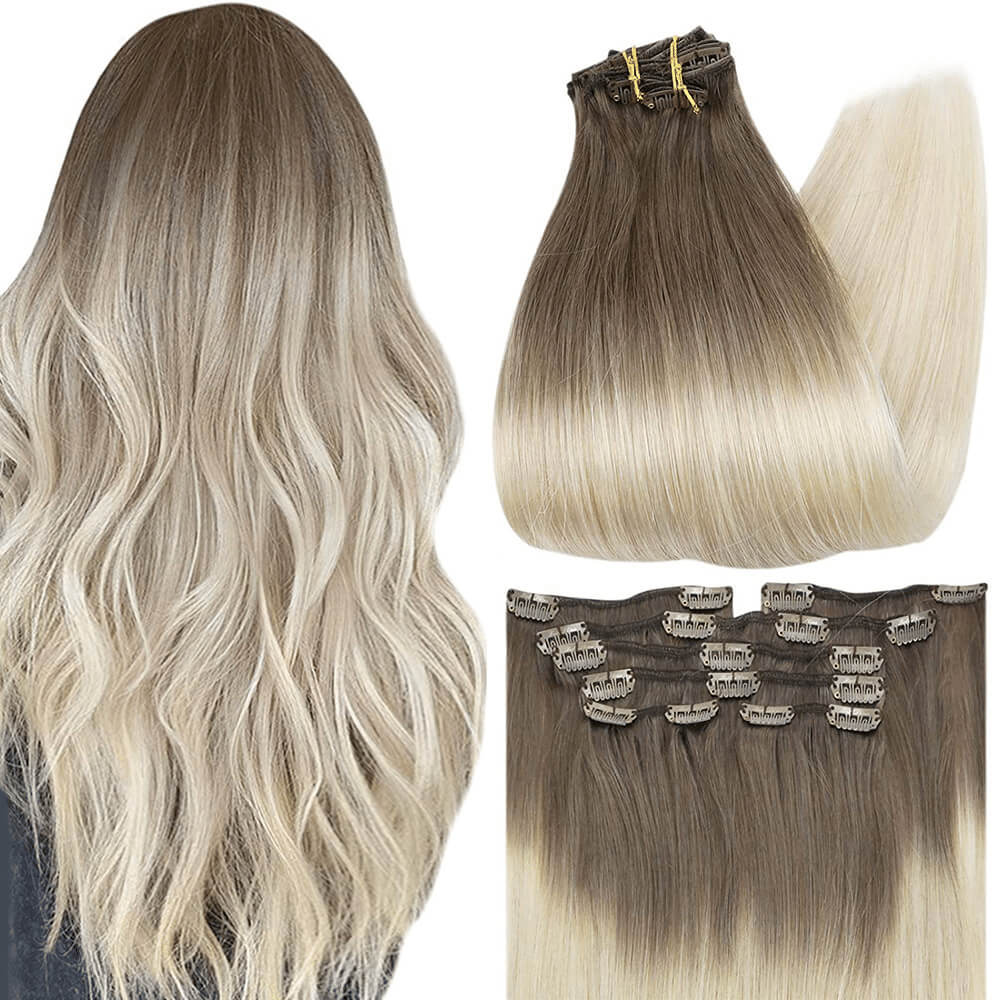
Clip-ins look more hidden when color, highlight pattern, shine level, and texture match your natural hair. Styling both together creates one surface and makes joins harder to see.
Dive deeper
Color match should be checked in three parts: root, mid-length, and ends. Many sets match the ends but fail near the root area. Root mismatch is the biggest giveaway because that is close to the clip zone. If your hair has highlights, you also need the highlight pattern to match. A single flat color can look like a panel.
Shine is another hidden problem. Some clip-ins look shinier than natural hair. In bright light, that shine difference makes the hair look separate. A light dry texture spray can reduce shine and add grip. Heavy oil can make shine worse and can also make clips slip, so it is not the best product near the roots.
Texture match is just as important. Straight hair on a wavy set looks off, and the join line becomes clearer. If your hair has a natural bend, choose a texture that matches. If you cannot match perfectly, style everything together. Curling or waving both at the same time makes them behave like one.
| Match problem | What it looks like | Fix |
|---|---|---|
| Root tone mismatch | Top looks different from length | Match root tone or choose rooted shades |
| Highlight mismatch | Extensions look like a “sheet” | Choose multi-tone or custom blend shades |
| Shine mismatch | Extensions look separate | Use dry texture spray, avoid heavy oil at root |
| Texture mismatch | Blend looks split | Match texture or style both together |
If you care about photos, match matters as much as placement.
How to hide clip in extensions during long wear and active days?
It looks perfect at the start. Then a few hours later, clips shift. You feel them. You touch them. And then they show.
Clip-ins stay hidden all day when the base has grip, the set is not too heavy, and clips close strongly. Comfort matters because if you keep adjusting, you increase exposure.
Dive deeper
Long wear is about two things: stability and comfort. If the set is heavy, you will feel it. If you feel it, you will touch it. Touching is what causes many “clip showing” moments.
Start with weight control. If your hair is fine, choose a lighter set. Fewer wefts can still look full if placement is smart. Balanced placement also matters. Too much hair in one zone can create bumps and pressure.
Grip helps prevent shifting. If your hair is very smooth, use a light grip spray at the root line. A small anchor tease can also help. Keep it controlled. You want grip only where the clips sit.
Clip quality matters too. Clips can weaken over time. If a clip does not close tightly, it can lift. That lift is what shows. If your set is old, check each clip. Replace weak ones.
Do a quick real-life check before you go out. Turn your head. Look down. Shake lightly. Take one photo from the back. That one photo can save your whole day.
| After-hours problem | Why it happens | Fix |
|---|---|---|
| Tracks drift | Roots are too smooth | Add grip spray and a small anchor |
| Hair feels sore | Too much weight | Reduce wefts and rebalance placement |
| Clips open | Clips are worn | Replace clips and test closure |
| You keep touching | Discomfort or insecurity | Improve comfort and simplify placement |
The best clip-in set is the one you forget you are wearing.

My opinion
Clip-ins are not “hard,” but they punish small mistakes. If you want them invisible, you need a simple system. You need safe zones. You need enough cover hair. You need flat placement. And you need an upstyle plan that keeps clips away from the ponytail base.
Most people try to fix showing clips by adding more hair. That usually makes it worse. A better fix is reducing bulk and improving placement. That one change often gives the most natural result.
FAQ
Why do my clip-ins show when I move?
Your tracks may be too high, or you may not have enough cover hair above the clip line. Do a movement test and adjust track height.
Can thin hair wear clip-ins without showing?
Yes. Use a lighter set, smaller clips, and place tracks only in dense zones. Avoid crown and hairline placement.
What is the easiest way to hide clip-ins in a ponytail?
Keep clips outside the tension circle around the ponytail base. Cover the elastic with a wrap section.
Should you use oil to hide clip-ins?
Oil can make hair slippery and can cause clips to slide. If you use oil, keep it on mid-length and ends, not near the root.
Do waves really help hide clip-ins?
Yes. Soft waves reduce harsh lines and make natural hair and clip-ins move together, so seams become harder to notice.
Conclusion
Clip-ins stay invisible with smart placement, enough cover hair, good matching, and a quick movement check before you step out.