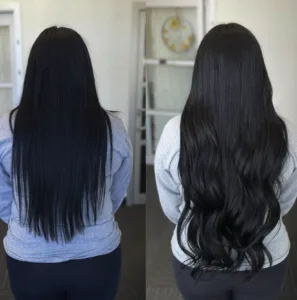
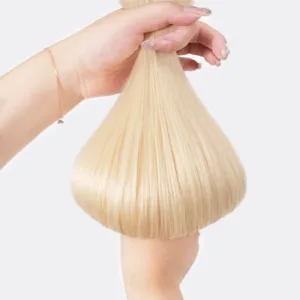
Hair extensions can transform length, volume, and overall style fast. But many buyers and clients feel confused because there are so many application methods, and each one works in a different way.
There are several different ways to put extensions in hair, including clip-in, halo, tape-in, keratin tip, I tip, micro bead, hand-tied weft, genius weft, machine weft, beaded weft, and sew-in methods. The best choice depends on how long the client wants to wear them, how much maintenance she accepts, and what suits her hair type best.
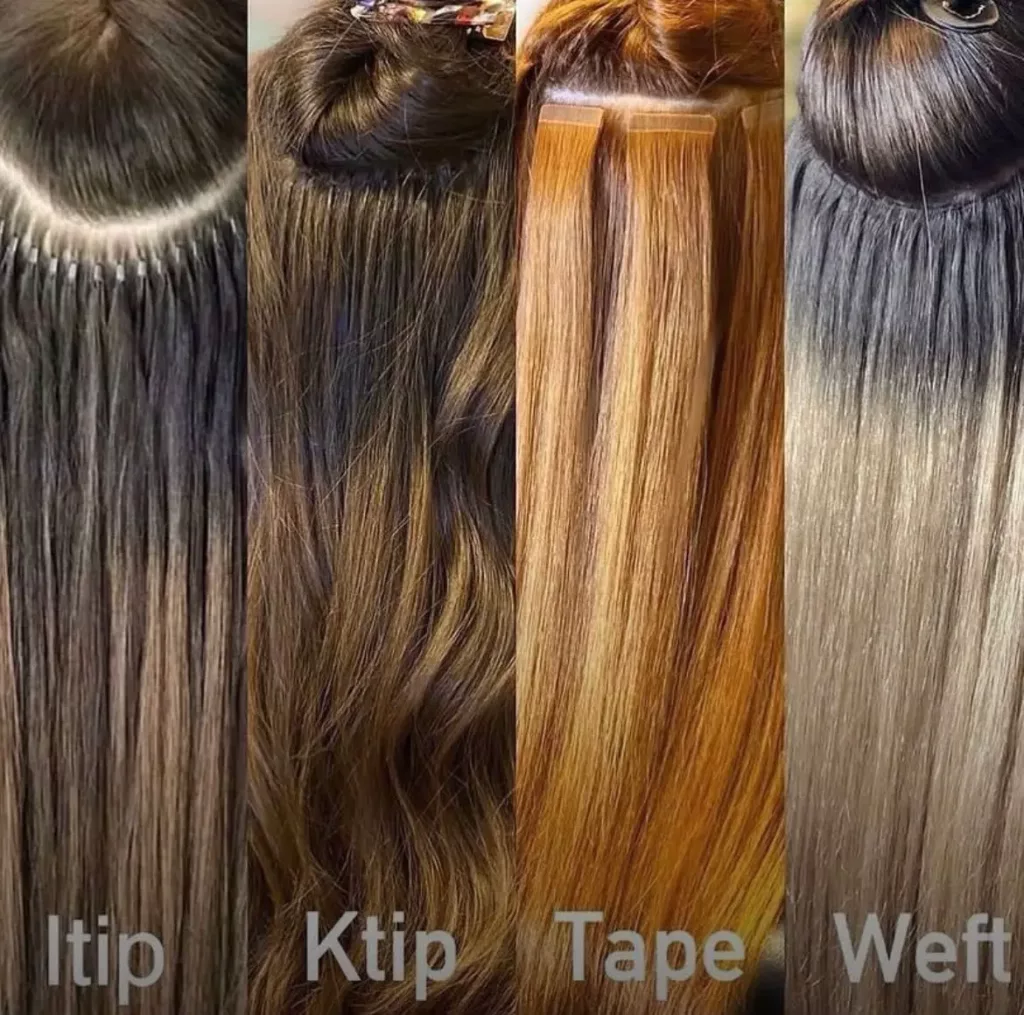
When I explain hair extension methods, I do not start with one “best” option. I first separate removable methods from salon-installed methods. Then I compare attachment style, maintenance, comfort, and suitability for different clients. That makes the topic much easier to understand.
How Are Hair Extensions Put In?
Hair extensions are put into the hair in several main ways, such as clipping, taping, bonding, beading, sewing, or layering with invisible support systems like halo wire. Each method attaches the hair differently and creates a different maintenance routine.
I think this is the best place to start because many people know the names of extension types but do not really know how they are installed. In simple terms, every extension method is built around one attachment system.
Some methods attach with clips. Some use tape adhesive. Some use keratin bonds that are melted and shaped onto the natural hair. Some use beads or rings to hold the extension in place. Others are sewn into a row foundation. And some methods, like halo extensions, do not attach directly to the natural hair at all. They sit on the head with a hidden wire.
This matters because the installation method affects everything else. It affects how long the extensions stay in. It affects whether the client can remove them at home. It affects how often she needs salon maintenance. It also affects whether the method is a good fit for fine hair, thick hair, or a client who wants a quick and simple routine.
Here is the easiest way to think about it:
| Attachment type | Common methods | Main idea |
|---|---|---|
| Clip-based | Clip-in | Temporary and removable |
| Wire-based | Halo | Temporary and very easy to wear |
| Adhesive-based | Tape-in | Flat and salon-installed |
| Bond-based | Keratin tip / U tip | Individual bonded strands |
| Bead-based | I tip / micro bead / beaded weft | Attached without glue |
| Sewn methods | Sew-in / hand-tied weft | Attached to a row base |
| Weft placement methods | Genius weft / machine weft | Installed in rows with salon method |
So when someone asks how hair extensions are put in, I answer like this: they can be clipped, taped, bonded, beaded, sewn, or placed with removable support systems. After that, the real question becomes which method fits the client best.
Different Ways to Attach Hair Extensions
Hair extensions can be attached in removable, adhesive, bonded, beaded, or sewn ways. Each category gives a different balance of convenience, wear time, and maintenance.
The main ways to attach hair extensions are clip-in, halo, tape-in, keratin bond, bead-based application, and sew-in or weft-based installation. These methods are different in both technique and long-term salon planning.
I think this section helps readers understand that extension methods are not random. They usually fall into a few logical groups.
The first group is removable methods. These include clip-in and halo extensions. They are designed for temporary wear, and the client can usually take them off at home. These methods are simple and flexible. They are a good fit for clients who do not want daily installed extensions.
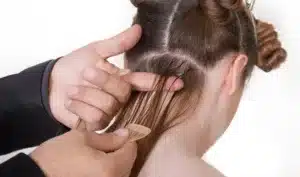
The second group is adhesive methods. Tape-ins are the most common example. These use adhesive tabs to sandwich the natural hair. They are popular because they lie flat and can give a very clean result. But they need professional application and a regular maintenance schedule.
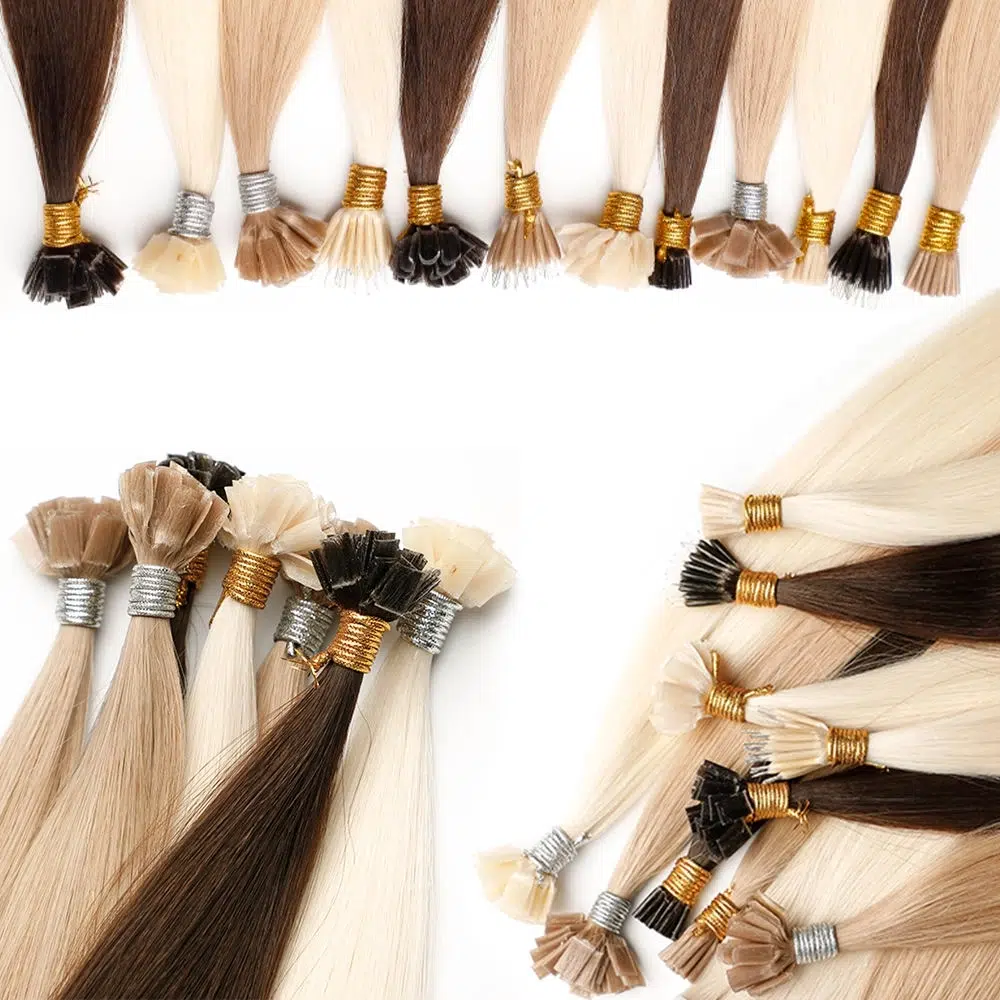
The third group is bonded methods. Keratin tip and U tip extensions belong here. These are attached strand by strand using keratin material. They are more detailed and time-consuming, but they can offer very natural movement and a longer wear cycle before full removal.
The fourth group is bead-based methods. I tip, micro bead, and some beaded weft methods fit here. These do not rely on glue or tape. Instead, they use small beads or rings to hold the extension in place. They can be very effective in the right hands, especially for clients who want a reusable salon method.
The fifth group is sewn or row-based methods. Hand-tied wefts, genius wefts, machine wefts, and sew-in methods often fall into this category. These methods build a row structure and then attach extension hair to it. They are common in professional salons and can offer strong reusability and flexible maintenance planning.
| Category | Examples | Best-known feature |
|---|---|---|
| Removable | Clip-in, halo | Easy home use |
| Adhesive | Tape-in | Flat finish |
| Bonded | Keratin tip, U tip | Individual strand movement |
| Bead-based | I tip, micro bead, beaded weft | No glue |
| Sewn / row-based | Wefts, sew-in | Strong salon maintenance value |
This is why I always explain attachment first. Once the reader understands how the method works, the rest of the comparison becomes much easier.
Removable Hair Extension Methods
Removable extensions are designed for temporary wear and easy removal. The two main removable methods are clip-in and halo extensions.
Clip-in and halo extensions are the most common removable hair extension methods. They are ideal for clients who want quick transformation without long-term installation or salon maintenance.
I think removable methods are a very important part of this topic because many readers do not actually want semi-permanent extensions. They just want extra volume or length for special occasions, content creation, events, or occasional styling.
Clip-in extensions are one of the easiest methods to understand. They come with attached clips, and the client places them section by section into the natural hair. They are very popular because they are flexible, easy to remove, and simple to control. They are a strong option for temporary wear and online retail sales. The quality can also be very premium if the hair itself is premium.
Halo extensions are another removable method, but they work differently. Instead of clipping into the hair, halo hair sits on the head with a nearly invisible wire. The natural hair covers the top, so the result can look smooth and natural when worn correctly. Halo extensions are often chosen by clients who want fast application and very low commitment.
These methods have clear strengths. They do not need salon installation in the same way as tape-ins or keratin tips. They are easier for many clients to manage. They also avoid the daily wear pressure that comes with installed extensions.
But removable methods also have limits. They are not ideal for continuous wear. They may not feel as secure for all-day professional salon use in the same way as installed methods. And they are less suitable for clients who want to wake up every day with the hair already in place.
| Removable method | How it works | Best for |
|---|---|---|
| Clip-in | Clips attach to sections of natural hair | Temporary volume and length |
| Halo | Hidden wire supports the hair piece | Fast and low-commitment wear |
So when I talk about removable methods, I see them as very practical, very user-friendly, and very valuable in the right situation. They are not lower-level methods. They simply solve a different need.

Semi-Permanent Hair Extension Methods
Semi-permanent extensions stay in the hair for a wear cycle and need regular maintenance. The most common semi-permanent methods include tape-in, I tip, micro bead, beaded weft, and several weft-based salon systems.
Tape-ins, bead-based methods, and many weft installations are considered semi-permanent because they remain in the hair for weeks and need move-up or reinstallation as the natural hair grows.
I think this category is where many salon clients start focusing, because semi-permanent methods offer a stronger day-to-day result than removable methods without always requiring the same bond system as keratin tips.
Tape-in extensions are one of the best-known semi-permanent methods. They are attached with adhesive tabs that sandwich the natural hair. They are popular because they lie flat, feel comfortable for many clients, and are efficient for salon work. They are a strong option for clients who want a polished look with a structured maintenance schedule.
I tip and micro bead extensions also sit in this category. These use small beads or rings to attach strand-by-strand hair without adhesive. They can work very well for the right client, especially when the stylist matches the strand size and placement carefully.
Beaded weft methods are another strong option. In these methods, a row is built with beads, and the weft hair is attached to that foundation. This gives the client a salon-installed look with reusability and a clear move-up system.
Many hand-tied, genius, and machine weft installs are also semi-permanent in practical salon life. They stay in for a wear cycle, then they are maintained or moved up as the natural hair grows.
The key point here is that semi-permanent does not mean one exact application style. It means the extensions stay in through normal daily life, but they are not meant to remain untouched forever. They are part of a maintenance system.
| Semi-permanent method | Main attachment style | Common benefit |
|---|---|---|
| Tape-in | Adhesive tabs | Flat and fast |
| I tip | Beads on individual strands | No glue |
| Micro bead | Small ring attachment | Flexible strand application |
| Beaded weft | Beaded row plus weft | Reusable salon system |
| Weft methods | Row-based installation | Strong move-up value |
So when I explain semi-permanent hair extensions, I focus on one simple idea: they are built for regular wear, but they need ongoing maintenance to stay beautiful and healthy.
Salon-Only Hair Extension Methods
Some extension methods require professional salon installation because they need technical skill, precise sectioning, and proper removal. These include keratin tip, sew-in, and most advanced weft systems.
Salon-only methods are usually more structured, more technical, and more dependent on professional application. They are not the kind of extensions most clients should try to install by themselves.
I think this section is very useful because many clients do not realize that not all extension methods are equally suitable for home use. Some methods look simple when seen online, but they are not simple in real application.
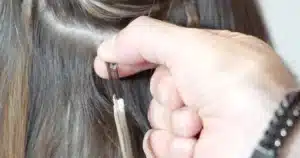
Keratin tip extensions are one of the clearest examples. These are installed strand by strand with keratin bonds that are melted and shaped around the natural hair. This method needs skill, control, and the right balance. It can create beautiful, natural movement, but it is definitely a salon method.
Sew-in methods also require professional skill. A row or braid base must be built correctly, and the extension hair must be attached in a balanced way. If the structure is poor, the result will not be comfortable or durable.
Advanced weft systems, including hand-tied wefts, genius wefts, and machine wefts installed in professional ways, also need salon-level sectioning, row building, and maintenance knowledge. The hair may come as a weft product, but the installation itself is still a skilled service.
This matters because salon-only does not just mean “harder.” It means the method depends on professional precision for both beauty and safety.
| Salon-only method | Why it needs a pro | Key feature |
|---|---|---|
| Keratin tip(U Tip,K Tip,V Tip) | Bond heating and shaping | Natural individual movement |
| Sew-in | Row or braid structure | Secure salon installation |
| Hand-tied weft | Precise row building | Flat and elegant weft look |
| Genius weft | Professional weft placement | Thin and flexible result |
| Machine weft | Structured salon install | Strong volume option |
So when I explain salon-only methods, I always make one thing clear: these methods can look amazing, but they need professional hands to perform at their best.
Which Extension Method Should You Choose?
There is no single best way to put extensions in hair. The right method depends on the client’s hair type, lifestyle, maintenance habits, styling goals, and budget.
The best extension method is the one that fits the client’s real needs. Some clients need temporary flexibility. Some want a flatter salon finish. Some want strand-by-strand movement. Some want reusable weft maintenance.
I think this final comparison section is where the article becomes truly helpful. It is easy to list methods. It is more useful to help the reader choose between them.
If the client wants something easy to remove, low commitment, and simple for occasional wear, clip-in or halo extensions usually make the most sense. These methods are especially useful for temporary volume, event styling, or online retail customers.
If the client wants a more polished day-to-day result but still wants a relatively fast salon service, tape-ins are often a strong choice. They are flat, neat, and very popular in salons.
If the client wants individual strand movement and a more detailed salon installation, keratin tips or U tips may be the better fit. These methods often appeal to clients who want a long-wear bonded system.
If the client prefers no glue and wants a method based on beads or rings, I tip, micro bead, or beaded weft methods may be better.
If the client wants strong reusability, salon maintenance structure, and fuller row-based installation, hand-tied weft, genius weft, machine weft, or related systems are often ideal.
This is how I simplify the decision:
| Client goal | Method that often fits well |
|---|---|
| Temporary and easy | Clip-in or halo |
| Flat and quick salon result | Tape-in |
| Strand-by-strand natural movement | Keratin tip or U tip |
| No glue application | I tip or micro bead |
| Reusable salon row method | Weft or beaded weft |
| Strong volume in structured install | Sew-in or machine weft |
So when I answer which extension method someone should choose, I do not try to crown one winner. I match the method to the real wearing plan. That is the most honest and professional answer.
My Opinion
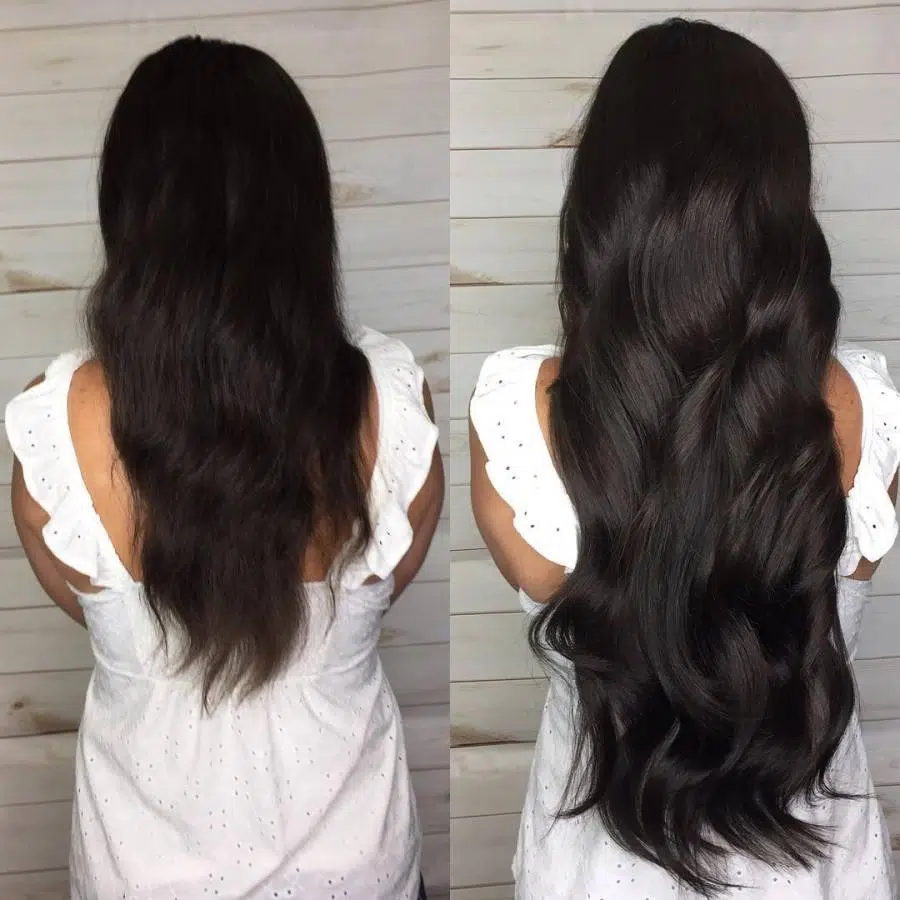
I do not think the smartest way to explain hair extensions is to rank one method above all others. I think the better way is to explain how each method works and which client it serves best.
In my view, removable methods like clip-in and halo are excellent for flexibility. Tape-ins are excellent for a flat salon finish. Keratin methods are strong for individual movement. Bead-based methods are useful for clients who want no glue. Weft systems are strong for salon structure, reuse, and long-term maintenance. The real answer always comes back to fit.
FAQ
What are the main ways to put extensions in hair?
The main ways are clip-in, halo, tape-in, keratin bond, bead-based methods, sew-in, and weft-based installation.
Which hair extension method is easiest to use at home?
Clip-in and halo extensions are usually the easiest methods for home use.
Which methods need a salon professional?
Keratin tip, U tip, sew-in, hand-tied weft, genius weft, machine weft, and most advanced bead-based installs need professional salon application.
Are tape-ins temporary or semi-permanent?
Tape-ins are usually considered semi-permanent because they stay in the hair for a wear cycle and need salon maintenance.
Is there one best way to install hair extensions?
No. The best method depends on hair type, styling goals, maintenance level, and how the client wants to wear the hair.
Conclusion
There are many different ways to put extensions in hair, and each method works in a different way. The right choice depends on wear style, maintenance needs, and the client’s real lifestyle.
where to buy Different hair extensions
Hibiscus Hair Manufacturer has been dedicated to producing high-quality hair extensions for 25 years and is a recognized leader in the industry. If you are interested in finding a reliable hair extensions supplier and wholesale for your brand, please visit our website for more information: