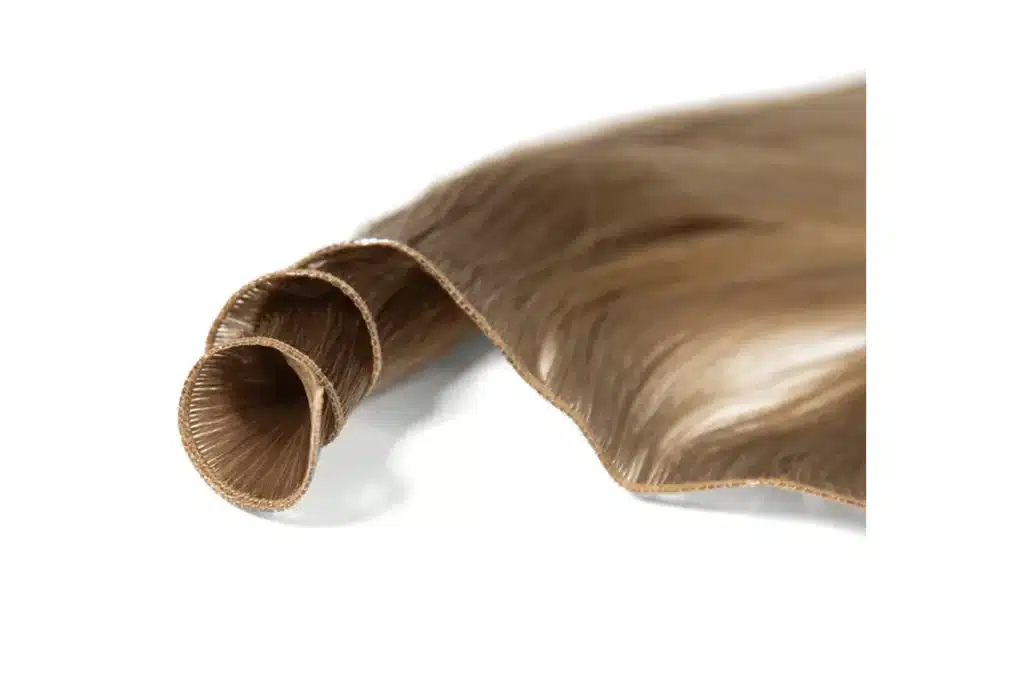
Stylists often choose genius weft for a thinner row, then worry that trimming the track will create shedding at the cut point. The answer depends on construction and handling.
Most quality genius weft extensions can be cut to fit a planned row because the top is reinforced differently from traditional hand tied weft. We still recommend a sample cut and seal check before a salon relies on this feature, because construction quality and cutting method affect the result.
We recommend explaining the difference clearly during a salon consultation. A cuttable weft can reduce folding bulk and make a custom width easier, but it is not a reason to cut without checking the exact product first.
Why Can Genius Weft Usually Be Cut?
Genius weft is usually designed with a reinforced, thin top that allows a stylist to trim the width without opening the entire weft construction.
Traditional hand tied weft uses individual tied points at the top. Cutting across those ties can release hairs and create a shedding problem. Genius weft is built differently, so a cuttable track is one of its practical advantages.
We still ask buyers to separate a product feature from a supplier claim. A very thin top is not enough on its own. The reinforcement must remain stable after a clean cut, normal combing, washing, and installation.
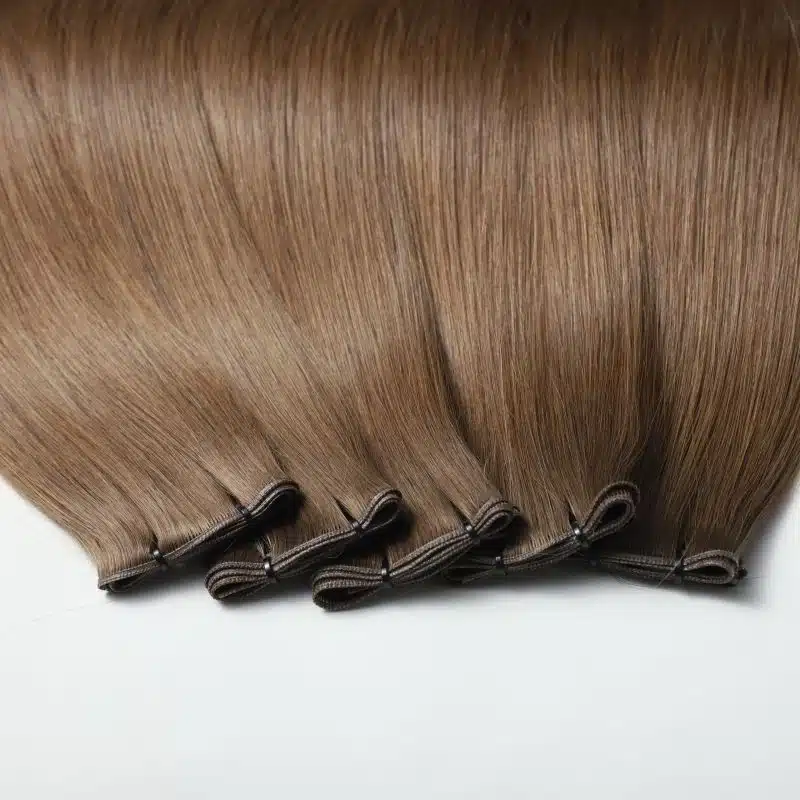
What Should a Stylist Check Before Cutting a Genius Weft?
A stylist should confirm the supplier’s cutting guidance, inspect the top seam, and make a small controlled cut on a sample before cutting a client’s full set.
| Check | What we recommend | Why it matters |
|---|---|---|
| Sample cut | Trim a short section first | Shows whether the edge remains stable |
| Seam inspection | Look for clean, continuous reinforcement | Helps identify weak construction |
| Tool choice | Use sharp, clean shears | Reduces pulling at the top |
| Cut position | Measure the row before cutting | Avoids a too-short track |
| Edge behavior | Comb and handle the cut point | Checks for loose hair after trimming |
In one sample review, a salon folded a genius weft at the side because it had not confirmed whether the product could be cut. The fold created more bulk than the client could hide. After a sample cut test confirmed seam stability, the salon used the trimmed width on the next install and achieved a flatter side profile.
How Should a Stylist Cut Genius Weft Extensions?
The stylist should measure the placement area, remove the weft from the client when practical, and make one clean cut with sharp shears instead of repeated short snips.
We recommend measuring the usable row before the client appointment. The stylist should then cut only the length needed for the placement. Repeated cutting in the same area can make the edge untidy and makes it harder to inspect whether the top remains stable.
After the cut, we recommend gently combing the edge and checking the weft after the row has been installed. A professional should not promise zero shedding from any hair product. The important check is whether the cut causes unusual release at the seam.
What Causes Shedding After a Genius Weft Is Cut?
Unusual shedding after cutting can come from weak seam construction, rough tools, repeated trimming, or handling that pulls at the top of the weft.
Weak or inconsistent reinforcement
If the top construction is not stable, cutting may expose a weak section. A buyer should report the exact cut location, product code, and handling method when asking a supplier to review the issue.
Incorrect product identification
Some wefts look thin in photos but are not built as a cuttable genius weft. We recommend confirming the construction in writing before an order. A hand tied weft and a genius weft should not receive the same cutting instruction.
Excessive tension during installation
The American Academy of Dermatology notes that repeated pulling hairstyles can contribute to hair loss.[1] We apply this guidance to the row plan as well. A stable cut edge does not make a row safe if the installation is too tight.
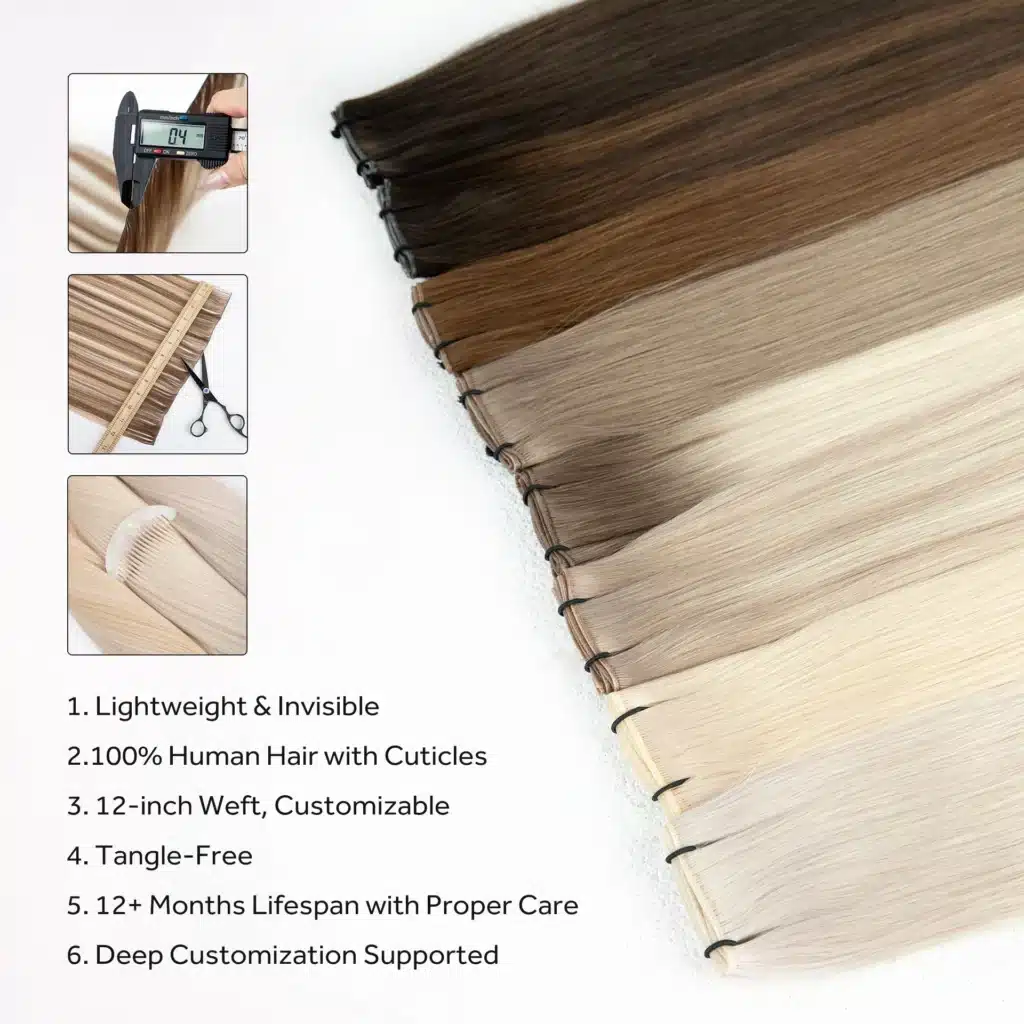
How Should Buyers Evaluate a Cuttable Genius Weft Sample?
Buyers should test the seam before and after cutting, then compare shedding, bulk, and wash behavior against the installation method they intend to use.
We recommend a sample protocol that includes a full-width inspection, a controlled trim, a combing check, a wash and dry check, and a real salon row. This gives a buyer more useful information than cutting a small piece on a desk.
The AAD also recommends gentle hair-care habits to reduce preventable hair damage from harsh handling.[2] We use the same approach during testing: clean tools, gentle combing, and no forced pulling at the cut edge.
For a product comparison, buyers can review the verified Genius Weft page. We still recommend confirming the exact construction and cutting guidance for the selected sample.
My View
We see cuttability as a useful genius weft feature, but it should be proven through a sample rather than assumed from a product name. A salon benefits when it can trim a weft to the correct width and avoid a bulky fold. The buyer still needs consistent seam construction and clear cutting instructions. We recommend that a supplier provide the product code, the recommended cutting method, and a sample that matches the intended production order. This makes it easier for a salon to train its team and easier for both sides to identify the cause if a cut edge does not perform as expected.
Frequently Asked Questions
Can a genius weft be cut anywhere?
Many genius wefts are designed to be cut to width, but the stylist should follow the supplier’s instruction and test a sample before cutting the full set.
Will cutting a genius weft stop all shedding?
No hair extension product can promise zero shedding. A correct cut should not cause unusual seam release. Buyers should compare the cut edge with the uncut sample during testing.
Can a stylist fold genius weft instead of cutting it?
Yes, but folding can add bulk. A cuttable genius weft may be a better option when a client needs a flat row in a narrow placement area.
Conclusion
Genius weft can often be cut without causing unusual shedding because its top construction is designed for custom widths. We recommend a controlled sample cut, clean tools, and a real installation check before a salon uses the method in a repeat service.