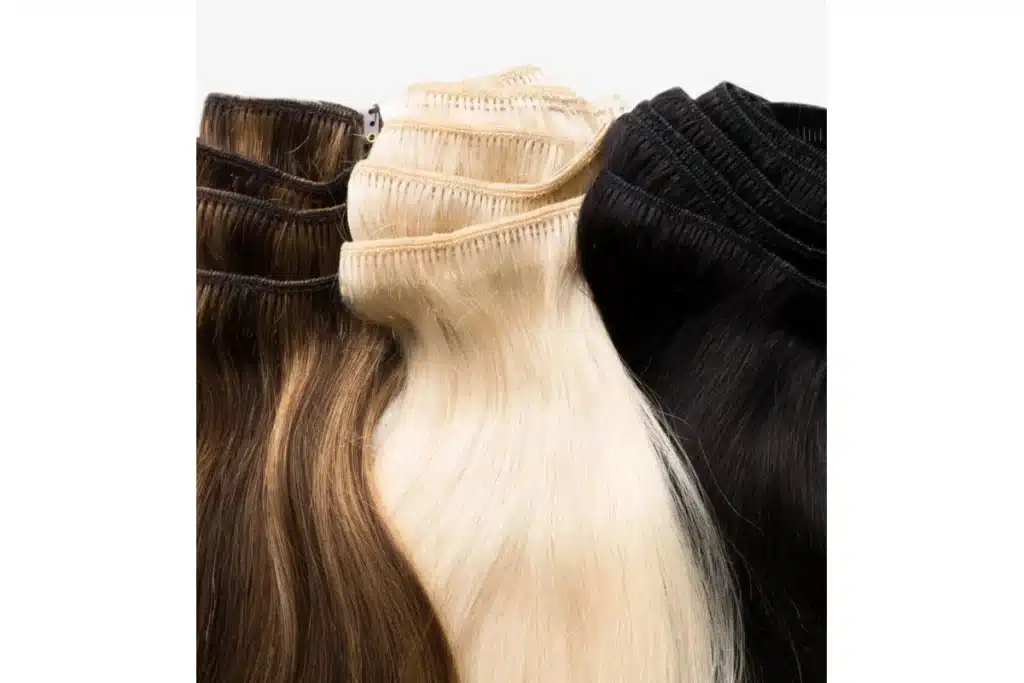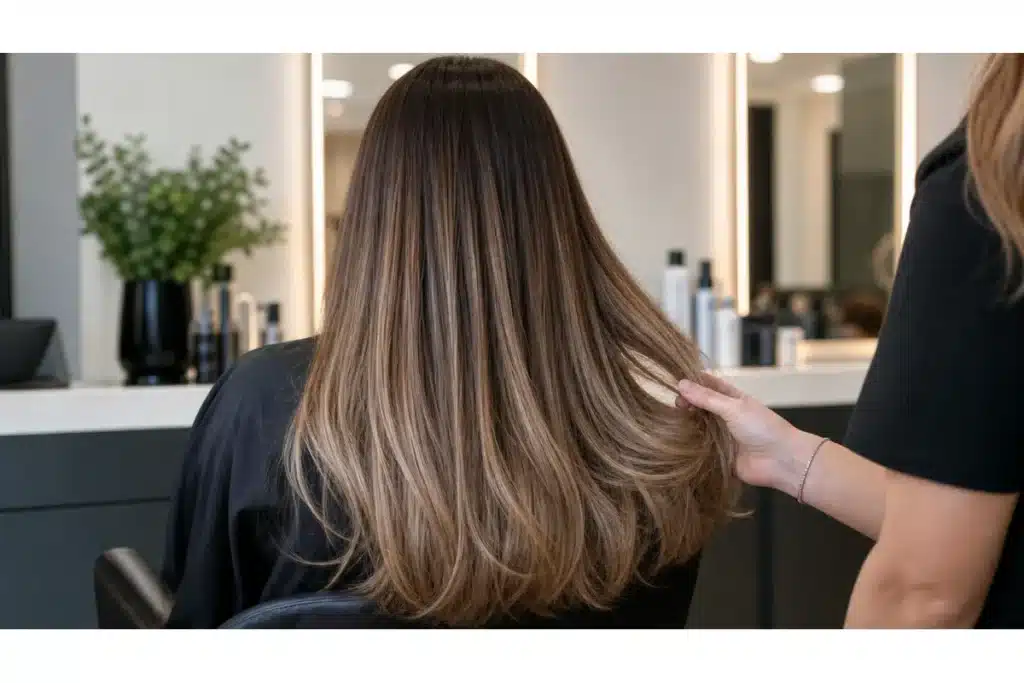
Many salon orders look correct on paper but arrive too light for the planned service. That can force a second order, slow the appointment, and create color-matching risk.
For standard tape in hair extensions, a 50g pack is usually better for partial fullness work, while a 100g pack is a stronger starting point for a full-head service. The right quantity still depends on the client's natural density, target length, and the amount of volume the salon promises.
Why Tape In Pack Size Changes the Finished Result
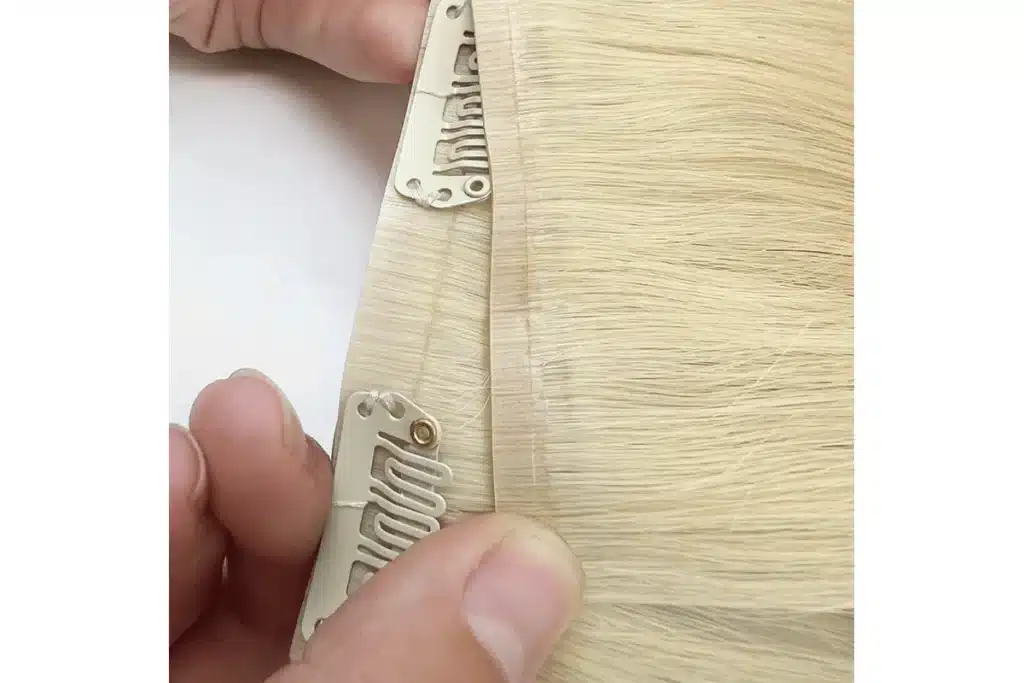
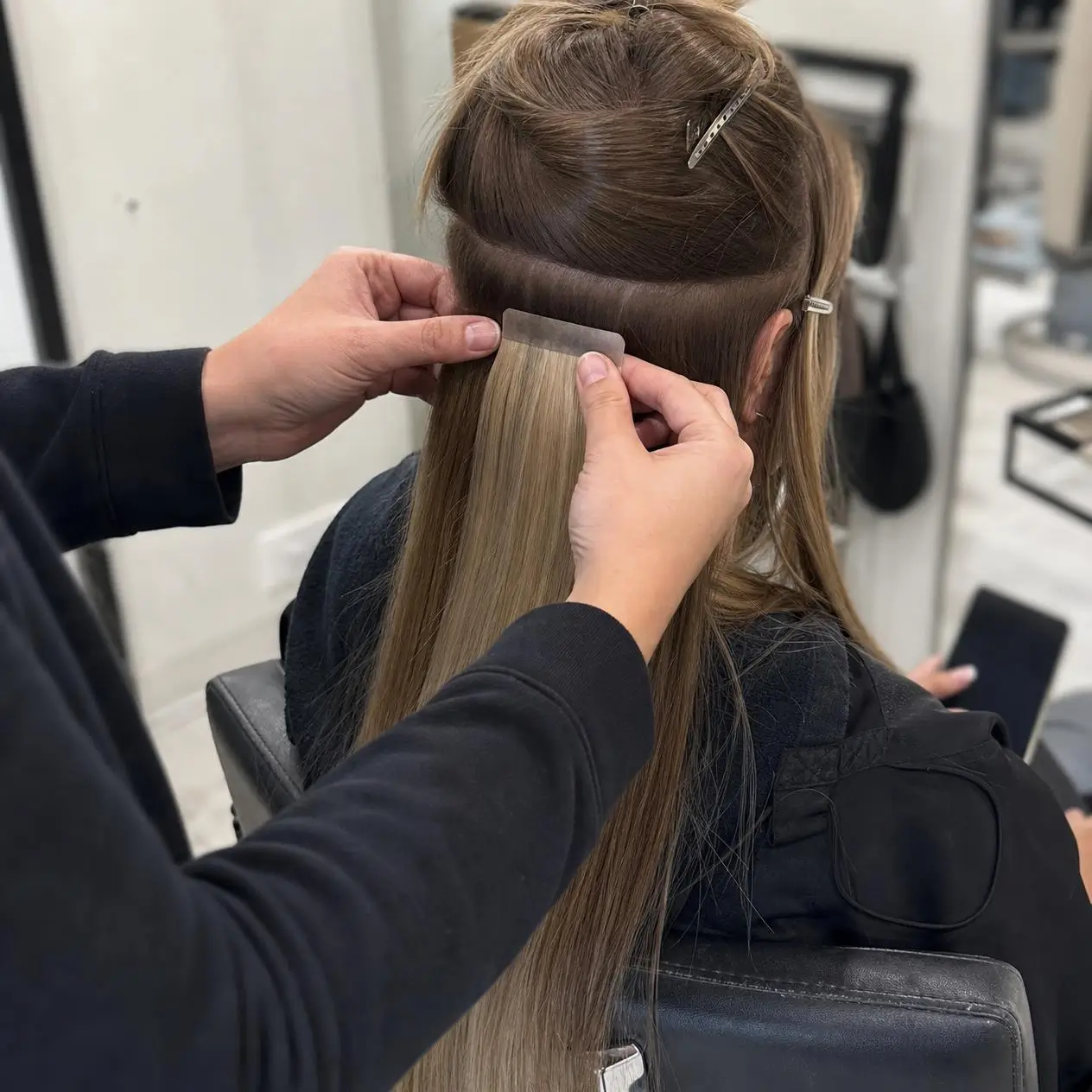
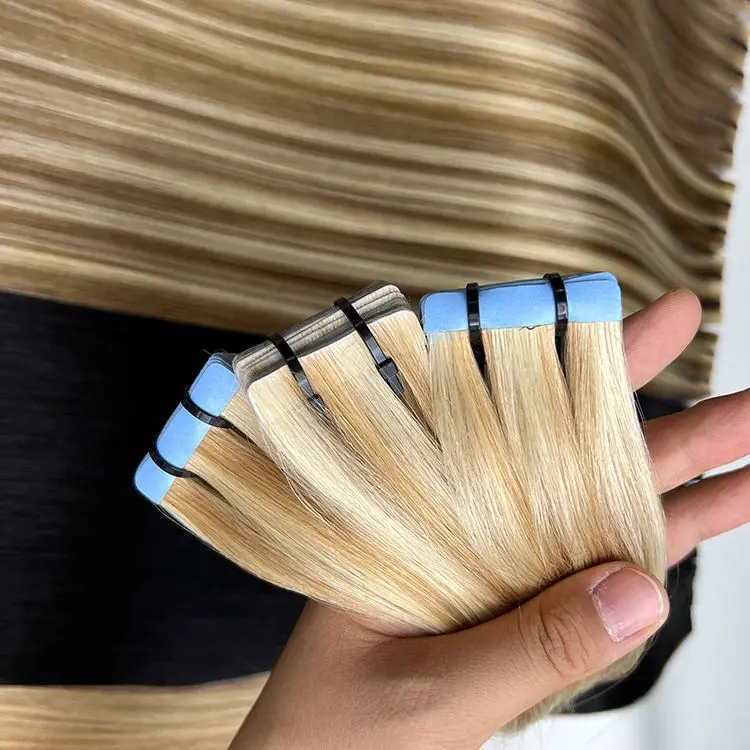
Tape in hair extensions are installed as small adhesive wefts. A standard tape tab is often about 4 cm by 1 cm. One weft sits below a thin section of natural hair, and another weft sits above it. The natural hair is held between the two tabs.
That structure means weight is not the only number that matters. The stylist also needs enough pairs to spread the hair through the head. A very small pack can create visible gaps if the service needs length and fullness at the same time.
From the production side, we usually confirm three points before a wholesale tape in order: the desired finished look, the natural hair density, and the exact tape type. Regular tape in, invisible tape in, micro tape, and shaped tape tabs do not all distribute hair in the same way.
A practical 50g and 100g comparison
| Pack option | Typical use | Best for | Order risk |
|---|---|---|---|
| 50g / 20 pieces | Light fullness or a partial install | Fine hair, side volume, color effect, or a test service | May look too light for a full-head length service |
| 100g / 40 pieces | More complete coverage | Average-density hair that needs a full-head service | May still be too light for very thick hair or a large length change |
| Two 100g packs | High-density or long-length work | Thick natural hair, major length change, or a very full result | Needs careful placement so the rows do not feel heavy |
When We Recommend a 50g Tape In Pack
A 50g pack works best when the service has a narrow goal, not when the salon promises a full transformation.
Fine hair that only needs light fullness
Some clients only want more density around the lower perimeter. In that case, the stylist may not need rows across the whole head. A 50g pack can give a lighter result and can reduce the chance of crowding weak sections.
Color blending or face-framing work
Tape in hair can add a small amount of contrast without a full color appointment. A partial pack can be useful for a few lighter pieces or a soft color blend. The salon should match the extension color in natural light before installation.
Trial services and sample checks
For a new salon account, a smaller order can also be a sensible first check. We suggest that buyers inspect the hair direction, tab consistency, color, and wash response before placing a larger repeat order. A soft first touch is useful, but it does not tell the buyer everything about longer-term performance.
Send us your target length, color, tape type, and expected service result. We can help you turn the request into a clear pack and piece specification.
When a 100g Pack Is the Better Starting Point
A 100g pack is usually the safer starting point for a standard full-head tape in service because it gives the stylist more pairs for balanced placement.
For many regular tape in programs, 100g is packed as 40 pieces, with about 2.5g per piece. That is a useful common format, but buyers should still confirm the actual piece count and piece weight with the supplier.
Average-density hair with a full-head goal
A client with average hair density often needs enough pieces to cover the lower and middle sections without making each row too wide. A 100g pack gives the stylist more flexibility to place the tape where it helps the blend.
Added length needs more than added volume
Longer extension lengths can make a small quantity look thinner at the ends. If the client wants a clear length change, the stylist should assess the natural end density before choosing only one light pack. This is especially important when the extension hair is much longer than the client's own hair.
Buyer Check: count pairs, not only grams
When a salon buyer asks us for a "full head," we do not treat that as a complete specification. We ask whether the request means 20 pairs, 40 pieces, 100g, two packs, or a specific placement map. This avoids a common complaint: the buyer receives the stated weight, but the stylist does not have enough pairs for the intended layout.
What Can Change the Quantity Recommendation
Natural hair density
Thick hair often needs more hair for a seamless blend. Fine hair may need fewer pieces, but the stylist should also avoid placing weight on weak areas. The goal is balance, not the highest possible piece count.
Length and texture
Long hair needs more density through the ends. Wavy and curly textures can also use weight differently from straight hair. Buyers should request a texture-consistent sample when they build a new salon menu.
Tape construction
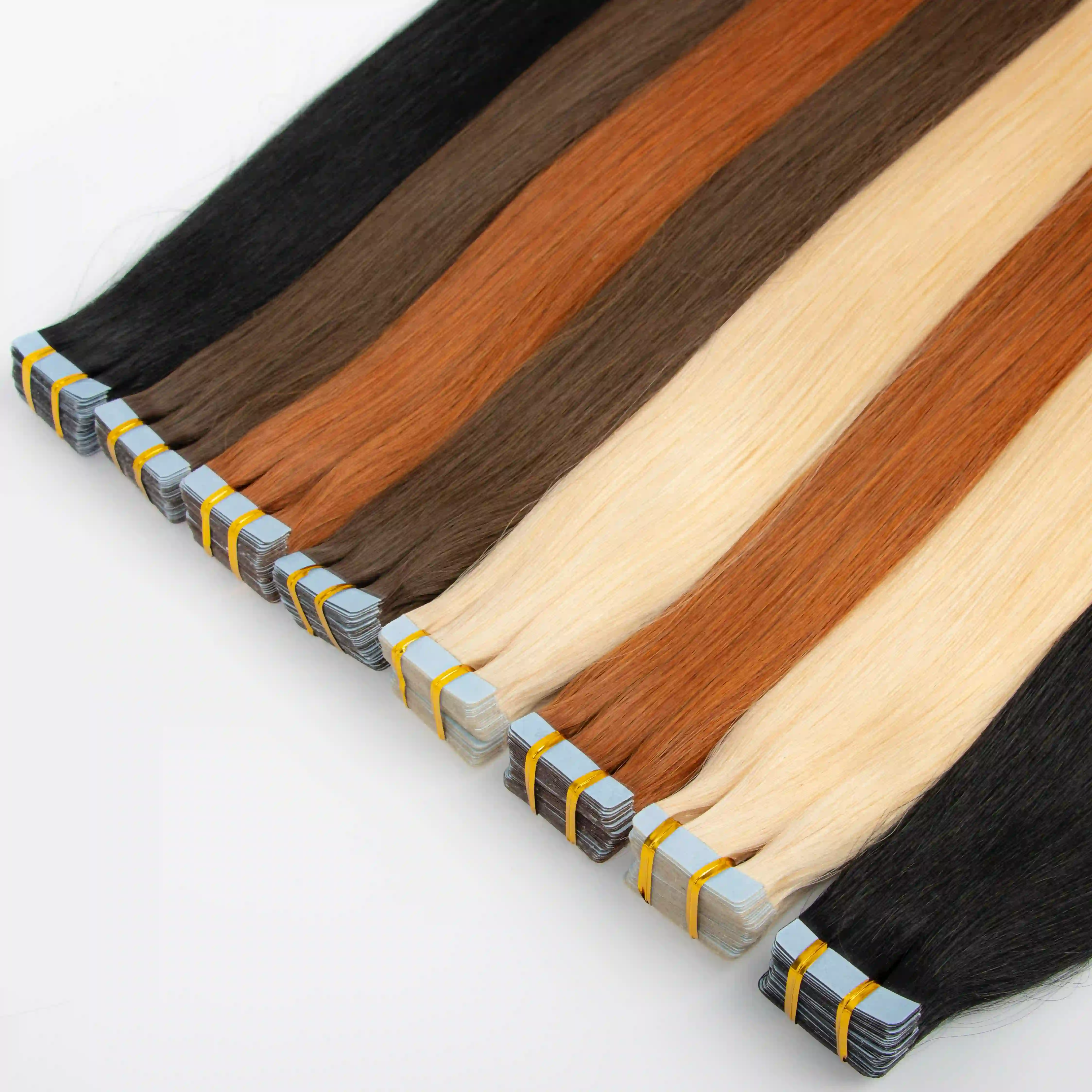
Regular tape in, invisible tape in, and smaller shaped tapes all have different placement limits. Buyers should not order from a product name alone. A photo, tab size, piece weight, and packing request are clearer.
For product options, salons can compare our Tape In Hair Extensions with other extension methods before they build a service menu.
Our View
We do not think a salon should use one fixed tape in quantity for every client. A 50g pack can be a good tool for a focused service. A 100g pack is often more useful for a normal full-head result. But both can be wrong when the natural hair is very thick, very fine, or much shorter than the planned extension length.
In our production experience, quantity questions become easier when the buyer turns a broad request into four details: client density, finished length, target fullness, and tape type. Those details also help the supplier prepare the correct piece count and reduce re-order pressure during a busy salon week.
Frequently Asked Questions
Is 100g enough for a full head of tape in hair extensions?
It can be enough for many average-density full-head services, but it is not a universal amount. Thick hair, very long lengths, and a high-volume target can need more than 100g.
How many tape in pieces are in a 50g pack?
Many 50g programs use 20 pieces when each piece is about 2.5g. Buyers should confirm the actual pack specification because piece weight can vary.
Can a salon mix two tape in colors in one service?
Yes. A stylist can use more than one shade when that helps the blend. The salon should confirm the tone in natural light and keep the hair quality and texture consistent across both colors.
Conclusion
A 50g tape in pack usually fits partial fullness, color work, or a light service. A 100g pack is a more practical starting point for many full-head tape in installs. Salons should confirm grams, piece count, tab type, and the finished result before ordering. That makes the order easier to install and easier to repeat.