Tape in extensions can slip early, feel sticky, or pull at the root when care starts too late. A clear maintenance timeline prevents many avoidable salon complaints.
Most tape in extension appointments need a professional check and move-up within about 6 to 8 weeks, but the right timing depends on hair growth, adhesive condition, oil exposure, installation quality, and daily care. We recommend giving every client a written timeline before they leave the salon.
We see that clients often remember the installation day but not the care steps that protect the bond. A useful timeline gives the stylist a reason to check early warning signs before slipping becomes residue, tangling, or uncomfortable tension.
What Should Clients Do in the First 48 Hours After Tape In Installation?
Clients should keep the tape area dry and avoid oils, heavy sweat, and repeated touching while the adhesive settles.
We recommend no washing during the first 48 hours unless the specific adhesive supplier gives a different written instruction. Clients should not apply conditioner, oil, or serum near the tape. A slick product can travel into the bond area and reduce the adhesive's hold.
We also ask clients to keep high ponytails and tight styling away from fresh tabs. The American Academy of Dermatology cautions that hairstyles which pull can damage hair over time.[1] For tape in extensions, reduced tension also helps the client notice whether a new row feels comfortable.
How Should Clients Wash Tape In Extensions Each Week?
Clients should wash gently, keep oily products away from the tabs, and dry the adhesive area fully before brushing or sleeping.
Before washing
We advise clients to brush the lengths first and hold the hair above the bonds while they work through tangles. They should separate the rows with their fingers so shampoo can rinse cleanly between them. A salon should choose care products that fit its adhesive system and explain which ingredients can leave a heavy film.
During washing
We recommend moving the hands in a downward direction instead of rubbing the tabs into a rough circle. Conditioner and masks belong on mid-lengths and ends, not on the adhesive. A clean scalp is important, but a client does not need to scrub hard at the tape line.
After washing
Clients should dry the bond area completely. Going to bed with damp tabs can create tangling at the roots and makes it harder for the client to notice a tab that has begun to lift. The AAD also recommends gentle hair-care habits to reduce preventable hair damage.[2]

Which Weeks Need the Most Attention in a Tape In Wear Cycle?
Weeks 1, 3 to 4, and 6 to 8 need clear checks because the adhesive, natural growth, and daily product exposure change at different speeds.
| Timing | What we ask the client to check | What the salon should do |
|---|---|---|
| Days 1-2 | Dry tabs, comfort, no lifting | Give written aftercare and contact route |
| Week 1 | Brushing, sleep habits, root feel | Resolve early discomfort before it becomes tension |
| Weeks 3-4 | Oil buildup, loose corners, matting | Offer a quick assessment if the client reports slipping |
| Weeks 6-8 | Growth distance, tab condition, blend | Book removal and move-up before the rows drop too low |
In one after-sales review, a client reported that several tabs started slipping in week three. The first concern was adhesive quality. Our review showed that a scalp oil product had been applied across the roots every day. The salon changed the product placement and reinstalled a controlled test section. The next set held normally. We recommend checking use habits before a salon assumes the tape itself is defective.
What Causes Tape In Extensions to Wear Out Earlier?
Early wear usually comes from oil contamination, poor sectioning, incomplete pressing, excess tension, or delayed maintenance rather than one single cause.
Product contact at the tape line
Oils, silicone-heavy products, and conditioner applied too close to the tab can weaken the adhesive. We tell clients to use a small amount on the lengths only and to ask the salon before changing their routine.
Installation details
A tape tab needs a clean, dry section with an appropriate amount of natural hair between the two tabs. A section that is too thick can reduce contact. A section that is too thin can feel tight. We recommend a sample install whenever a salon changes tape type, hair texture, or climate conditions.
Late move-up appointments
Natural hair grows, so the row moves farther from the scalp over time. When a client waits too long, the extension weight can pull on a lower point of the natural hair. This is why a move-up date is part of the original service, not an optional afterthought.
For product choices, our Tape In Hair Extensions page can support a salon's initial product comparison. We recommend validating adhesive performance with a real sample and the salon's own aftercare routine.
How Can a Salon Reduce Tape In Service Complaints?
A written aftercare card, a controlled sample test, and a scheduled check-in reduce more complaints than broad promises about wear time.
We recommend that salons record the tape type, hair color, installation date, client density, number of tabs, and home-care products. This gives the salon a factual basis if it needs to review a complaint later. It also helps identify whether a problem follows one product batch, one technique, or one care habit.
We also advise salons to order by the service plan. A 50g pack may suit a partial-volume service, while 100g can suit a fuller plan. The correct amount depends on hair density, length, and client expectations. A pack size alone does not guarantee a stable result.
My View
We do not describe tape in extensions as a set-and-forget service. The adhesive is only one part of the result. Clean sectioning, correct tab placement, product control, brushing habits, and a timely move-up all matter. We have seen salons reduce repeated complaints by giving clients three simple rules: keep oils away from the tabs, dry the roots fully, and return before the row grows too low. We also recommend a test install when a buyer changes supplier, adhesive, or local service conditions. A tape in product should be judged by the full service cycle, not only by how it looks on installation day.
Frequently Asked Questions
Can clients wash tape in extensions after one day?
We recommend following the adhesive supplier's written instructions. In many cases, waiting 48 hours gives the adhesive time to settle. A salon should use one consistent instruction for its chosen tape system.
Why do tape in tabs feel sticky after removal?
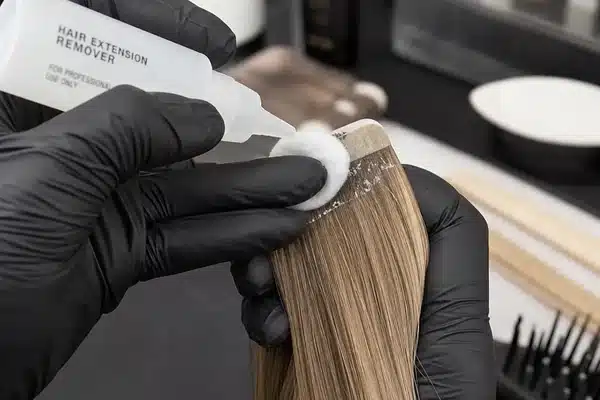
Residue can come from adhesive transfer, oil exposure, or removal technique. A professional remover and a gentle cleanup process help protect the natural hair and keep the extension hair easier to prepare for reuse.
Can a client exercise with tape in extensions?
Yes, but we recommend keeping sweat and oily products away from the tabs, drying the roots after exercise, and checking that the rows remain comfortable. A fresh installation needs extra care in the first 48 hours.
Conclusion
Tape in extension wear time depends on more than the tape. A salon should guide the first 48 hours, give clear washing rules, check the service around weeks three to four, and schedule removal or move-up before the rows sit too low. This process protects client comfort and gives the salon better evidence when it reviews a product concern.