Machine wefts can feel bulky, while hand tied wefts can limit a stylist's cutting options. A wrong choice can create uncomfortable rows, uneven stock, and client complaints.
Machine weft suits salons that need a durable, cuttable option for fuller density and flexible customization. Hand tied weft suits clients who need a very light, flat row and accept that the weft should not be cut. We recommend choosing by client density, installation method, and the salon's service model.
We do not see one construction as better in every order. We see the best result when a salon matches the weft structure to the client's hair, the installer’s method, and the amount of custom cutting the service needs.
What Is the Construction Difference Between Machine Weft and Hand Tied Weft?
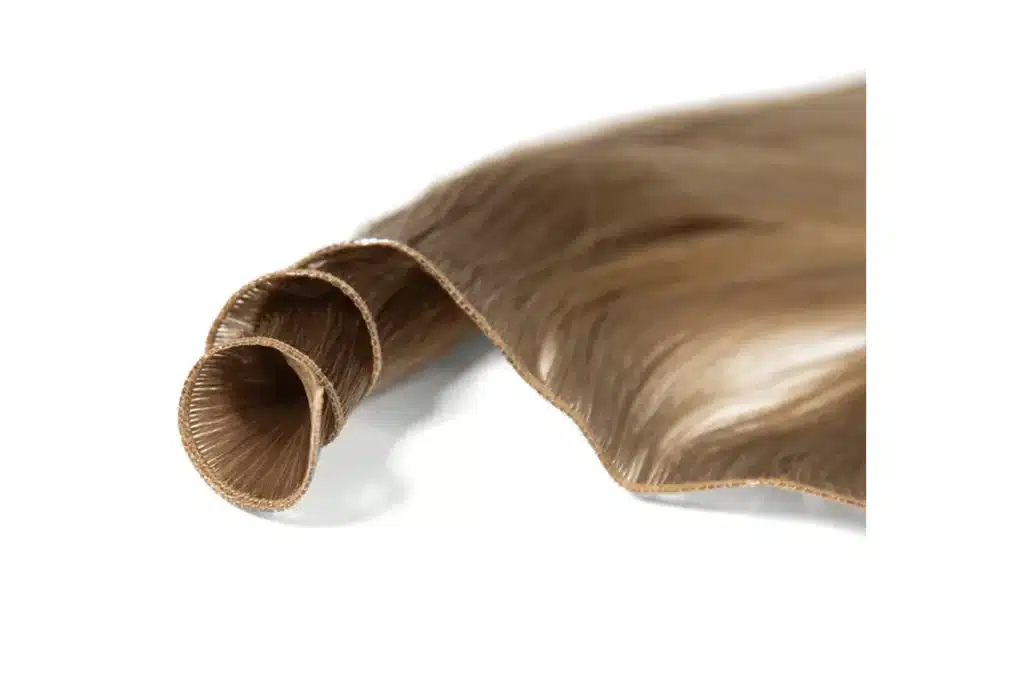
Machine weft uses a sewn reinforcement at the top, while hand tied weft uses a thinner hand-tied return. This changes bulk, cutting freedom, and row behavior.
Machine weft construction
We make a machine weft by stitching hair into a reinforced seam. The seam is stronger and usually thicker than a hand tied top. That structure gives a stylist more freedom to cut the weft to a custom width. It also works well when a client needs more hair in one row.
The tradeoff is visibility. A thick seam can show when it sits too close to a parting or when the client's natural hair is very fine. We recommend enough leave-out hair above every row.
Hand tied weft construction
Hand tied weft has a finer top and a softer edge. It can sit flatter against the head, so it is often useful for fine-hair clients and small head shapes. The return hairs at the top need protection. If a stylist cuts through that construction, the weft can unravel or shed from the cut point.
For this reason, we recommend using a fold-over installation or choosing the correct pre-cut width before the appointment. For a flatter cuttable alternative, salons can also compare Genius Weft options.
| Check | Machine Weft | Hand Tied Weft |
|---|---|---|
| Top seam | Reinforced and more visible | Fine and flatter |
| Cutting | Usually cuttable | Should not be cut |
| Best density fit | Medium to thick hair | Fine to medium hair |
| Row capacity | Can carry more hair | Better for lighter rows |
| Stock planning | Flexible for custom widths | Requires more width planning |
Which Weft Gives a Flatter Result for Fine Hair?
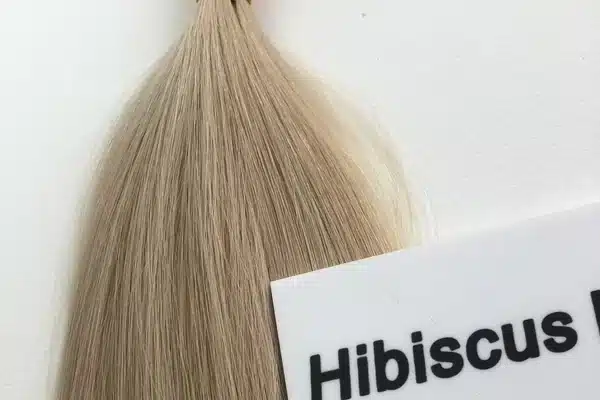
Hand tied weft usually gives the flatter result because its top is thinner, but placement and row weight still decide whether the result stays hidden.
We do not advise a salon to select hand tied weft only because a client has fine hair. We first check the density around the crown, the side profile, and the amount of hair that can cover the seam. A light hand tied row can still show if it is placed too high or if the section is too wide.
We also ask stylists to avoid harsh brushing and excessive heat around the row area. The American Academy of Dermatology recommends gentle hair-care habits to reduce preventable hair damage.[2]
In one sampling review, a salon requested a full-volume hand tied set for a client with low density at the temple. We suggested two lighter rows instead of one heavy row. The client received less total hair, but the salon achieved a cleaner blend and avoided a visible edge near the side part.
The American Academy of Dermatology notes that hairstyles which pull can contribute to hair loss over time.[1] We apply the same practical rule to extension planning: a flat row should also be a row with appropriate weight and tension.
When Does Machine Weft Make More Sense for a Salon?
Machine weft makes more sense when a salon needs cuttable widths, stronger construction, or fuller density without using many narrow weft pieces.
Custom-width services
Many salons do not install the same width on every client. A machine weft can be cut to match the planned row. This can simplify a service where the stylist builds a wide back row and shorter side pieces. The cut edge must still be sealed or handled according to the product construction.
Clients who want more volume
For medium to thick hair, a hand tied row may require more pieces to create the same fullness. A machine weft can be more efficient. We recommend comparing grams per row, not only the number of pieces in a pack. A 100g pack does not create the same result in every length or texture.
Value-focused salon menus
A salon that offers a practical volume service may prefer a strong, flexible weft. The choice should still include hair quality. We ask buyers to check the seam strength, hair direction, end thickness, and wash behavior before they compare price alone. Our weft hair extensions buyer discussions normally start with these checks.
What Should Salons Check Before Ordering Either Weft?
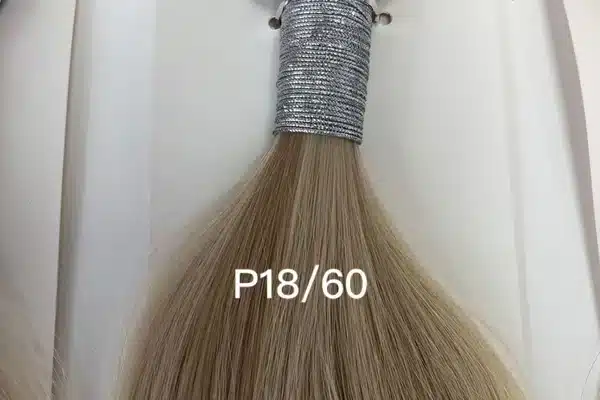
A sample install, seam inspection, and wash test tell a salon more than product photos or a single price quote.
We recommend this short pre-order process:
- Match the sample length and texture to the intended client service.
- Measure the usable width and weight of each piece.
- Check the seam after gentle folding and handling.
- Comb from ends to top after a light wash and full dry.
- Install one controlled test row before a bulk order.
We also recommend checking whether the hair has a consistent cuticle direction. When hair direction is mixed, a flat seam cannot solve tangling at the mid-lengths. A salon should separate a construction issue from a hair-quality issue before it reports a problem.
How Should a Salon Build a Menu Around Both Weft Types?
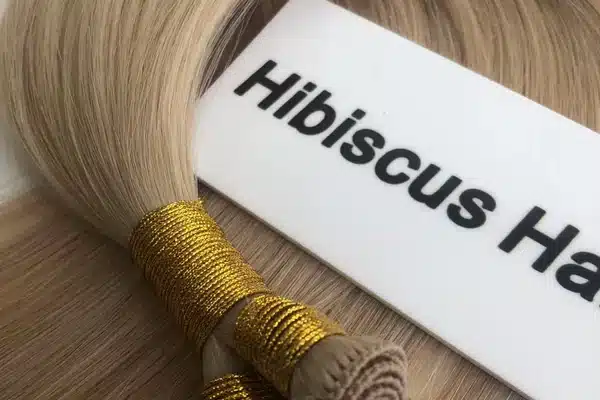
We recommend keeping both types when the salon serves different density levels and wants a clear consultation path instead of forcing every client into one method.
| Client goal | Better starting point | Consultation note |
|---|---|---|
| Hidden, light row | Hand tied weft | Confirm enough cover hair and avoid cutting |
| Fuller volume | Machine weft | Confirm row weight and leave-out coverage |
| Flexible custom width | Machine weft | Confirm how the cut edge will be secured |
| Very flat but cuttable row | Genius weft | Confirm seam behavior in a sample install |
My View
We believe salons should not buy hand tied weft only because it is popular, and they should not buy machine weft only because it is familiar. Construction has a real effect on the service. Hand tied weft can help a stylist make a low-profile row, but it requires a plan before the scissors come out. Machine weft gives more freedom for custom widths and stronger handling, but the seam needs enough natural hair above it. We see the most stable salon orders when buyers state the client density, target volume, row method, length, texture, and whether cutting is required. This gives us a clearer basis for recommending the right construction and pack weight.
Frequently Asked Questions
Can we cut a hand tied weft?
We do not recommend cutting a traditional hand tied weft. Cutting can release the hand-tied construction and create shedding. Plan the width in advance or use a cuttable construction.
Is machine weft too bulky for fine hair?
Not always. A light machine weft can work when it is placed low, matched to the client's density, and covered with enough natural hair. It is less forgiving than a fine hand tied seam near a sparse crown.
Can a salon mix machine and hand tied wefts in one service?
Yes. A salon can use a flatter construction where cover is limited and a stronger construction where it needs more volume. The row weight and blend should still be checked together.
Conclusion
Machine weft gives salons strength, cutting flexibility, and efficient fullness. Hand tied weft gives a finer top and a lighter visual profile. We recommend selecting by the client's density, the required width, and the installation plan. A controlled sample install is the best way to confirm the choice before a salon commits to a repeat order.