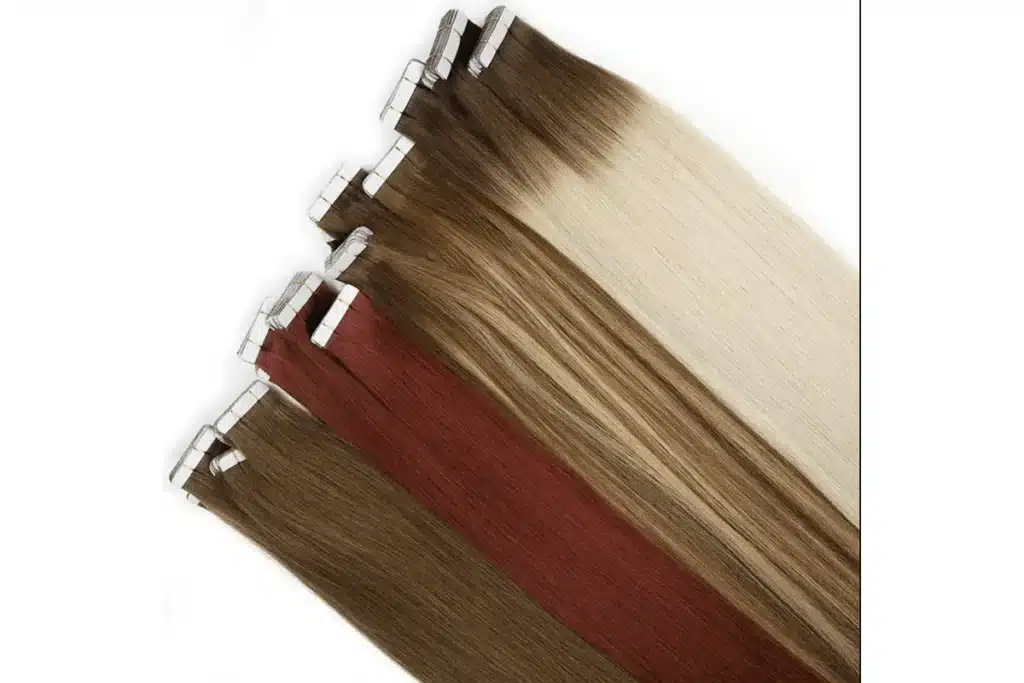
Fresh tape-ins can look perfect on install day. Then one wash later, pieces start slipping. That problem frustrates clients, wastes salon time, and weakens trust fast.
Tape extensions usually fall out after washing because of poor prep, early washing, oily products near the roots, weak installation pressure, or low-quality tape tabs. In most cases, washing is not the real cause. The wash only exposes a problem that already started before or during the install.

When I see this issue, I do not blame water first. I check the full chain. I look at the prep, the adhesive, the placement, the pressing, and the client’s wash routine. That is how I find the real reason and stop the same problem from happening again.
Is It Normal for Tape Extensions to Fall Out After Washing?
It is easy to panic after the first wash. Still, one loose tab and a full slipping install are not the same problem.
It is not normal for multiple tape extensions to fall out right after washing. A small edge lift can happen sometimes, but repeated slipping after washing usually points to prep mistakes, poor tape quality, or incorrect aftercare.
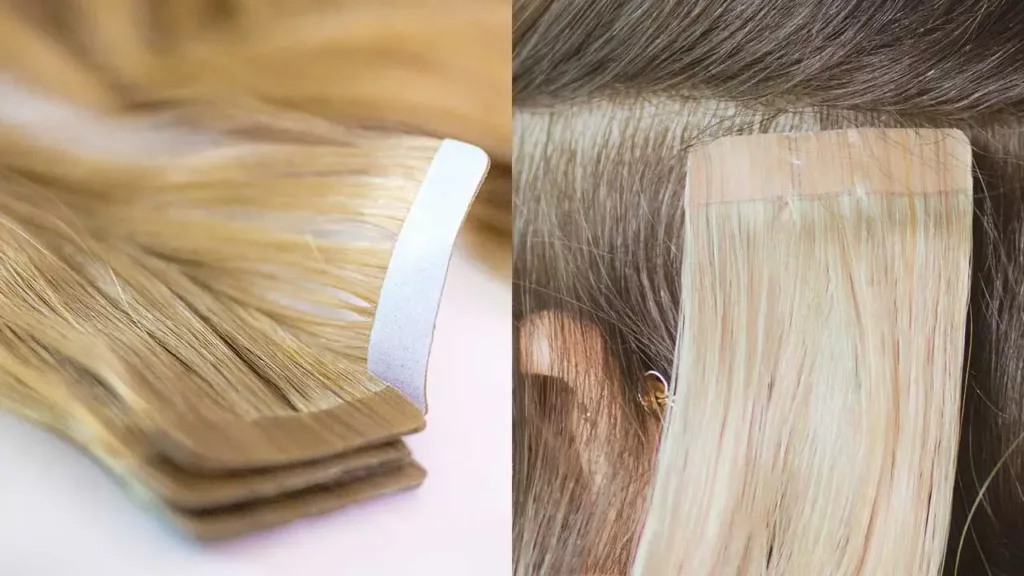
When I hear a client say that her tape extensions are falling out after washing, I first ask how many pieces slipped and when it happened. That matters a lot. If only one small area lifts after several washes, I do not treat that the same way as a full slipping install. One loose tab may come from one weak placement point, one section with more oil, or one local sealing problem. But if several sandwiches start slipping after the first or second wash, I treat that as a warning sign right away.
A strong tape install should stay stable through normal washing when the prep and application were done well. Tape-ins are made for real wear. They should handle regular brushing, regular styling, and normal salon-approved washing. So when the client loses multiple pieces early, I do not call that normal wear. I see it as a sign that something in the process was weak.
In my experience, water often reveals weakness instead of creating it. The real issue may have started before the first wash. The hair may not have been clarified enough. The roots may still have had scalp oil, conditioner residue, leave-in product, or smoothing serum. The tabs may have been sealed on hair that looked dry on the surface but still held moisture near the root. On install day, everything can still look perfect. Then the first wash changes the tension, softens the weak points, and the tabs begin to slip.
That is why I always tell salons not to guess. I look for patterns. Is this happening to one client or many clients? Is it always after the first wash? Is it always a certain area of the head? Is it tied to one tape batch or one stylist’s routine? Those questions lead to real answers.
| Situation | What I think | What it usually means |
|---|---|---|
| One tab lifts after several washes | Mild issue | Local placement or wear |
| A few tabs slip after the first wash | Not normal | Prep or install weakness |
| Many tabs fall out early | Serious issue | System problem |
| Slippage later in the wear cycle | More understandable | Maintenance timing |
So no, I do not think tape extensions should fall out after washing in any major way. A good install should survive washing. If it does not, I know I need to inspect the process, not just the result.
Why Are My Tape Extensions Falling Out After Washing?
When tape extensions slip after washing, the real issue usually starts before the shower.
Tape extensions often fall out after washing because the hair was not clarified well, the client washed too soon, oil or conditioner reached the roots, or the tape tabs and placement were not strong enough.
This is the question most clients ask first, and I think the answer needs to be clear and direct. Tape extensions do not usually fail because water touched them. They fail because something reduced the adhesive’s ability to bond well and stay sealed.
The first cause I check is root preparation. Tape tabs need a clean, dry, residue-free surface. If the stylist installs on hair that still has conditioner, oil, dry shampoo, leave-in spray, or natural scalp buildup at the root, the adhesive cannot grip correctly. The tape may close and feel secure at first, but the bond is sitting on contamination instead of clean hair. After the first wash, that weak bond starts to show.
The second cause is timing. If the client washes too soon after installation, the bond may not have had enough time to settle. I usually prefer a 48 to 72 hour wait before the first wash. That window matters even more for clients with oily scalps, active routines, or heavy sweating. Early washing does not always cause instant failure, but it increases the chance of lifting and slipping.
The third cause is product migration. A client may think she only used conditioner on the mid-lengths, but rich products can still travel up during rinsing. Heavy masks, oils, smoothing creams, and scalp treatments can all weaken the tape area if they reach the roots. The water is not the only thing touching the tabs. The real problem is often what the water carries.
The fourth cause is tape quality. I have seen tabs that feel very sticky on day one but lose strength too quickly after moisture, heat, and normal washing. Some low-grade adhesives create early slipping even when the stylist followed the right steps. That is why I never separate technique from product quality. They work together.
| Cause | What happens | What I check first |
|---|---|---|
| Dirty or coated roots before install | Weak bond from day one | Clarifying routine |
| Washed too soon | Early lifting | Timing after install |
| Oils or conditioner near roots | Grip loss after washing | Product use |
| Weak tape tabs | Repeat slipping | Supplier and tape quality |
So when I answer, “Why are my tape extensions falling out after washing?” I do not stop at one reason. I check the prep, the timing, the products, and the materials together. That is the only way to fix the problem properly.
What Installation Mistakes Cause Tape Extensions to Slip?
Many tape extension problems are created on installation day, even if they only show up later in the shower.
The most common installation mistakes are applying on damp or unclean hair, using uneven pressure, placing too much or too little natural hair between tabs, and creating poor sandwich alignment.
I think installation mistakes are one of the most overlooked reasons tape extensions fall out after washing. Many people focus only on the client’s shampoo or aftercare. I understand why. The slipping shows up after the wash, so the wash gets blamed. But many washing-related failures actually begin in the chair.
The first mistake is installing on hair that is not fully dry. Tape adhesive needs a clean and dry surface. Even slight dampness can reduce the bond. Some stylists work too fast after blow-drying, or they miss hidden moisture near the roots. The hair may look dry on the outside. At the base, it is not. That small detail can change the whole result.
The second mistake is poor sandwich alignment. The top and bottom tabs should meet cleanly and evenly. If one side sits off-center, or if the natural hair is not spread properly between the tabs, the bond becomes uneven. One section grips. Another section lifts. At first, the install can still look beautiful. Then the first wash and brush cycle puts pressure on the weak area, and the corners start peeling up.
The third mistake is using the wrong amount of natural hair between the tabs. If there is too much hair, the adhesive cannot fully connect. If there is too little hair, the extension may not feel anchored well and can create stress in a tiny section. Good tape-in work is not only about speed. It is about balance, control, and repeatable technique.
The fourth mistake is weak pressing. I have seen stylists close the sandwich but not really seal it. Tape tabs need firm, even pressure. That helps remove air and improves contact between adhesive and hair. If the press is rushed or uneven, the install may look finished while still being fragile.
| Installation issue | What it does | What happens after washing |
|---|---|---|
| Damp roots | Weak adhesion | Fast slipping |
| Uneven alignment | Incomplete seal | Corners lift |
| Too much hair in sandwich | Poor adhesive contact | Loose hold |
| Too little hair in sandwich | Weak support | Piece may drop |
| Poor pressing | Air gaps | Bond fails earlier |
I always remind stylists that tape-ins are simple, but they are not careless-proof. The method is fast and clean when the basics are right. When the basics are wrong, the first wash exposes everything.

What Aftercare Mistakes Make Tape Extensions Fall Out?
A good install can still fail if the client follows the wrong wash routine at home.
Tape extensions often fall out after washing when clients wash too soon, use oily or heavy products near the roots, rub the tape area too hard, or sleep with wet hair.
I think aftercare is where many otherwise good installs start to break down. A stylist can do everything right in the salon, but the result still depends on what happens in the bathroom at home. That is why I believe every professional service needs clear client education.
The first mistake is washing too early. Many clients are excited after a fresh install. They want to wash, restyle, or treat the hair right away. But adhesive systems need time. If the client shampoos too early, especially in the first two days, the bond may not have stabilized enough. That does not always cause instant failure, but it raises the risk.
The second mistake is using the wrong products. Oily shampoos, rich masks, smoothing creams, scalp oils, and heavy leave-ins can all reach the tape area. Clients often think the issue is the shower itself. In reality, the real problem is often the product buildup near the tabs. Once the adhesive zone becomes coated, retention drops.
The third mistake is rough washing. Some clients scrub their scalp hard with nails or rub the root area in circles. Tape-ins do not handle that kind of stress well. I prefer clients to wash gently, work in a downward motion, and avoid aggressive twisting or bunching around the taped sections.
The fourth mistake is sleeping with wet hair. Damp roots, pillow friction, and movement during sleep can all weaken the bond over time. Even if the tabs do not fall out after one night, repeated wet sleeping can shorten wear and create lifting.
| Aftercare mistake | Why it causes slipping | Better habit |
|---|---|---|
| Washing too soon | Bond has not settled | Wait 48–72 hours |
| Heavy products near roots | Adhesive weakens | Keep products lower |
| Rough rubbing | Mechanical stress on tabs | Wash gently |
| Sleeping with wet hair | Friction and moisture | Dry roots fully |
When I see tape in extensions slipping after washing, I always ask what products the client used and how she washed. Those answers often tell me more than the install photos do. Good aftercare is not extra. It is part of the result.
Does Tape Quality Matter for Retention?
Not all tape tabs behave the same, and product quality makes a real difference in salon results.
Yes, tape quality matters a lot. Strong, stable adhesive and consistent extension construction usually lead to better wear, fewer early slips, and fewer complaints after washing.
I think this section matters a lot for salon owners, professional stylists, and wholesale buyers. Too many people talk about tape extensions as if all tape tabs are basically the same. I do not agree with that. Tape quality can change retention, labor cost, service time, and client satisfaction in a very direct way.
Cheap tape tabs often create false confidence. They may feel very sticky at first, but strong first tack is not the same as stable long-term wear. Some low-grade adhesives soften too quickly, become messy after moisture, or lose holding power after regular washing and heat styling. When that happens, the salon ends up spending more time on fixes, re-installs, and client complaints.
Consistency also matters. I want every tab in the pack to behave the same way. If one sandwich holds well and the next one slips, the stylist starts doubting her own technique. In some cases, the real issue is not the install at all. The issue is inconsistent adhesive performance from one tab to another.
I also think hair quality and tape quality work together. If the hair itself is too heavily coated, too rough at the top, or poorly made, the whole service suffers. In my experience, better hair and better tape create a cleaner install and a stronger result. That matters even more for luxury salons and premium brands. They do not only sell hair. They sell trust, consistency, and repeat client satisfaction.
As a manufacturer, I always see this from a long-term angle. A salon does not need a tab that looks good for one day. A salon needs predictable retention across repeated services, repeated washes, and repeated orders. That is why stable adhesive quality matters so much in B2B supply.
| Product factor | Better quality result | Lower quality result |
|---|---|---|
| Adhesive stability | Better hold through washes | Early slipping |
| Tab consistency | Predictable installs | Random failures |
| Hair construction | Cleaner service result | More complaints |
| Overall service value | Better retention | More rework |
So yes, tape quality matters. Technique matters too. But when a good stylist keeps getting the same problem, I always take a closer look at the materials.
How to Stop Tape Extensions From Falling Out After Washing
Most tape extension slipping can be prevented with better prep, better materials, and a stronger wash routine.
To stop tape extensions from falling out after washing, I clarify the hair well, install on fully dry roots, use stable salon-grade tabs, apply even pressure, and teach clients how to wash without weakening the adhesive.
When I want to prevent this issue, I focus on control. Tape extensions do not need a complicated system, but they do need a disciplined one. I build that control into every stage of the service.
First, I clarify the hair properly before installation. I remove residue, scalp oil, and any product film at the roots. Then I dry the hair completely. Not mostly dry. Completely dry. That single rule prevents many failures before they ever begin.
Second, I control the sandwich size. I take a balanced amount of natural hair so the adhesive can grip well without being overloaded or under-supported. This step is simple, but it changes retention a lot. Small technical habits often create the biggest difference.
Third, I use stable tape products. I do not want random adhesive performance from pack to pack. Strong salon results need consistent tabs and reliable hair construction. If I am using replacement tape, I pay close attention to that quality too. A strong extension strand can still fail if the tape itself is weak.
Fourth, I seal with firm and even pressure. I make sure the tabs meet correctly, and I do not rush the press. Clean placement plus proper pressure creates a much better bond. This is one of those steps that looks small but changes the whole result.
Fifth, I educate the client clearly. I tell her when she can wash, what products to avoid near the roots, and how to wash gently. I also explain why wet sleeping, heavy masks, and oily scalp treatments can all increase slip risk. Clients follow instructions better when they understand the reason behind them.
| Prevention step | Why I do it | Result |
|---|---|---|
| Clarify roots well | Removes residue and oil | Cleaner bond |
| Dry fully before install | Eliminates hidden moisture | Stronger adhesion |
| Use balanced sandwich size | Improves tape contact | Better hold |
| Use stable tape quality | Gives repeatable results | Fewer complaints |
| Give wash instructions | Protects the bond at home | Longer wear |
I think the best way to stop tape in extensions from falling out is to treat the whole service like a system. When the prep, product, install, and aftercare all match, retention improves fast.

What Should Salons Do When Tape Extensions Fall Out After Washing?
When tape-ins start slipping, salons need a calm and professional response, not guesswork or blame.
When tape extensions fall out after washing, I inspect the tabs, check the root condition, review the client’s home care, and decide whether the issue came from prep, product, placement, or maintenance.
I believe salon response matters almost as much as the technical fix. When a client returns and says her tape extensions came out after washing, I do not get defensive. I slow down, gather facts, and inspect the details. That protects the relationship and helps me solve the problem faster.
The first thing I check is scale. Did one or two pieces slip, or did a large area fail? If it is only one small zone, the issue may be local. If many tabs failed, I start thinking about a wider prep or product problem.
The second thing I inspect is the removed tape itself. I look at whether the tabs still feel adhesive, whether I can see product buildup, whether the hair between them looks overloaded, and whether the root section was clean. Sometimes the removed piece tells the whole story. If I see oil or residue, I know aftercare played a role. If the adhesive looks weak or messy, I look harder at the tape quality.
The third thing I do is ask specific questions. When did the client first wash? What shampoo did she use? Did she apply conditioner too high? Did she sleep with damp hair or tie it up while wet? General questions lead to vague answers. Clear questions reveal real habits.
The fourth thing I do is use the case to improve the salon system. If I see the same issue more than once, I retrain the prep and pressing steps, review the tape batch, and tighten the client aftercare instructions. A complaint should lead to a fix, not just a repair.
| What I review | What I look for | Why it matters |
|---|---|---|
| Scale of slipping | One area or many | Finds the pattern |
| Removed tab condition | Clean, oily, weak, messy | Points to root cause |
| Wash timing | Too soon or on time | Checks aftercare risk |
| Product use | Shampoo, masks, oils | Reveals buildup issues |
| Team process | Repeat issue or not | Finds system gaps |
I think strong salons do not just replace the fallen pieces. They improve the process behind the problem. That is how one complaint becomes a better service standard.
My Opinion
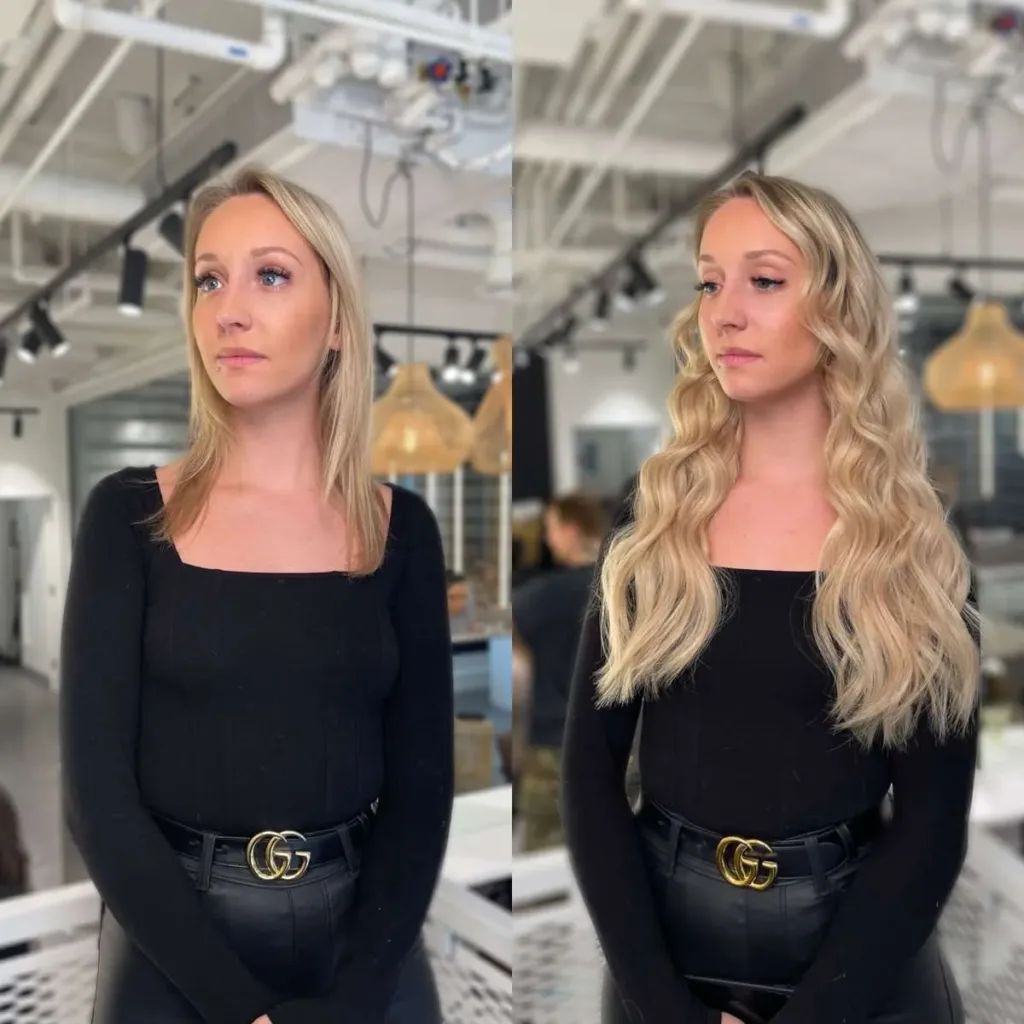
I do not think tape extensions are unreliable. I think many people underestimate how much the small details matter. When tape-ins fall out after washing, I usually see a chain problem, not a single problem. The prep may be a little weak. The pressing may be a little uneven. The client may wash a little too soon. The shampoo may be a little too rich. Then all those small things add up.
I also think many salons focus too much on speed. Tape-ins are popular because they are fast and clean. I understand that. But speed without control creates callbacks. I would rather spend more time on clarification, drying, placement, and aftercare education than lose much more time fixing a failed install later.
From my factory perspective, I also believe product quality matters more than many buyers admit. Good adhesive consistency, clean construction, and stable hair quality help salons deliver stronger results. Premium salons need products that behave the same way every time. That is one reason I always value consistency over short-term cheap cost.
FAQ
Is it normal for tape extensions to fall out after the first wash?
No. A few small issues can happen, but several pieces falling out after the first wash usually means there was a prep, product, or installation problem.
Why do my tape in extensions slip after washing?
They usually slip because the hair was not clarified well, the client washed too soon, oily products reached the tabs, or the adhesive quality was weak.
Can conditioner make tape extensions fall out?
Yes. If conditioner reaches the tape area near the roots, it can reduce grip and make the tabs slip faster.
How long should I wait to wash tape extensions?
I usually recommend waiting 48 to 72 hours after installation so the bond has time to settle properly.
Does better tape quality really help?
Yes. Better tape quality usually gives stronger, more stable retention and reduces random early failures after washing.
Conclusion
Tape extensions do not usually fall out because of washing alone. When I control prep, product, installation, and aftercare, the result stays much more secure.