Choosing the wrong hair extensions can waste money, create client complaints, and hurt salon results. That is why this question matters before any order is placed.
The best hair extensions to get are full cuticle human hair extensions that match the client’s hair type, lifestyle, and install goal. In my view, quality comes first, then method. Tape-ins, wefts, keratin hair, and even temporary hair can all be great when the hair itself is truly high grade.
This question sounds simple, but the answer is not just one product name. I always look at hair quality, damage risk, lifespan, natural look, maintenance level, and new product trends. That gives a much better answer for salon owners, wholesalers, and professional stylists.
What are the best quality hair extensions to get?
A lot of buyers hear words like premium, virgin, and Remy every day. But these words do not always help enough. I always look deeper than the label.
The best quality hair extensions to get are full cuticle hair extensions made from strong human hair, processed carefully, and produced with stable quality. If the cuticle stays intact and aligned, the hair usually lasts longer, tangles less, and feels softer in real salon use.
When I think about the best quality hair extensions, I always begin with full cuticle hair. This is the clearest standard in the premium market. Full cuticle hair keeps the outer layer of the hair fiber in better condition. That helps protect softness, shine, and strength. It also helps reduce tangling, dryness, and a rough feel after washing.
The second point is the raw material. Good extensions start with good raw hair. If the raw hair is weak, mixed too much, or already damaged, the final product cannot become top quality. This is why I pay close attention to single donor hair and stable raw hair selection. Better raw material gives a cleaner texture, more even ends, and a more luxury feel.
The third point is processing. Many low-grade products depend on harsh chemical treatment and heavy silicone coating. That can create a soft look at first, but the real performance often drops fast after washing. Better hair extensions go through a more careful process. The goal is to preserve the hair, not force it to look good for a short time.
The fourth point is factory consistency. For B2B buyers, one good sample is not enough. I need the next order to match too. Good manufacturing control matters. Weight, color, thickness, sewing quality, and bond quality all need to stay stable.
Full cuticle hair
This is the highest standard because it gives the best mix of softness, durability, low tangling, and long lifespan.
Single donor hair
This usually gives a more even texture and better consistency from top to bottom.
Low chemical processing
This helps the hair keep more of its natural condition and perform better over time.
Stable production quality
This matters for repeat orders, private label business, and salon trust.
| Quality level | Main feature | Typical result |
|---|---|---|
| Full cuticle hair | Intact and aligned cuticles | Soft, durable, long-lasting |
| Regular Remy hair | Aligned cuticles | Good, but not as strong long term |
| Non-Remy hair | Mixed or removed cuticles | More tangling, shorter life |
| Silicone-coated low-grade hair | Surface smoothness only | Looks fine first, drops fast later |
What type of hair extension is least damaging?
Many clients ask this first. I understand why. No one wants fuller hair at the cost of weak natural hair.
The least damaging hair extension is usually the one installed correctly, removed correctly, and matched to the client’s hair type. In real salon work, damage is not decided by method alone. Hair quality, sectioning, tension, placement, maintenance, and removal all matter.
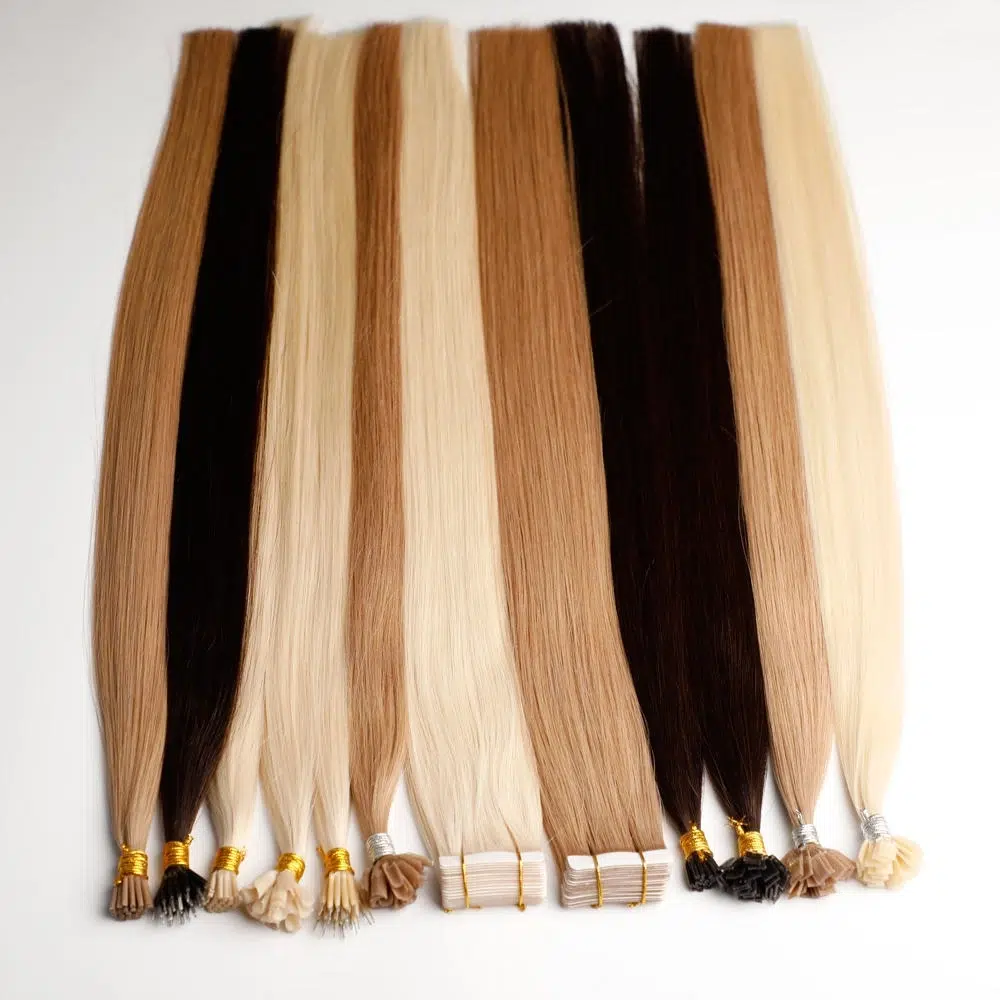
I do not think one method is always the safest for every client. A method that works well on thick hair may not be right for fine hair. A method that is easy for one stylist may be risky in untrained hands. That is why I always say the least damaging option depends on the full situation.
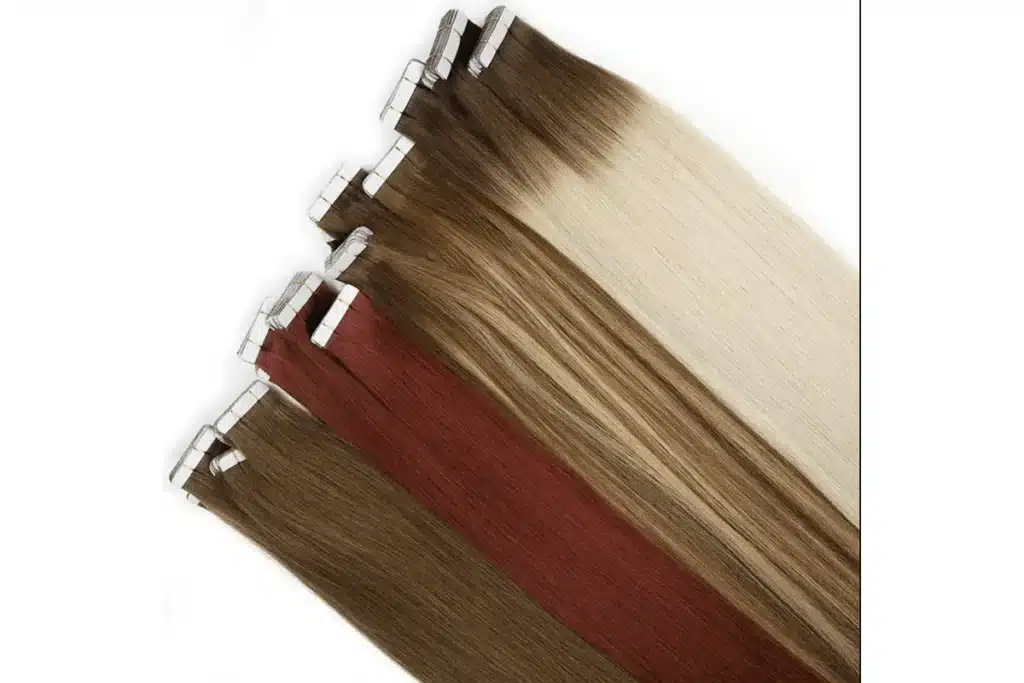
Tape-ins can be low damage when they are placed with clean sections and correct spacing. They lie flat and spread weight well. But if they are placed too close to the scalp, or if removal is rushed, they can still cause stress.
Hand tied wefts and genius wefts can also be low damage when the foundation is balanced and the rows are not too tight. They are popular because they can look natural and distribute hair weight well. But poor install technique can still create tension.
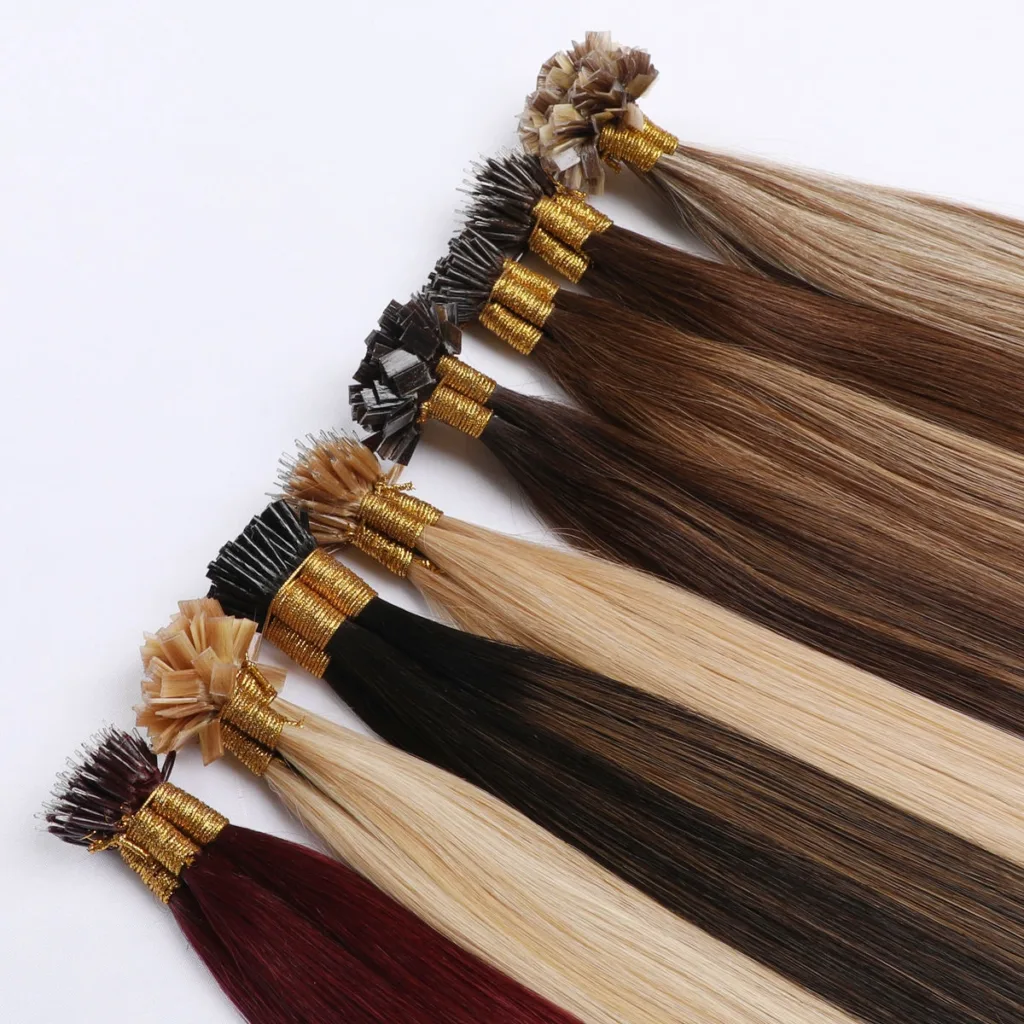
I tip, nano ring hair, and micro ring hair can work well too. They do not use heat or glue, which some buyers like. Still, the bead size, section size, and maintenance routine are very important. If the sections are too heavy or the hair is too fine, these methods can become stressful.
Halo hair and clip-ins are often the lowest risk in a broad sense because they are temporary. They are removed daily, so there is no long-term constant pull on the natural hair. But they still need proper brushing, storage, and wear habits.
What really reduces damage?
The main factors are:
- correct matching between method and natural hair type
- proper sectioning and placement
- balanced weight
- good home care
- careful removal
- skilled installation
| Extension type | Damage level when done well | Main risk point |
|---|---|---|
| Halo hair | Very low | Poor daily handling |
| Clip-ins | Low | Overuse in same area |
| Tape-ins | Low to moderate | Poor removal or bad placement |
| Hand tied / genius wefts | Low to moderate | Too much tension in rows |
| I tip / nano ring / micro ring | Moderate | Wrong section size or bead pressure |
| Keratin bonds | Moderate | Heat use and poor removal |
What type of hair extensions last the longest?
A lot of people ask which method lasts the longest. I think that question needs one correction first. In full cuticle grade hair, the different methods often have a similar overall hair lifespan. The bigger difference is usually move-up frequency, not the actual hair quality life.
The longest-lasting hair extensions are usually full cuticle human hair extensions, which can last 1 to 2 years with proper care. The method changes how often the client needs maintenance, but high-grade hair itself can stay in good condition across several methods.
This is where many buyers get confused. They think one method lasts longer because the install stays in longer. But install duration and hair lifespan are not the same thing. A U tip install may stay in place for a few months before move-up or replacement. A tape-in may need a move-up sooner. But if both are made with full cuticle hair, the actual hair can often last a similar total time with good care.
For example, tape-ins often need move-up every 6 to 8 weeks. Hand tied wefts and genius wefts often need move-up around 6 to 10 weeks, depending on growth and install style. I tip and nano ring hair often need move-up around 8 to 12 weeks. U tip hair often stays in around 3 to 4 months before the next step is needed. Clip-ins and halo hair do not follow the same salon maintenance cycle because they are removed after wear.
The key point is this: full cuticle grade hair in these methods can often last 1 to 2 years if the client uses good care. That includes gentle washing, careful brushing, less heat damage, and proper storage for temporary pieces.
Move-up frequency by method
| Method | Typical move-up or wear cycle | Hair lifespan if full cuticle |
|---|---|---|
| Tape-in hair | 6–8 weeks | 1–2 years with proper care |
| Hand tied wefts | 6–10 weeks | 1–2 years with proper care |
| Genius wefts | 6–10 weeks | 1–2 years with proper care |
| I tip hair | 8–12 weeks | 1–2 years with proper care |
| Nano ring hair | 8–12 weeks | 1–2 years with proper care |
| U tip hair | 3–4 months | 1–2 years with proper care |
| Clip-ins | Removed after each wear | 1–2 years with proper care |
| Halo hair | Removed after each wear | 1–2 years with proper care |
So if I answer honestly, the best hair lasts because of the hair grade first. The method mostly changes maintenance timing.
What are the most natural looking hair extensions?
Many buyers want one thing above all else. They want the extensions to disappear into the natural hair.
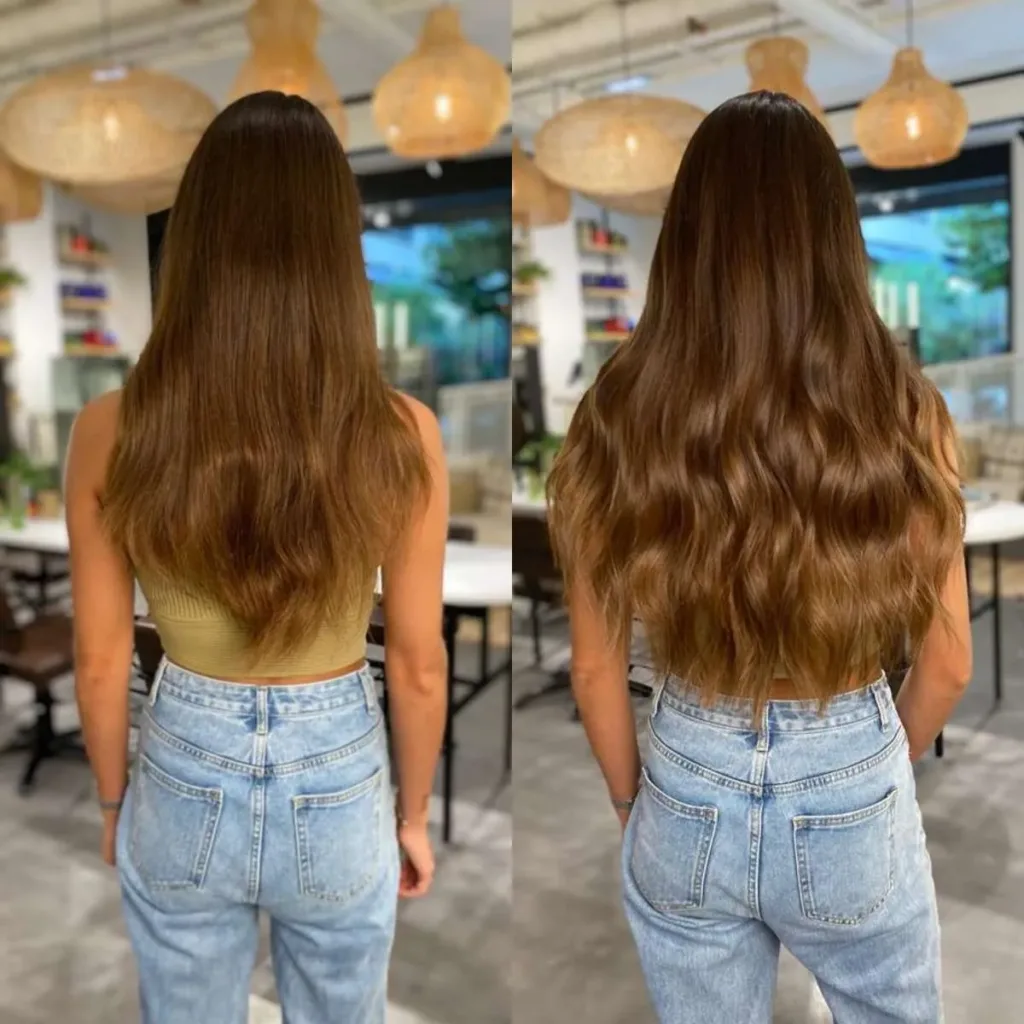
The most natural looking hair extensions are usually the ones that combine high-grade full cuticle hair with a flat, discreet structure and correct color match. Invisible tape-ins, hand tied wefts, genius wefts, seamless clip-ins, nano ring hair, and well-matched keratin bonds can all look very natural.
A natural look comes from more than one factor. Hair quality matters first because cheap hair often looks too dry, too shiny in the wrong way, or too thick at the top and too thin at the ends. Better hair moves better and blends better.
Then I look at the structure. Invisible tape in hair is popular because the top area is designed to hide better. Hand tied wefts and genius wefts are popular because they lie flatter and show less bulk. Nano ring hair is chosen because the attachment point is smaller. Seamless clip-ins and invisible clip-ins are valued because the top area is thinner and less visible.
Placement also matters a lot. Even the most advanced product can look obvious if the sections are wrong, the color match is poor, or the density does not fit the client’s natural hair. That is why professional installation still matters.
For salon owners and stylists, I think the most natural result usually comes from a mix of these points:
- full cuticle hair
- good density match
- flat top construction
- clean color blend
- correct placement
- client-appropriate method
Natural-looking options
| Type | Why it looks natural |
|---|---|
| Invisible tape in hair | Hidden top area and flat finish |
| Hand tied wefts | Thin and lightweight |
| Genius wefts | Thin top with flexible use |
| Nano ring hair | Very small attachment point |
| U tip / flat tip hair | Small strand-by-strand blending |
| Seamless clip-ins | Thin PU base and flat fit |
| Invisible clip-ins | Very discreet top design |

Which hair extensions require the least maintenance?
Some buyers hope one method needs almost no care. I do not think that is realistic. All good hair extensions need proper care if the goal is long wear and good performance.
Temporary hair extensions usually feel like they require less maintenance because they are worn less often and removed at night. But they still need daily care steps. In real use, no extension type is truly maintenance-free.
I always explain this carefully. Temporary products like clip-ins, ponytail hair, and halo hair are easier in one sense because they are not attached for weeks at a time. They are removed after wear. That means there is no salon move-up cycle in the same way. The total use time is also shorter in many cases. Because of that, many people feel they are lower maintenance.
Still, that does not mean no maintenance. These pieces still need gentle brushing, clean storage, regular washing, and heat control. If the user throws them aside, sleeps in them, or uses too much heat, even the best quality clip-ins will lose life.
Permanent or semi-permanent methods like tape-ins, wefts, I tip hair, nano ring hair, and keratin bonds need more structured care because they stay attached. The client needs to brush carefully, wash correctly, keep the root area clean, and come back for move-ups on time. This is more maintenance in daily life.
So if I compare by wearing frequency, temporary hair extensions often feel easier overall. But if I compare by hair care rules, every method still needs the basic steps.
Basic care never changes
- brush gently
- use suitable products
- avoid too much heat
- keep hair clean
- protect it during sleep or storage
- follow move-up timing if attached
| Type | Maintenance feeling | Why |
|---|---|---|
| Halo hair | Lower | Removed daily, simple wear |
| Clip-ins | Lower | Not attached long term |
| Ponytail hair | Lower | Quick wear and removal |
| Tape-ins | Moderate | Needs root care and move-up |
| Wefts | Moderate | Needs row care and salon upkeep |
| I tip / nano ring | Moderate to high | Needs careful brushing and section care |
| Keratin bonds | Moderate to high | Needs careful daily maintenance |
What are the newest types of hair extensions?
The market keeps changing. New products usually try to solve old problems like visibility, install speed, comfort, and flexibility.
Some of the newest types of hair extensions include invisible tape weft, butterfly weft, v-light hair, and newer advanced flat designs that improve invisibility and speed. These products do not replace quality basics, but they do show where the market is moving.
Invisible tape weft is one of the most talked-about new developments. It blends tape speed with weft-style coverage. Many buyers like it because it can reduce install time while keeping a flatter and more discreet look.
Butterfly weft is also a strong new product idea. The evenly spaced holes in the weft design help the needle pass through more easily during installation. That can save time and make salon work more efficient. Many stylists like it for both function and comfort.
V-light hair is another newer trend. This method is often used for detail areas, especially where very discreet support is needed. It is usually talked about in relation to finer front sections and more targeted blending work.
I also see newer product upgrades inside older categories. Slimmer tape tabs, thinner flat wefts, better seamless clip-ins, and more invisible injection techniques are all part of the same market movement. The goal is clear. Buyers want products that look more hidden, feel more comfortable, and save installation time.
Still, I always come back to one point. Newness does not equal quality by itself. A new design made with low-grade hair will still disappoint. The product idea may be smart, but the hair material still decides the real value.
Newer extension types to watch
| Newer type | Main benefit |
|---|---|
| Invisible tape weft | Faster install with flatter result |
| Butterfly weft | Easier sewing and time saving |
| V-light hair | Very discreet detail placement |
| Slim tape in hair | Thinner tape area |
| Invisible clip-ins | Better hidden top design |

My opinion
In my view, the best hair extensions to get are never chosen by method alone. I always start with hair quality. If the hair is full cuticle, soft, durable, and well made, many different extension methods can work at a high level.
Then I look at the real goal. If the client wants speed and a flat finish, tape-ins may be the best choice. If the client wants a luxury row method, hand tied wefts or genius wefts may fit better. If the client wants strand-by-strand flexibility, U tip hair, I tip hair, or nano ring hair may make more sense. If the client wants easy daily use, clip-ins or halo hair may be the better answer.
I do not think there is one perfect method for everyone. I think there is one perfect match between hair quality, client lifestyle, install skill, and service goal. That is the real answer behind this whole topic.
FAQ
What are the best hair extensions to get for salons?
I think full cuticle tape-ins, genius wefts, hand tied wefts, and keratin hair are some of the best options for salons because they combine premium quality with strong service value.
Which hair extensions are least damaging?
Halo hair and clip-ins are often the lowest risk because they are temporary. For attached methods, correct installation matters more than the method name alone.
Which hair extensions last the longest?
Full cuticle human hair lasts the longest. Across different methods, the hair lifespan can be similar, while move-up timing changes.
What hair extensions look the most natural?
Invisible tape-ins, hand tied wefts, genius wefts, nano ring hair, and seamless clip-ins are among the most natural-looking options when they are matched and installed well.
Which hair extensions are easiest to maintain?
Temporary hair like clip-ins, ponytail hair, and halo hair often feel easier because they are removed daily, but they still need proper care.
Conclusion
The best hair extensions to get are high-quality full cuticle extensions matched to the client’s needs, install goal, and maintenance level. Hair quality comes first. Method comes second.
where to get Best hair extensions
Hibiscus Hair Manufacturer has been dedicated to producing high-quality best hair extensions for 25 years and is a recognized leader in the industry. If you are interested in finding a reliable hair extensions supplier and wholesale for your brand, please visit our website for more information: