You want instant length and volume, but you also want a result that looks real. You may also worry about comfort, visibility, and whether a halo will damage your hair. That is why before-and-after photos matter so much.
Halo hair extensions before and after results usually show the biggest change in length, thickness at the ends, and overall shape. You can get a “finished hair” look in minutes, with no glue, no tape, and no beads. The best results come from the right color match, the right density, and correct placement.

If you want more than a pretty photo, you need to understand what creates a believable transformation. The sections below break down real before-and-after outcomes, how halo works, visibility issues, hair safety, pros and cons, and how long you can expect the hair to last.
What Do Halo Hair Extensions Before and After Results Usually Look Like?
You may look at photos and think, “That looks too perfect.” Then you try one and wonder why your blend looks different. The difference often comes from hair shape, ends density, and how the top layer covers the wire.
Halo hair extensions before and after usually improve three areas: length, thickness at the bottom, and a smoother outer shape. The most natural transformation happens when your haircut is blended, your top layer is long enough to cover the halo, and the extension density matches your natural density.
Dive deeper
Before-and-after is not only about “longer hair.” A halo changes how your hair sits as a full style. When you see a great result, it usually has balance, not only length.
1) The three most common “after” upgrades
Most users notice:
- the ends look fuller and less see-through
- the hair shape looks more polished, like a fresh blowout
- the overall silhouette looks longer and more lifted
This matters for photos and real life. If your natural ends are thin, a halo can create the look of a strong baseline. That is often the biggest visible upgrade.
2) What makes a before-and-after look natural
A natural blend comes from:
- correct color match in both shade and tone
- correct density match so the hair does not look too heavy
- correct placement so the top hair covers the wire
- a light layer or trim to remove a “shelf” line
Many users skip the blend cut. Then the after result can look like a straight line sitting under a shorter haircut. That is why short hair results need more planning.
3) How short hair results differ
If you search short hair halo hair extensions before and after, you will see both amazing results and obvious results. Short hair can work, but it needs:
- enough top length to cover the wire
- a halo that is not too thick for your natural density
- styling that blends texture, like waves or soft curls
- sometimes a layered haircut or face framing
If your hair is very short and blunt, the blend is the hard part, not the halo itself.
4) What the “after” should not look like
If you see these signs, the fit is off:
- a visible step line between your hair and the extension
- the wire feels too tight or rides up
- the halo looks bulky at the crown
- the extension looks too shiny compared with your hair
Here is a quick result-check table:
| What you see in the mirror | What it usually means | What to adjust |
|---|---|---|
| Natural flow from roots to ends | good match | keep routine |
| A clear “ledge” line | not blended | add waves or trim/layer |
| Crown looks puffy | too much density | choose lighter weight |
| Wire feels tight | wrong sizing | loosen wire or resize |
| Color looks off in sunlight | tone mismatch | adjust tone match |
If you want your “after” to look expensive, you should treat match and blend as the main job.

What Are Halo Hair Extensions and How Do They Work?
You may hear people call halo hair “easy extensions.” That is true, but only if you understand the basic structure. A halo is not attached to your natural hair. It sits on your head using a thin wire and your own hair covers it.
Halo hair extensions are a one-piece weft that sits around your head with a clear wire. Your natural hair covers the wire and the weft. You get instant length and volume without adhesives, heat, or beads.
%[what are halo hair extensions how they work(https://placehold.co/600×400 “What are halo hair extensions: a one-piece weft on a clear wire, covered by natural hair”)]
Dive deeper
A halo is different from tape, sew-in, or microlinks because the attachment method is not bonded to individual strands. That changes comfort, wear time per day, and who it fits best.
1) The structure in simple terms
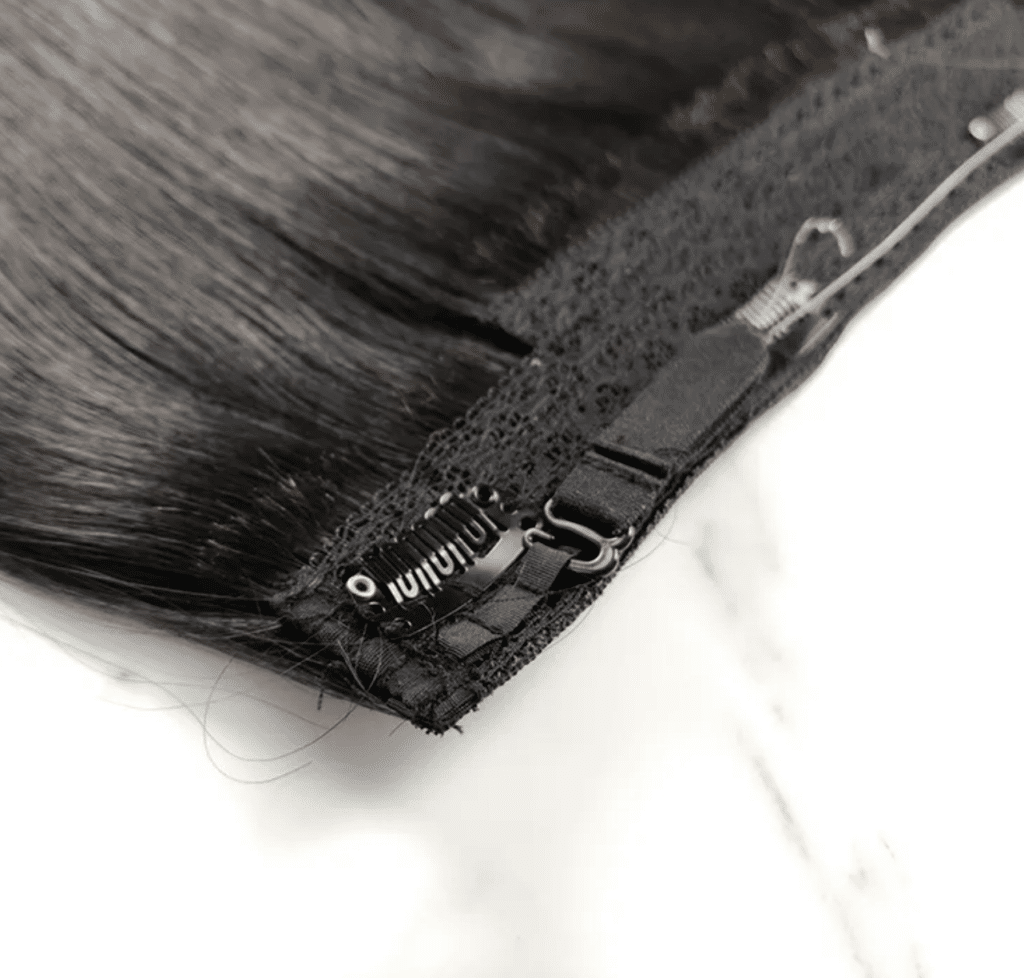
A typical halo includes:
- a one-piece hair weft
- a clear wire or nylon thread
- optional clips in some designs for extra security
The wire usually sits a little behind the hairline, then around the crown area. Your top hair falls over it. That is why top hair length matters.
2) Why people choose halo instead of bonded methods
Many users choose halo because:
- there is no glue and no tape residue
- there is no bead clamping pressure
- you can remove it daily
- you can avoid salon maintenance visits
This is ideal for users who want a flexible “wear when you want” system.
3) Who gets the best experience with halo hair
Halo works well when:
- your hair has enough top length to cover the wire
- you want quick change for events, work, or travel
- you do not want long-term bonded methods
- you want less commitment than tape ins
Halo can be harder when:
- you have very short top layers
- you have very fine hair with low cover
- you wear very high ponytails daily
4) What your daily routine looks like with a halo
Most users:
- put it on in minutes
- style hair down or half-up
- remove it at night
- store it flat or in a silk bag
This is why halo feels “low stress” for many people, if the fit is correct.
Here is a quick method comparison:
| Method | How it attaches | Best for | Main limitation |
|---|---|---|---|
| Halo | wire + cover hair | quick wear, no glue | not ideal for very short tops |
| Tape in | adhesive tabs | longer wear cycles | needs refits and seam care |
| Microlinks | beads clamp hair | no adhesive | install time and bead care |
If you want easy wear without commitment, halo is usually the simplest option.
Can You See Halo Hair Extensions?
You might worry about the wire showing, especially in bright light or wind. You may also ask, can you see halo hair extensions when you part your hair? You can avoid most visibility issues with correct placement and styling.
You usually cannot see halo hair extensions when the wire is placed in the right zone and your top hair covers it. You may see the halo if the wire is too high, your top hair is too short, your hair is very fine, or you part directly on the wire line.
Dive deeper
Visibility is the number one reason a halo looks “obvious.” Most visibility is not because halo is bad. Most visibility is because the fit and styling are not matched to your hair.
1) Common situations where halos show
You are more likely to see the wire when:
- you do a sharp middle part and your top hair is short
- you wear a very high ponytail
- you have very thin hair at the crown
- the wire is placed too close to the hairline
Wind can also lift your top layer. That can expose the wire for a moment. That is why styling matters.
2) Placement rules that reduce visibility
A good placement usually means:
- wire sits behind the hairline, not on it
- wire sits lower than the highest point of the crown
- you keep enough cover hair above the wire line
If the wire is too high, your top hair cannot cover it. If the wire is too low, the weft can peek through the bottom. So placement is a balance.
3) Styling tricks that make the halo disappear
If you want the most invisible look:
- add soft waves to blend your hair with the extension
- tease lightly at the crown if you need more cover
- avoid a razor-sharp part directly over the wire
- use half-up styles that keep top layers down
You do not need heavy teasing. You need smart cover.
4) Quick self-check before you leave the house
Use this fast check:
- look at your part in sunlight
- tilt your head forward and check crown
- turn side to side and check temples
- take one phone photo from the back
This table helps you diagnose visibility fast:
| Visibility issue | Likely cause | Fix |
|---|---|---|
| wire shows at crown | wire too high | lower wire slightly |
| weft peeks at bottom | halo too low | raise wire slightly |
| obvious “step” line | no blend | add waves or layers |
| side wire shows | top hair too short | adjust placement and style |
If you care about a clean finish, you should spend 60 seconds on this check.

Do Halo Extensions Damage Hair?
You may ask this because you want a safe method. Many users switch to halo after they feel stress from tape or bonds. Halo can be gentle, but it still needs correct sizing.
Halo extensions usually do not damage hair because they do not use adhesive, heat, or bead clamping. Damage risk can still happen if the wire is too tight, worn too long every day, or placed in a way that rubs fragile areas.
Dive deeper
The safety profile of a halo is strong because it avoids bonded stress. Still, anything that sits on your hair can create friction if it fits wrong.
1) Why halos are considered low-risk
Halo hair avoids:
- adhesive contact with your strands
- chemical removers
- bead pressure points
- long-term attachment stress
This matters for users who are rebuilding hair health or protecting fragile hairlines.
2) When halos can cause problems
Issues can happen when:
- the wire is too tight and creates pressure
- the wire sits on a sensitive scalp area
- you wear it all day, every day, with no breaks
- you brush aggressively near the weft
These issues are not common, but you should know them.
3) How to wear halo safely
You can keep halo wear safe by:
- choosing the correct wire size
- avoiding very tight wire settings
- removing it at night
- brushing gently in sections
- taking breaks on low-stress days
If you feel headaches or soreness, your wire is likely too tight or your placement is off. Comfort is a signal you should not ignore.
4) Halo vs other methods for safety
Halo can be a good “rest method” if you are taking a break from tape ins or microlinks. It gives you style without long-term attachment.
Here is a safety comparison table:
| Method | Main stress type | Typical damage risk driver |
|---|---|---|
| Halo | wire pressure if misfit | tight sizing, friction |
| Tape in | adhesive + removal | residue, pulling, overgrowth |
| Microlinks | bead pressure | tension, bead slippage |
If you want a gentle choice, halo often fits that goal.
What Are the Pros and Cons of Halo Extensions?
You may love the “instant hair” idea, but you may wonder what the trade-offs are. The pros are real, and the cons are also real. You can decide faster when you see them clearly.
The pros of halo extensions are fast wear, no adhesives, and easy daily removal. The cons are that halos are not ideal for very short top layers, very high ponytails, or people who want a 24/7 installed method.
%[What are the pros and cons of halo extensions(https://placehold.co/600×400 “What are the pros and cons of halo extensions: fast wear vs styling limits”)]
Dive deeper
A halo is best when you treat it like a “wearable style.” It is not the best choice for everyone, but it can be perfect for the right user.
Pros that matter in real life
- You can put it on fast. Many users do it in minutes.
- You can remove it at night. Your scalp rests.
- You can avoid glue and removers.
- You can use it for events, travel, and photo days.
- You can keep salon visits lower.
These points are why halo is popular with users who want flexibility.
Cons you should know before buying
- You may see the wire if your top hair is very short.
- You may feel the wire if sizing is wrong.
- You may have limits with high ponytails and tight updos.
- You need to style for blending if your haircut is blunt.
- You need to store it correctly to avoid tangles.
These cons are not deal-breakers for many users. They are planning points.
This table summarizes the trade-offs:
| Category | Halo advantage | Halo limitation |
|---|---|---|
| Wear time | daily on/off | not 24/7 installed |
| Comfort | no bonds | wire fit must be correct |
| Hair health | low chemical stress | friction if worn too tight |
| Styling | easy down styles | high ponytail limits |
| Maintenance | no refits | needs storage and brushing |
If you want a low-commitment extension, halo often wins.
How Long Do Halo Hair Extensions Last?
You may ask this because you want value, not a one-month purchase. Longevity depends on hair quality and how you care for it, not only how often you wear it.
How long do halo hair extensions last? High-quality human hair halos can last many months and often up to a year or longer with good care. Full cuticle hair halos can last longer because the hair stays smoother and tangles less when the cuticle remains intact.
Dive deeper
A halo does not face daily adhesive stress, so it can last longer than some bonded systems, if the hair quality is strong. Still, halos face friction from styling, brushing, and storage.
1) What extends halo lifespan
Lifespan improves when:
- you brush gently and often
- you avoid heavy oils and alcohol sprays on the hair
- you limit very high heat styling
- you store it flat and detangled
- you wash only when needed
Over-washing is a big lifespan killer. Halos do not get scalp oil like installed extensions do, so they usually need less washing.
2) What shortens halo lifespan
Lifespan drops when:
- you sleep in it often
- you store it tangled
- you use high heat daily
- you use strong purple shampoo too often
- you use heavy products that create buildup
3) A realistic wear-and-care schedule
Many users do:
- wear 2–5 days per week
- wash every 10–20 wears, depending on product use
- deep condition lightly on mid-lengths and ends
- trim ends when they feel dry
4) Hair quality difference shows up over time
Lower quality hair can look good in week one, then tangle by week four. Full cuticle hair often stays smoother longer. That matters for a halo because you handle it more with your hands.
Here is a lifespan guide table:
| Usage pattern | Care level | Typical outcome |
|---|---|---|
| occasional wear | good care | long-lasting value |
| daily wear | basic care | faster dryness at ends |
| daily wear | strong care | stable, but needs trimming |
| frequent heat | low protection | shorter lifespan |
If you want long wear, you should treat your halo like a luxury garment. Gentle care keeps it premium.

How Do You Get the Best Before-and-After Photos With a Halo?
You may want photos that look real, not edited. You can get that when you control light, angle, and blend. Your camera will show every mismatch.
You get the best halo before-and-after photos when you match the color, add soft texture, place the wire correctly, and shoot in consistent lighting. A simple wave often makes the blend look far more natural in photos.
Dive deeper
Photos are useful because they show what the mirror sometimes hides. The camera can reveal a shelf line, a tone mismatch, or a wire peek.
1) Use the same light for before and after
Take both photos in the same spot. Natural window light is best. Mixed lighting can change color tone and make hair look different.
2) Use the same angle and distance
Keep your head position consistent. Keep your camera distance the same. This makes the transformation clear and honest.
3) Add simple blending styling
A soft wave is a blending tool. It merges your hair and the extension in one texture. It also reduces the straight “line” that shows up in photos.
4) Show the back view
Many halo issues show in the back. If you want trust, show the back photo too. You can also include a close-up near the crown to prove invisibility.
Use this photo checklist:
| Photo goal | What you do | What you avoid |
|---|---|---|
| show length change | straight posture | leaning forward |
| show blend | soft waves | pin-straight blunt ends |
| show invisibility | crown check angle | bright overhead glare |
| show real color | natural light | yellow indoor light |
If you want photos that convert buyers, you should keep them consistent and real.

My opinion
I like halo hair for users who want a fast upgrade without long-term attachment. I think the best halo results come from the simplest rules: match color, match density, place the wire correctly, and blend the cut. If you do those, your halo before and after looks natural and expensive.
FAQ
Can you see halo hair extensions in sunlight?
You usually cannot if the wire is placed correctly and covered by top hair. You can sometimes see it if the wire is too high or your top layers are too short.
Do halo extensions damage hair if you wear them every day?
They usually do not, but daily wear can create friction if the wire is too tight. You should check comfort and take breaks.
Are halo extensions good for short hair?
They can be, but short hair halo hair extensions before and after results depend on top length and blending. Waves and a light layer cut help a lot.
Can you sleep in halo hair extensions?
Most users should remove them at night. Sleeping in them increases tangling and friction.
How long do halo hair extensions last with proper care?
High-quality human hair halos can last many months and often a year or longer with gentle care, light washing, and good storage.
What are the pros and cons of halo extensions compared with tape ins?
Halo is faster and avoids adhesives. Tape ins are more “installed” and allow more updo options. Halo can be less ideal for very short top layers.
Do you need a stylist to wear a halo?
You do not need one for daily wear, but a stylist can help with a blend cut, tone match, and first-time placement tips.
How do you store a halo extension?
You should store it clean, dry, detangled, and flat. You should avoid folding the weft sharply.
Conclusion
Halo hair extensions before and after results can be dramatic and natural when color, density, and placement are correct. A halo is usually low-risk for hair, but wire fit and blending decide whether it looks invisible.