Have you ever had a salon buyer tell you, “I want bonded hair,” but they really mean pre-tipped keratin hair? Have you noticed that many people use “bonded” as a vague word, even when they are talking about a very specific thing?
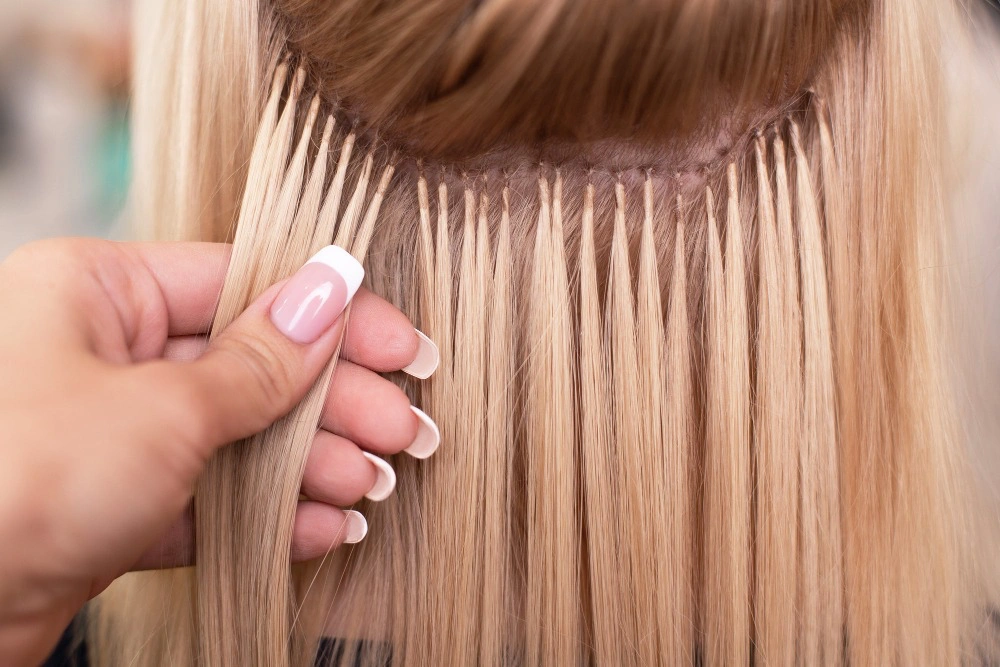
Bonded hair extensions mean pre-keratin tip extensions, including U tip hair, V tip hair, and flat tip hair. These are strand-by-strand keratin fusion extensions that come with a pre-made keratin tip. The tip is heated, shaped, and cooled to form a bond with natural hair.
If your clients or wholesale partners sell pre-tipped keratin hair, this guide will help you explain the method clearly. It will also help you reduce misunderstandings about performance, suitability, and removal.
What is bonded hair extensions?
Do you hear clients say “bonded hair” and imagine messy glue? Do you hear stylists say “bonded” and mean keratin fusion tips? This is exactly why I define it first.
Bonded hair extensions, in this guide, means pre-keratin tip extensions that are attached with heat. The hair comes in individual strands. Each strand has a solid keratin tip already formed at the top. During installation, the stylist uses a heat tool to soften the keratin. The softened keratin wraps around a small section of natural hair. Then the bond is shaped and cooled. After cooling, the keratin becomes firm again. That firm bond is what holds the extension.
What “bonded” means in a professional salon context
Bonded means each strand becomes part of the client’s hair through a small bond point. It is not a track. It is not tape. It is not a bead. It is a keratin bond that is built strand by strand.
Why pre-tipped keratin matters
Pre-tipped keratin makes the service more consistent. The keratin amount is controlled at the factory level. The tip shape is also controlled. This is why many salons prefer it over hand-made keratin work.
The three most common types of bonded hair extensions
In the bonded category I am talking about, there are three core types: U tip, V tip, and flat tip.
| Type | What the tip shape tends to do | What it often feels like | Common reason salons choose it |
|---|---|---|---|
| U tip hair | Melts into a rounded bond | Strong and stable | Classic fusion system, familiar to many stylists |
| V tip hair | Melts into a narrower bond | More discreet when done well | Good for detail blending and fine-density zones |
| Flat tip hair | Spreads into a flatter bond | Low-profile look | Often chosen for comfort and neat finish |
How does bonded hair extensions work?
Have you ever watched a keratin tip go from hard to soft in seconds, then back to firm? That is the core mechanism. The bond is not “glue.” It is a keratin material that changes state with heat.
Bonded hair extensions work through controlled softening and re-hardening of keratin. Heat turns the keratin tip flexible. The stylist then wraps and shapes it around natural hair. Cooling turns it firm again. The final bond holds because it has the right shape, the right pressure, and enough contact with clean natural hair.
What actually holds the strand in place
The hold comes from three things working together:
- The keratin bond shape
- The compression around the natural hair section
- The friction between keratin and clean hair
If one of these is weak, retention drops. This is why bonded hair performance can vary between salons even if the hair is the same.
Why section size is part of the “work”
If the section is too thick, keratin cannot grip every hair evenly. Some hairs slide. The strand slips. If the section is too thin, the hold may be strong but the load is too high on a small amount of hair. This can cause breakage over time.
| Section balance | What happens during wear | Result clients notice |
|---|---|---|
| Too thick | Bond grips unevenly | Slipping and early fallout |
| Too thin | Hair carries too much weight | Tight feeling, breakage risk |
| Correct match | Bond stays stable | Better comfort and wear time |
Why aftercare changes the “physics”
Oil and silicone reduce friction. Heat can soften keratin again if it touches the bond directly. Rough brushing can twist bonds. This is why aftercare is not optional. It is part of how the method works.
A short story you can replace later
I once helped a salon troubleshoot bonded hair slipping. The install looked neat. The real issue was the client using scalp oil daily. When the client changed product placement, the same bonded hair performed much better.

What are the three main types of bonded hair extensions?
Do you want to choose the right tip type for different client hair? Do you want to explain tip differences without over-complicating it? I keep it practical.
The three main types of bonded hair extensions in this category are U tip hair, V tip hair, and flat tip hair. Each one uses pre-keratin tips. Each one needs heat to attach. The difference is how the tip melts and how the bond sits on the head.
U tip hair extensions
U tip is a classic. Many stylists learn with U tip first because it is predictable. The bond often becomes a rounded shape. When done well, it is stable and long-wearing. U tip is often chosen for medium to thick hair density, and for clients who want a strong hold.

V tip hair extensions
V tip can create a narrower bond when it is shaped neatly. This can help with discreet placement in visible zones. It often suits fine hair areas when strand weight is chosen correctly. It also needs controlled heat and careful sectioning, because smaller bonds are more sensitive to mistakes.

Flat tip hair extensions
Flat tip spreads more evenly and can sit flatter. Many salons like the low-profile finish. Flat bonds can also feel comfortable if they are not oversized. Flat tip is often a good choice when the client wants a neat look and the stylist wants a tidy bond line.

| Tip type | Visual profile | Technique sensitivity | Where it is often used |
|---|---|---|---|
| U tip | Medium profile | Medium | General full-head installs |
| V tip | Lower, narrower | Higher | Hairline detail and discreet zones |
| Flat tip | Flat and wide if overheated | Medium-high | Comfort-focused installs |
What I suggest salons do
I suggest salons test all three on mannequins and real clients. I also suggest salons match tip type to hair density and styling habits, not only to trend.
What hair quality and keratin quality decide performance?
Do you notice that some bonded hair feels perfect on day one but tangles after two weeks? Do you see some tips melt smooth while others melt uneven? These differences usually come from hair quality and keratin consistency.
Bonded hair performance depends on two quality layers: the hair fiber quality and the keratin tip quality. Hair quality affects tangling, shedding, and reuse. Keratin quality affects melting behavior, bond shape stability, and long-term retention. If either layer is unstable, salons see more complaints.
Hair quality: what matters for salons
Full cuticle hair stays smoother because the cuticle direction is intact and aligned. Smooth hair tangles less. When hair tangles less, clients brush with less force. That protects bonds. This is why premium salons pay more for full cuticle hair.
Keratin quality: what matters for retention
Good keratin melts smoothly and cools firm but not brittle. Poor keratin can turn cloudy, crack, or feel sticky. Those issues often show up as early slipping or bond breakdown.
| Quality factor | What you might see | What it leads to |
|---|---|---|
| Full cuticle hair | Less tangling, better shine | Better client satisfaction |
| Lower grade hair | Matting and dryness | More pulling, bond stress |
| Stable keratin | Smooth melt, stable bonds | Longer wear and fewer fallouts |
| Unstable keratin | White bonds, cracks, sticky feel | Early fallout and rework |
A buying check I suggest for wholesalers
I suggest a small wear test, not only a touch test. I suggest testing melting behavior and bond appearance after washing.
Are bond hair extensions good?
Do buyers ask you if bonded hair is “safe”? Do salon owners ask you if it is worth the labor? I answer this in a business way, not a marketing way.
Bond hair extensions can be very good when the salon controls installation and removal, and when the hair and keratin quality are stable. The look is natural because it is strand-by-strand. Styling is flexible. The bonds can last for months when the client follows aftercare. The method is not ideal for clients who refuse maintenance, use heavy oils at the root, or want the fastest install possible.
What makes bonded hair a strong premium service
Bonded hair is labor-heavy. But it can be premium because the result is detailed. Clients pay for natural movement and discreet blending.
The main advantages salons sell
- Strong hold and stable wear
- Natural look from strand placement
- Flexible styling without wide wefts
- High-end service positioning
The main disadvantages salons must manage
- Longer install time
- Removal requires skill and patience
- Aftercare must be clear and strict
| Question salons ask | Practical answer I give |
|---|---|
| Is it good for fine hair? | Yes, if strand weight and tip choice fit the density |
| Is it good for oily scalp clients? | It can slip more, so aftercare and product control are key |
| Is it good for active lifestyles? | Yes, but sweat management and brushing habits matter |
| Is it good for first-time clients? | Yes, if consultation sets realistic expectations |
A positioning tip I suggest
I suggest salons sell bonded hair as a “custom, detailed service.” This helps justify labor cost and reduces price pressure.

How do you remove bonded hair extensions?
Do you want removal that protects natural hair and avoids panic shedding moments? Removal is where a salon proves professionalism. This is also where bonded hair can be reused if the hair quality is high.
You remove bonded hair extensions by softening the keratin bond first, then opening it gently, then sliding the extension out without pulling. A keratin remover is applied to the bond. The bond is flexed and cracked using a removal tool. After the strand releases, trapped shed hair is combed out carefully.
The safest removal sequence I suggest
- Detangle dry hair first.
- Clip hair into clean sections.
- Apply keratin remover to the bond only.
- Wait for softening.
- Crack the bond gently with correct pliers.
- Slide the extension out.
- Comb out trapped shed hair.
Why trapped shed hair matters
Clients often see more hair during removal. This is usually normal shed hair that stayed trapped near the bonds. If salons explain this, clients feel calm and trust increases.
| Removal mistake | What it causes | What to do instead |
|---|---|---|
| Pulling before softening | Breakage | Reapply remover and wait |
| Crushing hair inside bond | Snapped hairs | Use correct tool angle and pressure |
| Rushing detangle | Pain and tension | Detangle slowly and section well |
| Skipping shed cleanup | Matting later | Comb out trapped shed before washing |
How I suggest salons explain removal time
I suggest salons say: “Safe removal takes time because I protect your hair. Fast removal usually uses force.” This message is simple and believable.
What should salon owners and wholesalers standardize for better results?
Do you want fewer complaints across different stylists? Do you want consistent outcomes across many clients? Standardization is the difference between random results and predictable results.
I suggest salons and wholesalers standardize strand grams, tip type selection rules, heat range guidelines, and aftercare scripts. I also suggest a simple quality checklist for each batch. When standards exist, the salon runs smoother and the brand looks more professional.
What to standardize in the service menu
- Strand size options for fine, medium, thick hair
- Tip type recommendation by zone
- Maintenance schedule guidance
- Removal policy and time estimate
What to standardize in procurement
- Tip consistency and keratin behavior per batch
- Hair quality level and cuticle alignment
- Shade consistency rules
- Packaging and labeling accuracy
| Standard area | What it prevents | What it improves |
|---|---|---|
| Strand sizing rules | Breakage and slipping | Comfort and retention |
| Tip selection guide | Bulky look in fine zones | Better blending |
| Heat guideline | White bonds or soft bonds | Consistent bond quality |
| Aftercare script | Client misuse | Fewer refunds |
| Batch testing | Surprise quality drops | Long-term supply stability |
My manufacturer view
A premium factory supports standards. If the hair and tips are consistent, salons can build a consistent service. This is why I focus on full cuticle, single donor hair and controlled keratin tip production.

My opinion
I think bonded hair extensions are one of the best premium extension categories when the definition is clear and the system is controlled. In this guide, bonded means pre-keratin tips like U tip, V tip, and flat tip. I like this category because it creates a natural look and flexible styling. I also respect it because it demands skill in both install and removal. If a salon wants reliable results, I suggest it standardize strand size, tip choice, and aftercare, then buy from a supplier that keeps keratin and hair quality stable batch to batch.
FAQ
Are bonded hair extensions the same as keratin extensions?
Yes, in this guide bonded hair extensions means pre-keratin tip keratin fusion hair.
What is the difference between U tip and flat tip?
U tip often forms a rounded bond. Flat tip often spreads flatter. The best choice depends on hair density and placement needs.
Is V tip better for fine hair?
V tip can be good for fine hair zones when strand weight is light and sectioning is precise.
How long do bonded hair extensions last?
Many clients wear them for months, but timing depends on hair growth, aftercare, and bond stability. Maintenance planning is important.
Do bonded hair extensions damage hair?
They can if heat, tension, or removal is uncontrolled. They can be safe when the process is controlled and removal is patient.
Can clients reuse bonded hair after removal?
Yes, high-quality hair can often be reused if removal is gentle. The keratin tips usually need re-tipping.
What products should clients avoid?
Clients should avoid oils, heavy conditioners, and silicone sprays near the bond area because these can cause slipping.
Why do bonded hair extensions fall out early?
Early fallout often comes from oily roots, wrong section size, poor keratin melting behavior, or rough aftercare.
Are bonded hair extensions good for active clients?
They can be, but sweat management, drying roots, and gentle brushing become more important.
What should wholesalers label on cartons and invoices?
Wholesalers should label the exact type: U tip, V tip, or flat tip, plus length, color, and grams per strand.
Conclusion
Bonded hair extensions in this guide means pre-keratin tips like U tip, V tip, and flat tip. They work by heat-softening keratin to form a firm bond, and results depend on quality, technique, and aftercare.
Hibiscus Hair Manufacturer has been dedicated to producing high-quality hair extensions for 25 years and is a recognized leader in the industry. If you are interested in finding a reliable hair extensions supplier and wholesale for your brand, please visit our website for more information: