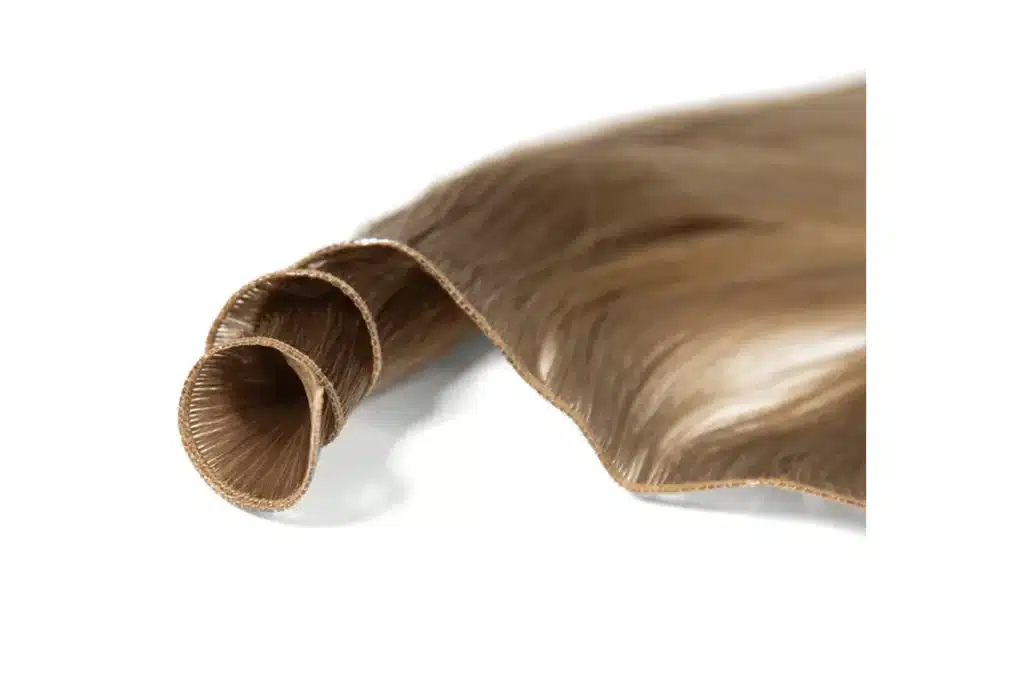
Congrats. Your extensions look amazing right now. But are you already thinking about tonight? Will you wake up with tangles, slipping, or a sore scalp?
Yes, you can sleep well with extensions on the first night. You just need a simple routine: brush gently, keep the hair fully dry, secure it in a loose style, and sleep on silk or satin. These steps cut friction and reduce pulling, so your install stays clean.
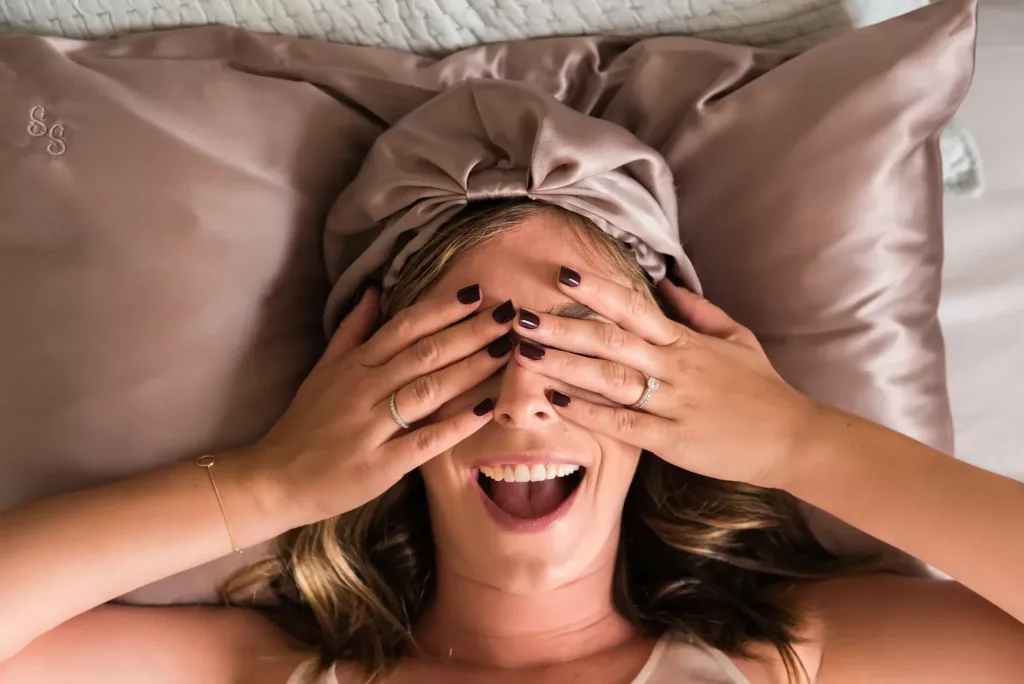
If you only remember one thing, remember this: night time is when friction and pulling do the most damage. So the goal is not “perfect hair.” The goal is calm hair that stays controlled while you sleep.
Can You Sleep With Extensions?
It feels like a small question. But it is the question that decides how your extensions look tomorrow. If you sleep the wrong way, the nape can mat fast. If you pull too tight, your scalp can feel sore fast.
Yes, you can sleep with extensions. You just need to keep them dry, smooth, and secured with low tension. A silk pillowcase helps a lot. A loose braid helps even more. Wet hair and tight ponytails cause most first-night problems.
Dive deeper
Sleep is not “free time” for extensions. Your hair moves for hours on the pillow. Your head turns. Your shoulders rub the nape area. This is why the first night sleeping with hair extensions matters so much. Three things make the difference: friction, tension, and moisture.
Friction: the sneaky one
Cotton pillowcases grab hair. That rubbing lifts the cuticle and creates tiny tangles. Those tangles turn into knots by morning, especially at the nape. Silk or satin reduces that grab. The hair slides instead of catching. That one change often cuts morning tangles by a lot.
Tension: the one you feel
Extensions add weight. If you tie the hair tight, your scalp can feel it. Some people describe it as a “pulling” feeling. That pulling can stress tapes, beads, bonds, or weft areas. A loose style keeps hair controlled but lets your scalp relax. The best rule is simple: secure, not tight.
Moisture: the fast way to mat hair
Wet hair swells and sticks together. When wet extension hair dries, it can lock into tangles. That is why sleeping with damp hair is a big no. If you wash late, you should dry the hair fully, especially around the roots and attachment points.
Here is the easiest first-night checklist:
| Risk | What causes it | What helps most |
|---|---|---|
| Friction | Cotton pillow, tossing | Silk or satin pillowcase |
| Tension | Tight ponytail/braid | Loose braid or loose pony |
| Moisture | Wet hair before bed | Dry fully |
| Nape matting | Hair left loose | Secure hair gently |
| Slipping | Heavy oils near roots | Keep oils on ends only |
You do not need a complicated routine. You just need these basics done well.

How To Sleep First Night With Extensions?
Some people try to do “extra care” on night one. They add lots of oil, or they try new products. That often makes things worse. Night one needs simple steps and a gentle touch.
You should sleep the first night with extensions after you detangle, check comfort, and secure the hair loosely. You should use a silk pillowcase, avoid wet hair, and keep heavy products away from the roots. If something feels painful, you should tell your stylist.
If you want the “easy win” routine, use this order. It works for most extension types, and it keeps your hair calm.
Step 1: Brush like you are protecting the install
You should start at the ends. Then you move upward. You should support the hair with your hand near the roots so you do not pull on the attachment points. The goal is smooth hair with no snags.
Step 2: Do a quick comfort check
You should use your fingertips and feel the areas where the extensions sit. Do you feel a sharp bead edge? Do you feel a tape tab folding? Do you feel one section pulling? A little “new feeling” is normal. Strong pain is not.
Step 3: Choose a sleep style that holds the hair, not your scalp
A loose low braid is the most popular choice for a reason. It keeps hair together and cuts friction. A loose low pony can also work. If you love volume, a loose “pineapple” on top can work for very long hair, but it should stay loose.
Step 4: Switch to silk or satin for the night
This is where you will feel the difference the next morning. Less friction means fewer tangles and less dryness.
Step 5: Keep products simple
You should not apply heavy oils at the roots before bed. Oils can cause slipping on tape-ins and can cause buildup around beads or bonds. If the ends feel dry, you can use a small amount of light leave-in on mid-length and ends only.
This table shows the “night one” mistakes that cause most trouble:
| Mistake | What happens | Better move |
|---|---|---|
| Going to bed with damp hair | Matting and knots | Dry fully |
| Tight ponytail | Scalp soreness | Loose braid |
| Heavy oil near roots | Slipping and buildup | Keep oils off roots |
| Skipping brushing | Nape tangles | Detangle first |
| Cotton pillowcase | More friction | Silk or satin |
If you wake up sore in one spot, that usually means one section is too tight or sitting in a pressure zone. A stylist can fix that quickly. It is better to adjust early than to “tough it out.”
How To Sleep With Clip In Hair Extensions?
Clip-ins look easy, and they are easy. But sleeping in them is a different story. Clips can press into your scalp, and the rubbing can stress your natural hair near the clip zone.
You should not sleep with clip in hair extensions in most cases. You should remove them, brush them, and store them properly. If you must sleep in them one time, you should use fewer wefts, keep them lower, and protect hair with silk.
Dive deeper
Clip-ins are made for day wear. Night wear creates discomfort and can also cause breakage over time. That is why most professionals say “remove them before bed.”
Why clips cause trouble at night
Clips are small, but they are firm. When your head turns on the pillow, clips press into the scalp. That pressure can cause soreness. Clips can also rub your natural hair. Repeated rubbing can weaken strands near the roots, especially for fine hair.
The best clip-in night routine
You should remove the clip-ins first. Then you brush them gently from ends to top. You store them flat, or you store them in a clean bag. You keep them dry and away from humidity. This routine also keeps the clips clean and helps the set last longer.
If you have to keep them in for a short situation
Sometimes people travel or fall asleep after an event. If that happens, you can reduce risk:
- use fewer wefts
- avoid placing clips high on the crown
- avoid thick stacking at one area
- braid the hair loosely
- sleep on silk
Here is a simple decision guide:
| Situation | Best choice | Why |
|---|---|---|
| Normal night | Remove clip-ins | Comfort and hair safety |
| Quick nap | Remove if possible | Pressure points |
| Travel emergency | Keep only if needed | Reduce friction |
| Sensitive scalp | Remove always | Prevent soreness |
If you want clip-ins to stay premium, removal is the best habit.

How To Sleep With Sew In Extensions?
Sew-ins feel secure, so many people assume sleep will be easy. Sleep can be easy, but the braid base and the nape area still need protection.
You can sleep with sew in extensions when you detangle first, secure hair loosely, and wrap with satin. You should also pay attention to tightness. If the braids feel painful, your stylist should check tension.
Dive deeper
Sew-ins are stable because the weft is attached to a braid base. That structure is great, but it changes how your scalp and hair feel at night.
Protect the braid base
If braids are too tight, night one will tell you. A little tightness can happen at first, but strong pain, headache, or “pulling at edges” is not okay. A satin wrap helps because it keeps the base calm and reduces rubbing.
Stop nape tangles before they start
The nape rubs the pillow and collar area. That is why the nape can mat faster than other areas. A loose braid is the easiest fix. Some people prefer two loose braids for even more control.
Choose the right wrap
A satin bonnet reduces friction. A scarf can also work, but it should not be tight. A tight wrap can create pressure and worsen soreness.
This table shows a practical sew-in night routine:
| Step | What you do | What it helps |
|---|---|---|
| Detangle | Brush gently | Less matting |
| Secure | Loose braid | Less friction |
| Wrap | Satin bonnet | Protects braids |
| Sleep position | Avoid heavy pressure zones | More comfort |
| Check pain | Notice sharp pulling | Fix early |
A sew-in should feel more comfortable each day. If it feels worse, the tension may be too high.
How To Sleep With Tape In Hair Extensions?
Tape-ins sit flat, so they usually sleep well. But tapes can still twist, and oil can still cause slipping. Small mistakes at night can shorten the wear time.
You can sleep with tape in hair extensions when the hair is dry, detangled, and tied loosely. You should keep oils away from the tape area and use silk to reduce friction. This helps tapes stay flat and clean.
Dive deeper
Tape-ins depend on clean adhesive contact. Night habits can protect that contact or weaken it.

Keep the tape zone clean
Oils and heavy serums near the roots can cause slipping. If you need moisture, you should place it on mid-length and ends only. This is one of the most important tape-in rules.
Prevent tape twisting
When hair is loose, tapes can flip or twist during sleep. Twisting can create tension on the hair inside the tape and can make the tab feel bulky. A loose braid keeps tapes aligned.
Dry roots matter more than you think
If you wash your hair at night, you should dry the roots fully. Damp roots can soften the tape area and create movement.
This table shows the tape-in night rules:
| Rule | Why it matters | What you do |
|---|---|---|
| Dry roots | Adhesive stays stable | Dry before bed |
| No oil at roots | Prevent slipping | Oil on ends only |
| Loose braid | Stops twisting | Secure gently |
| Silk pillow | Less friction | Protects hair |
| Gentle brushing | Less snags | Detangle first |
If tapes feel sticky, lifted, or uncomfortable, you should contact your stylist early. Small fixes are easy. Delayed fixes are not.
How To Sleep With Beaded Extensions?
Beaded systems can feel “bumpy” at first. That is normal for many people. The goal is to reduce pressure and prevent root tangles around beads.
You can sleep with beaded extensions if you detangle first, secure hair loosely, and sleep on silk. You should never sleep with wet hair because wet hair can knot around beads and dry into tight tangles.
Dive deeper
Beads are hardware, and hardware changes sleep comfort. Beads also create anchor points where hair can wrap. A good routine prevents both soreness and tangles.
Reduce pressure points
If you sleep on your side, you may feel beads more at first. Silk helps because it reduces pulling when you move. A loose braid keeps the beads from shifting into pressure zones.
Prevent bead tangles near the root
Hair can wrap around beads if it is left loose and dry or if it is damp. Those small tangles are annoying and can cause pulling when brushed. Detangling before bed and securing hair reduces that risk.
Dry hair is non-negotiable
Wet hair tightens as it dries. That tightening can lock knots around beads. If you only change one habit, change this one.
This table shows common bead issues and simple fixes:
| Issue | Why it happens | What helps |
|---|---|---|
| Beads feel sore | Pressure during sleep | Silk + change position |
| Root tangles | Hair wraps beads | Loose braid |
| Nape matting | Friction | Secure hair + silk |
| Sharp feeling | Bead edge issue | Stylist check |
Beads should feel smooth. If you feel sharp edges, you should get a quick adjustment.

Do Extensions Hurt The First Day?
A little tenderness can happen. That part is common. But strong pain is not something you should accept.
Extensions can feel tender on the first day, but they should not cause strong pain, headaches, or numbness. If pain is strong or stays overnight, your stylist should check tension and placement. Early adjustments protect your natural hair.
Dive deeper
Day-one comfort depends on install quality, your scalp sensitivity, and the extension type. Most people feel better after the first few days as the scalp adjusts.
What can feel normal
- mild tightness
- light tenderness when brushing
- awareness when you lay on certain areas
These usually improve in 24 to 72 hours.
What is not normal
- strong headache
- sharp pain in one section
- burning sensation
- numbness
- severe pulling at the edges
These signs can mean the install is too tight or too heavy for your hair density. A good stylist can adjust quickly. Waiting can make irritation worse.
What you can do tonight if you feel sore
You can use a loose braid, not a tight pony. You can sleep on silk. You can avoid pressure on the most sensitive zone by changing sleep position. You can also keep the hair very smooth and dry so you do not need to tug at knots in the morning.
This table helps you decide what to do:
| Feeling | What it means | What you should do |
|---|---|---|
| Mild tenderness | Scalp adjusting | Gentle routine |
| Tight pressure | Tension may be high | Monitor and avoid tight styles |
| Sharp pain | Placement or tension issue | Contact stylist |
| Headache | Too much tension | Contact stylist |
| Numbness | Nerve pressure risk | Contact stylist |
You deserve comfort. A luxury look should not come with real pain.
What Should You Avoid On The First Night With Extensions?
It is easy to do one small thing that creates big trouble. Night one problems usually come from the same few habits.
You should avoid wet hair, tight ponytails, heavy oil near roots, and cotton friction. You should also avoid sleeping with hair fully loose. A simple loose braid and silk pillowcase prevents most matting and slipping.
Dive deeper
This is the short “no list” that protects your install.
Avoid wet hair
Wet hair mats. Extensions hold water longer than natural hair because there is more density. If hair dries in a twisted state, it dries into knots.
Avoid tight hairstyles
Tight styles pull the scalp. Extensions already add weight. Tight styles add extra stress.
Avoid heavy oils near roots
Oil can cause tape slipping. Oil can also create buildup around beads and bonds. Products should stay on mid-length and ends only.
Avoid cotton friction
Cotton grabs hair. That grab creates tangles and rough feel. Silk or satin reduces that grab.
This table is a simple swap list:
| Avoid | Swap to | Why |
|---|---|---|
| Wet hair | Dry fully | Less matting |
| Tight pony | Loose braid | Less tension |
| Oil at roots | Light on ends | Less slipping |
| Cotton pillow | Silk pillow | Less friction |
| Hair loose | Secure gently | Less nape knots |
These swaps feel small. They make a big difference tomorrow morning.

My opinion
The first night is not the time to test new products. The first night is the time to be gentle. A silk pillowcase, a loose braid, and fully dry hair solve most problems. If you do those three things, you usually wake up with hair that still looks like day one.
Each method has its own rule. Clip-ins should come out. Tape-ins need clean roots and no oils. Sew-ins need wrap protection. Beaded systems need pressure control and detangling. When those rules are followed, sleep gets easy again.
FAQ
Can you sleep with extensions on the first night?
Yes. You should detangle, keep hair dry, and secure it loosely. Silk helps a lot.
Should you remove clip-in extensions before bed?
Yes. Most people should remove them because clips can press the scalp and stress hair.
What is the best way to sleep with extensions?
A loose low braid on a silk pillowcase is the easiest option for most people.
Can you sleep with tape-ins if you used oil earlier?
You should keep oil away from the tape area. If tapes start slipping, you should contact your stylist.
Why does the nape tangle overnight?
The nape rubs the pillow and collar. A loose braid reduces rubbing and knots.
Do extensions hurt the first day?
Mild tenderness can happen. Strong pain, headaches, or numbness is not normal and needs a stylist check.
Conclusion
Your first night sleeping with hair extensions should feel calm. Keep hair dry, braid it loosely, and sleep on silk so you wake up with smooth hair and stable attachments.