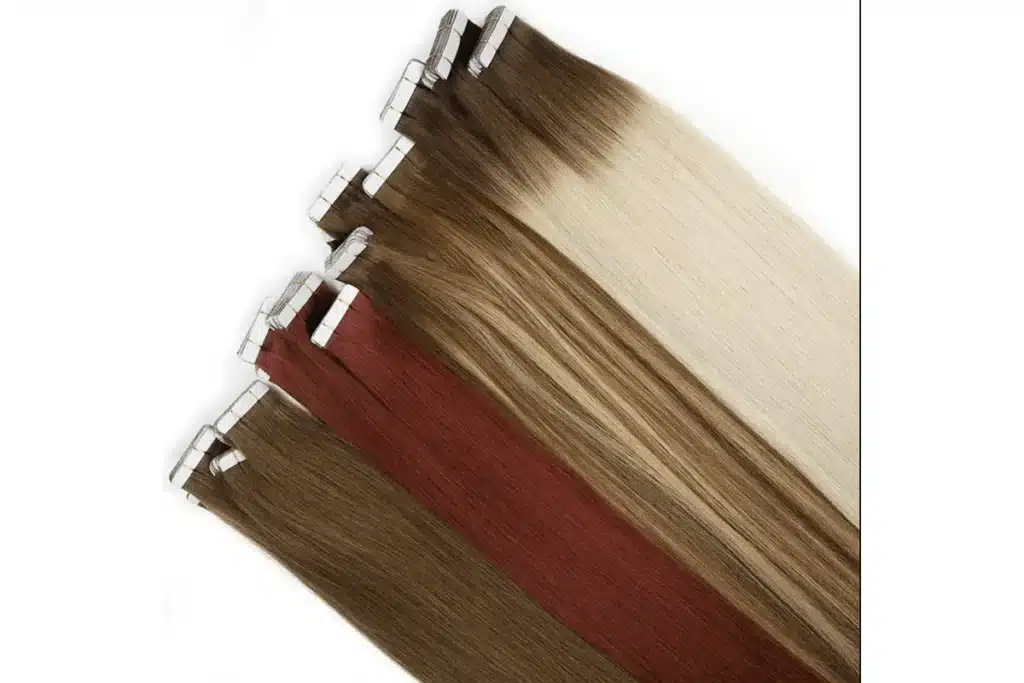
Sometimes stylists want extensions that stay secure for months. Sometimes clients want lightweight bonds that blend without bulk. Many people compare K Tip vs U Tip because both are fusion extensions that use keratin, yet they perform very differently. This guide explains each type in simple terms so you can choose the right method for your salon or wholesale line.
K Tip and U Tip hair extensions both use keratin bonds and give long-lasting results. K Tip has a small, flat keratin bond. U Tip has a larger U-shaped bond with more grip. The best choice depends on your client’s hair type, the installation zone, and the result you want to create.

This article breaks down the structure, application, pros and cons, costs, longevity, and the final comparison between K Tip and U Tip. I also share insight from my factory experience so you can select reliable suppliers and avoid common problems.
What Are K Tip and U Tip Hair Extensions?
Many stylists already use fusion extensions, but the difference between K Tip and U Tip can affect comfort, appearance, and longevity. Both look similar at first glance, but the bond shape changes how they behave in real use.
K Tip and U Tip extensions both use keratin bonds that melt with a fusion tool. K Tip has a small, flat bond, sometimes also called Flat Tip Hair. It wraps neatly around fine or medium hair. U Tip has a larger U-shaped keratin bond. It gives a wider surface area and stronger hold, especially on thick or coarse hair.
K Tip works well for detailed work around the crown or face because the small bond stays discreet. U Tip works well in the back or sides because it anchors firmly and supports heavier hair sections. Both can create natural, long-lasting results when applied by trained stylists.
K Tip blends smoothly and lays flat on the scalp. U Tip provides a stronger foundation where clients need more security. Both need clean sections, correct heat control, and even pressure when sealing the bond.
K Tip Structure and Use
K Tip extensions have a narrow bond that melts quickly. Stylists choose them for fine hair because the small size avoids bulk. The bond becomes soft under heat and wraps around the natural strand. This creates a secure but flexible hold. K Tip is often used for detailed zones because it stays hidden even in thin hair.

U Tip Structure and Use
U Tip extensions have a larger surface area. This lets them grab more natural hair and hold strong during daily movement. U Tip is suitable for dense or coarse hair because it supports tension better than K Tip. The bond needs steady heat and firm rolling to mold correctly.
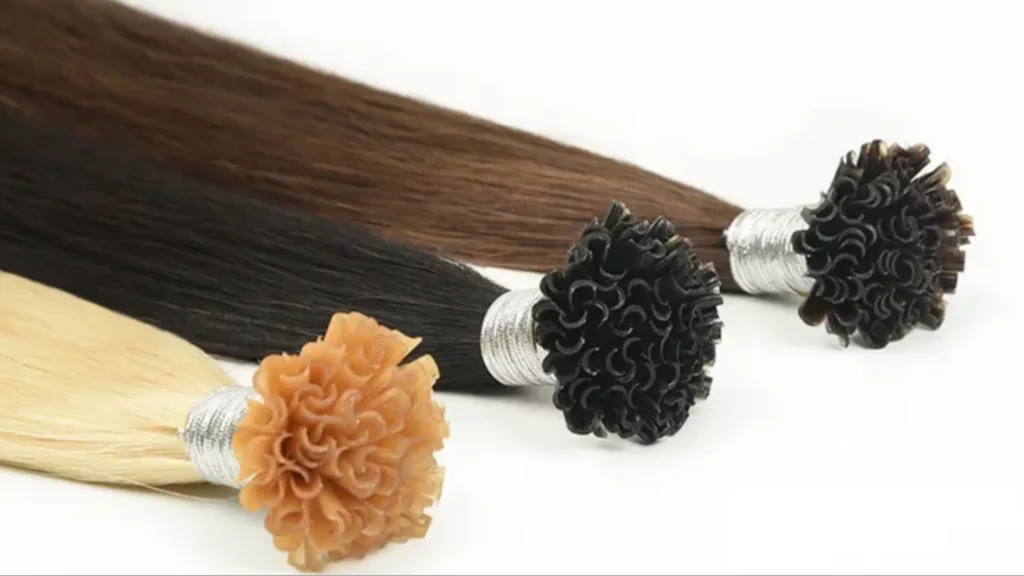
The two types share the same core idea but behave differently due to size. This difference guides how stylists plan sectioning, density, and placement for each client.
K Tip vs U Tip: Key Differences
Choosing between K Tip vs U Tip starts with understanding how the bond shape affects installation and daily wear. Many stylists think the hair quality is the biggest factor, but the bond shape also changes the comfort level, visibility, and durability.
1. Bond Shape and Construction
K Tip bonds are slim and flat, which lets the strands sit close to the scalp without creating volume at the root. U Tip bonds are pre-formed into a “U” curve that wraps around a larger section of natural hair. The curved shape helps the melted keratin grip more tightly, which gives extra stability for clients with thicker strands or naturally strong hair texture.
2. Flexibility and Movement
K Tip strands move more freely because the lighter bond follows the natural movement of fine or medium hair. Clients often describe them as softer during daily wear. U Tip bonds create a firmer anchor point. This limits unnecessary movement and keeps the extensions in place during active routines or frequent washing. Many stylists choose U Tip for clients who need long lengths that stay structured.
3. Sectioning and Tension Control
K Tip requires smaller sections of natural hair. This makes it safer for delicate areas, like the top layers or hairline. U Tip needs slightly larger sections to support the heavier bond. This controls tension and avoids strain, especially on dense hair where the extra weight is distributed more evenly.
4. Installation Technique
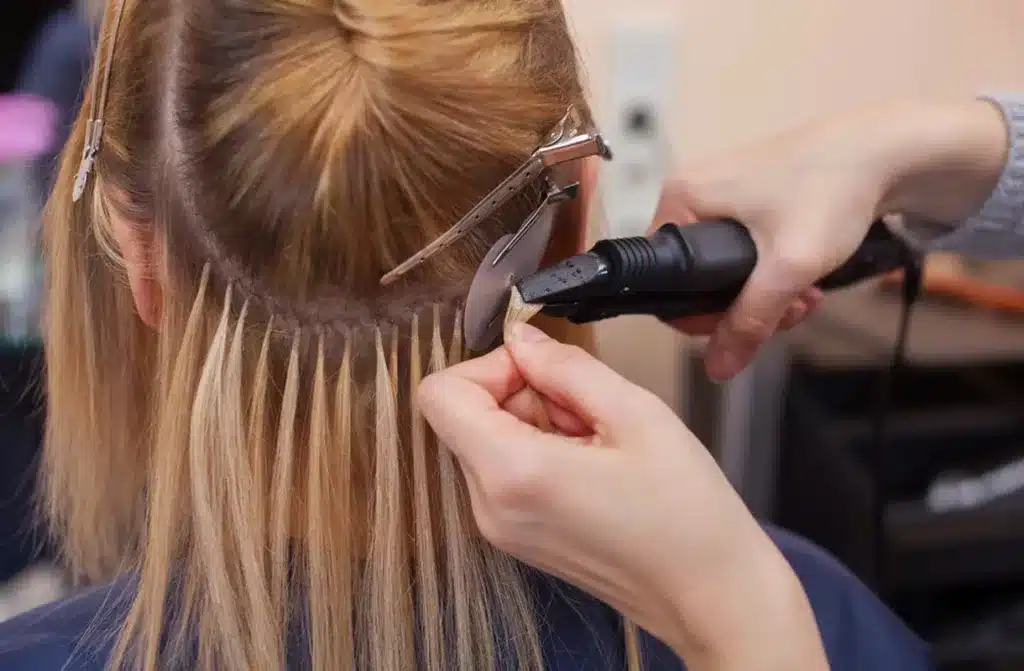
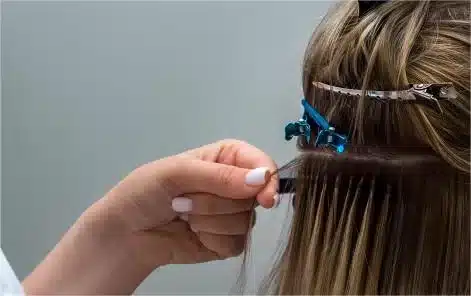
K Tip needs more precision because the bond is small. Stylists must place each strand carefully to maintain even spacing and prevent slippage in fine hair.
U Tip provides more forgiveness since the bond covers a wider area. This helps stylists maintain consistency across the back and sides, which are the strongest zones of the head.
5. Heat Response and Bonding Strength
K Tip melts quickly due to its lightweight structure. It cools fast and forms a smooth bond. U Tip needs slightly longer melting time, but the result is a dense, secure bond that holds up well under tension. This difference in heat behavior influences the speed of installation and the strength level of the final result.
6. Visibility After Installation
K Tip becomes almost invisible once the strands are blended. This is why stylists use them around areas where thin coverage can expose bonds. U Tip bonds are thicker, so they work best when covered by denser layers. With proper placement, they remain discreet but are not ideal for very fine or fragile hair.
7. Client Lifestyle Suitability
K Tip suits clients who want flexibility, soft texture, and a natural feel. It is ideal for clients who wear loose hairstyles or want lightweight movement. U Tip suits clients who need durability—those who exercise often, wear long lengths, or need strong anchoring for active routines. The heavier bond helps maintain stability through daily activities.
K Tip vs U Tip Pros and Cons
Sometimes stylists want lightweight bonds. Sometimes they want strong anchoring. Both K Tip and U Tip can create premium results, but they have different strengths. You can choose based on hair type, lifestyle, and placement.
Pros and cons help stylists choose between flexibility and strength.
K Tip Pros
- Lightweight for fine hair
- More discreet than U Tip
- Smooth and soft bond
- Great for face-framing placements

K Tip Cons
- Less hold on thick hair
- Needs high precision during install
U Tip Pros
- Strong grip for thick or coarse hair
- Better for busy clients with active routines
- Holds well in high-tension zones
U Tip Cons
- More visible in fine hair
- Slightly heavier bond
Many high-end salons use both types to create balanced density. The choice depends on where the bond sits and how much support the natural hair needs.

Cost Comparison: K Tip vs U Tip
Stylists and wholesalers often compare cost because it affects profit, speed, and reusability. Both K Tip and U Tip use keratin. Both require trained technicians. The pricing depends on hair quality and production.
K Tip and U Tip extensions often have similar wholesale prices, but K Tip may take more time to install because the small bonds require precise work. U Tip installs slightly faster because the larger bond is easier to roll and seal.
Full cuticle hair costs more at the start but lasts longer, making the cost per install lower over time.
Wholesale Pricing
- Full cuticle K Tip: typically $200–$300 per 100g
- Full cuticle U Tip: similar range
Installation Cost for Clients
- K Tip: higher due to detailed placement
- U Tip: medium because sections are larger
Reusability
- Full cuticle K Tip and U Tip: can be re-tipped 2–4 times
- Remy hair: short lifespan, limited re-tipping
A salon that targets premium clients benefits from full cuticle hair, even if the upfront cost is higher. The reusability improves the long-term budget for both the stylist and the client.
How Long Do K Tip and U Tip Extensions Last?
Longevity depends on the hair quality, installation skill, bond care, and the client’s lifestyle. K Tip and U Tip usually last 3–4 months before a move-up. Full cuticle hair lasts 1 year or longer with good care. Remy hair lasts 3–5 months. Non-Remy lasts 1–2 months.
K Tip lasts slightly shorter on thick hair because the bond is small. U Tip lasts longer in high-tension areas because it has a stronger grip.
Lifespan Factors
- Hair quality
- Bond quality
- Installation technique
- Aftercare
Re-tipping
Full cuticle K Tip and U Tip extensions can be re-tipped multiple times. Many salons prefer reusability because clients want long-term value.
Lifestyle
Clients who swim often, sweat heavily, or use strong heat tools may reduce the lifespan of both types. But high-quality keratin and proper installation help keep bonds intact.

Final Comparison Summary Table
You can quickly compare the two systems with this summary:
| Feature | K Tip Extensions | U Tip Extensions |
|---|---|---|
| Bond Size | Small, flat | Larger, U-shaped |
| Best For | Fine to medium hair | Thick or coarse hair |
| Visibility | Very discreet | More visible on fine hair |
| Placement | Hairline, crown | Back, sides |
| Grip Strength | Light-medium | Strong |
| Longevity | 3–4 months | 3–4 months |
| Reusability | High with full cuticle hair | High with full cuticle hair |
| Install Time | Longer | Medium |
Which Should You Choose: K Tip or U Tip?
Stylists choose based on hair type, density, and desired finish. Clients choose based on comfort, maintenance, and how natural they want the bonds to look.
K Tip works best for discreet installs. U Tip works best for strong anchoring.
Ideal for Fine Hair
K Tip blends into thin hair without adding bulk.
Ideal for Thick Hair
U Tip holds strong and supports heavy strands.
Ideal for Natural Movement
K Tip gives soft movement because the bond is small.
Ideal for Long Wear
U Tip stays stable during heavy activity or long hair routines.
Mixed Application
Many stylists combine both types. This creates natural density and balanced weight.
Choosing the Right Supplier
Hair quality affects bond performance. Many problems come from cheap hair, not the bond type. Full cuticle hair allows both K Tip and U Tip to last longer, stay smooth, and remain reusable.
My factory produces both K Tip and U Tip using full cuticle, single-donor hair. The keratin comes from Italian formulas for strong sealing. Many salons work with us for stable supply and consistent batches.
Consistent Quality
Full cuticle strands stay soft even after months of wear. Many factories mix hair or strip cuticles with acid, which causes tangling.
Stable Supply
Salons need predictable color and grams. We keep detailed control of production to match each batch.
Custom Options
We offer custom grams, bond sizes, colors, and packaging. This helps brands stand out.
Professional Support
We work with stylists and wholesalers worldwide. Many choose full cuticle K Tip and U Tip to reduce client complaints and increase reuse cycles.
My Opinion
I see both K Tip and U Tip as essential tools for stylists. K Tip helps with invisible work. U Tip helps with secure work. Both become premium when made with full cuticle hair and high-grade keratin. If your salon focuses on luxury clients, invest in higher quality because reusability and comfort matter most.

FAQ
Q: Are K Tip and U Tip both keratin-based?
A: Yes, both use keratin that melts with a fusion tool.
Q: Which is better for fine hair?
A: K Tip is better because it stays discreet.
Q: Which lasts longer?
A: Both last 3–4 months per install.
Q: Can I reuse K Tip and U Tip?
A: Yes, if the hair is full cuticle and re-tipped correctly.
Q: Do the bonds damage hair?
A: No, when installed and removed professionally.
Q: Can they be mixed with tape-ins?
A: Yes, hybrid installs are common.
Q: How many strands for a full head?
A: Usually 100–150 strands.
Q: Can clients swim with fusion extensions?
A: Yes, with proper care around the bonds.
Conclusion
K Tip and U Tip extensions both offer strong, long-lasting results. The better choice depends on hair type and placement. Choose K Tip for discreet work and U Tip for strong grip, and always choose high-quality full cuticle hair for the best results.

Hibiscus Hair Manufacturer has over 25 years of experience producing professional K Tip and U Tip hair extensions. We specialize in full cuticle hair and custom wholesale solutions. If you need a reliable supplier for your salon or brand, visit our website to learn more.