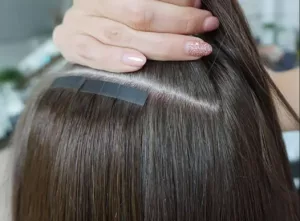
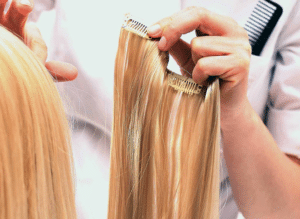
You may want longer hair, but you do not want obvious bonds. You may also worry about bulky tracks or shiny tape lines. That worry is common.
Hand tied extensions usually look very flat and natural when they are installed and maintained well. The wefts sit in rows, and the blend can look like real growth. The final look depends on row placement, density match, and hair quality.
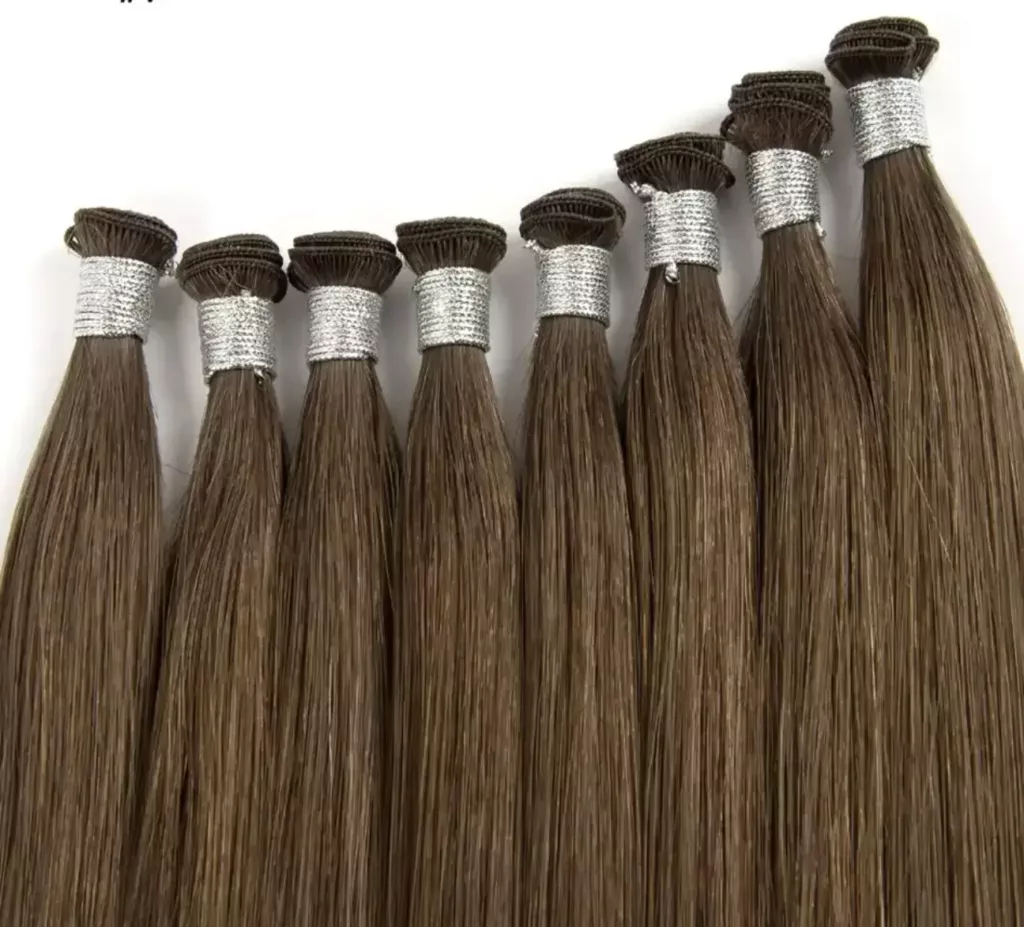
If you want to know what you will actually see in real life, keep reading. I will explain what hand tied wefts are, what before-and-after changes look like, how long results last, and what damage risks are real.
What Are Hand Tied Weft Extensions?
You may hear “hand tied” and think it is one single method. In reality, hand tied describes a weft type, and it is used inside a row system. The details matter.
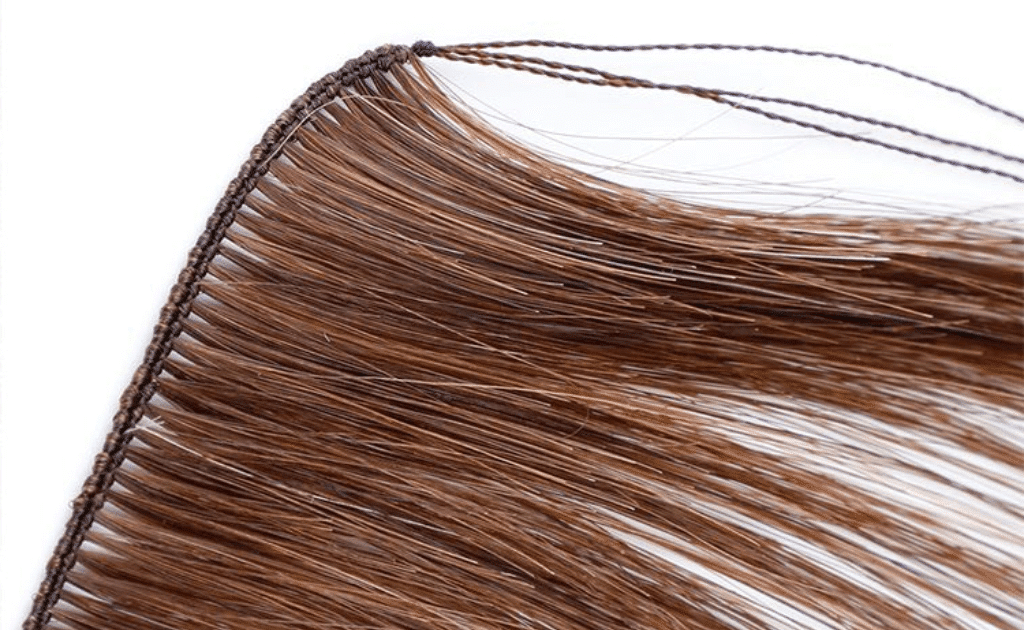
Hand tied weft extensions are thin wefts made by tying hair strands onto a fine thread track. They are designed to sit flat in the hair and blend smoothly. In most installs, a stylist places wefts on rows and uses beads and thread to secure them.
How the weft structure affects the look
A hand tied weft is usually thinner than a machine weft. That thin seam is why the result can look flatter at the head. When the seam is flat, the row looks less bulky. This matters in fine hair, where volume at the root can look obvious.
What “natural-looking” really depends on
Many people think hand tied always looks invisible. That is not always true. The look depends on:
- the match between extension density and your natural density
- row placement relative to your parting and crown
- the stylist’s section size and tension control
- how often you do maintenance
- the hair quality and cuticle alignment
What you will actually notice in the mirror
Most people notice these changes first:
- the ends look fuller
- the perimeter looks longer
- the hair has more “weight” when you move it
- the top looks the same, if the blending is done well
| Feature you care about | What hand tied wefts usually deliver | What can reduce it |
|---|---|---|
| flat profile | thin seam sits close | too many wefts per row |
| natural movement | weft hair flows like real hair | dry hair or heavy product |
| invisible blend | hair hides the row | wrong placement or heavy grow-out |
| comfort | low bulk feel | beads too tight or too close to hairline |
If you want the best look, you should ask your stylist about row count, weft weight per row, and maintenance timing. Those details control the result more than the word “hand tied.”
Hand Tied Extensions Before and After: What Changes Should You Expect?
You may look at before-and-after photos online and feel confused. Some look dramatic. Some look barely different. Both can be real results.
Hand tied extensions before and after usually show more length, more density at the ends, and better shape in the perimeter. A good result should look like your natural hair, just longer and fuller. The top should not look bulky.
Dive deeper
I like to explain before-and-after in a practical way. You are not buying a photo. You are buying a daily look. So I focus on what changes in real life.
The most common “before” situations
Many clients start with one of these:
- thin ends and a see-through perimeter
- uneven layers or past breakage
- medium hair that does not hold shape
- hair that grows slowly but needs length now
Hand tied can help each one, but the plan changes. A thin-end client often needs density first, not only length. A client with uneven layers needs blending and cutting that respects the natural shape.
The most common “after” results
A realistic “after” should show:
- a stronger, heavier perimeter
- improved shape when the hair is curled or straight
- less see-through at the bottom
- a smooth root area without visible tracks
What a before-and-after photo may hide
Photos can hide:
- the maintenance schedule needed to keep it clean
- the difference between salon lighting and home lighting
- how the hair behaves in humidity
- how heavy products can change the look
So I suggest you judge before-and-after with a checklist, not with emotion.
| Before-and-after detail | What you should look for | What it tells you |
|---|---|---|
| part line | does the top look natural? | row placement and blend skill |
| crown area | any bumps or bulk? | weft stacking and weight control |
| perimeter | is the bottom full? | density match and weft quality |
| movement | does it swing naturally? | hair softness and cuticle quality |
If you want a predictable “after,” you should bring your stylist a clear goal: length target, density target, and the styles you wear most. That helps the plan match real life.

How Long Do Hand Tied Extensions Last?
You may see different answers online, and that can feel confusing. Some say weeks. Some say a year. Both can be true, depending on what “last” means.
Hand tied extensions last in two ways: the install needs move-ups every several weeks, and the hair itself can last much longer with proper care. High-quality hair can be reused across multiple move-ups. Lower-quality hair may tangle, dry out, and need replacement sooner.
Dive deeper
When people ask “how long do they last,” I ask one question back: do you mean the install, or the hair fiber? These are two different timelines.
Timeline 1: the install timeline
A hand tied install sits on your natural hair, and your natural hair grows. That growth changes the position of the row. This is why move-ups matter. If move-ups are delayed, the row can slip, the bead line can show, and matting can increase.
Timeline 2: the hair quality timeline
Hair lifespan depends on:
- cuticle integrity
- processing level
- how often you use heat
- how you wash and dry
- how you sleep and brush
From a manufacturer view, full cuticle hair holds up better over time because the cuticle direction stays aligned. This reduces friction. This reduces tangling. It also helps softness stay stable.
Why salons care about hair lifespan
If a salon can reuse hair, the cost per wear drops. That makes the service feel more valuable. It also reduces waste.
| Factor | Helps hair last longer | Shortens hair life |
|---|---|---|
| hair quality | full cuticle, aligned cuticle | mixed cuticle or heavy processing |
| maintenance timing | regular move-ups | overdue rows and heavy matting |
| washing habits | gentle wash, full dry | sleeping with wet hair |
| product habits | light on roots, balanced on lengths | heavy oils and buildup near rows |
If you want the longest lifespan, you should treat the hair like luxury fabric. It needs gentle handling and a stable routine.

Do Hand Tied Extensions Damage Your Hair?
You may worry about traction, breakage, or thinning. That worry is reasonable because some installs are done wrong, and some maintenance is delayed too long.
Hand tied extensions can be low-damage when they are installed with correct tension, correct weight, and correct maintenance timing. They can cause damage when rows are too heavy, beads are too tight, or the client delays move-ups and pulls through tangles.
Dive deeper
I will keep this honest. Hand tied is not “magic safe.” It is a system. Like any system, it depends on technique and management.
Where damage usually comes from
Damage usually comes from four sources:
1) too much weight on one row
2) tension that is too high at install
3) poor home care and aggressive brushing
4) delayed maintenance that leads to matting
If a client has fine hair, a stylist must control weight carefully. If a client wears tight ponytails daily, tension can concentrate in one area. If a client sleeps with wet hair, matting risk increases fast.
How you can reduce damage risk
You can reduce risk by choosing:
- a stylist who plans row count and weft weight
- a realistic density goal for your hair type
- a maintenance schedule that you follow
- a routine that reduces friction at night
A simple way to judge if your install is “too much”
If you feel constant soreness, that is a sign. If you see redness, that is a sign. If you notice breakage around the bead line, that is a sign. A comfortable install should feel secure but not painful.
| Warning sign | What it can mean | What you should do |
|---|---|---|
| soreness that lasts | tension is too high | contact your stylist soon |
| beads feel sharp | beads are crushed or moved | book a fix, avoid pulling |
| matting near row | trapped shed hair + friction | detangle routine, do not delay |
| thinning near row | weight or tension issue | reassess plan and row design |
If you treat the system with respect, many people wear hand tied for years without major damage. The key is correct planning and steady maintenance.

What Makes Hand Tied Extensions Look Natural and “Invisible” in Daily Life?
You may want an invisible look in bright daylight, not only in salon photos. That is the real test.
Hand tied extensions look natural when the hair matches your texture and density, the row is placed correctly, and the weft seam stays flat. Good blending and a clean part line matter more than extreme length.
Dive deeper
A natural look comes from matching, not from hiding. If the match is wrong, you will try to hide it with styling. That creates more stress.
Matching is the foundation
You should match:
- texture (straight, slight wave, curl pattern)
- density (fine vs thick)
- color depth and tone
- shine level (too shiny can look fake)
Many people only focus on color. Texture match is often more important in real life. If the extension hair is very straight and your hair is naturally wavy, you may see separation in movement.
Placement decides what you can wear
If you wear hair up often, placement must support that. If you wear a deep side part, placement must support that. This is why a “one standard placement” does not work for every person.
Daily habits that protect the invisible look
- keep the base clean and dry
- avoid heavy product at the row area
- brush with support, not pulling
- use a satin pillowcase or bonnet
| Natural look factor | What helps | What hurts |
|---|---|---|
| part line | correct row placement | overdue move-up and bead show |
| crown bulk | controlled weft weight | stacking too many wefts |
| blend | correct cut and layers | mismatch texture or density |
| movement | soft cuticle hair | dry hair and heavy heat |
If you want the best “what it looks like” result, you should plan for your real daily life, not for one photo day.
What Should You Ask Before You Buy Hand Tied Hair?
You may be comparing salons or brands. You may also be comparing hair quality. You should ask questions that protect you from disappointment.
Before you buy, you should ask about hair quality, cuticle integrity, weft construction, and reuse potential. You should also ask about move-up timing, recommended products, and what results are realistic for your hair type.
Dive deeper
This section matters because the “look” you get is linked to the “hair” you buy. A good stylist can do a lot, but the hair fiber still matters.
Hair quality questions that matter
You can ask:
- Is the hair full cuticle and aligned?
- Is it single donor or mixed?
- Is it heavily processed?
- What is the expected lifespan with proper care?
- Can it be reused across move-ups?
If a seller avoids these questions, that is a signal. In premium services, transparency is normal.
Weft questions that matter
You can ask:
- Is the weft thin and flat?
- How does it handle shedding?
- Can the seam be cut, or should it stay intact?
- What is the average weight per weft?
These details affect bulk, comfort, and longevity.
| Buyer question | Why it matters | What you want to hear |
|---|---|---|
| cuticle integrity | affects tangling and shine | full cuticle intact and aligned |
| processing level | affects dryness and life | minimal harsh chemical processing |
| reuse plan | affects long-term value | hair can be reused with proper care |
| weft construction | affects bulk and comfort | thin, flat, stable seam |
If your goal is luxury, you should choose suppliers and salons who talk like professionals. Clear specs usually mean better control.

My opinion
I think hand tied extensions look their best when the plan is realistic and the hair quality is high. I also think the most common reason people feel disappointed is mismatch, not method. When texture, density, and maintenance timing match the client, hand tied can look like natural growth.
FAQ
What do hand tied extensions look like up close?
Up close, a well-done result should show a clean part line and a flat crown area. You should not see bulky tracks. You may see small beads if hair is lifted high or if maintenance is overdue.
Are hand tied extensions noticeable in the wind?
They should not be obvious in normal movement when blending is correct. If hair separates and shows the row, the match or placement may need adjustment.
Do hand tied wefts feel heavy?
They can feel light when row weight is planned well. They can feel heavy when too many wefts are stacked or when the hair length is too long for the client’s density.
Can hand tied extensions look natural on fine hair?
Yes, but fine hair needs careful weight control and smart placement. Too much hair can look bulky at the base.
Do hand tied extensions last longer than tape-ins?
The lifespan depends on hair quality and care. The install schedule differs, but premium hair can be reused across multiple move-ups in both systems when handled correctly.
What is the biggest reason hand tied extensions look fake?
The biggest reason is mismatch in texture and density. Bad color tone match is also common.
How do you keep hand tied extensions looking natural?
You keep the base clean, you avoid heavy products near the row, you protect hair at night, and you keep move-ups on time.
Conclusion
Hand tied extensions usually look flat, natural, and full when matching and maintenance are done right. The best look comes from correct planning, correct placement, and high-quality hair.