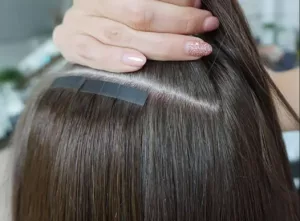
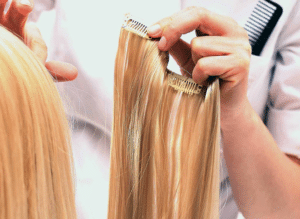
Thick hair can hide poor extensions fast. Then the mismatch shows up in bulk, tangling, and weak blending. That is why choosing the right hair for thick hair matters so much.
The best hair extensions for thick hair are full cuticle hair extensions in methods that can match heavier density, stronger weight, and better blending. In most salon cases, hand tied wefts, genius wefts, tape-ins, and some keratin methods work well when the hair quality is high and the pack quantity is planned correctly.
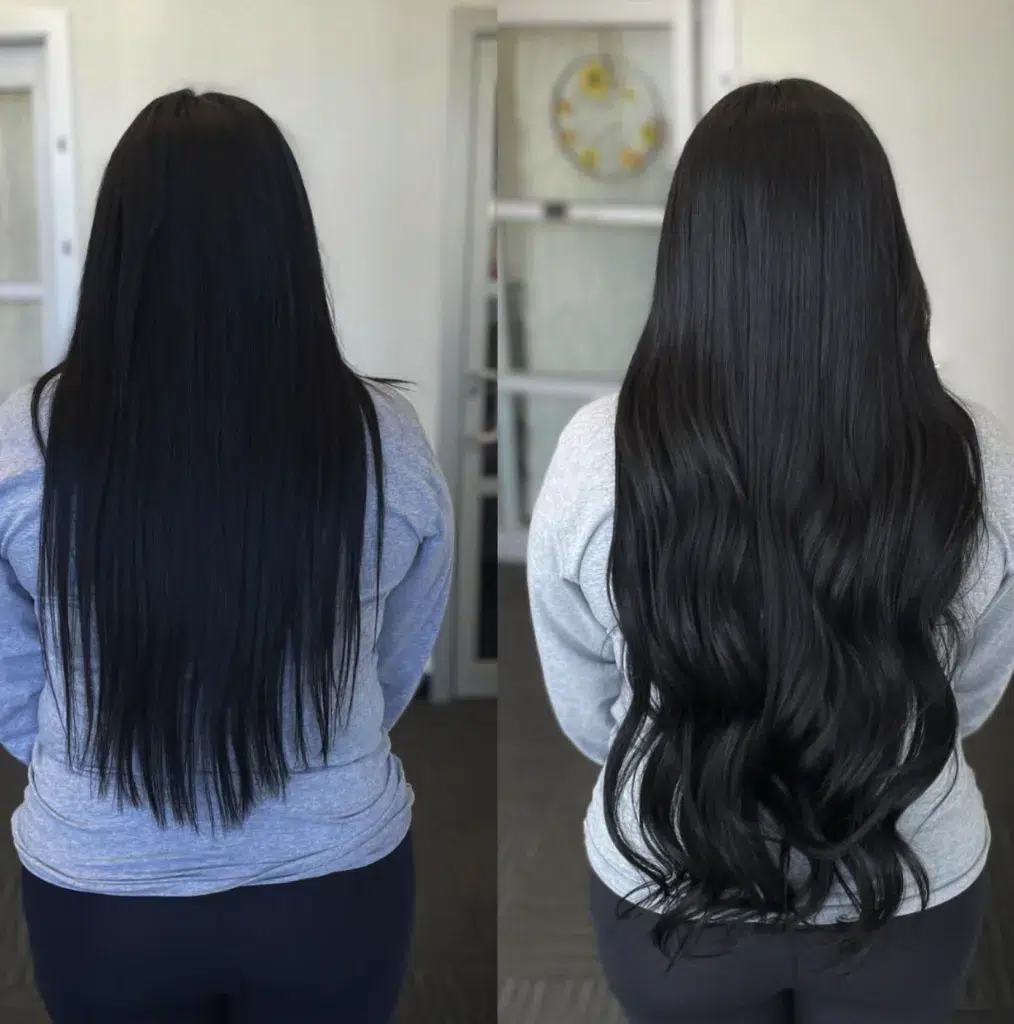
When I look at thick hair, I never start with method alone. I start with hair quality, density match, and install logic. Thick natural hair needs extensions that can blend into a heavier base, keep up with more movement, and still stay soft after repeated wear. That is why this topic is not only about adding more hair. It is about choosing the right quality and the right structure.
What is the best quality hair for thick hair?
Thick hair can create more friction and more movement during daily wear. That means low-grade hair usually shows its weakness faster.
The best quality hair for thick hair is full cuticle hair extensions. Thick hair often tangles more easily when the extension hair quality is weak, so I always prefer full cuticle, one donor hair material because the cuticles stay aligned and intact, which helps the hair stay smoother and less likely to tangle.
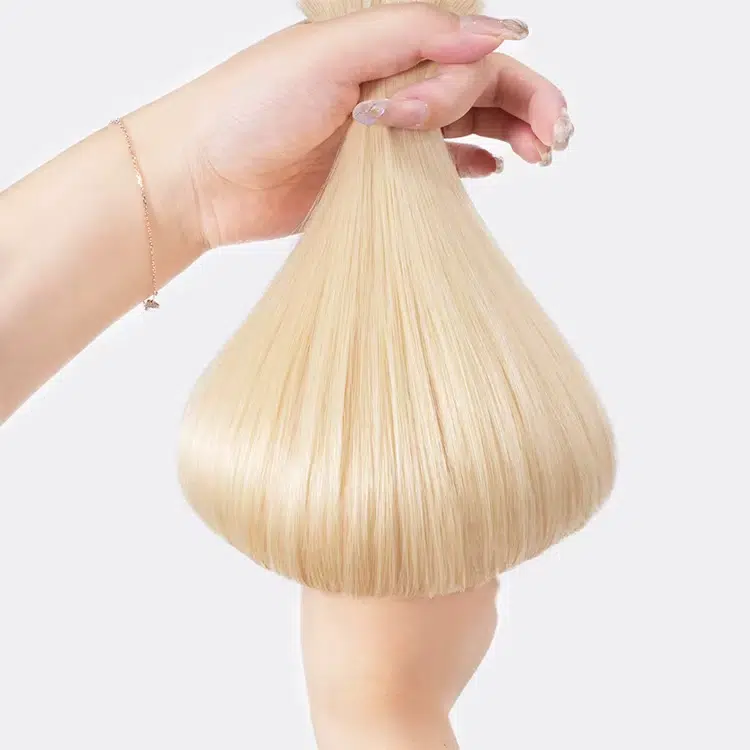
When I work from a product point of view, thick hair always raises the quality standard. Thin hair can sometimes hide average hair for a short time because less bulk is used. Thick hair is different. Thick hair has more density, more contact between strands, and often more need for larger installs. Because of that, poor-quality extensions usually start to mat, dry out, or lose smoothness faster.
That is why I put full cuticle hair at the top for thick hair. Full cuticle hair keeps the cuticles intact and aligned in one direction. This matters because cuticle alignment helps the strands move together instead of fighting each other. It reduces friction. It also helps keep the surface smoother. For thick-hair clients, that makes a real difference in brushing, washing, and long wear.
I also think one donor hair material is very important here. Thick hair needs consistency. When the extension hair comes from one donor source, the texture is usually more even from top to bottom. The movement looks cleaner. The ends look more balanced. This helps the extension blend into naturally thick hair in a more believable way.
Another point is processing. Thick-hair clients often need more hair installed. If the product is heavily processed or coated with too much silicone, the true condition of the hair becomes obvious after several washes. In a heavier install, that drop in quality shows faster. That is why I trust full cuticle hair with careful processing more than lower-grade alternatives.
Why thick hair needs better quality
Thick hair creates more contact between the natural hair and the extension hair. This increases friction. Better cuticle condition helps reduce that problem.
Why one donor material helps
One donor hair is more consistent in texture and movement. That makes thick-hair blending look more natural and feel more stable.
Why cheap hair fails faster in thick installs
Heavier installs mean more daily wear, more brushing, and more washing stress. Low-grade hair often cannot hold up well under that pressure.
| Quality factor | Why it matters for thick hair | Best choice |
|---|---|---|
| Cuticle condition | Reduces tangling and friction | Full cuticle hair |
| Hair source | Improves consistency | One donor hair material |
| Processing level | Affects softness after washing | Low-chemical processing |
| Density support | Must blend with thick natural hair | Stronger, fuller premium hair |
| Long-term wear | Thick installs see more stress | Durable full cuticle hair |
What are the best type for thick hair?
Many buyers think thick hair only needs more packs. But pack count is only one part. The extension type also matters because thick hair needs a method that can match density and create a strong visual blend.
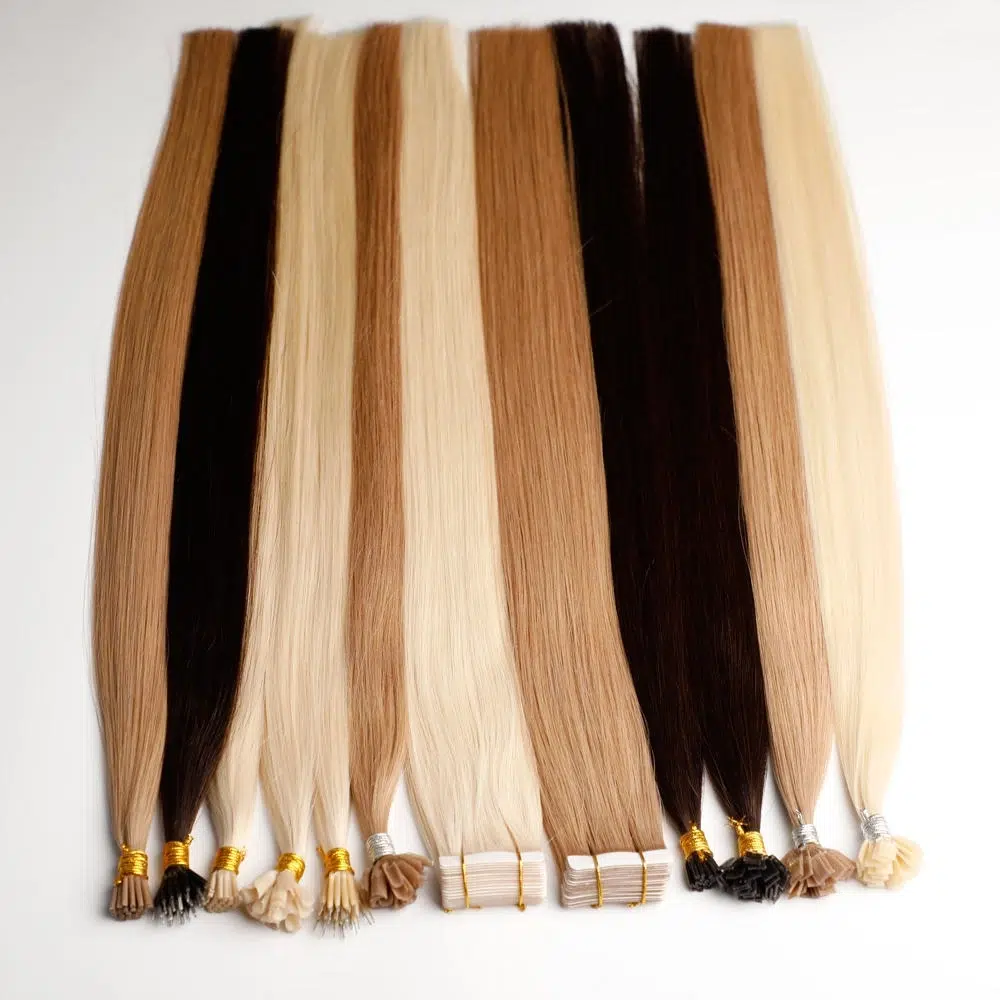
The best types for thick hair are usually hand tied wefts, genius wefts, volume wefts, tape-ins in larger quantities, and some keratin methods. The right type depends on the client’s density, lifestyle, and whether the goal is length, volume, or both.
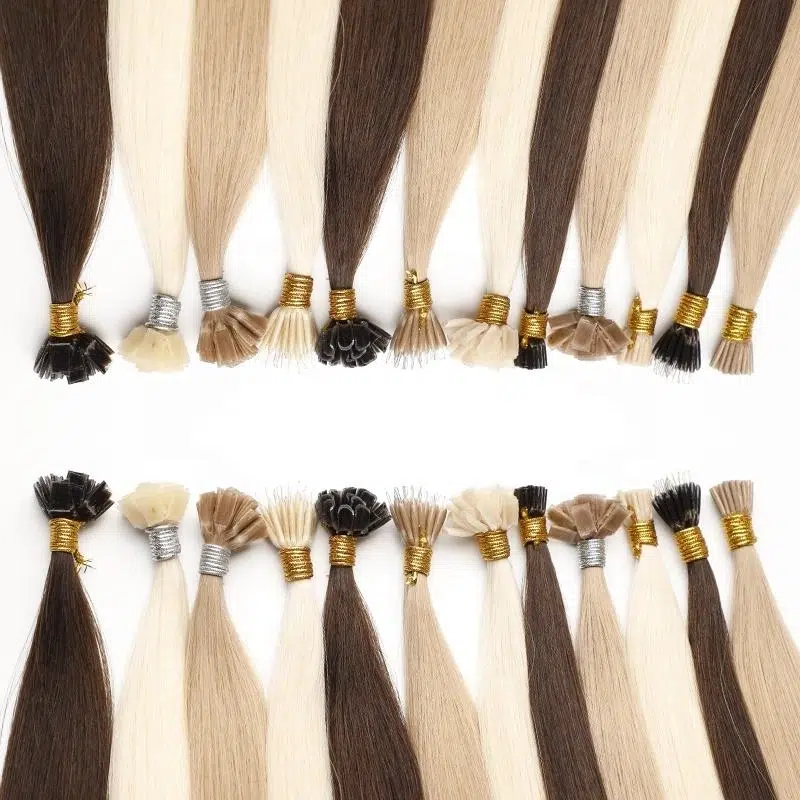
When I think about thick hair, I want methods that can deliver enough hair without making the install look broken into small weak sections. Thick natural hair usually needs a fuller extension structure. If the method is too light, the result may look thin at the bottom or disconnected from the client’s own density.
Hand tied wefts are one of the strongest choices for thick hair. They lay flat, they can carry enough density across the row, and they work well for clients who want a luxury salon result. Genius wefts are also excellent because they give a thin top with more flexibility. They are easy to work with in premium salon services and blend well into thicker natural hair.
Volume wefts can also work very well. Thick hair often needs more fullness, and volume wefts help build that look with fewer pieces. For some salons, this makes installation faster and gives the client a stronger result.
Tape-ins can also work for thick hair, but I usually think they need more planning. Thick hair often needs more sandwiches or more total packs for the blend to look complete. If the stylist under-orders the hair, the result can look too light compared with the client’s natural density.
Keratin hair, such as U tip hair, I tip hair, and nano ring hair, can also work for thick hair. These methods are useful when strand-by-strand placement is needed. But the stylist has to plan quantity and section size carefully. Thick hair usually needs more strands to create a full and even result.
Strong methods for thick hair
- hand tied wefts
- genius wefts
- volume wefts
- tape in hair
- U tip hair
- I tip hair
- nano ring hair
Types that often perform best
Weft-based methods often stand out because they can build density more efficiently for thick-hair clients.
| Extension type | Why it suits thick hair | Notes |
|---|---|---|
| Hand tied wefts | Flat and natural with good density | Great for luxury salon work |
| Genius wefts | Thin top and flexible use | Strong premium option |
| Volume wefts | Fuller result with fewer wefts | Good for bigger transformations |
| Tape-ins | Flat and clean look | Needs enough packs |
| U tip hair | Long-term strand placement | Needs more strands for thick hair |
| I tip / nano ring | Flexible and detailed placement | Best with careful section planning |
What are the best permanent hair extensions for thick hair?
Permanent or semi-permanent extensions are often the main choice for thick-hair clients because they want longer wear and a stronger salon result.
The best permanent hair extensions for thick hair are usually hand tied wefts, genius wefts, U tip hair, I tip hair, and nano ring hair. These methods can support a fuller blend and longer wear when the hair quality is full cuticle and the installation is done properly.
I usually separate this question into two parts. First, what method can stay in well for a thick-hair client? Second, what method can keep the overall look balanced and natural? Thick hair needs both.
Hand tied wefts and genius wefts are often my first answer. They are popular for a reason. They can cover more area, support more density, and still lay relatively flat. For thick natural hair, that helps the extension blend look continuous instead of piecey. These methods are especially useful when the client wants both length and volume.
U tip hair is also strong for thick hair. It gives a more permanent feel and good long-term wear. It works well for clients who want a strand-by-strand look. Since thick hair can hide bonds better, U tip installations can often look very clean when done well.
I tip hair and nano ring hair also deserve a place in this discussion. They are useful when the stylist wants flexibility without heat bonding. But thick-hair clients usually need more strands than fine-hair clients, so pack planning is very important.
I do not think one permanent method is perfect for every thick-hair client. The better question is which method matches the client’s density, maintenance habits, and salon expectations. In many cases, wefts win for efficiency and density. In some cases, keratin or ring methods win for placement flexibility.
Best long-wear options
- hand tied wefts
- genius wefts
- U tip hair
- I tip hair
- nano ring hair
Why they work well for thick hair
They either carry density better or allow enough placement flexibility to match a thick natural base.
| Permanent method | Thick-hair benefit | Best use case |
|---|---|---|
| Hand tied wefts | Covers density well | Length and volume installs |
| Genius wefts | Thin top, strong blend | Luxury premium salon work |
| U tip hair | Strong long-term wear | Clients wanting strand installs |
| I tip hair | Flexible placement | No-heat preference |
| Nano ring hair | Smaller, discreet sections | Detailed blending areas |
Can hair be too thick for extensions?
Some clients worry that their hair is too thick for extensions. In most cases, that is not the real problem.
Hair is usually not too thick for extensions, but it can be too thick for the wrong method, the wrong quantity, or the wrong quality. Thick hair needs enough extension hair, enough planning, and the right method to create a balanced result.
I do not usually say thick hair is “too thick” for extensions. I say thick hair is less forgiving. If the extension method is too light, the blend will look weak. If the hair quality is poor, the tangling will show faster. If the quantity is too low, the client’s own density will overpower the install.
This is why some stylists think thick hair is hard for extensions. The problem is not the natural hair itself. The problem is often underestimating what the install needs. Thick hair often needs more grams, more rows, or more packs. It also needs extension hair that can keep up with the movement and density of the client’s natural hair.
There is also the issue of haircut and layering. If the client has very thick blunt ends, the stylist may need more extension density at the bottom to avoid a shelf-like look. If that is ignored, the result can look obvious even if the extensions are good quality.
So I think the better way to answer this is: no, hair is not too thick for extensions, but thick hair needs a better plan. The stylist has to choose the right type, enough quantity, and premium enough hair quality to match the client’s natural fullness.
What makes thick hair more challenging
- it needs better blend support
- it often needs more hair
- it can create more friction
- it shows weak density planning faster
What solves the problem
- full cuticle hair
- more accurate pack planning
- better method selection
- correct cutting and blending
| Thick-hair challenge | Why it happens | Best solution |
|---|---|---|
| Weak blend | Not enough density added | Use more hair or fuller methods |
| Tangling | Friction from heavy density | Use full cuticle hair |
| Shelf line at ends | Blunt natural hair is thicker | Add enough lower-end density |
| Install looks patchy | Method too light for the client | Choose wefts or more strands |
How many packs of extensions for thick hair?
This is one of the most common buying questions because quantity affects both cost and final result.
Thick hair usually needs more packs than average hair. In many cases, 150g to 250g or more may be needed depending on the method, the client’s natural density, the desired length, and whether the goal is volume only or both length and volume.
I never like giving one fixed number without context, but thick hair definitely needs more planning than fine hair. A client with thick shoulder-length hair who only wants a little extra fullness may need much less than a client with very dense blunt hair who wants long glamorous length. The method also changes the answer.
For tape-ins, thick hair often needs more packs than many buyers expect. Around 4 to 8 packs may be common, and sometimes more for major length changes. For wefts, the discussion often moves into grams instead of “packs.” Thick hair may need 150g, 200g, or even 250g plus to create a full blend. For U tip, I tip, and nano ring installs, the number of strands often climbs fast. Thick-hair clients may need 150 to 250 pieces or more depending on the service goal.
I also separate “volume only” from “length plus volume.” If the goal is just thickness support, fewer packs may work. If the client wants much longer hair, the density demand increases because the ends need enough fullness to avoid looking stringy.
General quantity thinking
- more density needs more grams
- more length needs more support at the ends
- blunt thick hair usually needs more than layered hair
- weft installs often build density more efficiently
| Method | Typical amount for thick hair | Notes |
|---|---|---|
| Tape-ins | 4–8 packs or more | Depends on pack size and goal |
| Hand tied / genius wefts | 150g–250g+ | Common premium thick-hair range |
| U tip hair | 150–250 pieces or more | Depends on grams per strand |
| I tip / nano ring | 150–250 pieces or more | Dense hair often needs more |
| Clip-ins | 180g–260g sets | For temporary thick-hair blending |
What are the biggest mistakes when choosing extensions for thick hair?
Thick hair gives strong results when planned well, but it also exposes weak product choices very quickly.
The biggest mistakes are choosing low-quality hair, underestimating quantity, picking a method that is too light, and ignoring the need for proper blending and cutting. Thick hair needs a complete plan, not a shortcut.
I see the same mistakes happen again and again. The first is choosing hair based on price alone. Thick hair is not the place to save by dropping quality too far. Low-grade hair will usually show tangling and dryness faster in a thick install because there is more overall friction and more brushing stress.
The second mistake is under-ordering. Buyers often think they can use the same amount for thick hair as for normal hair. That rarely gives a strong blend. Thick hair usually needs more grams, more packs, or more strands to make the result look natural from top to bottom.
The third mistake is picking a method that cannot carry enough density. For example, using too few light tape-ins on very dense hair may create a broken look. In many thick-hair cases, wefts or larger total quantities create a much better result.
The fourth mistake is ignoring haircut logic. Thick natural hair can have a heavy line at the ends. If the stylist does not blend that line into the extension shape, the client may feel the install looks obvious even if the product is premium.
Most common mistakes
- buying low-grade hair
- not using enough quantity
- choosing a method too light for the density
- not blending the haircut correctly
What professional buyers should focus on
- full cuticle hair
- realistic grams or pack planning
- premium method selection
- strong salon blending work
| Mistake | Result | Better approach |
|---|---|---|
| Low-grade hair | More tangling and dryness | Use full cuticle hair |
| Too little hair ordered | Thin or disconnected result | Increase packs or grams |
| Wrong method | Weak density support | Use wefts or enough strands |
| Poor blending | Visible shelf or mismatch | Plan cut and density properly |
What are the best hair extensions for thick hair and long-term salon success?
For professional buyers, this topic is not only about one installation. It is also about client satisfaction, repeat business, and service confidence.
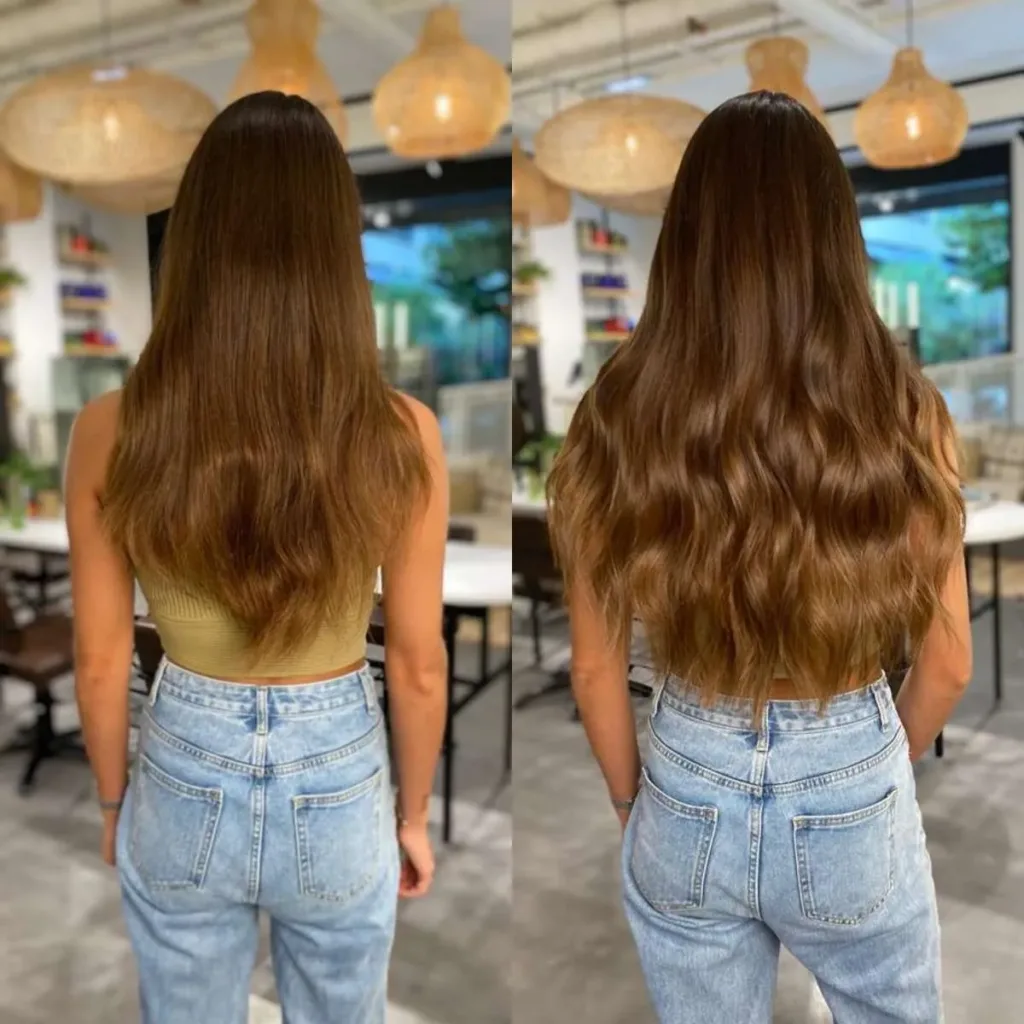
The best hair extensions for thick hair and long-term salon success are premium full cuticle products that can support dense installs, stable repeat orders, and reliable salon performance. In most high-end cases, hand tied wefts, genius wefts, tape-ins, and keratin methods lead the category.
When I think like a manufacturer serving salons and brands, I look beyond one appointment. Thick-hair clients are often high-value clients because they usually need more hair, more customization, and more technical salon work. That means the extension product has to be consistent. If the first order is good but the next batch changes in texture, color, or softness, the salon will feel that problem quickly.
This is why stable production matters so much. Thick-hair services often use more total product, so inconsistency becomes more visible. One donor full cuticle hair helps here because it supports a more uniform result. Strong factory control also matters because repeat pack weight, repeat shade, and repeat texture all affect long-term salon trust.
I also think this category supports premium pricing well. Thick-hair clients often understand that they need more hair and better hair. They are usually not looking for the cheapest result. They want a full, natural, durable result that justifies the service. That is why premium salons often prefer high-end wefts, tape-ins, and keratin products in true full cuticle grade.
What supports long-term success
- repeat quality
- stable texture and color
- enough density support
- premium hair that survives maintenance
- product types that fit thick-hair services well
| Business factor | Why it matters for thick-hair clients | Best support |
|---|---|---|
| Repeat consistency | More product used per install | Stable factory production |
| Hair durability | Thick installs create more stress | Full cuticle hair |
| Density options | Clients need customized fullness | Wefts, tape-ins, keratin lines |
| Premium image | Thick-hair services cost more | Luxury-grade positioning |
My opinion
In my view, thick hair needs more respect in extension planning. It is not enough to choose a popular method and hope it works. Thick hair needs better hair quality, better density planning, and a method that can carry the blend correctly.
That is why I put full cuticle hair extensions first. Thick hair creates more friction and more visual pressure on the final result. If the quality is weak, the problems show fast. If the quality is strong, the result looks more natural, feels smoother, and lasts much better.
I also think weft methods often make the most sense for many thick-hair salon clients, especially hand tied wefts and genius wefts. But I do not treat them as the only answer. Tape-ins, U tip hair, I tip hair, and nano ring hair can also work very well when the quality is high and the quantity is right. For me, the real answer is not one magic method. The real answer is full cuticle hair plus the correct method plus enough hair.
FAQ
What are the best hair extensions for thick hair?
The best hair extensions for thick hair are usually full cuticle hand tied wefts, genius wefts, tape-ins, and some keratin methods, depending on the client’s goals.
Why is full cuticle hair better for thick hair?
Thick hair creates more friction and more movement, so full cuticle hair helps reduce tangling and keeps the install smoother for longer.
Can thick hair wear tape-in extensions?
Yes, thick hair can wear tape-ins, but it usually needs more packs to create a balanced blend.
How much hair is needed for thick hair?
Many thick-hair clients need around 150g to 250g or more, depending on the method, the natural density, and the target length.
Are wefts better than keratin hair for thick hair?
In many cases, yes, because wefts can carry density more efficiently. But keratin hair can still work very well when the install needs strand-by-strand placement.
Conclusion
The best hair extensions for thick hair are full cuticle extensions with enough density and the right method, because thick hair needs premium quality, strong blending, and smart quantity planning.
where to buy Best Hair Extensions
Hibiscus Hair Manufacturer has been dedicated to producing high-quality hair extensions for 25 years and is a recognized leader in the industry. If you are interested in finding a reliable hair extensions supplier and wholesale for your brand, please visit our website for more information: