Have U ever seen “micro links” on a salon menu and wondered what the method actually is? Do U want a clear explanation before U choose a service or buy the hair and tools?
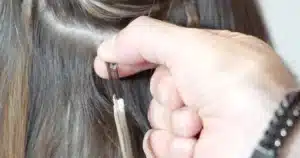
Micro link extensions are single-strand extensions that are attached with a tiny metal ring (often called a micro bead). A stylist threads a small section of natural hair into the ring, places the extension tip into the same ring, then closes it with pliers. There is no glue and there is no heat. The method can look natural, but it needs correct sizing and regular maintenance.

This is a general education guide for anyone who is curious about micro link extensions. I write from a manufacturer view, so I focus on how the system works and what makes results stable over time.
What are micro link extensions?
Do U notice people use micro links, micro rings, and micro beads like they are different things? That wording makes the topic harder than it needs to be.
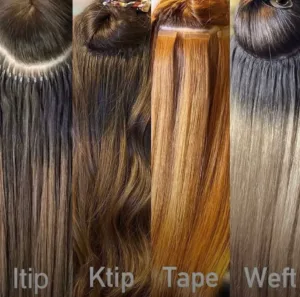
Micro link extensions are a bead-based strand extension method. The extension is attached by a small ring that clamps the extension strand and the natural hair together. In many salons, the strand used is I tip hair because it fits the micro ring size well.
Dive deeper
Micro links are best understood as a “hardware” method. The ring is the hardware. The ring is also the bond. When the ring closes, it grips the hair. When the ring opens, it releases the hair. That is why people call it a no-glue method. There is no adhesive layer that needs dissolving. There is also no keratin melting step. The bond is purely mechanical.
This method sits in the same family as nano links and micro bead extensions. The family name changes by region and marketing style, but the logic does not change. The ring holds two things at the same time: the client’s natural hair section and the extension strand tip. Because the ring has limited space, sizing matters. If the natural hair section is too thick, the ring may not compress evenly. If the section is too thin, the bond may feel tight and heavy. This is why bead methods look simple, yet they still need control.
I also want to clarify the “micro” part. Micro rings are larger than nano rings. That size difference makes micro links easier to handle for many technicians. A slightly larger ring can also accept a slightly wider range of section sizes. This can be useful for salons that want a method that scales across different hair densities. Still, a larger ring can be more visible in very fine hair, so placement and color matching matter.
From a sourcing point of view, micro link systems usually include:
- micro rings in several colors
- optional silicone-lined rings for extra grip
- I tip hair strands that match the ring size
- clamp tools that close the ring cleanly without sharp edges
| Word U may see | What it usually refers to | What U should check |
|---|---|---|
| Micro links | The method | Section sizing and maintenance plan |
| Micro rings / micro beads | The small ring hardware | Size spec, color, lining, edge finish |
| Silicone-lined rings | Rings with inner grip | Better hold for slippery hair types |
| I tip hair | Common strand type for micro links | Tip size consistency and shedding |

How to install micro link extensions?
Do U want to picture the process before U sit in the chair? The steps are simple, but the details decide comfort and hold.
A stylist installs micro links by making clean sections, threading hair through the ring, inserting the strand tip, then closing the ring with controlled pressure. The ring should hold firmly without being crushed flat.
Dive deeper
Installation success comes from repeatable technique. Many problems people blame on “bad hair” are actually sizing and pressure problems.
A clear install flow usually includes:
1) Prep the hair
A clean, dry base makes gripping easier. Heavy oils and thick conditioners near the root can reduce grip.
2) Map the head
A placement plan helps bonds stay hidden. Most stylists avoid placing rings directly under a sharp part line or too close to the hairline.
3) Take the right section
The stylist takes a small, even section. The section should match strand weight. A strand that is heavy for the section can create tension.
4) Load the ring
The stylist threads the natural hair through the ring. Many use a pull-through tool. The ring then sits a small distance away from the scalp for comfort.
5) Insert the extension strand
The extension tip is placed into the ring. For micro links, this is often I tip hair.
6) Close the ring
The ring is clamped with pliers. The goal is a secure closure that is smooth, not sharp. Over-crimping creates pressure points and increases breakage risk.
7) Check and repeat
The stylist checks movement and comfort, then repeats the pattern across the head.
For salons and wholesalers, the best way to reduce complaints is to standardize these basics. A written section-size rule, a clamp-pressure rule, and a move-up rule can reduce slipping and discomfort fast.
| Install variable | What it changes | If it is wrong | What improves it |
|---|---|---|---|
| Section size | Hold and comfort | Slip or pulling | Strand weight guide |
| Ring quality | Smoothness and safety | Snagging or irritation | Rounded edges and stable coating |
| Clamp pressure | Long-term hair health | Breakage risk | Controlled, consistent closing |
| Placement | Visibility | Rings show | Keep away from part line zones |
| Aftercare | Bond stability | Matting and stress | Clear home routine |
How to remove micro link extensions?
Do U think removal is “hard” because it is metal? Removal is usually straightforward when the ring is opened correctly.
Micro links are removed by using a ring-opening tool to reopen the ring, then sliding the strand out. The safest removal has no pulling and no ripping.
Dive deeper
Removal is where hair safety can go up or down. The correct goal is to reverse the clamp. That means the ring must open before the strand is moved.
A careful removal flow often looks like this:
1) Detangle the hair
Detangling first prevents snagging around the rings. Snagging makes people pull, and pulling causes breakage.
2) Locate each ring
The stylist works in small sections so rings are easy to see.
3) Open the ring in the correct direction
Rings are clamped in one direction. The opening tool presses the ring so it opens back toward its original shape. If the tool presses the wrong side, the ring can flatten more instead of opening.
4) Slide the extension out
Once opened, the strand and ring should slide out with almost no resistance. If there is resistance, the ring is not open enough.
5) Clean and reset
After removal, the hair is washed. If the extensions will be reused, the strands should be kept organized by length and color.
From a product point of view, ring finish can affect removal. Rough edges can snag. Soft coating can deform. This is why good accessories matter as much as good hair.
| Removal risk | What causes it | What it looks like | Better habit |
|---|---|---|---|
| Pulling | Ring not opened | Hair feels stuck | Open fully before sliding |
| Snagging | Rough edges or tangles | Pain and breakage | Detangle and use smooth rings |
| Deformed rings | Low-quality coating | Hard to open | Use stable rings and tools |
| Lost reuse value | Mixed hair bundles | Confusion later | Label and store strands neatly |
How long do micro link extensions last?
Do U mean “how long before maintenance,” or “how long the hair can be reused”? These are different questions.
Micro links often need to be moved up about every 6–10 weeks. The extension hair can last longer across several maintenance cycles when the hair quality is high and the tips stay strong.
Dive deeper
Micro link wear time depends on hair growth and daily habits. Natural hair growth pushes the rings down over time. When rings sit lower, they move more. More movement can lead to tangling at the root. That tangling creates stress during brushing. This is why salons plan move-ups.
Most salons use a window like:
- around 6–8 weeks for fine hair or very active lifestyles
- around 8–10 weeks for thicker hair and careful routines
The second part is hair lifespan. Some hair can be reused multiple times. Some hair cannot. This depends on the hair grade and the care routine. Hair that stays smooth is easier to brush. Hair that is easy to brush creates less pulling on the rings. Less pulling means bonds stay stable.
Tip condition also matters. Micro links often use I tip hair. If the tips stay consistent and do not shed, reuse becomes realistic. If the tips break down, reuse becomes harder even if the mid-lengths look good.
| Longevity question | What it really measures | Typical range | What helps most |
|---|---|---|---|
| Time to next appointment | Move-up timing | 6–10 weeks | On-time maintenance |
| Hair reuse life | How many cycles | depends on grade | High-quality hair and gentle handling |
| Bond stability | Slip and comfort | varies | Correct sizing and pressure |
| Daily manageability | Tangles and shedding | daily | Brush routine and product choices |
How much do micro link extensions cost?
Do U see huge price gaps online and wonder why? The bill is a mix of hair cost, labor cost, and maintenance cost.
Micro link extension cost depends on hair quality, length, strand count, local salon rates, and how often maintenance is needed. A partial volume install costs less than a full head. Maintenance adds ongoing cost.
Dive deeper
Micro link cost is not one fixed number because the method is modular. The final price changes with how much hair is added and what grade the hair is.
Cost driver 1: hair quality
Higher grade hair costs more. Still, it often lasts longer and stays smoother. That can improve the long-term value.
Cost driver 2: how many strands
More strands add more volume and length, but they also add more time. Micro links are strand-by-strand, so strand count changes labor cost directly.
Cost driver 3: local labor rates
A salon in a big city has different labor cost than a salon in a smaller market. The method also needs skill, so pricing reflects training.
Cost driver 4: maintenance plan
Move-ups are part of the ownership cost. The most common mistake is to budget for installation only and ignore maintenance.
For brands and wholesalers, this cost story matters because it affects product positioning. A salon can only charge premium pricing if the hair quality and accessory consistency support a premium experience.
| Cost part | What changes it | Lower budget path | Higher value path |
|---|---|---|---|
| Hair | Grade and length | lower grade, shorter | full cuticle, longer wear |
| Installation | Strand count and time | partial volume | full head install |
| Maintenance | Frequency | longer gaps (risk) | on-time move-ups |
| Reuse potential | Tip and hair condition | limited reuse | multiple reuse cycles |
What are the best candidates for micro link extensions?
Do U wonder if micro links fit your hair type? Fit is about density, scalp condition, and how much maintenance U can commit to.
Micro links often suit medium to thick hair and people who can return for move-ups. Fine hair can still work when placement is careful and the strand plan is lighter.
Dive deeper
Hair type matters because beads are a physical object. Thicker hair can hide beads more easily. It can also hold the strand load with less stress. Fine hair can still wear micro links, but it needs smarter planning. A lighter strand plan and safer placement zones are important. Many stylists keep beads away from fragile edges and high-visibility part line zones.
Scalp condition matters too. Very oily roots can reduce grip. This does not mean micro links cannot work, but it means product choice and routine matter more. Some salons use silicone-lined rings for extra grip on slippery hair types.
Lifestyle matters because tangling risk changes with habits. High sweat, frequent swimming, and irregular blow drying can increase root tangles. Root tangles increase pulling. Pulling increases stress on beads. This is why the best candidate is someone who can follow a simple routine and can book move-ups on time.
A realistic “fit check” includes:
- hair density and fragile areas
- willingness to visit the salon every 6–10 weeks
- comfort with a bead-based bond
| Fit factor | Why it matters | If U are unsure | Safer option |
|---|---|---|---|
| Density | Hides beads and carries load | Start with volume-only | Lighter strand plan |
| Oily roots | Grip can reduce | Ask about lined rings | Strong cleansing routine |
| Maintenance | Prevents matting | Pre-book move-ups | Choose a lower-maintenance method |
| Sensitivity | Comfort with beads | Test a small area first | Fewer strands and better spacing |

My opinion
Micro links are a practical bead method for people who want a no-glue approach. The method works best when the salon uses consistent section sizing and gentle, controlled clamping.
I also think micro links are easier for many salons to run than nano links because micro rings give more handling tolerance. Still, long-term comfort and stability depend on hair quality, ring finish, and regular maintenance.
FAQ
Are micro links the same as micro rings?
Most salons use these names for the same method. The ring is the hardware. The method is micro links.
Is there glue in micro link extensions?
No. The method uses a clamp ring.
Do micro links hurt?
They should not hurt when sizing and placement are correct. Pain often means the section is too small, the strand load is too heavy, or rings are too close to the scalp.
Can micro links be reused?
Hair reuse depends on hair grade and tip condition. Many high-quality strands can be reused across several move-ups with good handling.
How often do micro links need maintenance?
Many people need move-ups every 6–10 weeks.
Do micro links work for thin hair?
They can, but the plan should be lighter and placement should be careful. Many people with very fine hair prefer smaller hardware systems.
Conclusion
Micro link extensions use small rings to attach strand hair without glue or heat. They work best with correct section sizing, careful clamping, and move-ups every 6–10 weeks.
Hibiscus Hair Manufacturer has been dedicated to producing high-quality hair extensions for 25 years and is a recognized leader in the industry. If you are interested in finding a reliable hair extensions supplier and wholesale for your brand, please visit our website for more information: