Wedding hair can look simple in photos. Still, I know how much pressure sits behind that one style. If the hair looks thin, flat, or too short for the bridal look, the whole plan can feel uncertain.
Hair extensions can be worth it for a wedding if I need more volume, more length, better shape, or stronger hold for my bridal hairstyle. I do not think every bride needs them. I think they help most when the natural hair cannot fully support the final look.
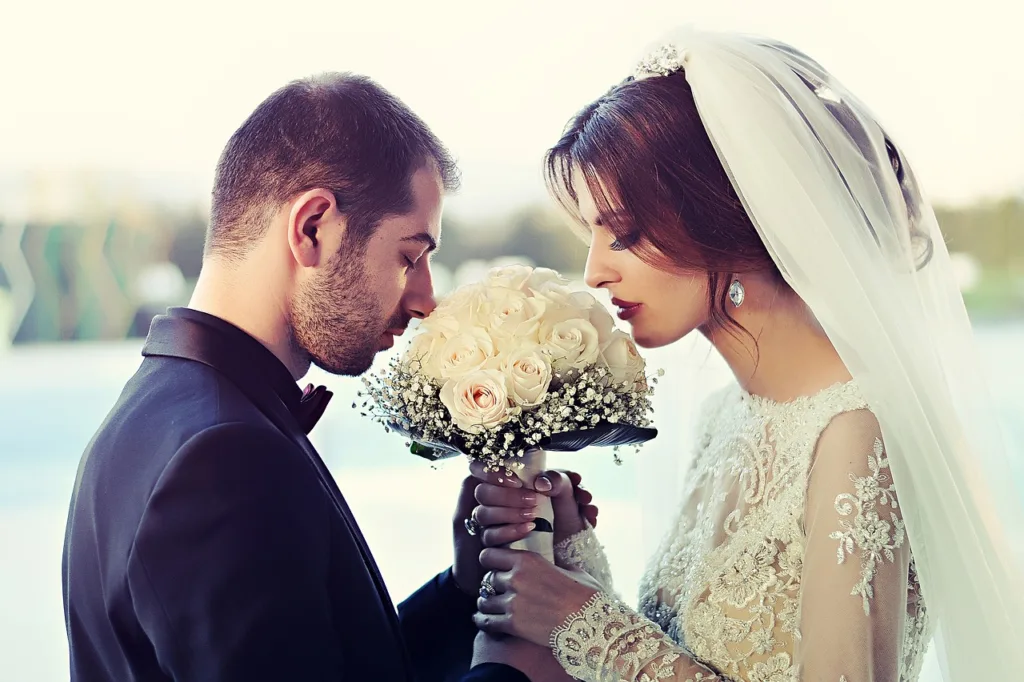
When I talk about wedding hair extensions, I do not treat them like a trend item. I treat them like a styling tool. The right answer depends on the hairstyle, the natural hair, the wedding timeline, and how much support the final look needs.
Do Brides Need Hair Extensions for Wedding Hairstyles?
Many brides ask the same first question. They do not want extra hair just because it sounds glamorous. They want to know whether extensions are actually necessary.
Brides do not always need hair extensions for wedding hairstyles. I think they are most useful when the bridal look needs more fullness, more length, stronger structure, or better style hold than the natural hair can give on its own.
I do not think wedding hair extensions should be treated like a standard bridal rule. Some brides have enough natural density and length for the exact look they want. In those cases, extensions may be optional or unnecessary. But many bridal styles are built around shape, softness, and fullness. That is where extensions can make a real difference.
A bridal updo may need more bulk to look balanced in photos. A soft wave style may need extra density so the shape does not disappear after a few hours. A half-up hairstyle may need fuller sides and ends so the final result looks polished from every angle. When I look at wedding styling this way, I stop asking whether extensions are “normal” and start asking whether they solve a real styling problem.
I also think some brides assume extensions are only for dramatic long hair. I do not agree. In many wedding cases, extensions are used more for support than for obvious transformation. They can help the bun look richer, the braid look thicker, the ponytail look more elegant, or the waves hold their pattern better. The guest may never even notice extensions were used. She may just see hair that looks complete.
This is how I would judge it:
| Bridal hair situation | Do extensions help? | Why |
|---|---|---|
| Natural hair already fits the style | Sometimes not needed | Hair can support the look alone |
| Hair is fine or low-density | Often yes | Adds body and fullness |
| Hair is too short for the style | Often yes | Adds length and shape |
| Hair drops style quickly | Often yes | Gives the stylist more structure |
| Bride wants fuller photos from every angle | Often yes | Improves visual balance |
So no, I do not think every bride needs extensions. I think the better question is whether the natural hair can fully support the planned wedding hairstyle.
Is It Worth Getting Hair Extensions for a Wedding?
This is really a value question. The bride is asking whether the result will justify the money, time, and effort.
Hair extensions are worth getting for a wedding when they noticeably improve the final hairstyle, make the style last better, or give more confidence in photos. I would not call them worth it if the natural hair already delivers the same result without extra cost or extra planning.
I think this question should be answered honestly, because bridal budgets are real and wedding beauty costs add up fast. I do not like telling every bride that she “must” get extensions. That is not professional. I prefer to ask what the bride is trying to achieve.
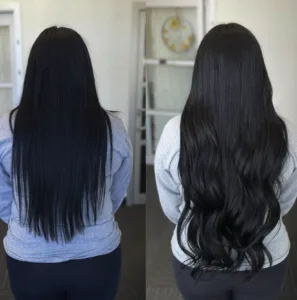
If the goal is a large soft updo, fuller Hollywood waves, a thick bridal braid, or a polished half-up style with volume through the sides and ends, extensions can be very worth it. In those cases, they are not just adding hair. They are helping the stylist create proportion, structure, and balance. That affects both the live result and the photography result.
If the bride has fine hair that loses curl or collapses quickly, extensions can also be worth it because they help the style feel more stable through a long day. Wedding hair does not only need to look good at the ceremony. It has to survive photos, movement, weather, hugs, and hours of wear.
But if the bride wants a simple low-effort style, already has enough hair for it, and does not care about extra fullness, then extensions may not be worth the added cost. I think the value comes from visible improvement, not from the idea of “more hair” by itself.
This is the way I would judge wedding value:
| Question | If the answer is yes | What that suggests |
|---|---|---|
| Will extensions improve the final shape? | Yes | They may be worth it |
| Will they help the style last better? | Yes | They may be worth it |
| Will they improve photos from all angles? | Yes | They may be worth it |
| Can the natural hair already do the job? | Yes | They may be optional |
| Will the bride only wear them once for little effect? | Yes | They may not be worth it |
So I think extensions are worth it when they solve a styling problem, improve confidence, and make the final bridal look more complete. I do not think they are worth it just because the bride feels pressured to copy a trend.
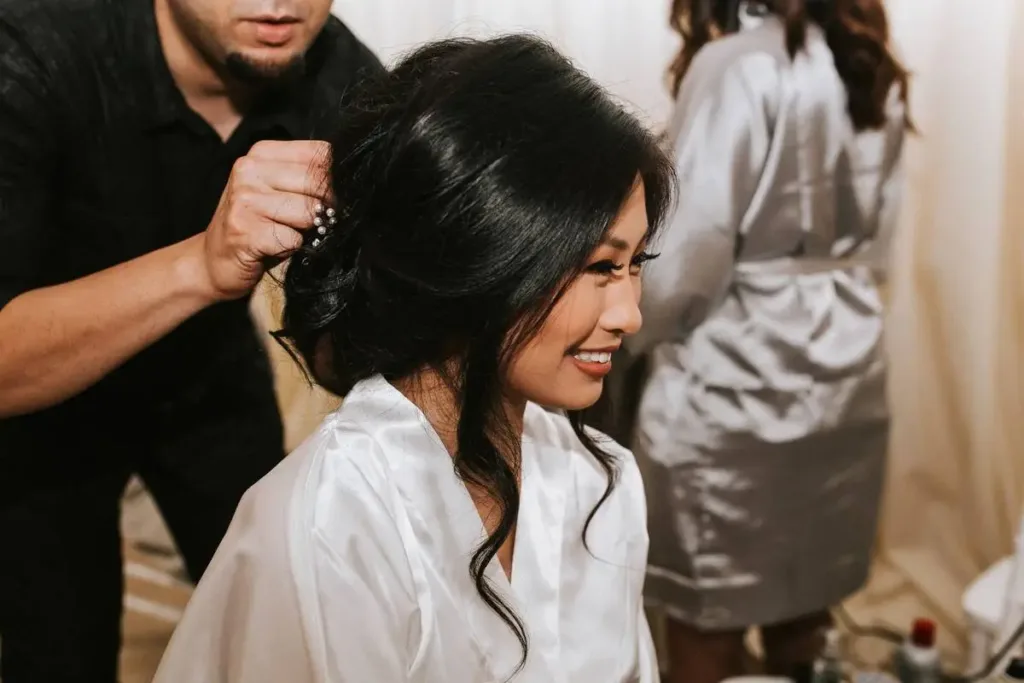
Do Most Brides Wear Hair Extensions?
This question sounds simple, but it really reflects a deeper worry. The bride wants to know whether extensions are unusual, fake-looking, or unnecessary.
Many brides do wear hair extensions, especially when they want more volume, more length, or a hairstyle that needs extra support. Still, not all brides wear them, and I do not think bridal beauty should be treated like a one-size-fits-all formula.
I think this question usually comes from two feelings. One is curiosity. The other is insecurity. Some brides worry that extensions will make the style feel fake. Others worry that they will look underdone if they do not wear them. I think both fears should be handled calmly.
In real bridal styling, extensions are common because many wedding hairstyles are built to look full, soft, and camera-ready. That often means more density than the bride naturally has, especially if her hair is fine, layered, or shorter than the inspiration photo. So yes, many brides do use extensions in some form. But I do not think that means most brides “should.”
The better way to think about it is this: bridal stylists use the tools that help the style succeed. Sometimes that means pins, padding, or texture spray. Sometimes it means extensions. The goal is not to prove whether the bride’s natural hair is enough. The goal is to create the look she wants in a way that feels natural on her.
I also think the word “extensions” sounds bigger than the reality. Some brides hear it and imagine a full dramatic transformation. In many wedding cases, that is not what happens. The stylist may only add enough hair to fill the sides, support the back, or thicken the braid. The result can still look completely bridal and completely believable.
| Bridal concern | My view |
|---|---|
| “Will extensions look fake?” | Not if they are matched and used well |
| “Do only brides with short hair use them?” | No, volume is a common reason too |
| “Does using extensions mean my hair is not enough?” | No, it means the style needs support |
| “Do all brides wear them?” | No, but many brides do |
So I would answer this way: many brides wear extensions, but not because they have to. They wear them because the right extra hair can make the wedding style look fuller, softer, and more secure.
When Hair Extensions Make the Biggest Difference on a Wedding Day?
This is where the decision becomes practical. Extensions do not help every bridal look in the same way.
Hair extensions make the biggest difference on a wedding day when the bride wants fuller updos, thicker braids, longer ponytails, softer waves, or better hold in styles that need more body and structure.
I think bridal extensions are easiest to understand when I connect them directly to specific style goals. That keeps the conversation practical.
The first big use case is volume. Many brides do not actually want dramatically longer hair. They want the style to look rich and balanced. A bun can look too small without support. A braid can look too narrow. Soft glam waves can look too flat. In those cases, extensions help create a better shape.
The second use case is length. Some bridal styles simply need more hair than the bride naturally has. That is especially true for long ponytails, long waves, larger braids, or romantic half-up styles where the ends still need to look full.
The third use case is hold. Wedding days are long. The bride may need the style to survive hours of movement, weather, and photos. Extensions can help the stylist build a stronger shape that does not collapse as quickly.
The fourth use case is visual balance in photography. Hair that looks “fine” in person can look too small on camera, especially with a veil, large dress, or dramatic neckline. Extra hair can help the full bridal image feel more balanced.
| Wedding hair goal | Do extensions help? | Main reason |
|---|---|---|
| Fuller bun or updo | Yes | Adds bulk and shape |
| Thicker braid | Yes | Adds width and density |
| Longer waves or ponytail | Yes | Adds visible length |
| Better curl or wave support | Yes | Adds structure |
| Balanced wedding photos | Yes | Improves overall proportion |
So when I think about bridal extensions, I do not ask whether they are fashionable. I ask whether the hairstyle needs support that natural hair alone cannot fully give.
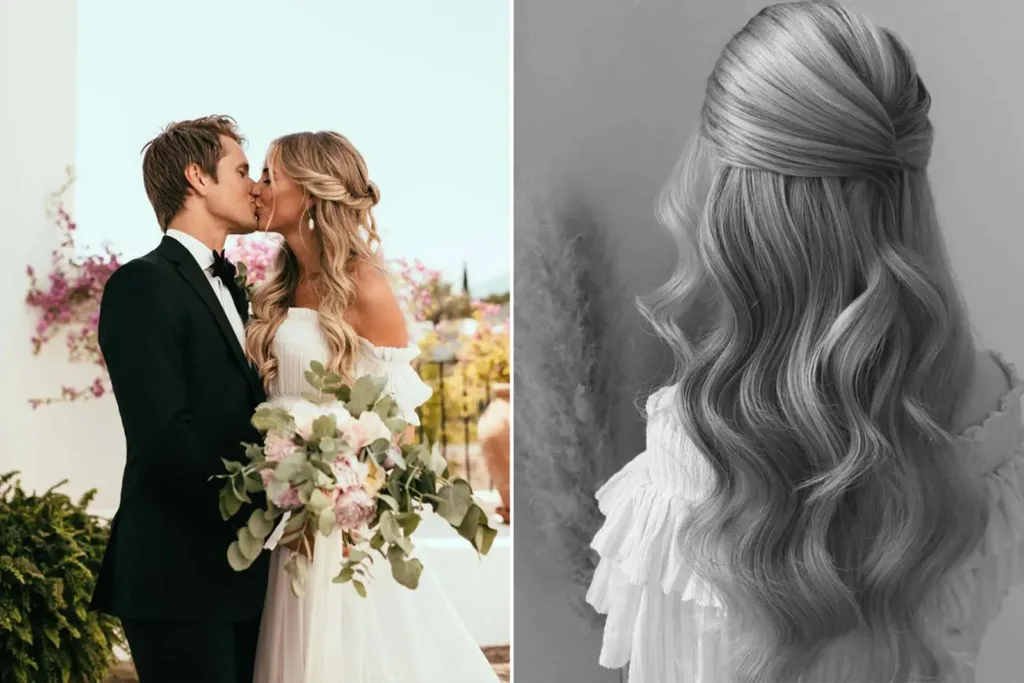
Which Hair Extensions Are Best for Weddings?
Not every wedding needs the same extension type. The best method depends on timing, comfort, hairstyle, and how long the bride wants to wear them.
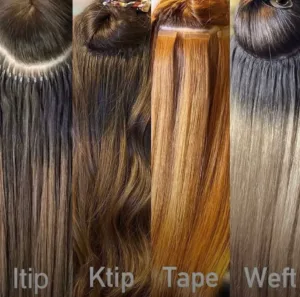
The best hair extensions for weddings are usually the ones that match the bride’s hairstyle, timeline, and commitment level. Clip-ins are often the easiest for one-day bridal use, while tape-ins, keratin, and other longer-wear methods suit brides who want extensions beyond the wedding day.
I think this section matters because brides often hear “extensions” as one category. In reality, different methods solve different wedding needs.
Clip-ins are often the simplest wedding option. They are easy to test at a bridal trial, easy to remove after the event, and very flexible for brides who only want extra hair for the ceremony, reception, or photos. That is why I see them as one of the most practical choices for wedding-only use.
Halo extensions can also work for some brides who want temporary volume and low commitment. Still, they are not ideal for every bridal style, especially if the stylist wants more structure or updo support.
Tape-ins suit brides who want the hair in place before the wedding and may want to keep wearing it for other events or the honeymoon. They offer a flat result and can work well for softer down styles and some half-up looks.
Keratin tip or U tip methods suit brides who want a longer-wear, more integrated strand-by-strand result. These are better for brides who want more than just one-day use and have enough lead time before the wedding.
Weft-based methods can also be excellent when the bride wants volume, reusability, and a structured salon result. They are often more than a wedding-day solution. They are a pre-wedding hair plan.
| Extension type | Best wedding use | Why |
|---|---|---|
| Clip-in | One-day bridal use | Flexible and easy |
| Halo | Temporary low-commitment wear | Fast and simple |
| Tape-in | Wedding plus pre/post events | Flat and wearable |
| Keratin tip | Longer bridal hair plan | Integrated individual wear |
| Weft-based | Fuller salon result over time | Reusable and structured |
So I do not think there is one universal best method. I think the best wedding extension is the one that fits how long the bride wants to wear it and what the bridal hairstyle needs.
Should I Choose Clip-Ins or Semi-Permanent Extensions for My Wedding?
This is one of the most practical bridal questions because it affects budget, timing, maintenance, and stress level.
I would usually choose clip-ins for a one-day wedding solution and semi-permanent extensions for a broader bridal timeline, such as engagement photos, bridal events, the wedding day, and the honeymoon.
I think this decision comes down to commitment. If the bride only wants support for the wedding hairstyle itself, clip-ins are usually the easiest answer. They are simple, removable, and easy to test at the trial. They also avoid the extra planning and maintenance that comes with installed methods.
But some brides want extensions to be part of a larger bridal beauty plan. They may have bridal showers, rehearsal events, photo sessions, travel, or a honeymoon hairstyle plan. In that case, semi-permanent methods can make sense because the hair stays in place through multiple events.
Tape-ins are often the first semi-permanent method many brides consider because they lie flat and give a polished result. Keratin tips or weft systems may suit brides who want longer wear and more integrated hair.
I think the bride should also think about stress. A longer-wear method may look seamless, but it also means the bride has to plan color matching, installation timing, and maintenance. That can be worth it, but only if she actually wants that level of commitment.
| Bridal situation | Better choice | Why |
|---|---|---|
| Only need hair for wedding day | Clip-ins | Lower commitment |
| Want to test and remove easily | Clip-ins | Flexible and simple |
| Want hair for many bridal events | Semi-permanent | Longer wear value |
| Want honeymoon hair too | Semi-permanent | Continuous result |
| Want the least planning burden | Clip-ins | Easier timeline |
So my answer is simple: clip-ins are often best for one-day bridal use, and semi-permanent methods are often better when the bride wants extensions to be part of a longer wedding season plan.
When Should I Buy or Test Wedding Hair Extensions?
The worst wedding hair decision is the rushed one. Timing affects matching, trials, and how confident the bride feels before the big day.
I think wedding hair extensions should be chosen early enough for color matching, a bridal hair trial, and any changes that may be needed. The bride should not wait until the last minute if the hairstyle depends on the extensions.
I take bridal timing seriously because even beautiful extensions can feel wrong if they are chosen too late. The bride needs time to see the color in real life, feel the weight, test the style, and decide whether the method actually suits her wedding plan.
The first step is deciding whether extensions are needed at all. That should happen after the hairstyle direction is clear. Once the bride knows whether she wants waves, a bun, a braid, or a half-up style, the extension decision becomes easier.
The second step is color matching. Bridal hair is photographed from every angle, in different lighting, often with flash and daylight both involved. So the match needs to be right.
The third step is the trial. I think the trial matters a lot. If the bride plans to wear extensions, the stylist should work with them at the bridal trial. That is the only way to know whether the amount, texture, and placement actually support the final hairstyle.
The fourth step is adjustment time. Sometimes the bride will realize she needs more hair, fewer pieces, or a different shade blend. That is why I do not like last-minute buying.
| Timing step | Why it matters |
|---|---|
| Choose hairstyle first | Clarifies whether extensions are needed |
| Match color early | Reduces visible mismatch risk |
| Bring extensions to the trial | Tests real styling result |
| Leave time for changes | Avoids wedding-week panic |
So I think the bride should buy or test extensions early enough to make calm decisions, not rushed ones. Wedding hair should feel prepared, not improvised.
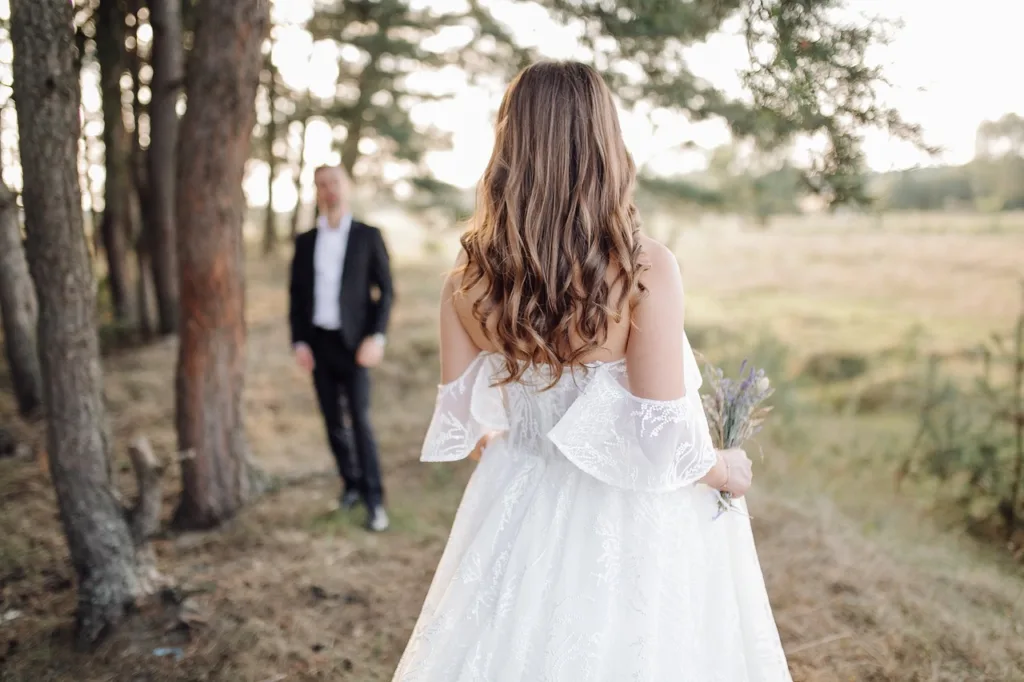
Will Hair Extensions Look Natural in Wedding Photos?
This is one of the most emotional bridal concerns. A bride may want fuller hair, but she does not want it to look obvious or artificial.
Hair extensions can look very natural in wedding photos when the color match, texture match, placement, and hairstyle are all done well. They usually look unnatural only when the match is poor or the amount is wrong.
I think wedding photography changes the way brides judge their hair. In person, the style may feel soft and pretty. In photos, small mismatches become more obvious. That is why bridal extension success depends on more than just buying extra hair.
The first factor is color match. Wedding photography can reveal hard lines quickly, especially around the sides, crown, and ends. That means the extension color should blend with the bride’s natural tone, dimension, and undertone.
The second factor is texture. If the natural hair is very smooth and the extension texture is too heavy or too different, the result can feel disconnected. The same problem happens in reverse.
The third factor is amount. Too little extension hair may not support the bridal style. Too much can make the style feel bulky or fake. I think balance is one of the biggest bridal styling skills.
The fourth factor is placement. A style may look good from the front and still fail from the back if the extension seams or shape are not handled properly. Wedding hair must look natural from every angle because the bride is photographed from every angle.
| Photo concern | What solves it |
|---|---|
| Visible color mismatch | Better shade match |
| Texture difference | Better texture blending |
| Too much or too little hair | Correct amount |
| Weak back view | Better placement |
| Obvious extension lines | Strong styling technique |
So yes, extensions can look very natural in wedding photos. I think the real key is matching and placement, not just the fact that extensions are being used.
What Is the Best Way to Decide If Wedding Hair Extensions Are Worth It?
This is the final decision point. The bride does not need more opinions. She needs a simple and honest way to choose.
The best way to decide if wedding hair extensions are worth it is to compare the natural hair with the final bridal hairstyle and ask whether the style will look fuller, last better, or photograph better with extensions.
I think brides get the clearest answer when they stop thinking about extensions as a beauty trend and start thinking about them as a problem-solving tool. That changes the whole decision.
The first question I would ask is this: can the natural hair already create the hairstyle the bride wants? If yes, extensions may be optional. If no, the next question is what is missing. Is it length? Volume? Hold? Shape?
The second question is whether the bride wants a one-day solution or a broader bridal hair plan. That helps decide the method and the budget level.
The third question is whether the bride cares strongly about photography and style longevity. If she does, extensions often become more valuable because they help the hairstyle look stronger over more hours and from more angles.
The fourth question is whether the bride is willing to plan properly. Extensions are much easier to love when they are matched, tested, and trialed in advance.
| Decision question | If yes | What it means |
|---|---|---|
| Does the hairstyle need more support? | Yes | Extensions may help |
| Will the style look better in photos with more hair? | Yes | Extensions may be worth it |
| Does the bride want more than one-day use? | Yes | Longer-wear methods may fit |
| Does she want the simplest solution? | Yes | Clip-ins may fit |
| Can she test them before the wedding? | Yes | Better final decision |
So I think the best decision method is simple: compare the hairstyle goal with the natural hair honestly. If the bride needs more support than her hair can give, extensions are often worth it.
My Opinion
I do not think brides should get hair extensions just because bridal hair culture makes them feel necessary. I think they should get them when the hairstyle clearly benefits from more fullness, length, shape, or hold. That is the honest answer.
In my view, wedding extensions work best when they are planned early, tested at the bridal trial, and chosen with the hairstyle in mind. I also think many brides are happier when they stop seeing extensions as “fake hair” and start seeing them as a styling support tool. That mindset makes the decision much easier.
FAQ
Should I get hair extensions for my wedding if I have fine hair?
Yes, possibly. Fine hair is one of the most common reasons extensions help, especially for fuller buns, braids, waves, and half-up styles.
Are hair extensions worth it for a wedding?
They can be worth it when they improve the style, help it last longer, or make the hair look better in photos.
Do most brides wear hair extensions?
Many brides do, but not all. It depends on the hairstyle, the natural hair, and how much support the final look needs.
What type of extensions are best for a wedding?
Clip-ins are often best for one-day bridal use. Tape-ins, keratin tips, and weft-based methods are better when the bride wants extensions for a longer bridal timeline.
Should I bring extensions to my wedding hair trial?
Yes. If the bride plans to wear extensions, the stylist should work with them during the trial so the final look can be tested properly.
Will wedding hair extensions look natural?
Yes, when the color, texture, amount, and placement are all matched well.
Conclusion
Wedding hair extensions are worth it when they solve a real styling need. I think the best choice comes from matching the method to the hairstyle, the timeline, and the bride’s natural hair.