Have U heard “nano beads are safer” and “microbeads are stronger”? Do U still feel unsure what U are really buying before U invest in stock, tools, and training?
Microbeads and nano beads belong to the same bead-extension family. The clamp logic is the same. The core difference is size and matching tips. Nano beads are usually used with nano tip strands (nano hair bundles). Micro beads are usually used with I tip strands. Nano looks more discreet but needs cleaner sectioning and better pressure control. Micro is easier to handle and more forgiving but can look bulkier on fine hair.
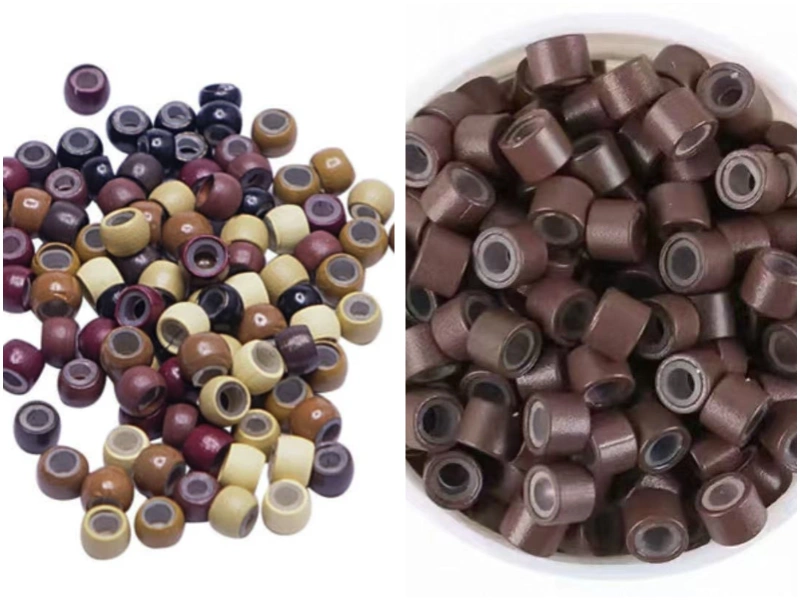
This guide is written for salon owners, wholesalers, and pro stylists who want fewer slip complaints and fewer redo appointments. The goal is simple. Make the bead choice clear, so buying and service planning become easier.
Are micro beads and nano beads the same?
Do U see suppliers use “micro bead,” “micro ring,” and “micro link” like they are the same thing? Do U also see “nano bead” and “nano ring” mixed in product listings? That confusion is common.
Micro beads and nano beads are the same method family. Both clamp natural hair and a tip strand using a small bead. The difference is size and what strand tip they are designed to match. Nano beads are usually designed for nano tip strands. Micro beads are usually designed for I tip strands.
What are micro beads?
Micro beads are small metal beads used to attach extension strands without glue or heat. In most salons, micro beads are used with I tip hair strands. The thicker I tip needs a bead with a larger inner space so the bead can close properly and hold securely. Micro beads often come in multiple colors to match roots. Many micro beads also come in silicone-lined versions, which can increase grip for slippery hair or oily scalp clients.
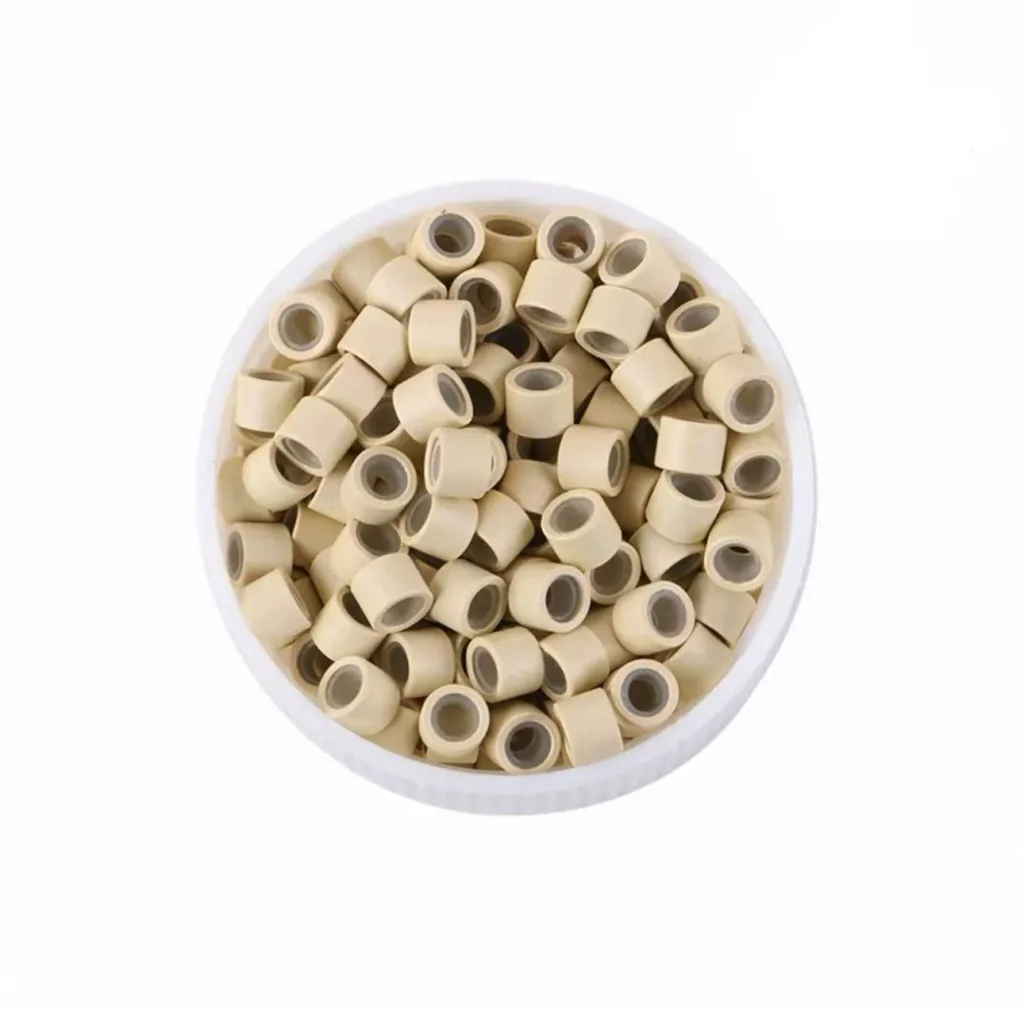
Micro beads are often called micro rings or micro links in the market. These names usually describe the same concept. The important part is the size and the finish quality. Smooth edges improve comfort. Stable coating reduces discoloration. Correct size improves grip. These details matter for professional service results and for wholesale reorders.
What are nano beads?
Nano beads are smaller metal beads used in the same clamp method. In most salons, nano beads are used with nano tip hair strands. The smaller bead size reduces bulk at the root and helps the bond look more discreet. This is why nano systems are often positioned as premium, especially for fine to medium density clients.
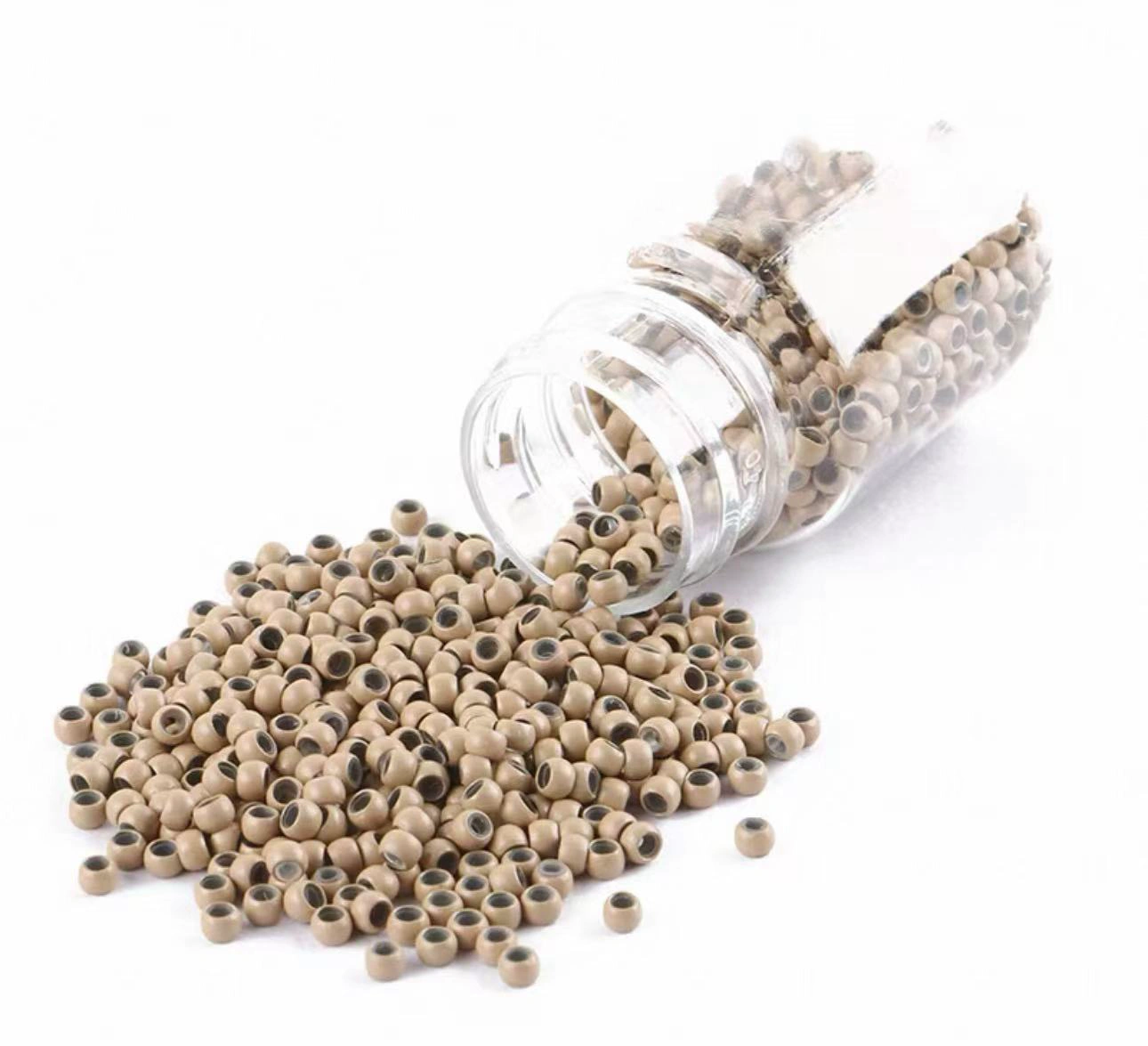
Nano beads can also come in multiple colors and can be silicone-lined. Nano beads require cleaner sectioning and careful clamp pressure because the smaller size gives less tolerance. When section size is too large, nano can slip faster. When clamp pressure is too strong, nano can pinch and stress the hair. This is why a nano program needs a clearer SOP and a better training standard.
| Bead type | Typical matching strand | Why this matching is common | What can go wrong if mismatched |
|---|---|---|---|
| Nano beads | Nano tip strands (nano hair bundles) | Smaller tip needs smaller bead for secure clamp | Using micro bead can increase slip |
| Micro beads | I tip strands | Thicker tip needs larger bead to fit and clamp | Using nano bead can crush or not close well |
| Silicone-lined versions | Nano tip or I tip | Adds grip without extra crushing | Poor lining can shift or loosen |
Nano bead vs microbead?
Do U want the quick comparison that helps U decide what to stock? Do U want to explain the difference to clients without long stories?
Nano bead vs microbead is mainly discreetness vs tolerance, plus tip compatibility. Nano beads usually match nano tip strands and reduce bulk at the root. Micro beads usually match I tip strands and make handling easier. Both can be stable when the bead size matches the tip size and the section size is correct.
Dive deeper
The most practical way to compare nano bead vs microbead is to view it as two complete systems, not two loose accessories.
System A: nano beads + nano tip hair bundles.
This system exists to reduce bulk and improve discreet blending. It can be a strong choice for fine to medium density clients. It also fits salons that sell a premium “small bond” story. The cost is precision. Nano requires cleaner sectioning. Nano requires controlled clamp pressure. Nano needs the correct move-up schedule, especially for fine hair.
System B: micro beads + I tip hair bundles.
This system is the original bead install style in many markets. It is easier to see and handle. It is more forgiving for small sectioning errors. It often suits medium to thick hair well. It can be faster in a busy salon day. The cost is bulk. Micro beads can show more on fine hair and near part lines if placement is not careful.
Tip compatibility is the center of both systems. Many slip and comfort complaints come from mixing systems. When a salon uses micro beads with nano tips, grip may be weaker. When a salon uses nano beads with I tips, the tip may not fit or the bead may not close well, and hair stress can rise.
A wholesale stocking plan should match the reality of what the salon uses.
- If the salon primarily buys I tip strands, the correct accessory stock is micro beads, plus optional lined micro beads.
- If the salon primarily buys nano tip strands, the correct accessory stock is nano beads, plus optional lined nano beads.
| Factor | Nano beads (nano tip system) | Micro beads (I tip system) | What this means for B2B buyers |
|---|---|---|---|
| Typical strand match | Nano tip strands | I tip strands | Stock beads based on the strand catalog |
| Bond size | Smaller | Larger | Nano can hide better in fine hair |
| Handling | Harder | Easier | Micro is easier for training |
| Slip sensitivity | Higher if mismatched | Medium | Correct matching reduces complaints |
| Best client fit | Fine to medium hair | Medium to thick hair | Choose based on your client base |
| Pricing position | Premium tier | Standard tier | Set service price by skill + time |

What does “bead-to-tip matching” mean, and why does it matter?
Do U ever see a salon buy beads first, then try to make all strands work with that bead? That creates problems. A clean matching rule protects results.
Bead-to-tip matching means the bead inner space and closure pressure are designed around the tip thickness. Nano beads fit nano tips. Micro beads fit I tips. A correct match improves grip and reduces stress.
Dive deeper
Bead-to-tip matching is the “hidden reason” behind many early failures. A bead is not only a ring. A bead is a clamp with a limited inner space. The tip must sit inside that space while the natural hair also sits inside. If the tip is too thick for the bead, the bead cannot close correctly. That can create sharp points and uneven pressure. If the tip is too thin for the bead, the bead can close but grip can be weak, and slipping becomes more likely.
Matching also affects how much clamp pressure is needed. When the match is correct, the bead holds with normal pressure. When the match is wrong, technicians often clamp harder to “force” stability. This is when damage risk rises. Over-crimping can crush hair fibers and create breakage near the root.
Matching also affects service efficiency. A correct match makes installs faster. A mismatch slows installs because the bead keeps sliding, or the bead feels hard to close, or the bond feels uncomfortable.
A simple rule helps:
- Stock beads based on strand tips.
- Then adjust bead options by hair type (lined vs unlined, colors, finish).
For wholesalers, the best product listing is the one that shows matching clearly. “Nano bead” should say “for nano tip.” “Micro bead” should say “for I tip.” This reduces confusion and reduces returns.
| Matching scenario | What happens in the salon | Risk level | Best correction |
|---|---|---|---|
| Nano bead + nano tip | Secure clamp with normal pressure | Low | Control section size and timing |
| Micro bead + I tip | Stable hold and easier handling | Low | Control placement and color match |
| Micro bead + nano tip | Bead can close but grip may be weak | Medium | Switch to nano beads or lined micro beads |
| Nano bead + I tip | Tip may not fit or bead may not close well | High | Switch to micro beads for I tip |

Which system is better for thin hair and fine hair clients?
Do U serve clients who complain about visible beads? Many fine hair clients have that issue. A smaller system can help, but the plan must be correct.
Nano beads with nano tip strands can suit thin hair because the bond is smaller and more discreet. Micro beads with I tip strands can still work, but bulk and placement risk rise in fine zones. Both systems need correct strand weight, section sizing, and on-time move-ups.
Dive deeper
Fine hair decisions should start with two realities: visibility and load. Nano systems help visibility because they reduce bulk. Still, load is still there. If strand weight is heavy, fine hair can be stressed even with a small bead. That is why a fine-hair plan needs lighter bonds and better spacing.
Micro systems can still perform well for fine hair in safer zones, like the back and mid-head. Micro becomes risky near fragile edges, temples, and top crown part lines. That is where bulk shows and traction risk rises.
Service design can solve this. Many salons run a “mixed placement” plan:
- use smaller bonds in visible zones
- use standard bonds in hidden zones
This plan also affects wholesale stocking. A salon that offers both systems should stock both bead sizes and both strand tips. That avoids forced mismatches.
| Fine hair goal | Best choice | Why | What to standardize |
|---|---|---|---|
| Reduce bead visibility | Nano bead + nano tip | Smaller bond | Stagger placement + color match |
| Faster installs for volume | Micro bead + I tip | Easier handling | Clean sections + consistent clamp |
| Reduce slip complaints | Correct matching + lining option | Grip improves | Offer lined beads for oily roots |
| Reduce breakage risk | Correct section + lighter bonds | Lower traction | Early move-up schedule |
How can slipping and breakage be reduced in both systems?
Do U see “slipped in two weeks” messages? Do U see “breakage near the root” stories? These problems usually come from mismatch and process, not from bead size alone.
Slip and breakage come from wrong section size, wrong bead-to-tip match, over-crimping, and late move-ups. A simple SOP reduces most problems for nano bead vs microbead.
Dive deeper
Slip is usually a grip issue. Grip is controlled by bead-to-tip match, hair section size, and root condition. If the section is too big, the bead cannot compress enough to hold. If the match is wrong, the bead holds poorly. If the scalp is oily and the bead is unlined, grip decreases.
Breakage is usually a tension or pinch issue. A small section carrying too much weight creates traction. Over-crimping creates pinch points. Late move-ups create drag and tangles. Tangles lead to hard brushing. Hard brushing creates breakage.
This is why the SOP should start with matching:
- nano beads for nano tip strands
- micro beads for I tip strands
Then the SOP should control section sizing and clamp pressure. When technicians use “more force” as the fix, breakage risk rises. When technicians use “better matching and better sizing” as the fix, stability improves without extra force.
| Symptom | What U see | Common cause | Best fix |
|---|---|---|---|
| Early slip | Bead slides | Wrong match or section too big | Correct bead-to-tip match + smaller section |
| Tight feeling | Soreness | Section too small or heavy bonds | Increase section or reduce strand weight |
| Root breakage | Short hairs | Over-crimp or late move-up | Reduce pressure + earlier maintenance |
| Matting | Tangled base | Wear time too long | Move-up sooner + root drying routine |
My opinion
Nano bead vs microbead becomes easy when the matching rule is clear. Nano beads are usually for nano tip strands. Micro beads are usually for I tip strands. When the system is matched, both can be stable.
The method succeeds when process is controlled. Section size, clamp pressure, bead finish, and move-up timing decide outcomes more than the label on the bead bag. Hair grade also matters because tangling behavior changes how clients brush, and brushing changes bond stress.
FAQ
Are micro beads and nano beads the same method?
Yes. Both are bead clamp methods with no glue and no heat. The difference is size and tip matching.
Do nano beads always mean better hair quality?
No. Nano refers to hardware size, not hair grade. Hair grade should be confirmed separately.
Can micro beads be used with nano tip strands?
They can be used, but grip can be weaker and slip risk can rise. Correct matching is better.
Can nano beads be used with I tip strands?
This is not recommended. The tip may not fit well and pressure risk can rise.
Which one is better for fine hair visibility?
Nano bead + nano tip is often better because the bond is smaller.
How often do move-ups happen?
Many clients need move-ups around 6–10 weeks. Fine hair and oily scalp clients often need 6–8 weeks.
Should salons stock both systems?
Yes, when client density varies or when the salon offers both standard and premium bead services.
Conclusion
Nano beads usually match nano tip strands and give more discreet bonds. Micro beads usually match I tip strands and are easier to handle. Correct matching and process control decide results.