Micro links can look perfect in photos. Then you try them, and you start asking real questions. Will the beads show? Will your hair feel heavy? Will the “after” still look good after two weeks?
Micro link extensions before and after results look natural when the bead size fits your hair, the placement avoids the hairline, and the hair quality can handle daily friction. In this guide, I will walk you through what micro links are, what the change really looks like, how long they last, and what the cost usually includes.

If you are here, you probably have one clear goal. You want a believable result. You want hair that moves like hair. You also want a method that does not turn into a daily headache. Let’s go step by step.
What Are Micro Link Hair Extensions?
Micro links are not “one thing.” People use the name for a few similar methods. That is why you can hear five different explanations and still feel confused.
Micro link hair extensions are extensions attached with small beads. A small section of your natural hair goes into a bead together with the extension, then the bead is clamped to hold it in place. There is no glue and no heat in the attachment itself.
Dive deeper
A micro link attachment is mechanical. That sounds simple, and it is simple in theory. The real-life result depends on details that are easy to miss. Most problems come from sizing and placement, not from the idea of micro links.
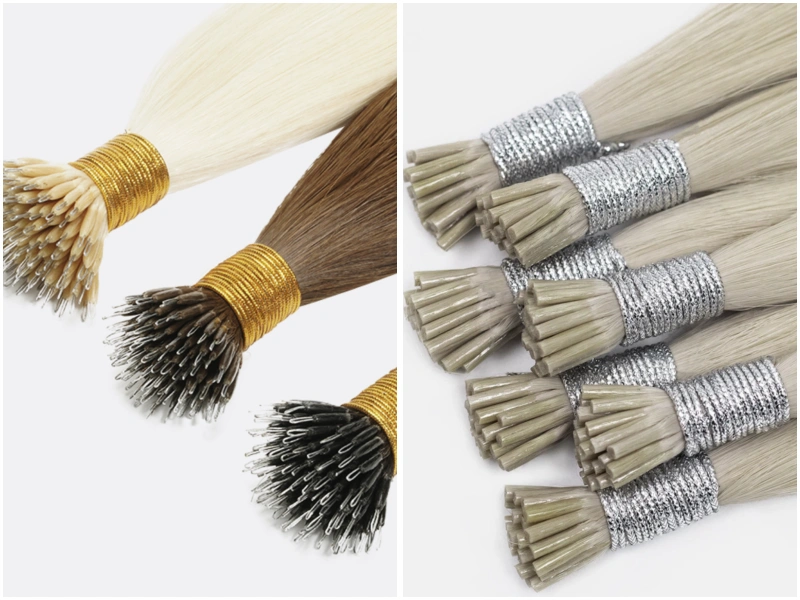
Micro links are usually done in two structures. One is strand-based. The other is weft-based. Both use beads. The difference is what the bead is holding.
Here is the clearest way to describe the “types” using examples you see in the market:
| Type | Common examples | What it attaches | Best for |
|---|---|---|---|
| Micro link strands | I tip, nano tip, F tip | Individual strand + bead (micro/nano ring) | You want flexible movement and very natural separation |
| Micro link weft | Handtied weft, genius weft | Weft + beads (often on a row/base) | You want fuller coverage with fewer placement points |
Now let’s make that feel more real.
If you choose micro link strands, you get a lot of movement. You can part the hair and it still looks “hair-like.” Many people love that. The trade-off is time. Strand installs take longer. They also require good sectioning. If sections are uneven, you can get discomfort or slipping.
If you choose micro link weft, you usually get more coverage faster. A weft can create fullness with fewer attachment points. The trade-off is bulk. A weft row can feel more noticeable if your hair is very fine, or if you wear your hair up often.
The bead matters too. Beads vary in size and in lining. Silicone-lined beads can feel softer and can grip better for some hair types. A bead with rough edges is never a good sign. It can create friction. It can also catch and weaken hair over time.
Placement is the second big factor. Micro links should not be installed too close to the hairline. They also should not sit too high on the crown. Those areas move a lot. They also show more easily in bright light or wind. A careful placement plan makes the “after” look natural from more angles, not only one angle.
If you remember one thing from this section, remember this: micro links can be gentle, but they are not “automatic.” The method still needs the right match for your hair type.
Micro Link Extensions Before and After: What Changes, and What Should Stay Realistic?
This is the part most people care about. The photos are exciting. The “after” looks like a new version of you. Then you wonder, what will it look like on your head, in your lighting, with your daily styling?
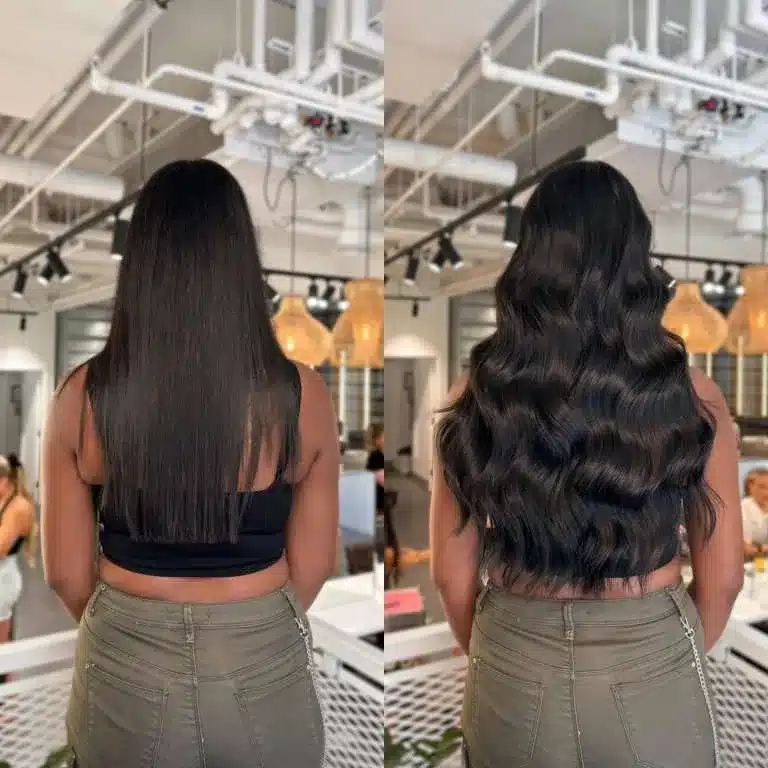
Micro link extensions before and after usually show three changes: more density, more length, and a smoother shape. The most natural result comes from realistic length choices and a color blend that matches in daylight.
Dive deeper
A believable “after” has balance. It is not only about adding hair. It is about how the added hair sits with your own hair.
Let’s break it into three parts.
Density
If your natural hair is fine, you can still add volume. You just need the right amount. Too many strands can create tension. Too much hair can also make the root area look bulky, while the ends still look thin. That imbalance is common when people chase a dramatic “after” without thinking about density.

Length
Length is where many installs look fake. Not because long hair is bad. Long hair can look stunning. The issue is the jump. If your natural ends are thin, going very long can make the blend obvious. A moderate length increase often looks more expensive and more natural. Then you can go longer later if you love it.
Blend
Blend is not only color. Blend is also cut. A blunt natural cut with very layered extensions can look choppy. A small trim after install can make the difference between “good” and “wow.”
Here is a quick expectation table:
| Goal | What helps it look natural | What makes it look obvious |
|---|---|---|
| Add volume | match strand count to density | too many heavy strands on fine hair |
| Add length | moderate jump first | very long length with thin natural ends |
| Hide connections | safe placement + enough cover hair | beads near hairline or crown |
| Smooth blend | daylight color match + a trim | mismatched undertone or no blending cut |
One more thing: photos hide movement. In real life, hair moves. Wind happens. You tuck hair behind your ear. You turn your head under bright indoor lights. A great install looks good in motion.
If you want a personal story section, this is where it fits well. This could be a short moment where someone wanted extreme length, then chose a smaller change first and loved the result more. That kind of story feels honest and helps people choose better.

How Long Do Micro Link Extensions Last?
When people ask this, they usually mean two timelines. They mean how long the install can stay before it needs a move-up, and how long the extension hair itself stays in good condition.
Most micro link installs need a move-up every 6–10 weeks. The extension hair can last months or longer, depending on hair quality and care.
Dive deeper
Let’s separate the timelines clearly.
Timeline 1: Move-up schedule
Your natural hair grows. The beads move down as your hair grows. That is normal. The risk starts when beads drop too far. When they sit low, shed hair can get trapped near the bead. Tangles start at the root area. That is why move-ups matter.
A common schedule looks like this:
- fine hair: often 6–8 weeks
- medium hair: often around 8 weeks
- thick hair: sometimes 8–10 weeks
Timeline 2: Hair lifespan
The hair itself can last a long time if it is high quality and treated well. Lower quality hair can look great at first, then dry out and tangle faster.
Here is a realistic lifespan table based on hair quality:
| Hair quality | Typical lifespan with good care | What you may notice later |
|---|---|---|
| Full cuticle hair | about 12 months with proper care | may need deep conditioning and light toning |
| Regular Remy hair | about 3–5 months with proper care | ends can feel dry sooner, more tangling |
| Non-Remy hair | about 1–2 months with proper care | tangling and matting increase fast |
Now, how do you know you waited too long for maintenance?
| Sign | What it often means |
|---|---|
| beads feel loose | slippage or weak clamp |
| root tangles | trapped shed hair and grow-out |
| twisting strands | bead rotation and low placement |
| heaviness | section sizes may be off or maintenance overdue |
If you want the “after” to stay pretty, the move-up schedule is not optional. It is part of the method.

How Much Do Micro Link Extensions Cost?
Cost is not only the hair. Cost includes time, skill, and maintenance. Micro links often sit in the mid to high price range because they are detailed and appointment-based.
Micro link extensions cost depends on hair length, grams, quality, and how many strands or rows you need. Maintenance appointments are also part of the ongoing cost.
Dive deeper
Let’s keep this practical.
Most total cost includes:
- extension hair
- installation service
- move-up appointments
- occasional replacement strands or density refresh
Prices vary by salon and country, so I will focus on the structure, not a single number.
| Cost part | What changes it | What to expect |
|---|---|---|
| Hair | grams, length, quality | quality changes long-term value most |
| Install labor | time, strand count, skill | often the biggest part of the bill |
| Move-ups | how often you go | repeats every 6–10 weeks |
| Extra hair | lost strands, refresh | small but ongoing |
There is also a hidden cost: wrong method choice. If your hair is very fine and the install feels uncomfortable, you may need to remove or redo it. That can cost more than choosing the right method from the start.
If you want a simple planning question, use this one:
Do you want “more volume,” or do you want “more volume and long length”?
Volume-only often needs fewer grams. Long length needs more grams. That alone can change the budget a lot.
Quality also matters in a way people feel later. Lower quality hair can be cheaper upfront, but it often needs replacement sooner. Higher quality hair costs more, but it keeps the “after” look longer and feels better to wear.
Do Micro Link Extensions Damage Your Hair?
This question is fair. You should ask it. You should also expect an honest answer.
Micro links can be safe when the section size is correct, the bead is smooth, and maintenance happens on time. Damage usually comes from too much tension, wrong placement, or leaving beads in too long.
Dive deeper
Damage is not random. It usually shows up in predictable patterns.
- Breakage near the bead
- Thinning near the hairline
- Tangling and matting at the root area
- Weak ends from friction and dryness
The causes are also predictable.
Cause 1: The natural hair section is too small
A heavy extension attached to a tiny section creates stress. That is simple physics. That stress can lead to breakage.
Cause 2: The bead is clamped poorly
If a bead is crushed too hard, it can cut hair. If it is clamped unevenly, it can slip and rub.
Cause 3: Placement is too close to the hairline
Hairline hair is often finer. It is also touched more. Beads in that zone can show and can stress the hair.
Cause 4: Maintenance is overdue
When beads drop down, shed hairs get trapped. Root tangles start. That is when people feel the method is “bad,” but it is often just delayed maintenance.
Here is a clear safe vs risky table:
| Choice | Safer outcome | Risky outcome |
|---|---|---|
| section size | even and balanced | tiny section holding heavy strand |
| placement | away from hairline and crown | too close to hairline or too high |
| schedule | move-up on time | long grow-out and root tangles |
| removal | controlled and gentle | pulling and rushing |
Daily habits matter too. If you brush aggressively at the root, you create friction around beads. If you sleep with wet hair, tangles form faster. If you use heavy scalp oils daily, you can increase slip and movement.
So the method is not automatically damaging. The method is only as safe as the install and the maintenance.
How to Care for Micro Link Extensions Day to Day?
The “after” is not only install day. The “after” is also week three. Week six. And the day you are in a hurry and still want the hair to behave.
Micro link maintenance works best when it stays simple: gentle brushing, careful washing, dry roots before bed, and regular move-ups.
Dive deeper
The goal of daily care is simple. You want less friction at the root. You want less tangling. You want the extension hair to stay soft.
Brushing
- Use an extension-friendly brush.
- Start at the ends and work up.
- Hold the hair near the roots when you brush near beads.
- Brush in the morning and at night. Add one more brush if the day is windy.
Washing
- Clean your scalp gently. Do not scrub harshly around beads.
- Use conditioner on mid-lengths and ends. Keep it away from the bead area.
- Rinse well. Leftover product makes tangles worse.
Drying
- Dry the bead area well. Damp roots lead to tangles.
- Avoid sleeping with wet hair. That one habit can ruin the “after” fast.
Sleeping
- A loose braid or a low ponytail reduces tangles.
- A silk pillowcase reduces friction.
- If beads feel uncomfortable at night, the placement may need adjusting at your next appointment.
Here is a simple routine table that feels realistic:
| Task | How often | Why it matters |
|---|---|---|
| brush gently | morning + night | prevents tangles and stress |
| wash | 2–3 times per week (common) | keeps scalp clean without over-drying |
| deep condition ends | weekly | keeps softness and shine |
| move-up | every 6–10 weeks | prevents matting and tension |
Hair quality also changes the daily experience. High quality full cuticle hair stays smoother, so it tangles less. Lower quality hair often needs more product to feel soft, and more product can create buildup. That is why quality and routine work together.
My opinion
Micro links can look very natural in real life, not only in photos. The best results come from correct section sizing, safe placement, and on-time move-ups. A realistic length choice often looks more expensive and feels more comfortable.
FAQ
Are micro links the same as microlinks or micro bead extensions?
Many people use these terms for the same idea. The core method is a bead that clamps the extension to your hair.
Can you wash micro links like normal hair?
You can wash normally, but you should be gentle around the bead area and keep conditioner away from the beads.
Do micro links show when you wear your hair up?
They can show in high ponytails if the beads are placed too high or too close to the hairline. Low ponytails and half-up styles are easier to hide.
Do micro links work for very fine hair?
Sometimes, but bead size and strand weight must be chosen carefully. Some fine hair types do better with a different method.
Why do micro links slip?
Slipping often comes from very silky hair, small sectioning, or beads clamped unevenly.
How often do you need a move-up?
Many people do move-ups every 6–10 weeks. Hair growth speed and tangling risk decide the schedule.
Can the hair be reused during move-ups?
Often yes, if the hair quality is good and the strands stay healthy. A professional can reinstall during the move-up.
Conclusion
Micro link extensions can create a beautiful before-and-after change when sizing, placement, and maintenance stay correct. A realistic length plan and simple daily care help the result stay natural and comfortable.