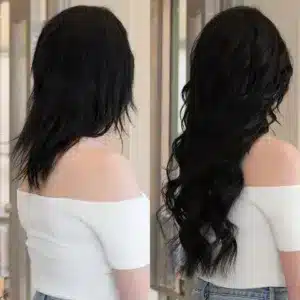
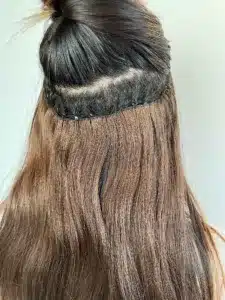
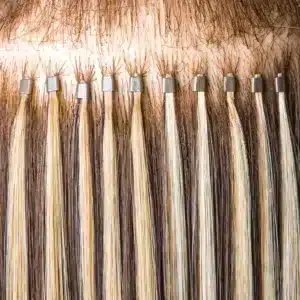
Do you want longer, fuller hair without glue or heat, but you still worry about beads showing or slipping? Do you keep asking, “Is this method safe for my real hair?” You can get a clean result, but you need the correct micro bead system first.
Micro bead hair extensions are a no-glue, no-melt method that uses a tiny bead to clamp your natural hair together with a pre-tipped extension strand. The most common strand types used with micro beads are i tip, nano tip, and f tip. When the tip type matches your hair density and your routine, the method can look natural and feel light.

In this guide, I will explain what micro bead hair extensions are, the real pros and cons, how micro bead installation works, whether they damage hair, and what you should check before you commit.
What are micro bead hair extensions?
Have you heard micro bead, micro ring, or micro link, and you feel like they are different? In most salons, these words point to the same family of extensions.
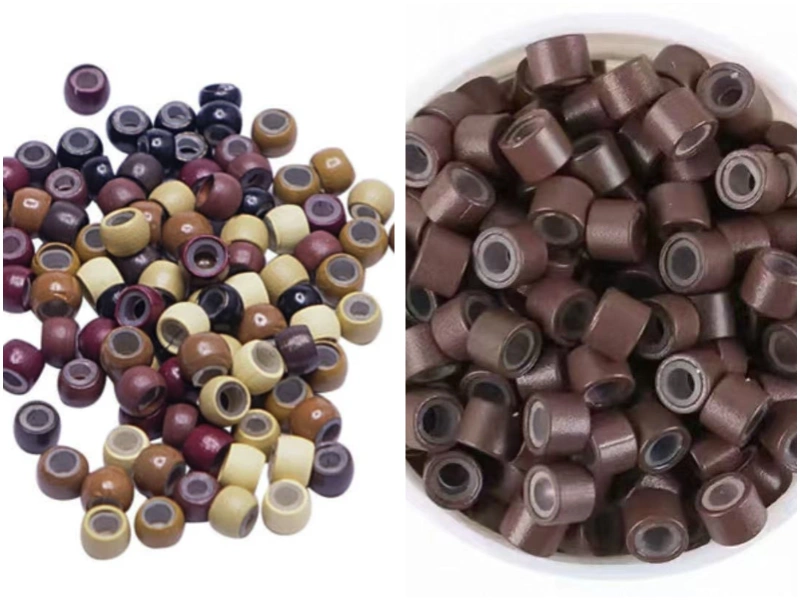
Micro bead hair extensions are strand-by-strand extensions that attach to your natural hair using a small metal bead (often with a silicone lining). A stylist slides the bead onto a small section of your hair, inserts the extension tip into the same bead, and clamps it flat. This creates grip. The method does not use tape, glue, or melted keratin.
The three most common strand types for micro beads
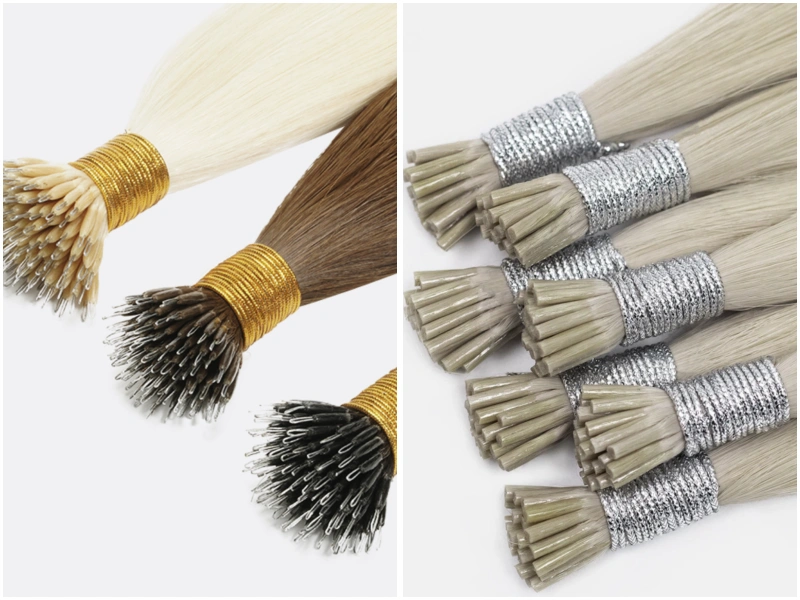
Most micro bead installs use one of these three pre-tipped options:
- i tip: a slim stick tip that is designed to sit inside a bead
- nano tip: a smaller, more refined tip that is designed for a smaller bead
- f tip: a flat plastic tip that can be clamped in a bead system and often spreads pressure over a wider surface
These tip types matter because they change the feel, visibility, and hold.
| Tip type | What the top looks like | Typical bead size | Best for |
|---|---|---|---|
| i tip | slim stick tip | micro bead | normal to medium density hair |
| nano tip | thinner, smaller tip | nano bead | fine hair and clients who want smaller points |
| f tip | smaller plastic tip | nano bead | clients who want a flatter contact feel |
What micro bead extensions are not
Micro bead is not tape-in.
Micro bead is not sewn-in weft.
Micro bead is not keratin fusion melting.
| Feature | Micro bead extensions | Tape-in extensions | Keratin fusion |
|---|---|---|---|
| Attachment | bead clamp | adhesive tape | melted keratin bond |
| Heat used | no | no | yes (usually) |
| Glue used | no | yes | yes (keratin) |
| Maintenance | move-up | re-tape | remove and reinstall |
| Reuse | often yes | sometimes | often yes if handled well |
Micro bead hair extensions pros and cons?
Do you want the honest pros and cons you can feel in daily life? You should judge micro beads by comfort, visibility, upkeep, and hair health.
Micro bead hair extensions pros include no glue, no melt, flexible styling, and strong reuse potential. Micro bead hair extensions cons include frequent maintenance, possible visibility on very fine hair, and tension risk if the stylist uses the wrong section size or the wrong tip weight for your hair.
Pros that make people choose micro beads
1) No glue and no melting
Many clients like that there is no sticky residue and no heat bonding step near the scalp.
2) Natural movement
Each strand moves on its own, so the hair can feel more natural than some panel methods.
3) Reuse across move-ups
If the hair quality is high and the tips stay intact, the same strands can often be moved up and reused.
4) Good option for clients who hate tape removal
Some clients dislike tape removal appointments. Micro beads avoid adhesive work.
Cons that you should plan for
1) Maintenance is part of the method
Your hair grows. The beads move down. You need a move-up schedule.
2) Beads can show with the wrong mapping
If the bead sits too close to the part line, crown swirl, or hairline, it can show.
3) Tension is the main risk
If the strand is too heavy, or the section is too small, your hair can feel sore and can break.
4) Slipping can happen on oily scalps
Oils, conditioner near roots, and buildup can reduce grip and cause slippage.
| Topic | Pros | Cons | What you should check |
|---|---|---|---|
| Appearance | strand-by-strand blend | points may show | placement and bead color |
| Comfort | no glue residue | can feel tight if wrong | section sizing and pressure |
| Maintenance | move-up reuse | regular appointments | your schedule and budget |
| Hair health | no adhesive | tension risk exists | stylist skill and strand weight |
Micro bead hair extensions installation?
Do you want to understand the install so you can judge if it is being done safely? You do not need to do it yourself. You only need to know what “balanced” looks like.
Micro bead hair extensions installation uses a bead to clamp your natural hair together with a pre-tipped strand, usually i tip, nano tip, or f tip. The safety comes from correct section size, correct bead size, correct placement zones, and correct clamp pressure. If one part is off, you can feel discomfort, see beads, or experience slipping.
Step-by-step: what happens in the chair
- Your hair gets cleansed and fully dried.
- Your stylist maps safe zones and rows.
- Your stylist selects a small section of your natural hair.
- Your stylist slides a bead onto that section.
- Your stylist inserts the extension tip into the bead (i tip, nano tip, or f tip).
- Your stylist clamps the bead flat to lock it.
The most important “match” in installation
Your stylist must match:
- your hair section size
- the extension strand weight
- the tip type (i tip vs nano tip vs f tip)
- the bead size
If your hair is fine, a lighter strand and smaller connection usually behaves better.
| Install factor | Good sign | Bad sign | What you may notice |
|---|---|---|---|
| Placement distance | secure but comfortable | pinching near scalp | soreness or headache |
| Strand weight | feels light | feels heavy | pulling sensation |
| Tip type choice | matches your density | too bulky for fine hair | visible points |
| Clamp pressure | firm and smooth | over-crushed sharp bead | breakage risk |
What you can ask your stylist during install
- Which tip type are you using for me, i tip, nano tip, or f tip?
- What move-up schedule do you recommend for my growth speed?
- Can you check tension on the first 10 strands before you continue?

Do micro bead extensions damage hair?
Do you fear breakage or thinning? That fear is valid. Micro beads can be safe, but they can also cause damage if tension and maintenance are wrong.
Micro bead extensions can damage hair when the strand weight is too heavy, the section is too small, the bead is clamped too tight, or move-ups are delayed. They can be safe when the tip type matches your hair, the tension is balanced, and you follow brushing and maintenance habits.
The three damage patterns you should know
1) Tension breakage
This happens when one small section carries too much weight.
2) Root matting
This happens when shed hair collects near the bead area, especially if you delay move-up or skip brushing.
3) Hairline stress
This happens when beads are placed too close to fragile edges.
| Damage risk | Why it happens | Early signs | What you should do |
|---|---|---|---|
| tension breakage | heavy strand + small section | soreness, tight feel | adjust weight and section size |
| root matting | grow-out + trapped shed hair | itchy roots, hard knots | early detangle + move-up |
| hairline stress | poor placement zones | short broken hairs | keep beads away from edges |
One rule you should follow
If you feel sharp pain or constant pulling, the install needs adjustment. A correct install should feel secure, not painful.
How long do micro bead hair extensions last?
Do you want a real timeline so you can plan costs and appointments? Micro beads need move-ups. That is normal.
Many clients book move-ups around 6–10 weeks. Your growth speed can shorten or extend that. The extension hair itself can last much longer if it is high quality and handled gently. If you use full cuticle hair and you care for it, you can often reuse it through multiple move-ups.
Two timelines you should separate
- maintenance cycle: when you move the beads up
- hair lifespan: how long the extension hair stays beautiful
| Timeline | What it refers to | Typical range | What controls it |
|---|---|---|---|
| move-up cycle | bead position and root comfort | 6–10 weeks | growth, routine, install quality |
| hair lifespan | extension hair condition | 6–18 months+ | hair grade, heat, brushing |
Why delaying maintenance is risky
When beads grow out too far, twisting and matting risk rises. That can make removal harder and can increase breakage risk.
What problems happen most with micro bead extensions?
Do you want to know the common issues so you can avoid them? Most problems are preventable.
The most common micro bead issues are slipping, visible beads, root tangling, discomfort, and uneven shedding. These usually come from bead size mismatch, poor section sizing, heavy products near the bead area, and delayed move-up.
Problem 1: Slipping
Common cause: oily scalp or conditioner near roots.
Fast fix: salon can tighten or redo.
Prevention: keep bead area clean and light.
Problem 2: Root tangles
Common cause: trapped shed hair and grow-out.
Fast fix: early detangle and book move-up.
Prevention: daily brushing in sections.
Problem 3: Beads showing
Common cause: placement too close to part line or hairline.
Fast fix: re-map and move points.
Prevention: choose safe zones and correct bead color.
| Problem | Most common cause | Fast fix | Best prevention |
|---|---|---|---|
| slipping | oil + sizing mismatch | tighten/redo | avoid oils near roots |
| root tangles | delayed move-up | move-up + detangle | brush daily in sections |
| beads showing | wrong placement zones | re-map | keep away from edges |
| discomfort | clamp too tight | adjust | tension test early |

How do you care for micro bead hair extensions?
Do you want your hair to look good in week 6, not only week 1? Care makes the difference.
You should care for micro bead extensions by brushing daily, washing your scalp gently, keeping oils away from bead areas, drying roots after washing, and securing hair for sleep. You should also avoid sleeping with wet hair, because wet roots knot faster.
Brushing
- you brush from ends first, then move up
- you hold the hair near bead area to reduce tension
- you brush before washing and before bed
Washing
- you clean your scalp with gentle pressure
- you rinse longer than you think
- you keep conditioner on mid-length and ends only
Sleeping
- you dry your hair fully
- you braid loosely or use a low ponytail
- you reduce friction with a smooth pillowcase
| Care habit | What it protects | Why it works |
|---|---|---|
| section brushing daily | roots and beads | prevents shed hair buildup |
| dry roots after wash | reduces matting | wet roots tangle fast |
| no oils at bead area | grip | less slipping |
| loose braid at night | alignment | less twisting |
My opinion
I think micro bead extensions are a strong choice for clients who want a glue-free method and who can commit to maintenance. I think the tip choice matters a lot. i tip, nano tip, and f tip do not feel the same on every head. A good match can feel light and look clean. A poor match can feel tight and look obvious. You should choose a stylist who understands tension, mapping, and tip selection.
FAQ
What is the difference between i tip and nano tip?
Nano tip is smaller and usually pairs with smaller beads. Many fine hair clients prefer the smaller connection. i tip is still discreet, but it is usually a bit larger.
What is f tip hair used for in micro bead systems?
f tip has a flat plastic tip. Some clients like the flatter contact feel. A stylist still needs correct sizing and placement to keep it secure and discreet.
Are micro bead hair extensions good for thin hair?
They can be, but thin hair needs lighter strands, smaller connections, and careful placement away from hairline and part line.
Do micro bead extensions hurt?
They should not hurt. Mild awareness can happen at first. Sharp pain means tension is wrong and needs adjustment.
How often do micro bead extensions need move-up?
Many clients plan 6–10 weeks, but hair growth and routine can change that.
Can micro bead extensions be reused?
Often yes, especially with high quality hair and careful maintenance. Your stylist can confirm based on hair condition.
Conclusion
Micro bead hair extensions can give glue-free length and volume with natural movement, but they need correct tip selection, balanced tension, and regular move-up maintenance. If you match the method to your hair and routine, you can wear them safely and confidently.