Have you ever had a removal appointment that turned into a rescue job? Have you seen root matting build up around keratin bonds because the client waited too long? Bonded hair removal can protect hair, or it can break hair, and the difference is the process.
Bonded hair extensions removal is safest when you soften the keratin first, open the bond with controlled pressure, and slide the strand out without pulling. A clean removal also includes shed-hair cleanup, residue control, and a short aftercare plan so the client leaves with healthy hair.

This guide is written for professional stylists, salon owners, and educators. I am not the installer, so I focus on what I see repeatedly from a factory support view: what causes damage, what prevents refunds, and what makes clients rebook.
What are bonded hair extensions?
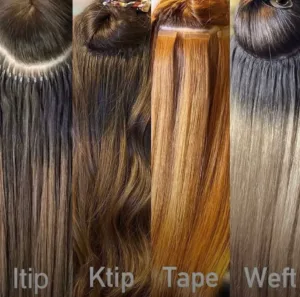
Do you notice clients call many methods “bonded”? Do you see confusion between tape, glue, and keratin? In this article, bonded hair extensions means one category only: pre-keratin tip fusion hair.
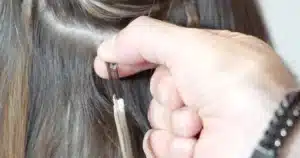
Bonded hair extensions are individual hair strands with a pre-made keratin tip at the top. The stylist uses a fusion tool to soften the keratin. The stylist then wraps and shapes the softened keratin around a small section of natural hair. The bond cools and becomes firm again. The client wears the hair until growth and movement make the bonds sit lower and start to twist more.
The only bonded types used in this guide
- U tip hair extensions
- V tip hair extensions
- Flat tip hair extensions
All three are pre-keratin tips. The difference is the tip shape and the bond profile after melting.

Why removal is not “one tool fits all”
A keratin bond is designed to hold for months. That strength is why removal needs softening first. If the bond stays firm, force will transfer into natural hair.
A quick client explanation that reduces fear
A client often sees shed hair and thinks it is damage. A stylist can say: “That shed hair was trapped in the bonds for weeks. You are seeing it today because the bonds are releasing.”
| Method in this guide | Bond material | Main risk point | Main protection principle |
|---|---|---|---|
| U tip / V tip / Flat tip | Keratin | Removal pulling | Soften, open, then slide |
What should you diagnose before removing bonded hair extensions?
Have you ever started removal and realized the client has matting at the root? Have you ever found mixed bond sizes because another stylist installed? Diagnosis decides the removal plan, the timing, and the price.
Before removal, you should diagnose bond condition, root tangling level, product residue level, and client hair strength. You should also check if the client had bleach damage, recent chemical services, or scalp issues. These details decide how gentle you need to be and how much time you need to book.
Bond condition checklist
- Are bonds white, cloudy, or brittle?
- Are bonds sticky from product buildup?
- Are bonds oversized and bulky?
- Are bonds twisted together in pairs or clusters?
Root tangling and matting check
You should lift small sections and look for mats close to the scalp. You should check behind the ears and at the nape. These are the common matting zones.
Hair strength and risk zones
You should check fine hair density areas. You should check the front hairline. You should check crown swirl zones. These areas break faster when removal is rushed.
| Diagnosis finding | What it usually means | How it changes removal |
|---|---|---|
| Heavy root matting | Client waited too long | More detangle time before remover |
| Sticky residue | Oils and silicones near bonds | More cleansing and residue control |
| Brittle white bonds | Overheating or poor keratin behavior | Softer pressure and slower cracking |
| Oversized bonds | Too much keratin or poor shaping | Higher effort to soften and open |
A booking and pricing rule that protects the salon
If you see matting, you should quote time first. If you do not quote time, the appointment becomes unprofitable and stressful.
How to remove bonded hair extensions?
Do you want removal that keeps the client’s hair full and calm? Do you want fewer broken hairs and fewer “my hair is ruined” claims? The sequence matters, and the discipline matters.
To remove bonded hair extensions, you should detangle dry first, section cleanly, apply keratin remover to each bond, wait for softening, open the bond with controlled cracking, then slide the strand out. After the strand releases, you should comb out trapped shed hair and check for residue. You should repeat in a predictable pattern so speed does not reduce control.
Step 1: Dry detangle before any remover
You should detangle on dry hair because wet hair stretches and snaps more easily. You should start at ends and move upward. You should use controlled tension with your fingers near the root.
Step 2: Clean sectioning and bond isolation
You should section into workable panels. You should isolate one bond at a time. You should clip cleanly so you do not pull surrounding hairs.
Step 3: Apply keratin remover correctly
You should place remover on the keratin only. You should avoid scalp contact. You should use enough product to saturate the bond, not to drip.
Step 4: Wait, then crack the bond open
You should wait for the bond to soften. Then you should use removal pliers to flex and crack the bond. The goal is to open the keratin shell, not to crush the hair.
Step 5: Slide the strand out without force
You should slide the extension out after the bond is opened. If the strand resists, you should reapply remover and wait again. Force is the fastest path to breakage.
Step 6: Comb out trapped shed hair
You should comb out the shed hair that was trapped near the bond. This step prevents later matting and reduces client panic.
| Removal stage | What you do | What you avoid | Why it matters |
|---|---|---|---|
| Dry detangle | Brush gently in sections | Ripping through knots | Lowers tension and breakage |
| Isolate bond | Separate one bond | Working in large messy sections | Prevents pulling wrong hairs |
| Soften bond | Saturate keratin with remover | Using too little remover | Reduces force needed |
| Open bond | Flex and crack gently | Crushing hair inside keratin | Prevents snapped hairs |
| Slide out | Remove strand smoothly | Pulling hard | Protects natural hair |
| Shed cleanup | Fine comb near root | Skipping cleanup | Prevents post-removal matting |
The two most common removal mistakes
- The stylist cracks the bond before it is softened enough.
- The stylist pulls the extension out while keratin is still gripping hair.
A bond appearance guide that helps troubleshooting
If the bond stays hard and shiny, the remover time is not enough. If the bond becomes crumbly and white, the keratin may be overheated or brittle, so pressure should be lighter and slower.
What tools and products should a stylist prepare for bonded hair removal?
Have you ever started removal and realized you are missing the correct pliers? Have you ever used the wrong remover and made residue worse? A complete kit makes removal safer and faster.
A professional bonded hair removal kit should include a keratin bond remover, proper removal pliers, sectioning clips, a tail comb, a gentle detangling brush, and cleansing tools for residue management. The kit should also include protective items such as gloves and towels, because removers can be drying to skin.
Why the remover quality matters
A remover that softens bonds evenly reduces time and reduces force. A remover that barely works leads to pulling. Pulling leads to breakage and complaints.
Why plier shape matters
The right plier opens the bond without slicing hair. A random plier can crush hair inside the bond. That is where broken hairs come from.
| Tool or product | Job | What happens if missing | Quick stylist tip |
|---|---|---|---|
| Keratin remover | Softens keratin | You use force | Reapply instead of pulling |
| Removal pliers | Opens bond | Hair gets crushed | Use controlled flexing |
| Clips | Clean sectioning | Hair tangles | Work one panel at a time |
| Tail comb | Isolate strands | You grab wrong hair | Keep isolation tight |
| Fine comb | Shed cleanup | Matting later | Comb gently near root |
| Clarifying shampoo | Removes residue | Sticky feel remains | Use after removal if needed |
A salon operations tip
You should keep a dedicated removal kit on a tray. When your kit is complete, your removal service becomes predictable and profitable.
How to care for bonded hair extensions?
Do your clients believe bonded hair is “wash and forget”? Do they place oils at the scalp because they want shine? Aftercare is what protects retention and reduces matting.
To care for bonded hair extensions, the client should keep heavy products away from the bond area, brush with control, dry the root area after washing, and secure hair for sleep. The client should also avoid direct heat on bonds and avoid rough towel rubbing. The goal is to reduce friction, reduce residue, and reduce twisting near the root area.
Product placement rules
Clients can use conditioner and oil, but placement must be correct. Conditioner belongs on mid-length and ends. Oil belongs on ends. The bond area must stay clean and light.
Washing and drying rules
Clients should shampoo scalp gently and rinse longer than usual. Clients should not flip hair aggressively. Clients should dry roots after washing because damp roots increase tangling.
Brushing rules
Clients should support the hair near the root with one hand and brush from ends upward. Clients should brush more often if they work out or sweat.
| Aftercare habit | What it prevents | Why it works |
|---|---|---|
| Keep oils off bonds | Slipping and residue | Oil reduces friction at bond area |
| Dry roots after wash | Root matting | Damp hair tangles easily |
| Brush in sections | Tight knots | Less tension on bonds |
| Sleep with braid | Twisting | Hair stays aligned overnight |

What are the most common client complaints and how should a stylist respond?
Do you get messages like “My bonds feel itchy” or “I am losing hair” two weeks after install? Client complaints often have a pattern. When you know the pattern, you can solve faster and protect trust.
The most common bonded hair complaints are early slipping, root tangling, itchy scalp, visible bonds, and anxiety about shedding. A stylist response should start with a quick diagnosis: product use near roots, washing frequency, heat habits, and brushing habits. The stylist should also check bond size and placement at the next appointment.
Complaint 1: Slipping or early fallout
This often links to oily roots, heavy conditioner near bonds, incorrect section size, or unstable melting behavior.
Complaint 2: Root tangling
This often links to sleeping with wet hair, not brushing enough, or waiting too long between checks.
Complaint 3: Shedding panic
This often happens during removal or heavy detangling. The client sees trapped shed hair and thinks it is damage.
| Client complaint | Most likely cause | First action | Next action |
|---|---|---|---|
| Slipping | Oil and product at roots | Review routine | Check section balance |
| Itchy scalp | Product buildup or sensitivity | Cleanse and rinse | Adjust products |
| Root tangles | Friction and twisting | Sleep routine update | Book check earlier |
| Visible bonds | Placement too close to hairline | Restyle or reposition | Plan better mapping |
| “I lost hair” | Trapped shed release | Explain shedding | Gentle shed cleanup |
A communication tip that reduces drama
You should use clear language. You should avoid blaming the client. You can say: “This method has rules near the bond area. Let us check your routine and fix it together.”
How should stylists set timing, consultation, and client expectations for removal?
Do you want fewer last-minute emergencies? Do you want fewer situations where clients try home removal? Clear expectations reduce risk.
Stylists should set removal expectations at the install appointment. Clients should know that removal needs a separate booking and it cannot be rushed. Clients should also know that they will see shed hair during removal. A client who understands these points is less likely to panic and less likely to try unsafe removal at home.
Timing and booking structure
You should estimate time based on strand count and tangling risk. You should book longer for first-time removal clients and for clients with coarse hair that tangles easily.
What the client should hear before removal day
- Removal is a professional service.
- Shed hair is normal and expected.
- Waiting too long increases matting risk.
- Root oils and heavy products increase removal difficulty.
| Consultation topic | What you ask | Why you ask |
|---|---|---|
| Products at roots | Oils, serums, conditioners | Predict slipping and residue |
| Sleep habits | Wet hair, loose hair | Predict root matting |
| Workout routine | Sweat frequency | Predict tangles and buildup |
| Chemical history | Bleach, relaxers | Predict hair strength |
A policy tip that protects your salon
You should clearly state that you do not recommend at-home removal. You can also explain why: “Force breaks hair, and remover plus technique prevents that.”
My opinion
I see bonded hair extensions succeed when the stylist controls removal the same way the stylist controls installation. A keratin bond is strong, so the removal must be gentle and methodical. I also see most damage happen because someone rushed or pulled. If a salon standardizes diagnosis, tools, and steps, the salon reduces breakage and client panic. A clean removal also protects reuse value when the hair quality is high. That is why I suggest stylists treat removal as a premium skill, not as an add-on.
FAQ
Why do some clients lose hair during removal?
Clients often see trapped shed hair that collected during wear. The bonds held the shed hair, so it appears during removal.
Can a stylist remove bonded hair without remover?
A stylist should not. Without remover, the bond stays firm and force increases, which raises breakage risk.
What should a stylist do if a strand will not slide out?
A stylist should stop pulling, reapply remover, wait, then crack the bond again with lighter control.
What causes white or crumbly keratin bonds?
White or crumbly bonds can come from overheating, brittle keratin behavior, or heavy product buildup.
How long should a bonded removal appointment take?
Time depends on strand count, tangling level, and bond condition. More matting needs more time.
How can clients reduce matting before removal day?
Clients should brush daily, keep oils off bonds, dry roots after washing, and sleep with a braid.
Can bonded hair be reused after removal?
High-quality hair can often be reused, but it typically needs re-tipping before reinstall.
What is the biggest mistake in bonded hair removal?
The biggest mistake is pulling before the bond is softened and opened.
Conclusion
Bonded hair removal stays safe when you diagnose first, soften keratin fully, open bonds with control, and clean out trapped shed hair. A professional process protects natural hair, protects your reputation, and improves client retention.