Halo extensions look easy until the first cut goes wrong. A bad cut makes the halo look like a “hair curtain.” A smart cut makes it disappear into the natural hair.
Halo hair extensions can be cut and shaped, but the safest method is to fit the halo first, then cut the perimeter and blend in small steps. The key is to protect the wire track area and avoid heavy thinning near the top.

This article answers what can be cut, how to cut it, and how to avoid the common halo mistakes that cause slipping, bulk, or visible edges.
Can halo hair extensions be cut?
Many people buy a halo set in a standard length and hope it matches the haircut at home. That rarely happens. Haircuts are personal. Halo sets are standardized.
Halo hair extensions can be cut. Trimming is normal. Shaping is also possible. The rule is simple: cut the hair lengths, not the wire track or any stitched return area.

Dive deeper
A halo extension is a single weft or a multi-track weft attached to a thin wire that sits around the head like a headband. That design makes halo extensions fast to wear. It also changes how cutting should be done.
Halo hair sits as one large panel. If the panel is cut like a normal weft, the blend can fail. The top edge can become visible. The sides can look heavy. So a halo cut should focus on two goals: match the overall length, and reduce the “sheet” look.
The safest first cut is a small perimeter trim. That removes thick ends and creates a natural finish. After that, blending should be done in light steps. A heavy layer cut can expose the top seam. It can also create gaps because the halo is one continuous piece.
Hair quality matters too. High quality full cuticle hair takes a cut cleanly and stays smooth. Lower quality hair can look dry after cutting because the ends fray more. That means the cutting method should stay simple. A clean shear cut and light point cutting are usually enough.
A final point is balance. Halo sets often have more weight in the back. If the stylist cuts too much from the back and not enough from the sides, the halo can look uneven. Measuring from the center back and checking both sides prevents that.
| Cutting area | Safe to cut? | Why | Safer approach |
|---|---|---|---|
| hair ends | yes | normal shaping | trim in small steps |
| top seam near track | no | can expose track | keep layers low and long |
| wire area | no | can weaken fit | adjust wire size instead |
| thick perimeter | yes | helps blend | point cut lightly |
What tools and setup are needed before cutting a halo?
Some cuts fail because the halo was never fitted first. The wire sits too loose. The track sits too high. Then every cut looks wrong after.
A halo should be fitted and styled before any cutting starts. The key tools are sharp shears, a fine comb, section clips, and a mirror check for symmetry.
Dive deeper
A halo extension must sit in the correct position. If the wire sits too far forward, the front blend will look heavy. If the wire sits too far back, the sides can gap and reveal the edge. A proper setup reduces all those risks.
A safe setup routine looks like this:
- Place the halo 1–2 inches behind the hairline. The wire should not sit on the baby hair area.
- Pull the natural hair over the halo track. The track should be hidden before any cutting.
- Style the hair in the final wear style. That means straight, wave, or curl. A cut should match how the client will wear it.
Tools matter because halo hair often comes in thick density. Dull scissors crush the ends. That makes the halo tangle more. A razor can create fuzzy ends fast. That also increases tangling and dryness. Clean shears keep the ends smooth.
For salon owners, a mannequin head setup is a good system. It allows repeat cuts. It also lets a brand offer “pre-shaped halo” products with consistent results.
| Setup step | Purpose | Common mistake | Fix |
|---|---|---|---|
| fit wire tension | stop slipping | wire too loose | tighten or change wire size |
| place halo track | hide edge | track too high | move slightly lower |
| style first | match final look | cutting straight then curling | cut after styling |
| use sharp shears | smooth ends | dull scissors | shear maintenance |
How to cut halo hair extensions step by step?
A halo can look perfect out of the package, then look fake after one fast cut. That happens when the stylist removes too much length at once.
The safest way is: fit first, trim the perimeter, then add soft blending with point cutting. A good halo cut is slow and measured.
Dive deeper
A step-by-step process reduces mistakes:
1) Fit the halo. The wire tension should feel secure but not tight. The track should sit flat.
2) Style the hair in the final wear style. If the wearer curls daily, the cut should be checked in a curled state.
3) Create a guide length at the center back. That is the easiest reference point.
4) Trim the ends in small increments. A first trim of 0.5–1 cm is safer than a big cut.
5) Check both sides. The halo is one piece, but the head shape is not perfectly symmetrical. Mirror checks matter.
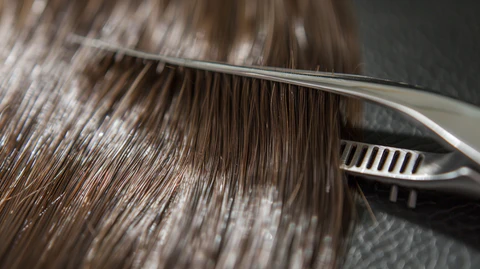
6) Blend the perimeter. Use point cutting on the bottom edges. This removes the “straight curtain” look.
7) Avoid cutting into the top area near the track. If blending is needed, keep it long. Short layers can reveal the seam.
For people with layered natural hair, a halo needs matching movement. Still, layers should be longer than the natural layers. That allows the halo to stay covered.
If the client has a blunt bob and wants a short halo, a halo may not be the best method. Clip-ins or tape-ins can blend better for very short styles. A halo works best for medium to long hair.
| Goal | Cutting action | Risk | Best control |
|---|---|---|---|
| shorten length | perimeter trim | too short | cut small, recheck |
| remove curtain look | point cut ends | frizzy ends | avoid razor, use shears |
| match layers | long soft layers | seam exposure | keep layers low and long |

Should halo extensions be cut wet or dry?
Wet hair looks longer. Dry hair shows the true shape. Halo extensions are also worn dry most of the time.
Dry cutting is usually better for halo hair extensions. Wet cutting can work for a simple trim, but the final shaping should be checked and finished dry.
Dive deeper
Wet cutting can create surprises. Hair stretches when wet. Some hair shrinks after drying, especially wavy textures. That can lead to a halo that ends up shorter than planned.
Dry cutting shows the real fall. It also shows bulk points. Bulk points matter for halo because the track sits under the top hair. If a cut creates too much bulk near the sides, the halo can push the natural hair up and reveal the edge.
A practical method is:
- wash and fully dry the halo first if the halo has any coating feel
- style it in the final style
- trim and blend dry
- do a final check after brushing
For salons, this method reduces complaints. Many halo users wear waves. If the cut is done wet and straight, the waved finish can look uneven.
| Cutting condition | Works for | Main risk | Best rule |
|---|---|---|---|
| dry and styled | best blend | slower | small cuts, mirror checks |
| wet | basic trim | shrinkage | finish dry |
| half-dry | quick edits | uneven fall | avoid for final shape |
What mistakes make halo extensions look obvious after cutting?
People blame the halo when the real problem is the cut. Halo hair can look natural, but the cut has to respect the structure.
The most common halo cutting mistakes are cutting too short, thinning too much near the top, and ignoring the side blend.
Dive deeper
Mistake 1: Cutting too much length in one go. A halo set is expensive. Once the length is gone, it cannot be restored. A short halo can also sit differently because weight changes.
Mistake 2: Thinning close to the top. The top area is where coverage matters. If a stylist thins heavily near the track, the seam can show. That is the fastest way to make a halo look fake.
Mistake 3: Ignoring the sides. Halo sets can gap near the temples. If the sides are not blended, the wearer sees a visible line. Side blending is often more important than the back.
Mistake 4: Cutting each side without measuring. Even small differences show on a halo because the hair sits as one panel. A mirror check and a center guide prevent that.
Mistake 5: Using a razor on lower quality hair. Razors can create frayed ends. Frayed ends tangle faster. That makes the halo feel “cheap” even if the hair was decent.
A simple inspection helps: after cutting, check in bright light. Check from the side. Check with the hair tucked behind the ear. Those checks reveal the real blend.
| Mistake | What it causes | Quick fix |
|---|---|---|
| big cut first | too short | cut small next time |
| heavy thinning near top | track shows | keep top dense, blend low |
| no side blend | visible edges | point cut sides lightly |
| razor use | frizz and tangles | switch to shears |
How to blend halo extensions after cutting?
A halo can match length but still look separate. That happens when the natural hair ends do not merge with the halo ends.
Blending works best with small point cuts, soft styling, and correct placement. The blend should focus on the perimeter and the sides, not the track area.
Dive deeper
Blending is a technique, not just a cut. It combines placement, density match, and finish.
Placement comes first. A halo that sits too high causes a visible ridge. A halo that sits too low can slip and gap. When placement is correct, blending becomes easier.
Density match is next. Some clients have fine hair. A thick halo can overpower it. Cutting cannot fully fix a density mismatch. The better fix is choosing a lighter halo. Still, the cut can reduce the heavy look by softening the perimeter.
Finish matters. Many halos blend best with a light wave because waves hide lines. Straight hair can also work, but it needs a cleaner cut and a better density match.
For salons and wholesale buyers, blending guidance reduces returns. Many end users struggle because they do not know the “side check.” The side check is simple: look at the halo from the temple area in bright light. If the edge shows, placement or side blending needs adjustment.
| Blend method | Best for | Why it works |
|---|---|---|
| point cut perimeter | most halos | removes curtain line |
| light wave styling | fine hair | hides transitions |
| correct wire tension | slipping issues | keeps halo stable |
| density matching | natural look | reduces bulk mismatch |
How to keep a halo extension in good condition after cutting?
Cutting creates new ends. Ends are the area that dries out first. So after a cut, care matters more.
Halo maintenance should focus on gentle brushing, low heat, and clean ends. A good routine protects softness and reduces tangling.
Dive deeper
Halo extensions are removed daily or weekly. That is an advantage because products do not sit on the hair for weeks like permanent methods. Still, halo hair can dry out because it is not receiving scalp oils. After cutting, the ends are fresh and more exposed.
A simple care routine:
- Brush before and after wearing. Use a gentle extension brush.
- Avoid heavy oils near the top track area. Oils can make the hair slide and reduce grip.
- Wash only when needed. Over-washing makes hair dry.
- Use warm water, not hot. Heat opens the cuticle more.
- Use conditioner mid-length to ends, not at the top.
- Dry fully before storage. Wet storage causes odor and tangles.
- Store flat or in a hanger bag. A tight fold creates creases and knots.
For salons, this also affects customer experience. When the halo stays soft, customers reuse it longer. That builds trust in the supplier and in the salon recommendation.
| Care action | Frequency | Why it matters |
|---|---|---|
| brush gently | every wear | prevents matting |
| wash light | every 15–25 wears | avoids dryness |
| low heat styling | as needed | reduces breakage |
| store correctly | every time | prevents knots |

My opinion
Halo extensions look natural when the cut respects the track structure. A slow perimeter trim and soft blending usually beat aggressive layers. The best halo results also start with the right density and a correct wire fit.
FAQ
Can halo hair extensions be cut shorter?
Yes. A small trim is safe. A big cut should be avoided unless the wearer is sure about the final length.
Can a halo extension be layered?
Yes, but layers should stay long and soft. Short layers can expose the top seam.
Can U cut the wire on a halo extension?
No. A cut wire can weaken the fit. A better option is changing wire size or adjusting tension.
Can halo extensions be thinned?
Light thinning at the ends can work, but heavy thinning near the top often makes the track show.
Should U cut halo extensions on a mannequin head?
A mannequin head can help with control and repeat results. The final check should still be done on the head because placement changes fall.
Why does a halo look bulky after cutting?
Bulk often comes from density mismatch or poor placement. Cutting alone cannot solve a halo that is too dense for fine natural hair.
Conclusion
Halo hair extensions can be cut safely when the halo is fitted first, the track stays untouched, and the perimeter is shaped in small steps for a clean blend.