Have you ever touched a client’s fusion bonds and wondered, “What is really holding this in place?” Have you heard people say “keratin bond,” but nobody explains the actual mechanics? If you sell fusion hair, or you offer it in your salon, you need more than a simple definition.
Fusion hair extensions work by melting keratin around a small section of natural hair, then shaping it into a tight bond that cools and locks in place. The bond holds through grip, shape, and clean hair prep. Wear time depends on bond quality, section balance, and aftercare.
If you want better retention and fewer complaints, you need to understand the “why” behind each step. I will break it down in plain terms, so you can explain it to clients and also make better buying decisions.
What are fusion hair extensions?
Do you feel clients mix up fusion, tape, and beads? Do you get questions like “Is this glue?” or “Will it damage my hair?” I hear that often, so I start with a clean definition.
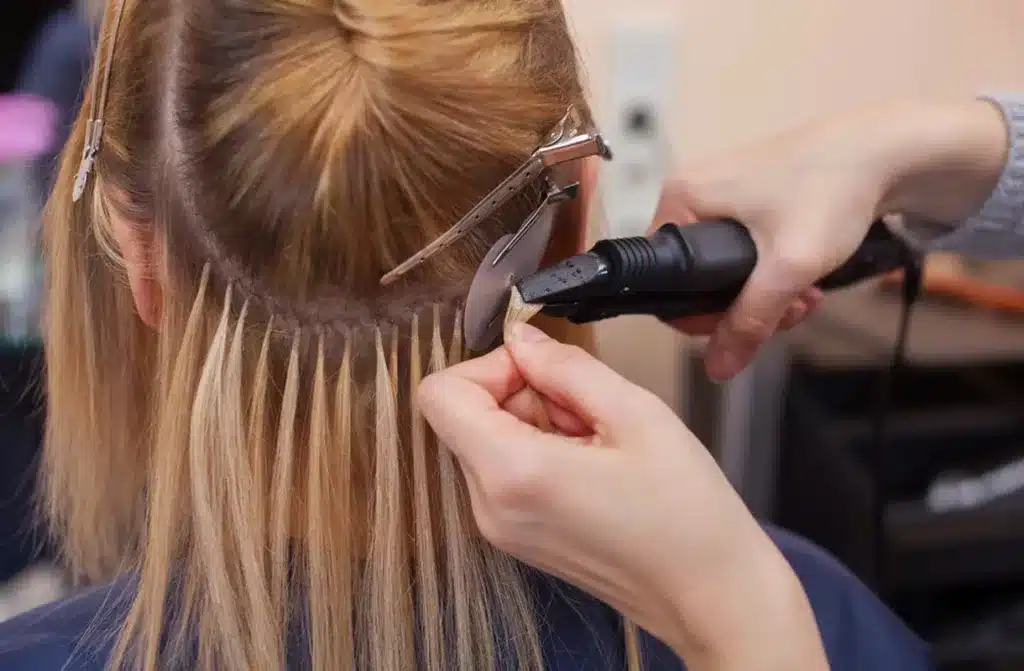
Fusion hair extensions are individual strands that attach to natural hair using a keratin-based bond. The strand can be pre-tipped, like U tip, flat tip, or V tip. The stylist uses controlled heat to soften the keratin. Then they wrap and shape the bond around a small section of natural hair. After the bond cools, it becomes firm again and holds the extension in place.
What fusion is and what it is not
Fusion is not tape. Fusion is not a bead system. Fusion also does not rely on liquid glue. It uses solid keratin material that melts and re-hardens.
The core parts of a fusion extension system
Fusion has three simple parts: the extension strand, the keratin bond, and the natural hair section. If any one part is off, the system fails.
| Part | What it does | What can go wrong |
|---|---|---|
| Extension strand | Adds length and density | Poor hair quality tangles and sheds |
| Keratin bond | Creates the “lock” | Wrong keratin breaks, turns cloudy, or slips |
| Natural hair section | Carries the load | Too thick slips, too thin breaks |
A short story I often use in training
When I explain fusion to new salon partners, I compare it to shrink wrap. The keratin is like a wrap that tightens when shaped and cooled. If the wrap is too thin or poorly melted, it does not grip. If the wrap is overheated, it becomes brittle.

How do fusion hair extensions work?
Have you ever watched a fusion install and noticed how fast the bond changes from hard to soft, then back to hard? That is the whole mechanism. It is controlled melting and controlled cooling.
Fusion works because keratin becomes flexible when heated, then it becomes firm again when cooled. During the soft stage, the keratin flows around the natural hair section. The stylist shapes the bond so it grips evenly. After cooling, the bond keeps its shape and holds through friction, compression, and surface contact.
Step-by-step mechanics in simple words
- The keratin tip heats up and softens.
- The softened keratin wraps around the natural hair section.
- The bond is rolled or pressed into a stable shape.
- The keratin cools and hardens.
- The bond holds until hair growth and daily movement reduce stability.
Why “section balance” matters to the physics
If the natural hair section is too thick, keratin cannot wrap every hair evenly. Some hairs sit outside the bond. Those hairs slide, so the bond loosens. If the section is too thin, the bond grips well but the load is too high on a small amount of hair. That raises breakage risk.
| Section issue | What happens inside the bond | Typical outcome |
|---|---|---|
| Too thick | Keratin cannot cover all hairs | Slipping and early fallout |
| Too thin | Too much weight on few hairs | Breakage near root |
| Uneven | Pressure is not balanced | Twisting and mixed retention |
What I suggest salon owners explain to clients
I suggest you say: “Fusion is a small keratin sleeve that wraps your hair. It is not permanent. It needs clean hair and correct section size.” Clients usually accept aftercare better when they understand that.
What types of fusion hair extensions exist?
Do you get confused by names like U tip, flat tip, V tip, and K tip? Many buyers do. I separate them by bond shape, because bond shape affects how it sits and how it blends.
Fusion extensions include U tip, flat tip, V tip, and other pre-bonded keratin tips. They all use the same basic working principle. The difference is the keratin tip shape and how it spreads when melted. Some shapes sit flatter. Some shapes create a smaller bond. Some shapes suit fine hair better.
%[types of fusion hair extensions u tip flat tip v tip(https://placehold.co/600×400 “types of fusion hair extensions”)]
How I compare common fusion tip styles
U tip is a classic keratin tip that melts into a rounded bond. Flat tip spreads more evenly and can sit flatter. V tip can create a narrower bond. The best choice depends on hair density and style goal.
| Fusion type | Bond shape goal | Typical best fit | Main risk if used wrong |
|---|---|---|---|
| U tip | Rounded, strong hold | Medium to thick hair | Bond can feel bulky if over-applied |
| Flat tip | Flatter profile | Fine to medium hair | Spreads too wide if overheated |
| V tip | Narrow and neat | Fine hair and detailed blending | Can slip if section is too thick |
| Micro keratin tips | Smaller bond size | Very fine hair zones | Higher technique sensitivity |
How I advise buyers and salon owners
I suggest you do not buy one type only because it is popular. I suggest you match tip style to client hair density. This reduces complaints and rework.
A practical buying detail many people miss
Many buyers focus only on hair length and color. I suggest you also check keratin consistency. A good keratin tip should melt smoothly and cool into a flexible but firm bond.
What tools and materials make fusion work in real practice?
Do you want fusion installs to feel consistent across different stylists? Do you want fewer refunds? Then tools and materials matter more than people think.
Fusion needs a heat tool, sectioning tools, and stable keratin material. The heat tool needs a consistent temperature output. The keratin needs the right melting range for that tool. The hair must be clean and dry. If one item is unstable, the bond quality changes from head to head.
The key tools and what each one controls
- Fusion heating tool controls keratin melt quality
- Sectioning clips control bond placement and tension
- Tail comb controls clean partings and uniform sections
- Finger protectors reduce heat risk and speed up shaping
| Item | What it controls | What can happen if it is poor |
|---|---|---|
| Heat tool | Melt quality and consistency | Bonds vary, slipping or brittle bonds |
| Keratin tip | Grip and durability | Bonds crack, turn cloudy, or feel sticky |
| Prep shampoo | Clean surface for bonding | Bond slips due to residue |
| Drying method | Moisture at root area | Bond does not lock well |
Why power stability matters in salons
If a tool heats differently on different outlets, results change. I suggest salons use stable power and keep tools clean. Dirty plates change heat transfer.
What I do as a manufacturer when I design fusion products
I design tips with controlled keratin amount and stable shape. I focus on predictable melting behavior. This gives stylists a better working rhythm.
How long do fusion hair extensions last, and what changes over time?
Do clients expect fusion to last “forever”? Do they ask for a fixed number like 6 months? I prefer to explain wear in a realistic way.
Fusion extensions last until hair growth and daily movement make bonds sit lower and twist more. Many clients schedule move-up or removal around 3–4 months, but timing depends on hair growth and care. The hair quality also matters. High quality full cuticle hair can be reused more times if removal is done carefully.
What changes from month 1 to month 4
Month 1 often feels secure and neat. Month 2 shows small growth. Month 3 shows more movement and possible tangles near the root. Month 4 often needs a planned maintenance decision.
| Time period | What clients notice | What salons should plan |
|---|---|---|
| Weeks 1–4 | Bonds feel stable | Teach aftercare and brushing |
| Weeks 5–8 | More growth and movement | Check bond condition if needed |
| Weeks 9–12 | Tangling risk rises | Plan maintenance appointment |
| Weeks 13–16 | Bonds sit lower | Remove or move-up strategy |
Hair quality and reuse, in simple terms
If the hair stays soft and aligned, the client feels more value. Full cuticle hair often lasts longer because it tangles less. Less tangling means less force during brushing, so the bond area is protected.
What I suggest you say to clients
I suggest you avoid promising one fixed timeline. I suggest you say: “Your hair growth decides the schedule. Your care decides the condition.”

Do fusion hair extensions damage hair, and how can salons reduce risk?
Do you worry about the word “heat” and think it must mean damage? Heat can be safe or unsafe. The difference is control.
Fusion can damage hair when the bond is too hot, the sections are too small, or the placement creates constant tension. Fusion can also cause damage when removal is rushed and keratin is pulled instead of softened and released. When tools and technique are controlled, fusion can be worn with good hair health.
The most common risk points I see
- Overheating the keratin during install
- Using too heavy strands for fine hair
- Placing bonds too close to the scalp
- Skipping correct removal steps
- Clients using oils at the root and causing slipping, then re-tightening too often
| Risk factor | What it can cause | How salons reduce it |
|---|---|---|
| Too much heat | Brittle bonds and dry hair | Use correct heat range and timing |
| Too small sections | Breakage at root | Match strand size to density |
| Heavy strands | Tension and shedding | Use lighter grams per strand |
| Poor removal | Hair pull-out | Use proper remover and patience |
| Poor aftercare | Matting and stress | Teach simple daily habits |
What I suggest for a “safe fusion” service
I suggest salons standardize strand sizes by hair type. I suggest salons set a clear aftercare guide. I also suggest salons plan maintenance timing early so clients do not wait too long.
A simple client message that works
I tell clients: “Fusion is strong, but it needs respect. If you protect the bond area, you protect your hair.”
Why do fusion installations fail, and how can buyers avoid poor supply?
Have you seen one batch perform well, then the next batch causes more slipping? That can happen. This is why buyers need supplier standards.
Fusion failures come from unstable keratin, inconsistent tip sizes, poor hair processing, and weak strand construction. If hair is over-processed, it tangles. When hair tangles, clients brush harder. That adds stress to bonds. If keratin quality changes, melting behavior changes, so stylists cannot keep consistency.
The quality checks I suggest for wholesale buyers
Buyers should check keratin melting behavior, bond size consistency, and hair cuticle alignment. Buyers should also request sample testing before large orders.
| What to test | How to test it | Why it matters |
|---|---|---|
| Keratin melt behavior | Small install test, then wash | Predicts retention and bond strength |
| Tip size consistency | Measure and compare batches | Prevents uneven bonds and complaints |
| Hair cuticle alignment | Wash and brush test | Reduces tangling and shedding |
| Strand strength | Gentle pull and wear test | Prevents early shedding from strand |
What I do differently in my factory
I control hair sourcing and processing. I keep cuticle direction aligned. I avoid harsh chemicals. I aim for long wear life, because my market is premium salons and brands.
A short personal story you can replace later
I once had a salon partner who switched to a cheaper fusion supply to save cost. They got more complaints in one month than the previous six months. They lost repeat clients. They came back to premium supply after that. That story is common in real business.
My opinion
I think fusion is one of the most “technical” extension methods. It rewards control. It also punishes shortcuts. I see success when a salon treats fusion like a system: stable keratin, stable heat, clean sections, and clear aftercare. I also think buyers should stop judging fusion hair only by softness on day one. Buyers should test melting behavior and tip consistency. If you do that, you reduce refunds and you build trust. When you build trust, you build repeat business.
FAQ
What is fusion hair exactly?
Fusion hair is individual extension strands attached with a keratin bond that is heated, shaped, and cooled to lock onto natural hair.
How do fusion hair extensions work compared to tape-ins?
Fusion uses keratin bonds and heat to attach strands. Tape-ins use adhesive tape tabs. Fusion is strand-by-strand and often feels more flexible in movement.
Is fusion hair the same as U tip hair?
U tip is one type of fusion hair. It uses a U-shaped keratin tip. The working principle is the same as other keratin fusion tips.
How long does a fusion install take?
Time depends on head size and fullness goal. Many full heads take several hours because each strand is placed one by one.
Can fusion hair be reused?
The hair can often be reused if it is high quality and removal is done carefully. The keratin tips usually need to be replaced or re-tipped.
What products should clients avoid with fusion?
Clients should avoid oils and heavy conditioners near the bond area. These can weaken grip and increase slipping.
Can clients swim with fusion hair?
Clients can swim, but they should rinse and dry after. Chlorine and salt can increase dryness and tangling.
What is the biggest reason fusion falls out early?
Early fallout often comes from wrong section size, oily roots, product buildup, or unstable keratin melting behavior.
Does fusion damage natural hair?
Fusion can be safe when heat and tension are controlled. Damage risk rises when heat is too high, sections are too small, or removal is rushed.
What should salons check before choosing a fusion supplier?
Salons should check keratin consistency, tip size consistency, and hair quality. A small sample test before bulk orders can prevent problems.
Conclusion
Fusion works through controlled keratin melt and cooling that locks onto a balanced hair section. Stable materials, clean prep, and correct care decide retention and client satisfaction.