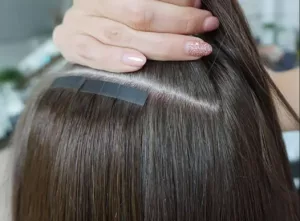
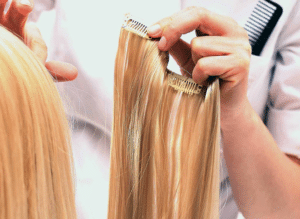
You love the idea of instant length, but you do not want anyone to “spot the wire.” You may also worry that bright light, wind, or a sharp part will expose the halo. That concern is normal.
Most people cannot see halo hair extensions when the wire sits in the correct zone and your top layer covers it. You usually see a halo when the wire is too high, the hair is too fine on top, the halo is too thick, or your part and styling expose the wire line.

If you want a halo that looks like your own hair, you need to understand how it works, why halos become obvious, and how to hide them in real life. The sections below guide you step by step.
How Do Halo Hair Extensions Work?
You want to add volume, but you do not want to use glue or clips. You might wonder how a single piece of hair stays on your head securely.
Halo extensions use a clear nylon wire and a wide weft of hair. You place it on your head like a headband or a halo. The wire sits on the top, and the hair sits at the back. It uses the weight of your hair and the shape of your head to stay in place.
Let us look closer at the design of this product. It is very simple but very smart. There are three main parts to a halo extension. I see these parts every day in my factory.
First, there is the wire. We use a transparent nylon material. It is like a fishing line, but it is softer and stronger. It does not stretch out. This wire goes over the top of your head. It rests about one to two inches back from your hairline. Because it is clear, it takes on the color of your scalp or your hair underneath it.
Second, there is the weft. This is the strip of fabric where the hair is attached. In my factory, we sew this weft to be flat and comfortable. It wraps around the back of your head from ear to ear. The weft does not sit on top of your head. It sits low on the occipital bone. This is the bone you can feel at the back of your skull that curves inward. This bone acts like a shelf. The weft sits under that shelf, and gravity keeps it there.
Third, there is the hair itself. We use 100% full cuticle human hair. This is important. The hair must hang naturally. If the hair is stiff or cheap, it will stand out. The hair on a halo falls down your back and shoulders. It mixes with your natural hair layers.
Here is a simple breakdown of the components:
| Component | Material | Function |
|---|---|---|
| The Wire | Clear Nylon | Holds the extension on the crown; invisible. |
| The Weft Base | Lace or Fabric | Holds the hair together; sits at the back. |
| The Clips (Optional) | Metal | Some halos have removable clips for extra security. |
I remember when I first looked at this design years ago. He was amazed that something so simple could work so well. It works because it fits the natural shape of the human head. It does not pull on your roots. It just sits there.
Are Halo Hair Extensions Obvious?
You may see mixed opinions online. Some people say halos are invisible. Some people say halos always show. The truth depends on a few predictable factors.
Halo hair extensions are not obvious when you have enough top hair to cover the wire, the wire sits in the right zone, and the halo density matches your natural density. They can look obvious when the wire is too high, the top layers are too short, the color is off in sunlight, or the halo is too thick for fine hair.
Dive deeper
When a halo looks obvious, it usually shows in one of three ways: a visible wire line, a visible step line, or unnatural volume at the crown. You can solve each one with a specific fix.
1) The “wire line” problem
This happens when:
- the wire sits too high on the crown
- your top hair is too short or too thin
- your part line sits directly over the wire
A wire line is not a halo defect. It is a placement and cover issue.
2) The “step line” problem
This happens when:
- your natural hair is much shorter than the halo hair
- your haircut is blunt at the bottom
- the halo density is much thicker than your own hair
The result can look like “two layers.” A simple blend cut or waves can remove that look fast.
3) The “crown bulk” problem
This happens when:
- the halo weft is thick
- the wire is too tight and lifts hair
- the halo is placed too high
The crown can look rounded in a way that does not match your natural shape.
4) The lighting truth test
A halo that looks perfect indoors can show issues outdoors. Sunlight makes:
- tone mismatch more visible
- shine differences more obvious
- wire peek easier to notice
Use this visibility table to identify your main issue:
| What looks obvious | Most likely cause | Best fix |
|---|---|---|
| wire shows | wire too high | move wire back and lower |
| “shelf” line | no blending | waves or a blend cut |
| crown bump | too thick or too tight | lighter halo or loosen wire |
| color looks off | tone mismatch | adjust shade and tone |
If you want a halo that stays invisible all day, you should test it in bright light before you leave.

How to Hide Halo Hair Extensions?
You do not need advanced skills to hide a halo. You need simple steps that control placement, cover hair, and texture. Many users get better results after just two or three wears.
You can hide halo hair extensions by placing the wire in the correct zone behind the hairline, keeping enough top hair over the wire, adding soft texture to blend layers, and avoiding part lines and styles that expose the wire line.
Dive deeper
Hiding a halo is a system. You can follow the same system each time and get consistent results.
1) Start with the correct placement zone
A simple placement rule:
- do not place the wire at the highest point of the crown
- do place it slightly behind the hairline, where your top hair naturally falls
If you place it too high, your hair cannot cover it. If you place it too low, the weft can peek at the bottom. You want the “middle safe zone.”
2) Create enough cover hair on top
Cover hair means the top layer that sits over the wire. You can increase cover by:
- moving the wire back slightly
- adjusting your part so it does not sit on the wire line
- adding a small amount of lift at the crown
You do not need heavy teasing. You need natural cover.
3) Use blending texture as a tool
Texture hides lines. Waves and soft curls:
- blend your natural hair and halo hair together
- hide the step line
- reduce the chance of wire peek
If you wear hair pin-straight, the blend needs to be perfect. If you wear a soft wave, the blend is easier.
4) Choose styles that protect invisibility
Most halo users look best with:
- hair down
- half-up styles that keep top hair down
- low ponytails with some face framing
Very high ponytails often expose the halo line. If you love high ponies, a halo may still work, but you need a careful layout and realistic expectations.
Use this “hide it” checklist:
| Step | What you do | Why it works |
|---|---|---|
| Place wire | behind hairline, not too high | cover hair can fall naturally |
| Adjust part | avoid part directly over wire | reduces wire peek |
| Add texture | waves or bends | hides step lines |
| Check in light | sunlight mirror check | catches tone and wire issues |
| Pick safe styles | down or half-up | keeps cover hair in place |
If you follow these steps, most people will not notice you are wearing a halo.

What Are the Pros and Cons of Halo Extensions?
You may ask this because you want a method that fits your lifestyle. Some people need daily flexibility. Some people want a 24/7 installed method. Halo sits on the flexible side.
The pros of halo extensions are fast application, no adhesive, and easy daily removal. The cons are styling limits for high ponytails, the need for enough top hair to cover the wire, and the risk of visibility if the fit and placement are wrong.
Dive deeper
A halo is often a great choice when you want “instant hair” without long-term bonds. Still, you should know what it can and cannot do.
Pros that users value most
- You can wear it in minutes.
- You can remove it at night.
- You avoid glue, tape, and chemical remover.
- You can reduce salon maintenance visits.
- You can use it for events and photo days without commitment.
These benefits are strong for users who want freedom.
Cons that matter in daily life
- You may not love it for very high ponytails and tight updos.
- You need enough top hair to cover the wire.
- You need correct wire tension for comfort.
- You need storage and brushing care to prevent tangling.
- You may need a blend cut if your hair is very blunt or very short.
These cons are not “bad.” They are fit factors.
Use this decision table:
| Your priority | Halo is strong because | Halo is weaker because |
|---|---|---|
| speed | quick wear | needs a placement habit |
| hair safety | no adhesive | wire friction if misfit |
| styling | great for down styles | high ponytail limits |
| convenience | remove anytime | not a 24/7 install |
| value | reusable hair | needs good storage |
If you want simple daily volume without long-term bonds, halo can be one of the easiest methods to live with.
What Hair Types and Haircuts Make a Halo More Invisible?
You may wonder if your hair is “right” for a halo. The answer is usually about top layer length and density, not only about curl pattern.
A halo is more invisible when you have enough top layer length to cover the wire and enough density at the crown to create natural coverage. Very fine hair and very short layers can still work, but the halo must be lighter and placement must be precise.
Dive deeper
A halo is like a headband under your hair. You need enough hair to act as a cover.
1) Top layer length matters most
If your top layer is short, it can lift and expose the wire. A longer top layer lays down. It hides the wire. That is why some users with shoulder-length hair get very natural results.
2) Density at the crown helps
If your crown is very low density, the wire can show easier. In that case, a lighter halo and a soft wave style often help.
3) Haircut shape affects blending
A blunt cut can show a step line. A layered cut blends easier. If you have a blunt bob, you can still wear a halo, but you may need:
- texture styling
- a small trim on the halo ends
- a blend cut on your own hair later
4) Color and shine affect visibility
If the halo hair is much shinier than your own hair, it can look separate. This is why hair quality and processing matter. Better hair has a more natural shine and smoother cuticle direction.
Use this fit table:
| Your hair situation | Halo invisibility level | What improves it |
|---|---|---|
| medium density, medium length | high | correct placement |
| fine crown hair | medium | lighter halo + waves |
| short top layers | medium to low | careful placement + texture |
| blunt haircut | medium | blend cut or soft curls |
| strong color contrast | low | better shade and tone match |
If you want the most invisible halo, you should treat hair shape and density as your starting point.
How Can You Test If Your Halo Is Visible Before You Go Out?
You do not need to guess. You can test visibility in two minutes. You can save yourself a stressful day.
You can test halo visibility by checking in bright natural light, taking a crown photo, moving your head side to side, and testing your main part line. If you can spot the wire in your phone camera, other people might spot it too.
Dive deeper
A mirror can lie because you do not see every angle. A phone camera is more honest.
1) The sunlight check
Stand near a window or go outside. Look at:
- the crown
- the part line
- both sides near the temples
If the wire shows in sunlight, you should adjust placement and add texture.
2) The head movement check
Turn your head left and right. Tilt forward. This imitates real life. If the wire peeks when you move, you likely need:
- more cover hair
- slightly lower placement
- a safer part
3) The phone camera back view
Take a photo from behind. Many halo issues show at the back because the weft can sit too low or too high. This is the fastest way to confirm a natural look.
4) The “wind test”
If you are going out in wind, you should choose a style that protects the top layer. A half-up style can pull cover hair up. A down style keeps cover hair stable.
Use this check table:
| Test | What you look for | Fix if it fails |
|---|---|---|
| sunlight | wire line or shine mismatch | adjust placement, add waves |
| movement | wire peeks when you tilt | move wire back, add cover |
| back photo | weft peeking | raise or lower slightly |
| part test | wire under part | change part position |
If you do these tests, you will feel much more confident wearing a halo outside.

My opinion
I think a halo can look very natural when you treat placement like a routine and use texture as a blending tool. I also think most “visible halo” stories come from two mistakes: wire placed too high and halo density too heavy for the wearer’s hair. When you fix those, the halo usually disappears.
FAQ
Can you see halo hair extensions if you have thin hair?
You might if the halo is too thick or the wire is too high. A lighter halo and soft waves usually help a lot.
Are halo hair extensions obvious in bright sunlight?
They can be if the tone match is off or the wire is exposed. A sunlight check before you leave helps you avoid surprises.
How do halo hair extensions work without clips?
The wire holds the weft in place around the head. Your natural hair covers the wire and the weft.
How to hide halo hair extensions with a middle part?
You should avoid placing your part directly over the wire line. You can shift the part slightly and add a soft wave to hide the blend.
What are the pros and cons of halo extensions compared with clip-ins?
Halo is faster and more even in density because it is one piece. Clip-ins can give more placement control, but they can feel bulkier and take longer to place.
Can you wear a halo in a ponytail?
Low ponytails are easier. High ponytails can expose the wire line. If you love high ponies, you need a careful style plan.
Does halo hair feel uncomfortable?
It should not. If you feel pressure or headache, the wire is likely too tight or placed wrong.
Conclusion
You usually cannot see halo hair extensions when placement, cover hair, and density match are correct. If the halo looks obvious, a simple fix like lowering the wire, changing the part, and adding soft texture often makes it disappear.