I often see salons face a sudden color request. A client wants a brighter look, but the extensions look too deep. A quick lightning job can turn a premium set into dry, tangled hair.
Yes, can you dye hair extensions lighter is possible only for 100% full cuticle human hair by prpfessionals, but it is high risk and usually not the best plan. Synthetic hair cannot be lightened with normal hair color. Any lightning can shorten extension lifespan and cause dryness, tangling, and even destroy the hair extensions, so the stylist should warn the client before starting.

This topic needs strict rules. These rules protect the salon schedule and protect client trust. The sections below explain what can change, why lightning is risky, and what a safer plan looks like.
Can You Change The Color Of Hair Extensions?
Many buyers think extension color is flexible after purchase. That is only partly true. Human hair can be toned or darkened with more control. Lightening is different because it needs pigment removal. Synthetic hair follows a separate rule set and does not behave like human hair.
Yes, the color of hair extensions can change when the fiber is 100% human hair. Synthetic fiber cannot be reliably recolored with salon dye, and it cannot be safely lightened. Even on human hair, a major color change often creates uneven lift and texture loss.
Dive deeper
A professional color change starts with a decision tree. This decision tree reduces redo work. It also protects the hair. The first decision is fiber type. The second decision is the direction of change.
Fiber type is the first gate
Human hair has cuticles. This structure allows oxidative color to develop inside the strand. Synthetic fiber is a polymer. It does not accept oxidative dye in the same way. Some online “hacks” stain synthetic fiber, but staining can bleed and feel rough. It also damages the salon’s reputation when the result fails.
Direction of change matters
A darker change is usually deposit. Deposit means pigment goes in, and the hair structure is not heavily stripped. A lighter change needs pigment removal. Pigment removal usually means bleach or high lift. This is the point where softness drops, and tangling risk rises.
Prior factory processing matters
Most extension shades are not raw hair color. Many shades were lifted or adjusted in production. Many also have surface treatments for shine. This history changes how the hair reacts in a salon.
This table shows the practical limits:
| Extension type | Can change color? | Best type of change | Main risk |
|---|---|---|---|
| 100% human hair | Yes | Tone or go darker | Dryness if over-processed |
| Human hair blend | Unstable | Small tone shift only | Uneven grab |
| Synthetic | No (with salon dye) | Replace or reorder | Stain, melt, shedding |
| Heat-friendly synthetic | No (with salon dye) | Replace or reorder | Damage, rough feel |
A salon can still offer extension color services, but the offer should have strict boundaries. A salon can protect results by selecting the right shade first, then using small adjustments later.
Can You Dye Human Hair Extensions Lighter?
Many stylists ask this when a client wants a lighter result without buying a new set. The request sounds simple, but the hair can react in an unstable way. The risk can be high even when the hair is already a light shade.
Yes, can you dye human hair extensions lighter is possible, but it is not recommended in most cases. Many human hair extensions have already been lightened during factory production, especially lighter shades. Lightening again can quickly reduce softness, increase dryness, and cause tangling and early shedding.
Dive deeper
Lightening extensions is not the same as lightening natural hair. Extensions do not get scalp oils. Extensions also carry a production history that the salon did not control. That history often includes lifting, toning, and surface treatment. This is why a light shade does not mean “safe to bleach.”
Light shades can be more fragile, not safer
A common belief is that light hair should lift easier. The lift part can be true, but the condition part can be false. Many blond and light brown extension shades were already lifted in the factory to reach the target level and tone. That means the hair already paid a chemical cost before it arrived. If bleach is applied again, the second round can push the hair into high porosity fast. High porosity means dryness, swelling when wet, and fast tangling.
The salon must warn the client before any lightening
Before any attempt to dye hair extensions lighter, the stylist should explain the risks clearly:
- the extension lifespan may become shorter
- the hair may become dry and lose shine
- the hair may tangle, knot, or shed earlier
- the shade can lift unevenly and look patchy
This warning protects the salon and sets honest expectations.
Lightening can still fail even with a skilled stylist
Factory processing can create different porosity zones along the strand. Ends often lift fast because they are older and drier. Mid-length can lift differently. A small mistake can create bands that are hard to fix without more damage.
This table helps explain risk by shade and history:
| Extension starting point | Hidden reality in many cases | What can happen if bleached again |
|---|---|---|
| Blonde / very light shades | Often already lifted in factory | Fast damage, tangling, breakage |
| Medium brown shades | May be colored and coated | Uneven lift, warmth, dryness |
| Dark brown / black shades | High pigment load | Needs heavy bleach, high damage |
A salon that sells luxury installs should treat lightening as a last resort. A premium program often performs better with shade replacement and blending methods instead of bleach.
Why Is It Not Recommended To Dye Dark Hair Extensions Lighter?
Some clients think dark hair is “strong,” so it can handle bleach. In reality, dark hair needs more pigment removal. More pigment removal means a stronger or longer bleach process. This increases damage risk.
No, in most cases, can you dye dark hair extensions lighter is not a smart plan. Dark hair needs heavy lift, and heavy lift can cause dryness, tangling, and early shedding. The salon should warn the client that the extension lifespan can drop after lightening, and the result may still be uneven.
Dive deeper
This section is about real salon economics. A damaged set often costs more than a replacement set. The cost shows up in redo labor, client dissatisfaction, and brand reputation.
1) Dark pigment removal requires aggressive processing
Dark shades contain strong pigment. To reach lighter levels, bleach needs time and strength. That increases cuticle lift and internal breakdown. The hair can feel rough and can lose slip.
2) Warm stages create extra steps
Dark hair often lifts through red, orange, and yellow stages. If the target is a cool blonde or beige tone, the process needs careful timing and then toner steps. Each step adds stress.
3) Extensions have less “buffer” than natural hair
Natural hair grows and can be trimmed. Extensions are a fixed asset. When the ends break or tangle, the whole set loses value.
4) Complex patterns add more uneven risk
Some dark extension sets have root shadow, mixed tones, or multi-level blends. Those zones lift at different speeds. That difference can create patchy results that look worse after toning.
This table shows how the risk grows as lift demand grows:
| Lift demand | What the hair often becomes | What the salon sees later |
|---|---|---|
| Small lift | Slightly drier | Less shine |
| Medium lift | High porosity | Tangling, rough feel |
| Large lift | Structural loss | Breakage, shedding |
| Multi-step blonde | Repeated chemical stress | Very short wear life |
A professional recommendation is often simple: if the client wants a lighter look from a dark set, replacement or blending is usually the safer path.

How To Dye Hair Extensions Lighter?
Some salons still want to offer correction services. Some clients still insist. In those cases, the work should be treated as advanced technical color. It should be done by a professional hairstylist only. The salon should also give a clear risk notice before starting.
How to dye hair extensions lighter usually means controlled bleach work and controlled toning, done only by a professional stylist. A strand test is required. The stylist should warn the client about dryness, tangling, and shortened extension lifespan before the first mix.
Dive deeper
A safe method is still a risk method. The goal is damage control and a usable outcome, not a perfect transformation. A salon should document the consultation and set realistic expectations.
Step 1: Consultation and risk disclosure
Before any service begins, the stylist should explain:
- the hair can become dry and lose softness
- tangling and knotting can increase
- shedding can increase
- extension lifespan can become shorter
- the shade can lift unevenly
- the hair extension can be destroyed in the lighting process
If the client cannot accept these risks, the salon should recommend replacement.
Step 2: Confirm the fiber and decide on off-head processing
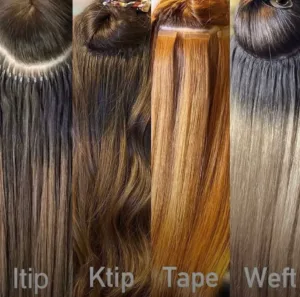
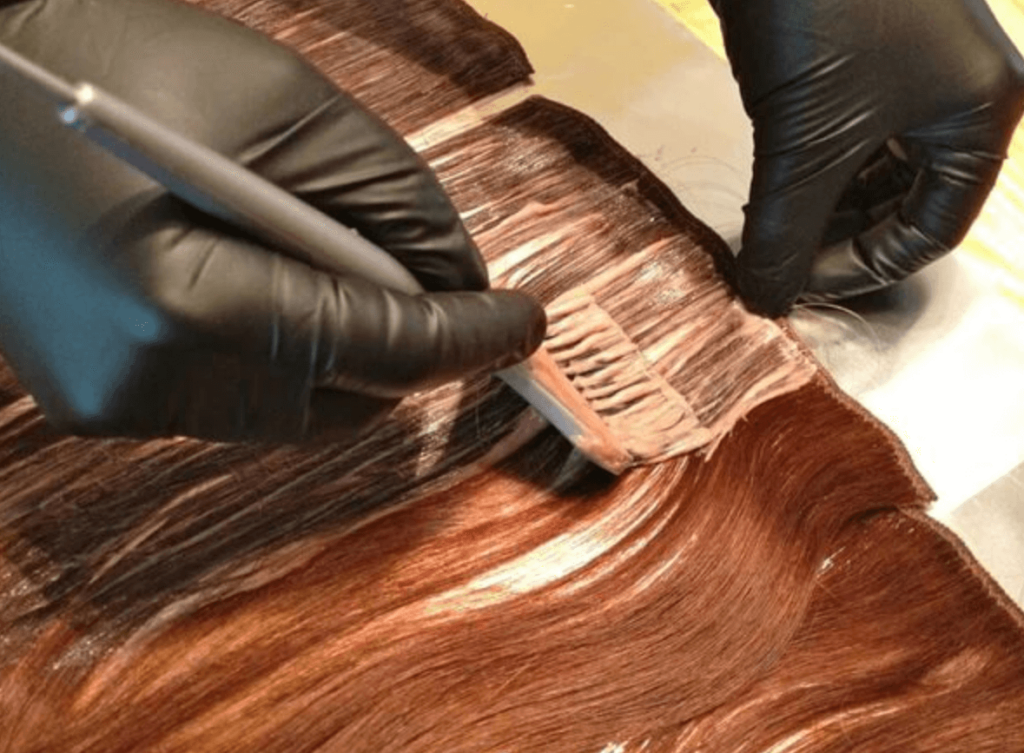
The hair must be 100% human hair. The stylist should decide if the hair should be processed off the head. Clip-ins and halos can be removed and processed off the head. Wefts can often be processed off the head with care. Tape-ins and keratin tips bring more risk near the attachment area. Bleach can weaken adhesive, and it can stress bonds.
Step 3: Clarify and strand test
The hair should be clarified to remove buildup. A strand test should be done from a hidden area. The test should check lift speed, warmth stage, and texture after rinse. If the hair feels gummy, stretchy, or rough, the stylist should stop and recommend replacement.
Step 4: Use the mildest workable lift
The stylist should use controlled bleach application and controlled timing. The stylist should avoid chasing large lift jumps. A smaller lift plus correct tone can look cleaner than a damaged “almost blonde” outcome.
Step 5: Rinse, rebuild, and tone
The stylist should rinse gently and use deep conditioning. The stylist should tone only after the hair reaches a safe level. Toner does not lift. Toner only refines tone.
This table shows decision points for safer outcomes:
| Goal | Safer plan | Why it is safer |
|---|---|---|
| Slightly lighter look | Small lift + tone | Less chemical stress |
| Cleaner tone | Tone only if level is enough | No lift damage |
| Big blonde result | Replace with correct shade | Lowest risk overall |
A salon can position this as a premium correction service with strict rules. That protects the salon and protects the client.
What Is A Better Alternative Than Lightening Extensions?
Many clients say “lighter” when they really want “brighter” or “more dimensional.” A salon can often deliver that look without bleach. This keeps the hair quality higher and reduces complaint risk.
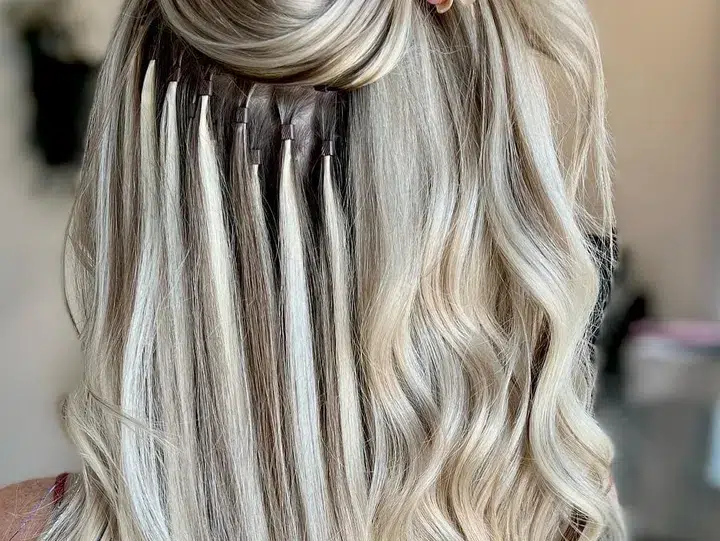
A better alternative than lightening is to buy the correct shade, mix two shades, or add lighter face-framing pieces. These options protect the extension fiber and protect the wear life. This is often a better business choice than trying to dye hair extensions lighter.
Dive deeper
A stable salon program needs repeatable results. Lightening is not repeatable across unknown hair history. Alternatives are more repeatable. They also protect the hair, so the client stays happy longer.
1) Shade replacement is often the cleanest solution
A new set in the target shade usually costs less than a failed correction plus redo labor. It also looks more natural because the shade was built in production, not forced in the salon.
2) Shade mixing can create a lighter look
A salon can mix a lighter and a darker shade in wefts. The salon can also place lighter pieces near the face. This can create the illusion of a lighter overall look with no bleach.
3) Tone and gloss can create a cleaner, brighter effect
If the hair level is already close, a gloss can improve brightness and reduce warmth. This can make the client feel “lighter” without actual lift.
4) Choose solid bases when future adjustment is likely
Solid, single-tone bases are easier to match and easier to adjust slightly. Complex balayage blends can be harder to correct and can lift unevenly if bleach is used later.
This table shows common requests and safer solutions:
| Client request | Better plan | Benefit |
|---|---|---|
| “I want lighter” | Order a lighter shade | No damage risk |
| “I want brighter” | Neutralize warmth with gloss | Cleaner look |
| “I want dimension” | Mix shades, add face frame | Natural effect |
| “I want ash blonde” | Order correct ash blonde | Avoid bleach |
A premium salon wins when the hair stays soft and stable. A premium brand wins when clients reorder because the result lasted.
What Should Buyers Ask A Supplier Before Planning Lightening?
Some buyers want hair that can handle color services. That is a fair request, but it needs clear limits. Even high-grade hair can be damaged by bleach. Still, better hair gives more predictable behavior.
Before planning to dye hair extensions lighter, buyers should ask about hair type, factory processing, and whether the hair is full cuticle and single donor. Buyers should still treat bleaching as high risk and should build a shade program that reduces the need for lightening.
Dive deeper
A buyer can reduce problems by building a clear sourcing and service policy. The policy defines what the salon will do and what it will refuse. The policy also defines what the supplier can support.
Questions that help set realistic expectations
A buyer can ask:
- Is the hair 100% human hair?
- Is the hair full cuticle intact?
- Is the hair single donor or mixed donor?
- Was the shade achieved with lifting in production?
- Is there a silicone coating?
- What is the expected lifespan with normal salon care?
- Does the supplier recommend toning only or also lightening?
Why these questions matter
If a shade was already lifted in production, another lift can push the hair into damage fast. This is often true for lighter shades. Full cuticle hair often holds up better in general, but it still cannot “escape” bleach damage when lift is aggressive.
This table shows what buyer info changes:
| Supplier detail | What it often means | What it changes for lightening |
|---|---|---|
| Full cuticle intact | Better alignment and slip | More stable feel, not bleach-proof |
| Single donor | More even porosity | Less uneven response, still risky |
| Already lifted shade | Prior chemical cost | High risk if lifted again |
| Heavy coating | Hidden porosity | Surprise damage and unevenness |
A buyer can also set a clear service statement in the salon: any lightening service requires a written risk notice and a strand test. For big shade changes, the salon recommends replacement.
My opinion
I treat extension lightening as a last choice. Many light shades already went through lifting during factory production, so “it is already blonde” does not mean “it can handle more bleach.” Dark-to-light is also risky because it needs heavy pigment removal.
I also think the risk disclosure matters. A stylist should explain the real outcomes before starting. The client should know the lifespan can drop. The client should know dryness and tangling can increase. This one step protects the salon relationship.
A premium program works better with strong shade selection. A brand can offer more shades. A salon can mix shades. A salon can use gloss to refine tone. These steps keep the hair soft and keep the client happy.
FAQ
Can you dye hair extensions lighter at home?
No. Home lightening is too risky. A professional colorist should handle any lift work.
Can you dye dark hair extensions lighter without bleach?
No. Dark pigment needs removal. Removal usually requires bleach or high lift, and both can damage the hair.
Can you dye human hair extensions lighter with toner?
No. Toner does not lift. Toner only adjusts tone after the hair is already light enough.
Are lighter extensions safer to bleach than dark ones?
No. Many lighter shades were already lifted in factory production. Bleaching again can damage the hair faster.
What risks should the stylist explain before lightening extensions?
The stylist should explain shorter lifespan, dryness, tangling, knotting, more shedding, and possible uneven lift and patchy tone.
Which extension types are easier to process off the head?
Clip-ins and halos are easier because they can be removed. Wefts can often be processed off the head with care. Tape-ins and keratin tips carry more risk near attachments.
What is a safer way to get a lighter look?
A safer way is ordering the correct lighter shade, mixing two shades, or adding lighter face-framing pieces.
Does gloss make extensions lighter?
No. Gloss can improve tone and shine, but it does not lift level.
Conclusion
Hair extensions can be lightened only when they are human hair, but the risk is high. Many light shades were already lifted in production, so extra bleach can ruin texture, so shade replacement is often smarter.