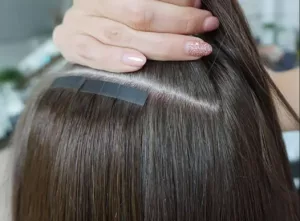
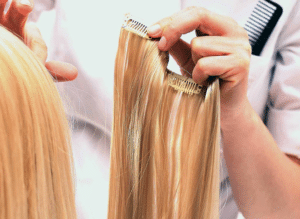
Many salon owners and stylists face the same issue. The extension shade looks fine in the bag, but it looks too light on the client. A darker dye job can fix it, but a wrong method can make the hair dry and uneven.
Hair extensions can be dyed darker when it is 100% human hair and the hair is not heavily coated. A strand test, a deposit-focused formula, and simple shade goals help the result stay even. Darker dye is safer than lightning, but it still needs control.

A clean result starts with the right plan. The plan depends on fiber type, prior processing, and the color pattern. The sections below explain what works, what fails, and how to avoid costly redo work.
Can You Dye Hair Extensions?
Many people assume all extensions can take dye because they look like real hair. That assumption causes most of the damage and most of the complaints. The dye result depends on what the extension fiber is, and what was done to it before it reached the salon.
Hair extensions can be dyed when they are 100% human hair and the surface is not blocked by heavy coating. A small strand test, even saturation, and gentle timing support a stable result. Synthetic fiber and mixed-fiber products usually do not respond like human hair.
Dive deeper
A practical dye decision needs a simple checklist. This checklist protects salon time and protects client trust. Three checks matter most: fiber type, hair history, and surface condition.
1) Fiber type decides everything
Human hair accepts oxidative dye and demi systems in a predictable way. Synthetic fiber does not. Many “heat-friendly” or “human hair blend” products can look real but react like plastic. The safest approach is to confirm the fiber before any dye work.
2) Hair history changes how dye enters
Many popular extension shades are already processed. Color correction on processed hair can still work, but the result can shift warm and the tone can look flat. That is normal. This is also why darker correction should stay small and controlled. A change of 1–3 levels is safer than a big jump.
3) Surface condition affects saturation
Some extensions have a smooth film that comes from coating. Dye can slide over coated areas and soak into exposed areas. That creates patchy bands. A clarifying wash helps. A strand test confirms if the coating is still blocking.
This table shows the core decision points:
| Check point | What to look for | What it means |
|---|---|---|
| Fiber | 100% human hair | Dye is possible |
| Fiber | Synthetic or blend | Dye is high risk |
| Processing | Heavy lightening | Higher porosity, uneven risk |
| Coating | Very slick feel | Clarify and strand test |
| Color goal | Darker by 1–3 levels | Best success rate |
A simple shade goal also matters. A single, solid base shade tends to dye more evenly. A multi-tone extension pattern does not. This point becomes critical for balayage and highlight styles, and it is covered in detail in the next sections.
Can You Dye Human Hair Extensions Darker?
Shade mismatch can hurt the final look even when the install is perfect. Many buyers want to “fix it fast” by going darker in one heavy step. That often creates dull tone, warm bands, and dry feel.
Human hair extensions can be dyed darker with the best results when the starting color is a simple, single base. The hair dyes more evenly when the base tone is consistent. Complex patterns like balayage, highlights, or mixed-tone blends can dye unevenly because each zone has different porosity.
Dive deeper
The key point is simple. Darker dye deposits pigment. Pigment follows porosity. When different parts of the hair have different porosity, the dye grabs in different ways. This is why a single base color behaves well, but a balayage set can look blotchy.
Why single-tone bases dye more evenly
A solid color extension is often processed in a consistent way across the length. The cuticle behavior is more uniform. That uniform behavior helps dye absorb at a similar speed. The result looks smoother and the shine stays more stable.
Why balayage or highlights can dye unevenly
A balayage or highlight effect usually includes zones that were lightened more. Those lighter zones are more porous. When darker dye is applied, porous sections soak up pigment faster. The darker result then looks “spotty” or “over-dark” in those areas. Meanwhile, the darker base areas may accept less pigment. That creates a patchy look.
This is also why “dye hair extensions darker” should follow a conservative plan. A small level shift and a controlled tone are safer than chasing a deep shade in one pass.
| Starting pattern | Dye-evenness risk | Common outcome | Better approach |
|---|---|---|---|
| Single-tone base | Low | Even dark result | 1–3 levels darker |
| Root shadow + mid tone | Medium | Slight banding risk | Strand test per zone |
| Balayage/highlights | High | Patchy grab, muddy tone | Buy correct shade set |
| Very light blondes | Medium to high | Flat tone, dryness risk | Replace or gloss only |
Tone control also matters. Warm undertones show more when dark pigment is added. Neutral and ash support can reduce red or orange shifts. This is why the keyword question can you dye human hair extensions darker has a “yes” answer, but only when the method and the starting pattern are right.
How To Dye Human Hair Extensions Darker?
Many dye mistakes come from skipping one step: the strand test. A strand test shows how the hair reacts and how the tone shifts. That small test prevents a full set from turning too warm or too flat.
A safe method to dye human hair extensions darker includes clarifying first, doing a strand test, selecting a deposit-focused formula, applying evenly, rinsing gently, and finishing with deep conditioning. A simple base color tends to dye more evenly than balayage or highlight patterns.
Dive deeper
A repeatable process helps salons deliver consistent results across many clients. The same process also helps wholesale buyers set clear instructions for stylists who install the brand hair. The steps below focus on control, not speed.
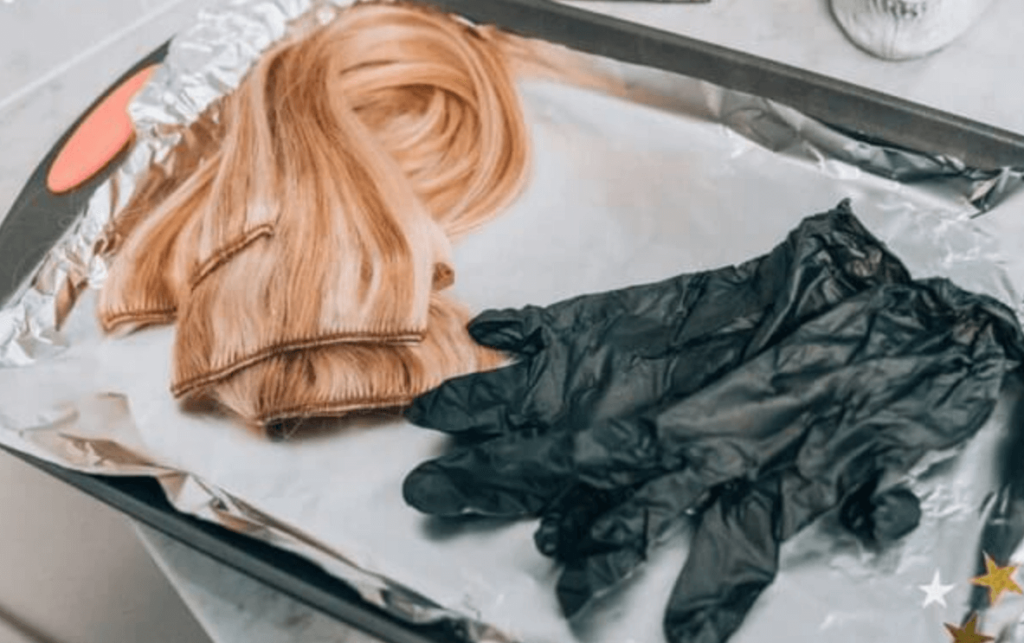
Step 1: Clarify to remove surface buildup
A clarifying shampoo wash removes styling residue and reduces coating impact. If the hair feels very slick, a second gentle wash helps. The hair should be towel dried before applying dye. Heavy oil products should be avoided before dye because they can block pigment.
Step 2: Strand test on the real hair
A small section from a hidden area is tested first. The test checks three things:
- The shade under natural light
- The warmth shift (red/orange)
- The feel after rinse (dry or smooth)
A strand test is also the best moment to detect a balayage risk. If a light zone grabs too fast, the full set will likely turn patchy.
Step 3: Choose a deposit-focused formula
Demi systems and gentle deposit formulas usually protect texture better than aggressive permanent formulas. Lower developer strength supports a smoother result because the cuticle does not need to open too much for a darker deposit.
| Goal | Safer choice | Avoid |
|---|---|---|
| 1–2 levels darker | Demi or deposit-focused color | High developer |
| Rich brunette tone | Neutral + ash support | Heavy blue-black |
| Refresh tone later | Gloss | Repeated permanent cycles |
Step 4: Apply with even saturation
Even saturation matters more than speed. The dye should be distributed with a brush and comb-through control. Mid-length and ends often need more attention. The top area near tabs or bonds should be protected where possible.
Step 5: Rinse gently and condition deeply
The rinse should be cool to lukewarm until water runs clear. The hair should not be twisted or scrubbed. A deep conditioner or mask helps restore slip. This step matters more on processed hair and on lighter shades.
Step 6: Set aftercare rules that protect the color
Color life depends on care. Gentle shampoo, heat protection, and weekly conditioning support a longer-lasting result. For extension types with adhesives, conditioner should be kept away from tape tabs.
A short personal story can be used here for brand messaging. One client asked for a quick black result on a light brown set. A strand test showed a blue-black shift. The plan changed to a natural black gloss. The final result looked softer and the hair stayed smooth. The strand test saved the set.
Is It Better To Get Darker Or Lighter Hair Extensions?
Many buyers try to prevent mismatch by ordering lighter hair, then planning to dye later. That approach can work, but it depends on how much change is needed and what the target lifespan is.
It is often better to buy slightly lighter hair extensions if the plan is a small darkening adjustment with deposit color. It is risky to buy darker and then try to go lighter because lightening usually needs bleach. Bleach can shorten extension lifespan and reduce softness.
%[darker or lighter hair extensions for salon owners choosing correct shade(https://placehold.co/600×400 “darker or lighter hair extensions”)]
Dive deeper
This choice is about risk control. In professional work, darker correction is usually safer than lighter correction. The main reason is that darker work can stay on deposit. Lighter work often needs bleach or high lift. That process removes structure and can create dryness and tangling.
When slightly lighter is the safer buy
Slightly lighter hair can be toned and darkened in a controlled way. This works best when the extension base shade is single-tone. It also works best when the stylist uses gloss or demi systems instead of harsh permanent dye.
When darker is the safer buy
Darker hair can reduce color work when the client is naturally dark and stays dark. But undertone still matters. A cool black on a warm brunette client can look unnatural. A natural black or deep neutral brown can blend better.
This table shows the practical decision:
| Buyer situation | Better choice | Reason |
|---|---|---|
| Luxury wear target 1–2 years | Avoid lightening | Texture stays premium |
| Small correction expected | Slightly lighter | Easy to dye darker |
| Client stays very dark | Darker | Less work, stable look |
| Client has highlights | Match pattern carefully | Pattern changes dye behavior |
| Salon wants low redo rate | Choose closest match | Less chemical load |
The pattern point matters again. A balayage extension set can look beautiful, but it is not the best base for dye correction. If the client wants a deeper shade, a single-tone base set in the correct shade is usually the cleaner path.
Can You Dye Synthetic Hair Extensions Darker?
Many stylists ask this after a client brings budget hair. The hair looks fine at first. Then the client wants a darker shade. The problem is that synthetic fibers do not behave like human hair.
Synthetic hair extensions usually cannot be dyed darker with standard hair dye. Most hair color products are made for human hair. Synthetic fibers do not absorb oxidative dye in the same way. Some staining methods exist, but results are uneven and the fiber can become stiff or damaged.
Dive deeper
This topic matters for salons because it saves time and protects reputation. A salon can lose trust when a synthetic set turns patchy, sticky, or dull. The safest professional position is clear: synthetic hair is not a reliable candidate for normal dye.
Why standard dye does not work on synthetic
Synthetic fibers are made from polymers. These polymers do not have the same cuticle structure as human hair. Oxidative dye needs the cuticle to open and the pigment to develop inside the fiber. Synthetic fiber does not support that reaction. This is why dye often “sits on top” or does nothing.
Why “internet hacks” create problems
Some online methods use fabric dye or markers. Those methods can stain, but staining is not professional coloring. The result can bleed onto clothing. The result can also rub off during washing. The fiber can feel rough and can tangle more.
What a salon can do instead
A salon can choose one of these safe routes:
- Replace the synthetic set with a human hair set in the correct shade
- Order a darker synthetic set from the same brand line
- Blend with a darker topper or add-on piece if the client accepts a mixed look
This table keeps the decision simple:
| Fiber type | Can it be dyed darker with hair dye? | Realistic salon option |
|---|---|---|
| 100% human hair | Yes, with control | Strand test + deposit plan |
| Human hair blend | Unstable | Test first, expect uneven |
| Synthetic | No | Replace or reorder shade |
| Heat-friendly synthetic | Still no for hair dye | Replace or reorder shade |
For professional buyers, the best strategy is to separate product lines clearly. Human hair extensions can be positioned as color-service friendly. Synthetic products can be positioned as ready-to-wear only. That clarity prevents complaint cycles.
What Hair Extensions Should Not Be Dyed?
Many problems come from dyeing the wrong hair. Not all human hair extensions are a good base for dye correction. Some are too processed. Some are heavily coated. Some have sensitive attachment areas that can be harmed by dye contact.
Extensions should not be dyed when they are synthetic, heavily coated, very damaged, or when the attachment structure is already weak. Complex color patterns like heavy balayage or highlight mixes also carry a higher risk of uneven dye results.
%[hair extensions that should not be dyed with examples for salon buyers(https://placehold.co/600×400 “what hair extensions should not be dyed”)]
Dive deeper
A salon needs a clear line between “serviceable hair” and “replace-only hair.” This protects profit and reduces remake appointments. Three risk zones matter most: fiber risk, structure risk, and pattern risk.
1) Fiber risk
Synthetic fiber is the top “no.” Hair dye does not behave correctly. Blends can also be unstable. A blend can include different fibers that take dye at different rates. That often creates a strange two-tone effect.
2) Structure risk
Some extensions are already stressed from prior processing. Very light blondes and high-lift shades can be fragile. Dark dye can still go in, but the result can look muddy and the feel can drop fast. If the hair already feels dry before dye, the risk goes up.
3) Pattern risk
Balayage and highlight patterns are beautiful, but they are not the best base for “make it darker” correction. Each light section has different porosity. That difference makes dye absorption uneven. A single, solid base shade is the better choice for a clean darker dye job.
4) Attachment risk
Some extension types need extra care:
- tape-ins: dye can weaken adhesive if dye touches the tabs
- keratin tips: dye can affect the bond area and create messy residue
- hand-tied wefts: rough rinsing can loosen stitching
This table gives a fast risk view:
| Risk type | What it looks like | What to do |
|---|---|---|
| Synthetic | Plastic feel, heat-friendly claim | Replace |
| Heavy coating | Slick film and strong shine | Clarify + test, or replace |
| Fragile blonde | Dry, rough, tangles fast | Replace or gloss only |
| Balayage/highlights | Mixed light zones | Prefer buying correct shade |
| Weak attachments | Loose stitching, old tabs | Replace or recolor off-piece only |
This section also links back to the key phrase dye hair extensions darker. Darker correction is safer, but only when the base hair is stable and the color pattern is simple.

How Do You Keep Dyed Extensions Soft And Long-Lasting?
A darker shade can look rich on day one. Then the hair can feel dry two weeks later if the routine is too harsh. Salon-level aftercare keeps the hair soft and keeps the shade stable.
Dyed extensions stay soft when the cuticle is supported with deep conditioning, low heat use, and gentle washing. Color should be refreshed with gloss when needed, not with repeated permanent dye. Attachment areas should stay clean and free from heavy oils.
Dive deeper
A long-lasting result depends on a few habits that are easy to teach clients. These habits also matter for wholesale buyers because they reduce complaints and increase repeat orders.
1) Conditioning after dye is not optional
A deep conditioner helps the hair recover slip. A mask also helps reduce tangling. Many extension fibers do not receive scalp oils like natural hair does. This is why conditioning matters more.
2) Heat rules need to be strict
Heat tools can dry the hair fast, especially after dye. Heat protectant should be used every time. Tool temperature should be kept moderate. A client can still style daily, but the method must be careful.
3) Washing habits control fade and dryness
Frequent washing strips color and dries the length. A client can wash less often and still keep the scalp clean. Shampoo should stay near the scalp area. The length should be cleaned gently.
4) Product choice should match the extension type
Tape-ins need clean adhesive zones. Heavy oils and masks should be kept away from tabs. Wefts and clip-ins can handle more conditioning, but heavy buildup still creates dullness.
This table gives a simple care plan:
| Care step | Best practice | Why it helps |
|---|---|---|
| Wash | 1–2 times weekly when possible | Less stripping |
| Shampoo | Focus on scalp and roots area | Keeps length softer |
| Conditioner | Mid-length to ends only | Protects attachments |
| Mask | Weekly, 10–20 minutes | Restores slip |
| Heat | Always use protectant | Reduces dryness |
| Refresh | Gloss instead of re-dye | Low damage tone control |
When a salon follows these rules, the hair holds the darker tone better. The texture also stays closer to “new hair” for longer.
My opinion
A salon gets the best dye results when the hair base is simple and stable. A single, solid base shade is the best starting point for darkening. A complex balayage or highlight pattern is a higher-risk base because porosity changes across zones. That mismatch can create patchy results even when the method is careful.
A luxury program also needs a low-chemical strategy. Darkening with deposit color is a controlled service. Lightening with bleach is a high-risk service. A salon that wants long wear life should avoid bleach on extensions whenever possible.
This is also why sourcing matters. Full cuticle hair with stable processing gives salons more control. It also supports a longer service life. That helps the salon. That also helps the brand and the wholesale buyer.

FAQ
Can dyed extensions be colored while installed?
Yes, but attachment areas need protection. Tape tabs should stay clean. Keratin bonds should not be flooded with dye. Rinsing should be gentle to prevent tangling.
Can box dye be used on human hair extensions?
Box dye is not ideal. The formula strength is often too aggressive and less predictable. A professional deposit-focused system is safer.
Why do extensions turn red or brassy after darkening?
Warm undertones can show after pigment deposit. Neutral or ash tone support can reduce warmth. A strand test should guide the tone choice.
How many levels darker is a safe change?
A change of 1–3 levels is usually safer. Bigger jumps raise the risk of flat tone and dry feel.
Can tape-ins be dyed darker?
Yes, but dye should be kept away from the adhesive. Conditioner and oils should also stay off the tabs to keep the hold stable.
Can U tip keratin extensions be dyed darker?
Yes, but dye control near the bond area is important. Many salons prefer to dye before install or after removal if deep saturation is needed.
Can balayage extensions be dyed into a solid dark color?
It is possible, but the risk of uneven result is high. The lighter zones often grab faster and turn darker than the base. A single-tone base set in the correct shade is usually a cleaner option.
Can synthetic extensions be dyed darker with hair dye?
No, standard hair dye does not work well on synthetic fiber. Replacement or reorder in the correct shade is the professional route.
Conclusion
Hair extensions can be dyed darker when the fiber is human hair and the base color is simple. A strand test and deposit-focused dye protect softness and reduce uneven results.