Have U ever received a client message like, “The extensions look great, but the ends feel too long and heavy”? That one question can turn into a redo appointment if the cutting plan is unclear.
Yes, hair extensions can be cut, and many installs need it for a natural blend. The safe approach depends on the extension type, the hair quality, and where the cut is made. The goal is simple: improve shape without harming the attachment or thinning the weft.
The rest of this guide breaks the topic into practical questions salons and buyers face, so U can avoid mistakes and set the right expectations before any trim happens.
Can you cut extensions?
Have U heard someone say “Never cut extensions or they will ruin”? That fear is common, but it is not the full story.
Most hair extensions can be cut. Cutting is often needed to match layers, remove damaged ends, and improve the blend. The key rule is to cut the hair, not the attachment area.
Dive deeper
A clean answer starts with what “cut” means. Cutting usually means trimming length or shaping layers after installation. In salon work, cutting also means a small “refine” cut on the extension ends so the natural hair and extension hair sit together. That is normal.
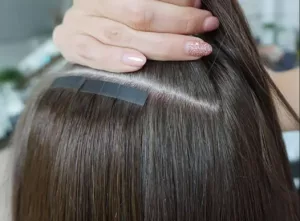
The risk comes from cutting too high. If scissors reach the tape tab, the sewn track, the keratin bond, or the bead area, the attachment can weaken. The risk also comes from over-thinning. Many stylists use razors or aggressive thinning shears to blend fast. That can work on some human hair. It can also cause fuzzy ends and faster tangling, especially when the hair is already processed.
Another point is hair quality. Full cuticle hair handles trimming better because the cuticle alignment stays stable. Lower grade hair can look fine at first, but after cutting and heat styling, it can show dryness faster. This is why it helps to set a policy: if a client wants heavy layering or short face framing, the salon should choose hair that can take repeated styling.
| What is being cut | Usually safe? | Main risk | Best control |
|---|---|---|---|
| only the ends | yes | fraying if razor is used | sharp shears, light point cutting |
| shaping long layers | yes | over-thinning | small sections, step-by-step check |
| cutting near attachment | no | weakening hold | keep a “no cut zone” near roots |
What should be cut: the extensions, the natural hair, or both?
Have U seen a client request “just cut the extensions,” but the real issue is the natural hair shape? This is where results can look off even when the cut is neat.
A natural blend often needs both: a small trim on the client’s natural hair and a controlled cut on the extensions. The goal is to match the perimeter and remove the “shelf” line.

Dive deeper
Blending is not only about removing length. It is about matching movement. Many clients have natural hair that is fine at the ends. Extensions can be thicker at the ends because of weight and density. If the salon only trims the extension ends, the natural hair can still peek through and look thin. If the salon only trims the natural hair, the client may lose too much of their own length.
A better approach is to plan the blend:
1) Set the final length line (the perimeter).
2) Check density difference at the last 3–4 inches.
3) Add soft shaping where needed, not everywhere.
This is also where the extension type matters. A hand-tied weft or genius weft can sit flatter, so the blend can rely more on perimeter shaping. Tape-ins can create a very smooth fall, so a slight face frame cut can be enough. Strand methods like micro links can show separation if the cut creates too many short pieces. That is why strand methods usually need less layering and more perimeter control.
Salons can avoid complaints by explaining the rule to clients: “U are paying for a blend, not only length.” That sets the right goal and reduces “why does it look choppy” issues.
| Client goal | What usually needs cutting | What to avoid |
|---|---|---|
| remove heaviness | small extension end trim + slight layering | deep thinning at mid-lengths |
| match a blunt lob | perimeter cut on extensions, minimal layers | razor on dry extension ends |
| add face framing | controlled face layers on both | cutting too short near attachments |
Can you cut extensions before installation?
Have U had a buyer ask if the factory can pre-cut hair to a custom length? That request happens often in wholesale orders.
Extensions can be cut before installation, but it should be done for specific reasons only. Pre-cutting can save time when a client needs a short length, or when a brand sells a fixed “ready-to-wear” length. The risk is waste and mismatch after install.
Dive deeper
Pre-cutting is a business decision. It affects inventory and return risk. When salons cut hair after install, they cut to the client’s head shape and natural hair density. That is the most accurate method. When U cut before install, U are cutting without seeing the final fall and without seeing where the tracks will sit. So pre-cutting works best when the goal is simple: reduce length, not shape.
Here are situations where pre-cutting makes sense:
- The client wants the extensions at a fixed length, and the natural hair already matches the shape.
- A brand sells “18 inch” and wants consistent ends for packaging.
- A stylist wants to remove 1–2 inches for cleaner ends before install.
Here are situations where it is risky:
- The client wants layers or a special shape.
- The client has uneven natural hair.
- The client wants a blunt finish but the placement changes the density at the ends.
For wholesale buyers, a smart policy is to offer pre-cut length as an option, but still educate that the final blend cut should happen on the head. That reduces disputes and improves client satisfaction.
| Pre-cut purpose | Works well? | Why |
|---|---|---|
| shorten length only | yes | low styling risk |
| make layered shape | no | needs on-head balance |
| remove dry ends | yes | improves finish before install |
What cutting tools are safest for hair extensions?
Have U seen extensions look great on day one, then feel rough two weeks later? Cutting tools can be a hidden reason.
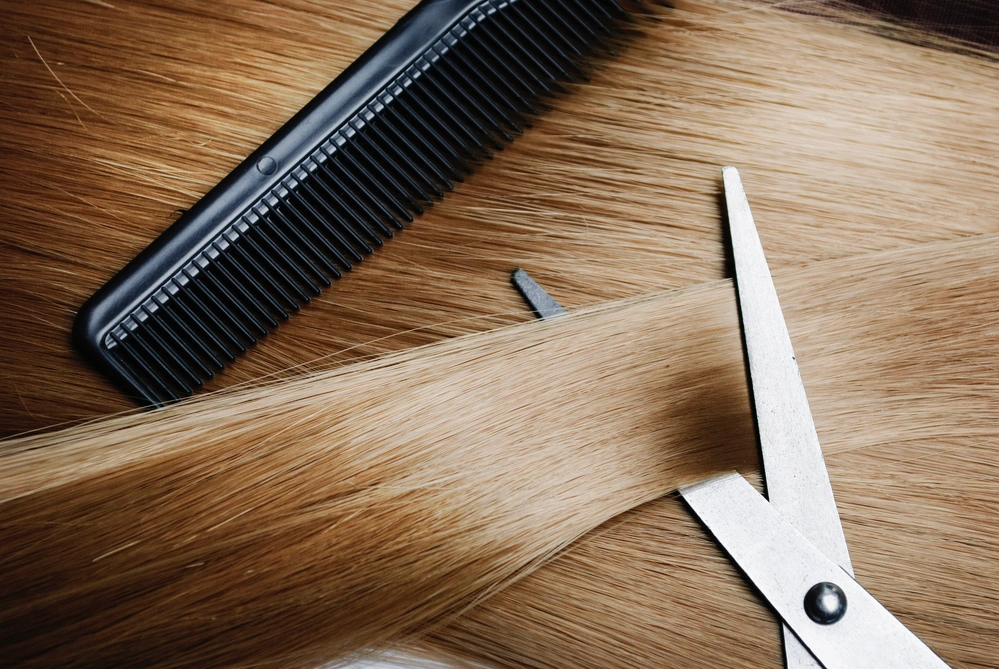
Sharp professional shears and light point-cutting are the safest. Razors and heavy thinning shears can cause fraying and faster tangling, especially on processed hair.
Dive deeper
Extensions are not the same as natural hair at the ends. Even when the hair is human hair, the cuticle has been cleaned, colored, and styled. Some hair has more processing than others. A razor can create a feathered edge, but it also creates micro-tears. Those tears can catch during brushing. That becomes tangling and dryness over time.
Thinning shears are another common tool. Used lightly, they can soften a line. Used too much, they remove too many strands and create see-through ends. That makes the hair look thin and worn earlier than it should. This is why controlled point-cutting is often the best method. It keeps the ends soft without shredding.
For salons that want consistent outcomes, the best practice is to define a cutting standard:
- Use sharp shears.
- Cut in small sections.
- Step back and check symmetry.
- Avoid cutting into the attachment area.
- Avoid razor on extension ends unless the hair quality is proven to handle it.
| Tool | Outcome | Risk level | Best use case |
|---|---|---|---|
| sharp shears | clean edge, controlled blend | low | most extension cuts |
| thinning shears | softens line quickly | medium | small amounts at perimeter |
| razor | textured, light finish | high | only when hair quality supports it |
Does cutting shorten the lifespan of hair extensions?
Have U had clients blame the hair quality right after a big haircut? The real issue can be how the cut was done.
Cutting itself does not automatically reduce lifespan. Poor cutting methods can. Aggressive thinning, razors, and cutting into already dry ends can make the hair tangle faster and look worn earlier.
Dive deeper
Hair lifespan is mainly controlled by hair quality and care. Cutting is a smaller factor. Still, cutting can push hair into a higher risk zone when the ends are already dry. If a client has used high heat, the ends may be brittle. A razor cut can worsen that. If a stylist uses heavy thinning, the hair can lose its strong perimeter, and the ends can look thin sooner.
The safest way to protect lifespan is to treat cutting as “finish work,” not “rebuilding.” That means:
- Remove only what is needed.
- Keep the ends clean and sealed with a shear cut.
- Avoid over-texturizing.
- Add moisture care after the cut, because fresh ends still need conditioning.
For buyers, this is also a training topic. Brands that sell hair to salons should include a simple cutting guideline in their product guide. That reduces negative feedback that is actually caused by technique, not by the hair itself.
| What shortens lifespan most | Why | What to do |
|---|---|---|
| razor on dry ends | increases fray | shear cut + moisture routine |
| too much thinning | weak ends | blend with point-cut instead |
| cutting near attachment | loosens hold | keep safe distance |
Can you cut different types of extensions the same way?
Have U noticed some stylists use one haircut routine for every method? That often creates issues, because the base behaves differently.
Different extension types can be cut, but the strategy changes. Tape-ins and wefts usually allow more shaping. Strand methods like micro links often need more conservative layering to avoid visible separation.
Dive deeper
Cutting is not only about hair. It is also about how the hair is attached. Wefts sit in a row. That row creates a consistent fall. Tape-ins sit flat and can blend smoothly in many head shapes. That makes them friendly for shaping and face framing. Strand methods move individually. That is great for flexibility. It can also show gaps if the cut creates many short pieces around the crown.
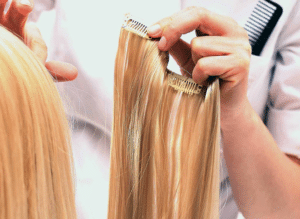
Clip-ins and halo hair are a special case. They are removable. Many clients cut them at home. That creates risk, because the set must still match across pieces. If one piece is cut too short, it stands out. A salon can offer a “set shaping service” where the whole set is cut together on the client. That produces better blending.
A simple table helps salons choose the right approach.
| Extension type | Cutting freedom | Main caution | Best cutting focus |
|---|---|---|---|
| tape-in | high | avoid cutting tape tab | blend + perimeter |
| weft sew-in | high | avoid cutting stitching | shape + ends |
| micro links | medium | avoid too many short layers | perimeter + light blend |
| keratin tips | medium | avoid cutting near bonds | ends + soft shaping |
| clip-ins | medium | keep set balanced | cut as a full set |

How should salons set expectations before cutting extensions?
Have U had a client ask for heavy layers, then feel unhappy because the set looks thinner? That is an expectation gap, not a cutting skill problem.
Before cutting, salons should confirm the target length, the shape, and the density outcome. The client should understand that more layers often means less weight at the ends.
Dive deeper
This is the business part of the topic. Cutting can change how the client perceives value. If the client pays for long thick hair, then requests a layered cut, the ends will look lighter. That is normal. Still, clients may interpret it as “the hair is thin.” This is why clear language matters.
A good consultation includes:
- The final length line.
- The amount of face framing.
- Whether the ends should look blunt or soft.
- How much volume should remain at the bottom.
Salons can also explain that shaping is done step by step. That reduces “too much too fast” mistakes. For wholesale buyers and brands, this is also a training advantage. If a brand provides simple consultation scripts, salons can reduce disputes and increase repeat orders.
My opinion
Cutting extensions is normal work, but the best results come from small changes, clean tools, and clear expectations. Hair quality still matters, because good hair stays smooth even after multiple trims.
FAQ
Can a client cut hair extensions at home?
A client can, but results are often uneven. A salon cut usually looks cleaner because the set is balanced on the head.
Should extensions be cut when wet or dry?
Many stylists prefer cutting dry for final shape, because it shows the real fall. Wet cutting can work for removing length, but the finish should be checked dry.
Can tape-in hair extensions be cut?
Yes, the hair can be cut. The tape tab area should not be cut, because it can weaken hold and create lifting.
Can clip-in extensions be trimmed?
Yes, but the set should be cut together to keep a consistent shape across pieces.
Will cutting cause shedding?
A good cut does not cause shedding. Cutting into weft stitching, tape tabs, or bond areas can create problems.
Conclusion
Yes, hair extensions can be cut. A safe cut protects the attachment, uses clean tools, and focuses on blending without over-thinning.