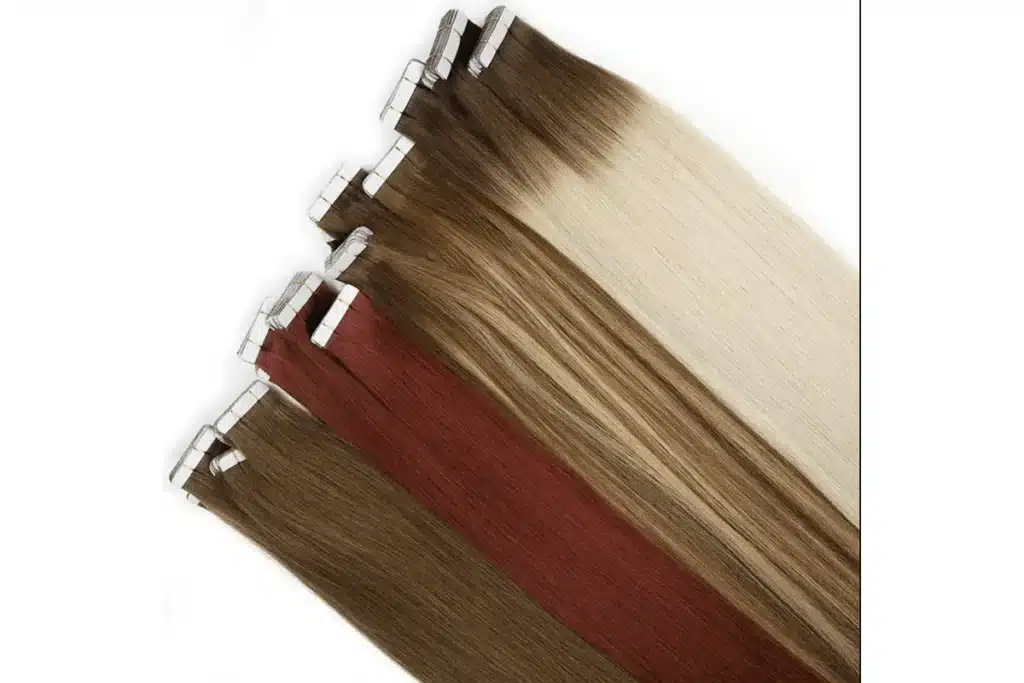
Bad hair extensions can look fine at first. Then the tangling starts, the ends turn dry, and clients begin to complain. That is why this question matters so much.
The best quality hair extensions are full cuticle human hair extensions. They last longer, feel softer, tangle less, and perform better in salon work than lower-grade hair. For professional buyers, that quality difference directly affects client satisfaction, repeat business, and brand reputation.
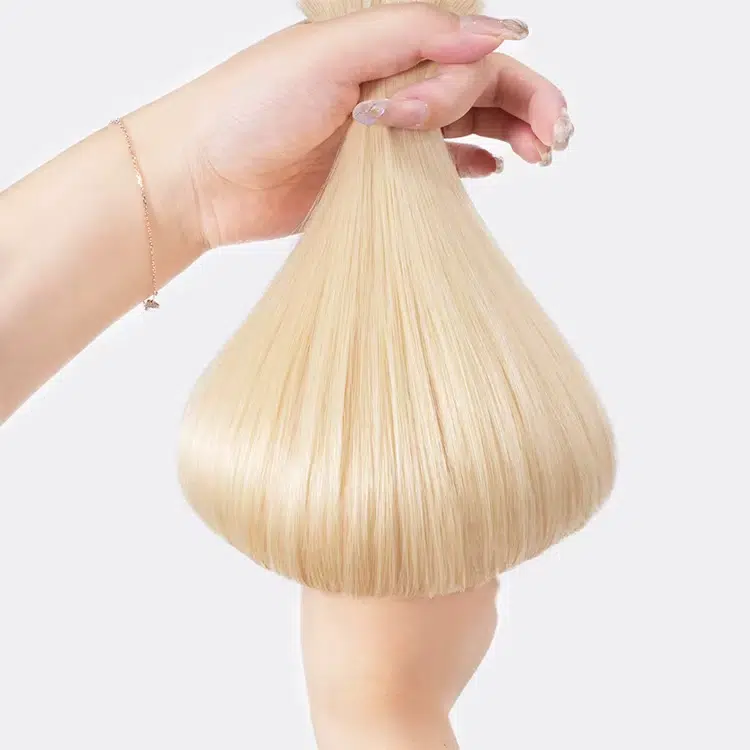
Many people ask this question as if there is one simple product name that solves everything. In reality, the answer starts with hair quality first, then moves to extension type, lifespan, and long-term value. That is where the real difference shows. If U run a salon, a wholesale business, or a hair brand, this topic is not only about beauty. It is also about service results, client trust, and long-term profit.
What Is the Best Quality Hair Extensions?
Many suppliers use words like premium, virgin, and Remy. But these words do not always tell the full story. The real answer is deeper than a label.
The best quality hair extensions are full cuticle hair extensions made from strong human hair, with the cuticles intact and aligned in one direction. This kind of hair keeps more of its natural strength, softness, and shine, so it performs much better over time.
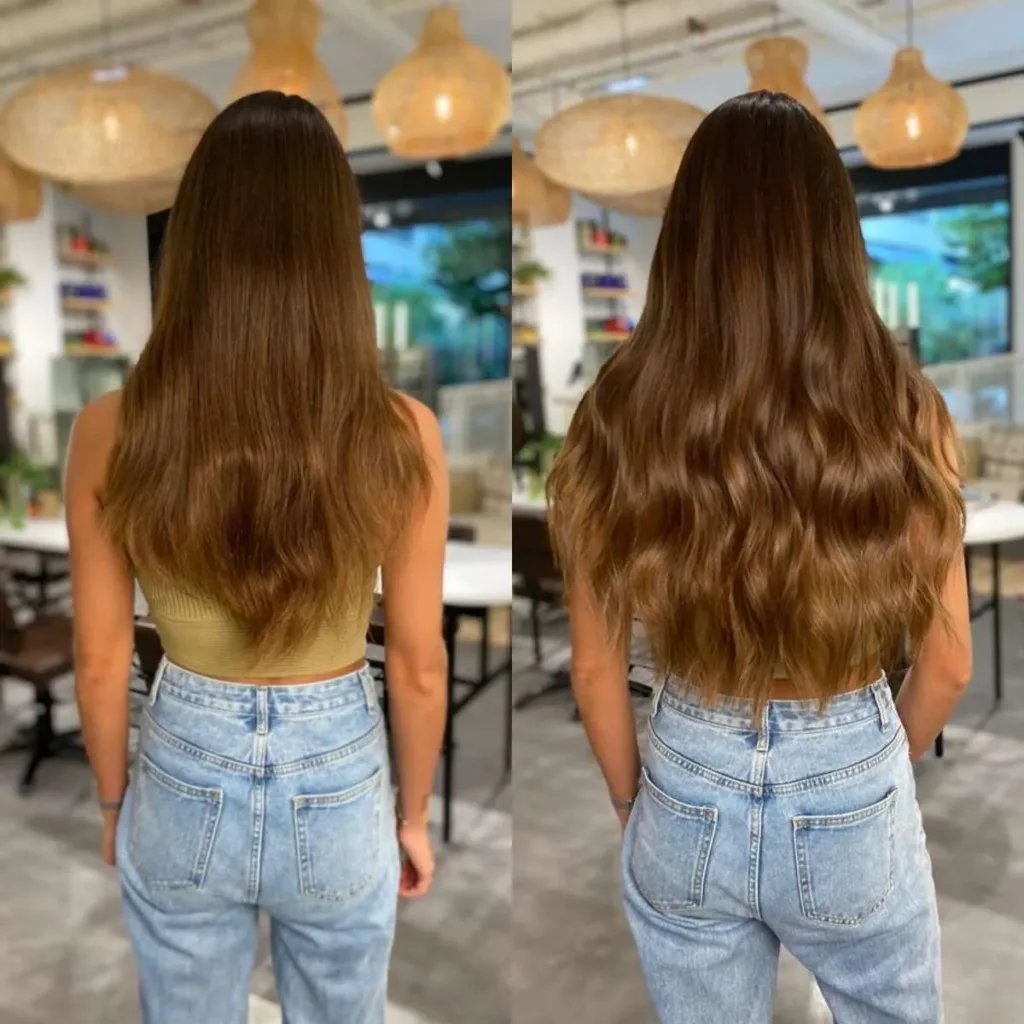
When I answer this question, I always start with full cuticle hair extensions. That is because the cuticle is one of the most important parts of hair quality. If the cuticle stays intact and aligned, the hair usually feels smoother, stays softer, and resists tangling much better.
A lot of buyers confuse full cuticle hair with regular Remy hair. I do not think they should be treated as the same thing. Remy hair usually means the cuticles are aligned. But it does not always mean the cuticles are still fully intact after processing. Full cuticle hair is a higher standard. It means the outer layer of the hair is preserved much better.
The next point is the raw material itself. High quality hair extensions usually come from better raw hair sources. The hair should be healthy, strong, and consistent before production even begins. If the raw hair is weak, dry, or mixed too much, the final extension product will not hold up well, even if it looks smooth at first.
Another key point is how the hair is processed. Lower-grade hair is often heavily treated with acid and then coated with silicone to create a fake soft feel. That soft look can disappear after a few washes. Better hair extensions are processed more carefully. They keep more of the hair’s natural feel and performance.
This is why I do not think “best quality” is just a marketing phrase. It has a real meaning. It starts with full cuticle hair, careful sorting, gentle processing, and stable production standards.
Full cuticle hair extensions
Full cuticle hair extensions are the top answer here because they offer the best balance of softness, durability, shine, and long lifespan.
Single donor hair
Single donor hair often gives a more uniform texture and cleaner result. It can be a strong sign of higher-end extension quality.
Low-chemical processing
The less harsh processing the hair goes through, the better it usually performs in real salon use.
Stable factory production
Even great raw hair can turn into average hair if the factory process is poor. Production consistency matters just as much as the raw material.
Hair level | Main feature | Common performance |
|---|---|---|
| Full cuticle hair | Intact and aligned cuticles | Soft, durable, low tangle, long life |
| Regular Remy hair | Aligned cuticles | Good, but less durable than full cuticle |
| Non-Remy hair | Mixed or removed cuticles | Easy to tangle, shorter lifespan |
| Silicone-coated low-grade hair | Artificial smooth finish | Looks nice at first, weak after washing |
What makes hair extensions high quality?
A lot of people judge hair by the first touch. That can be misleading. Real quality appears after washing, styling, moving up, and daily wear.
Hair extensions are high quality when they combine strong raw hair, intact cuticles, careful processing, stable thickness, consistent color, and reliable construction. If one of these parts fails, the product will not truly feel premium for long.
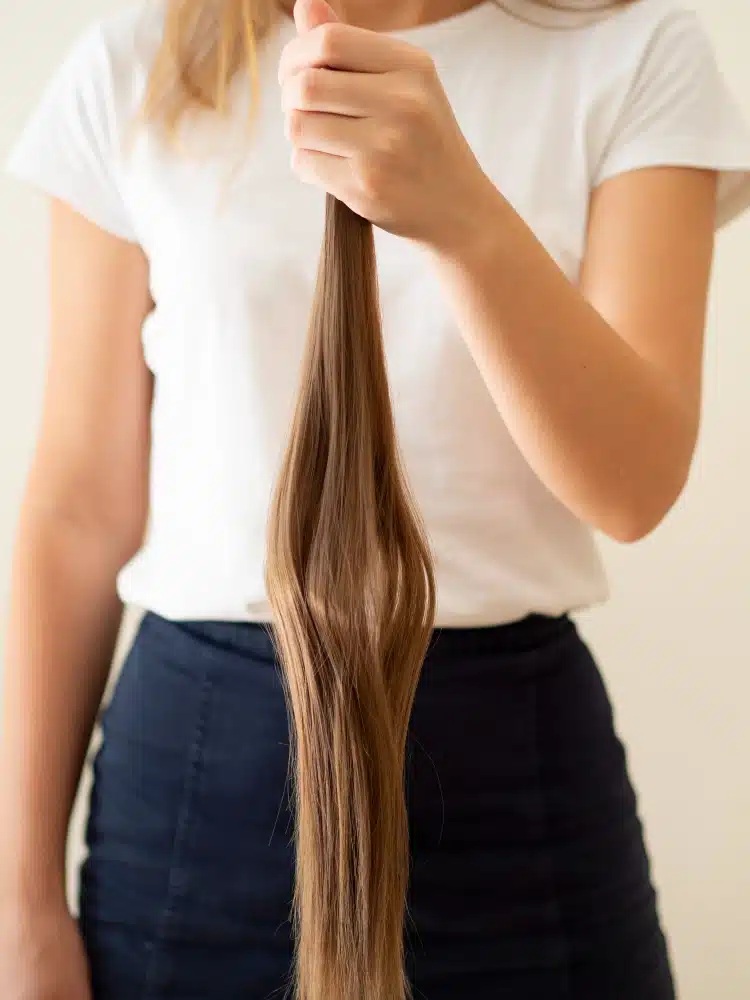
The first thing that makes hair extensions high quality is the raw hair material. Good hair starts before production. If the original hair is healthy and strong, the final extension has a much better base. If the original hair is weak or over-collected, the product can only go so far.
The second thing is cuticle condition. This part matters a lot. Hair with intact cuticles usually stays smoother and stronger over time. It also handles daily wear better. When the cuticle is damaged or removed, the hair becomes more likely to dry out, mat, and lose its natural movement.
The third point is processing. High quality hair should not rely on heavy chemical correction. Many low-end products use strong treatment to force the hair into a better look. That works only in the short term. Better products depend more on the quality of the raw hair and less on artificial coating.
Then there is consistency. This matters a lot for salon owners, wholesalers, and brands. One nice sample does not mean much if the next bulk order feels different. High quality extensions should have stable weight, stable color, even thickness, and predictable performance. This is important for repeat orders and long-term business trust.
The final point is product construction. This depends on the extension type. A tape-in should have a clean tab. A U tip should have a neat keratin bond. A weft should be secure and well made. Even if the hair itself is good, poor product construction can still create a poor user experience.
So when I look at high quality hair extensions, I do not focus on only one factor. I look at the whole chain, from raw material to final finished product.
Strong raw material
Good hair extensions start with healthy human hair. Weak raw hair cannot create top-level finished products.
Intact cuticle
The cuticle protects the hair. Better cuticle condition usually means better salon performance.
Gentle processing
Hair that goes through less harsh treatment tends to last longer and feel more natural.
Consistent specifications
Stable weight, color, texture, and thickness are part of real professional quality.
| Quality factor | Why it matters | What to check |
|---|---|---|
| Raw material | Decides the base performance | Healthy, strong, even human hair |
| Cuticle integrity | Supports smoothness and lifespan | Intact and aligned cuticles |
| Processing method | Protects natural quality | Low chemical treatment |
| Consistency | Helps repeat business | Stable color, weight, texture |
| Product construction | Affects installation result | Clean tabs, neat bonds, strong wefts |
What types are of the best quality hair extensions?
Many buyers ask this question in the wrong way. They ask which method is the best. But in real business, the method itself does not decide the quality.
The best quality hair extensions can be found in tape-ins, keratin hair, hair wefts, and temporary hair extensions. The method does not decide the quality by itself. Full cuticle human hair, good construction, and stable manufacturing are what make any extension type truly high quality.
The best way to answer this question is to look at the main categories first, then the sub-types under each category. This gives a much more complete view for salon owners, wholesalers, and professional stylists.
Tape in hair extensions
Tape in hair extensions are one of the most popular categories in the professional market. They are loved for their fast installation, flat result, and easy salon workflow. But again, the tape method alone does not make them high quality. The hair itself, the tape quality, and the production consistency are what matter most.
Common sub-types include:
- Classical tape in hair
- Invisible tape in hair
- Stitched tape in hair
- Micro tape in hair
- Mini tape in hair
- Slim tape in hair
- Invisible tape weft
- Long tape weft hair extensions
Tape-ins can absolutely be among the best quality hair extensions when they are made with full cuticle hair and clean, reliable tape tabs. For many salons, this category works very well because it supports both beauty and speed.
Keratin hair extensions
Keratin hair extensions are often chosen for clients who want long-term wear, flexible placement, and a more strand-by-strand result. This category includes both hot fusion and cold fusion related methods, depending on the specific product design. In this category, the bond quality matters a lot, but the hair quality still matters more.
Common sub-types include:
- U tip hair
- V tip hair
- Flat tip hair
- I tip hair
- Nano ring hair
- F tips hair extensions
- Micro ring hair
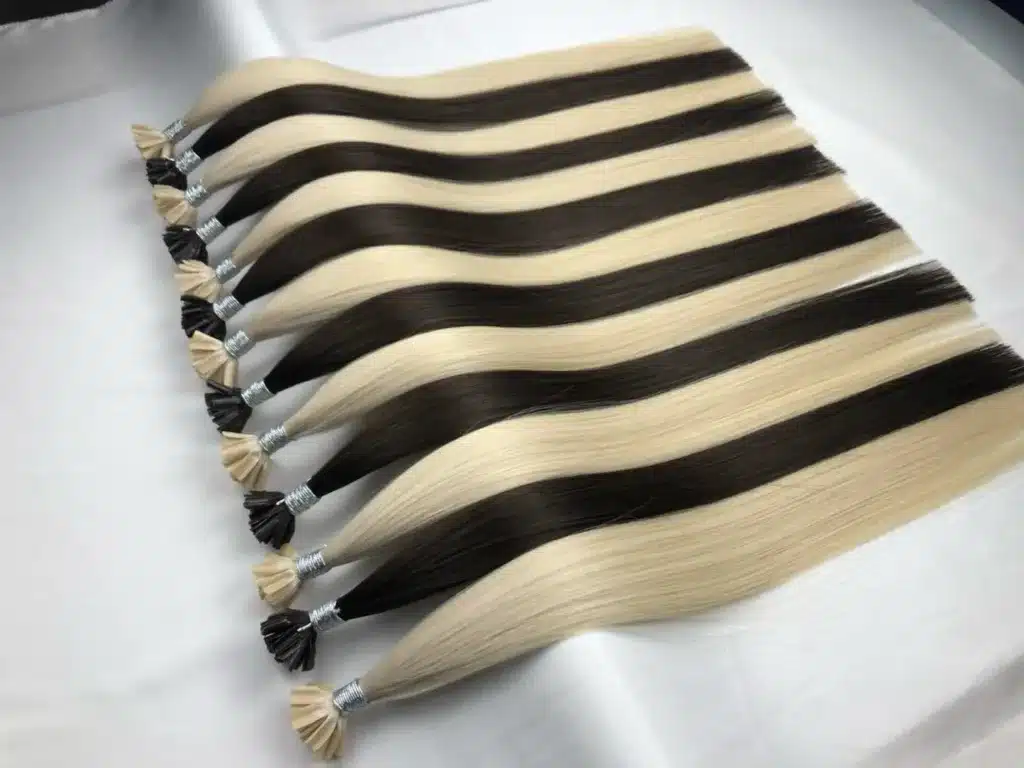
This category is very important for professional stylists because it gives more control over placement and movement. U tip, flat tip, I tip, nano ring hair, and F tip hair can all be premium choices when they are made from top-grade full cuticle hair. If the raw hair is poor, the bond method will not save the product.
Hair weft extensions
Hair weft extensions are one of the biggest and most important categories in the wholesale and salon market. This category includes traditional styles and many newer innovations. Wefts are widely used because they are efficient, versatile, and suitable for many installation methods. They can work for luxury salon services, education, private label brands, and large-volume wholesale business.
Common sub-types include:
- Regular machine wefts
- Volume wefts
- Hand tied wefts
- Genius wefts
- Flat wefts
- Volume genius wefts
- Butterfly wefts
- Invisible tape weft
- Long tape weft hair extensions
This category shows very clearly why method does not decide quality. Machine wefts can be premium. Hand tied wefts can be premium. Genius wefts can be premium. The real difference is the hair material, the top construction, shedding control, comfort, and consistency from order to order.
For example, hand tied wefts are often seen as luxury because they are thin and less visible. Genius wefts became very popular because they can be cut and still stay neat. Butterfly wefts are valued because they make sewing easier and save time. But none of these product ideas automatically create high quality. If the hair used is dry, mixed, or over-processed, the final result will still be average.
Temporary hair extensions
Temporary hair extensions are very important for online sellers, retail brands, salon clients who want flexible wear, and buyers who serve the fashion and event market. These products are designed for quick application and removal. They are not always lower quality just because they are temporary. In fact, some of the most comfortable and invisible products in the market are in this category.
Common sub-types include:
- Classical clip in hair
- Lace clip in hair
- Seamless clip in hair
- Invisible clip in hair
- Ponytail hair
- Halo hair
This category serves a different need from keratin or weft extensions. It focuses more on convenience, easy wear, and fast transformation. But just like the other categories, quality still depends on the hair itself. A seamless clip-in made with poor hair will still tangle and dry out. A halo made with full cuticle hair can feel soft, look natural, and give very strong customer satisfaction.
So which type is really the best?
There is no single method that owns the title of best quality. That is the wrong angle. The better answer is this: the best quality hair extensions can exist in many methods, including tape-ins, keratin hair, wefts, and temporary hair pieces.
What decides the quality is:
- whether the hair is full cuticle human hair
- whether the raw material is strong and consistent
- whether the processing is careful
- whether the top, bond, tape, or weft construction is clean and reliable
- whether the supplier can keep the same quality across repeat orders
So when buyers ask what types are of the best quality hair extensions, the most complete answer is not one product name. It is a full category view. Tape-ins have many strong sub-types. Keratin hair has several professional strand methods. Hair wefts have the widest range of salon and wholesale options. Temporary hair extensions also include several premium products for fast and comfortable wear.
| Main category | Common sub-types | Why buyers choose it |
|---|---|---|
| Tape in hair | Classical tape in, invisible tape in, stitched tape in, micro tape, mini tape, slim tape, invisible tape weft, long tape weft | Flat result, fast install, salon-friendly |
| Keratin hair | U tip, V tip, flat tip, I tip, nano ring hair, F tip, micro ring hair | Flexible placement, strand-by-strand result, long-term wear |
| Hair weft | Regular machine weft, volume weft, hand tied weft, genius weft, flat weft, volume genius weft, butterfly weft, invisible tape weft, long tape weft | Versatile, professional, suitable for many install methods |
| Temporary hair extensions | Classical clip in, lace clip in, seamless clip in, invisible clip in, ponytail hair, halo hair | Quick wear, easy removal, retail-friendly |
In short, method does not decide quality. Hair quality decides quality. The best extension types are the ones made with the best hair.
How long does the Best Quality Hair Extensions last?
A lot of buyers ask this first, and I understand why. Lifespan affects cost, service planning, and client expectations. But the answer depends on hair quality much more than many people think.
The best quality hair extensions can last 1 to 2 years with proper care when they are made from full cuticle human hair. Lower-grade options may last only a few months, even if they look similar when new.
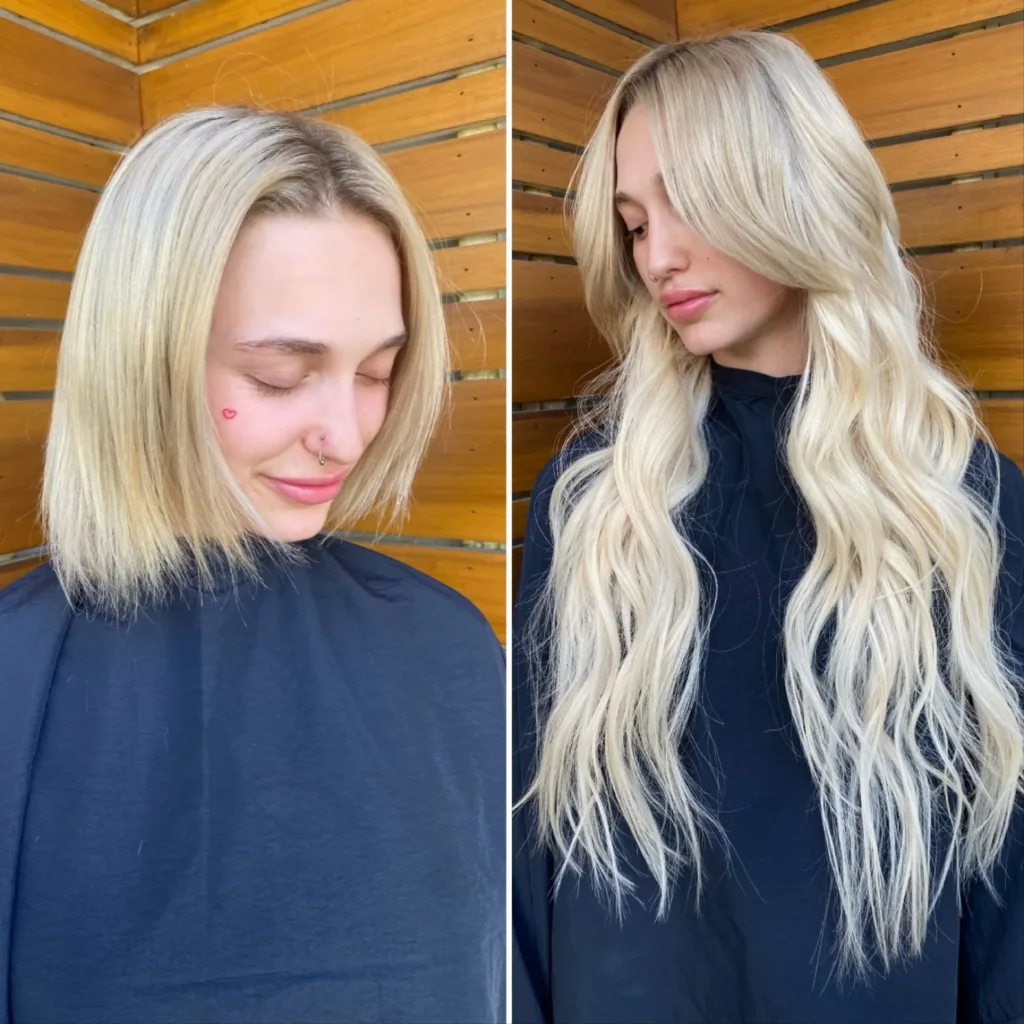
The biggest factor here is the quality of the hair fiber itself. Full cuticle hair usually lasts the longest because it keeps more of the natural protection layer. That helps the hair stay soft and strong through washing, brushing, styling, and repeated wear. In reusable extension methods, this can make a major difference.
Regular Remy hair usually performs in the middle range. It can still be a good option in some market levels. But it often does not hold the same softness and smoothness as full cuticle hair over a long period. The difference becomes clearer after multiple washes and salon appointments.
Non-Remy hair has the shortest lifespan in most cases. It often tangles faster, dries out sooner, and loses its visual quality much earlier. That can create more complaints and more replacement costs.
Care also matters a lot. Even the best quality hair extensions need proper maintenance. Clients should use suitable products, avoid sleeping with wet hair, brush carefully, and reduce unnecessary heat damage. Good quality hair gives a better starting point, but bad care can still reduce the lifespan.
The extension type also affects reuse. For example, hand tied wefts, genius wefts, and some keratin methods may be reused or reinstalled depending on condition. That makes better hair even more valuable. Low-grade hair often cannot handle repeated use well.
So when I think about lifespan, I do not just think in months. I also think in service cycles, reinstall value, and how the hair holds up in real salon life. That is where full cuticle hair stands far above lower-end options.
Full cuticle hair lifespan
This is usually the longest-lasting choice and can often perform well for 1 to 2 years with correct care.
Regular Remy hair lifespan
This often lasts around 4 to 6 months, depending on processing and maintenance.
Non-Remy hair lifespan
This is usually much shorter and may last only 1 to 3 months in many cases.
Aftercare matters
The better the care routine, the more value the client gets from high quality hair.
| Hair quality | Typical lifespan | Business meaning |
|---|---|---|
| Full cuticle hair | 1–2 years | Best value for premium clients |
| Regular Remy hair | 4–6 months | Mid-level performance |
| Non-Remy hair | 1–3 months | Lower upfront cost, higher replacement risk |
Are expensive hair extensions worth it?
A cheap product can look attractive at the start. But the real cost often appears later in client complaints, replacements, and lost trust.
Yes, expensive hair extensions are worth it when the higher price comes from real quality. Better hair lasts longer, performs better, reduces after-sales problems, and protects both salon profit and brand image.
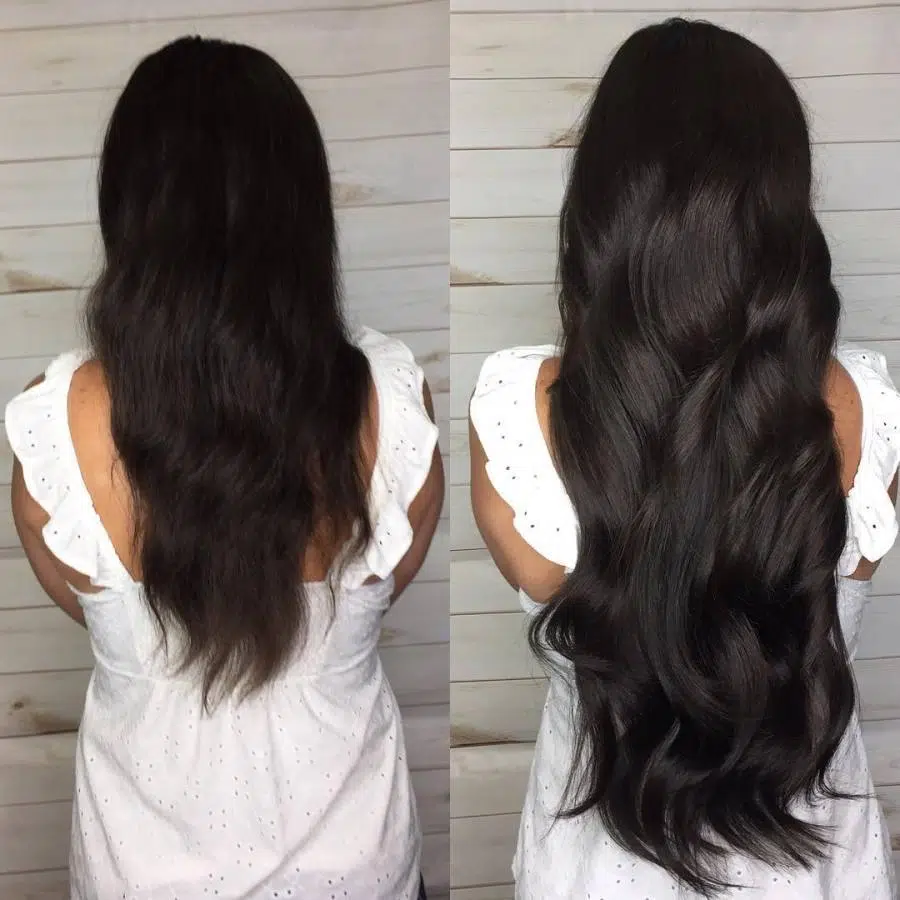
The first reason expensive hair extensions can be worth it is lifespan. If the hair lasts much longer, the cost per use becomes lower. A cheap extension that fails fast is not really cheap. It just shifts the cost into replacement, labor, and client dissatisfaction.
The second reason is service quality. When hair performs well, the stylist has a smoother installation process and the client gets a better wearing experience. Softness, low tangling, and clean movement matter a lot in the salon chair.
The third reason is business reputation. If a salon or hair brand wants to position itself at the higher end of the market, the product quality must support that image. Clients may not know every technical term, but they can still feel the difference between average hair and premium hair.
The fourth reason is reduced after-sales trouble. Poor hair takes time away from more valuable work. Handling complaints, answering problems, and replacing failed products can cost more than the original savings from buying cheap hair.
Of course, not every expensive product is worth the price. High price alone does not prove high quality. The value only makes sense when the raw material, processing, and product performance are truly better. That is why testing, supplier selection, and quality understanding all matter.
So my answer is simple. Expensive hair extensions are worth it when they are actually premium, not when they are just priced like premium hair.
Lower replacement costs
Longer-lasting hair often lowers the real cost over time.
Better client satisfaction
Premium hair gives a smoother look and feel, which helps client retention.
Stronger brand position
High-end brands need product quality that supports their market promise.
Less after-sales pressure
Better hair usually means fewer problems after the sale.
| Lower-priced hair | Higher-quality hair |
|---|---|
| Lower upfront cost | Higher upfront cost |
| Shorter life | Longer life |
| More risk of complaints | Better user experience |
| More replacements | Better long-term value |
| Can hurt reputation | Supports premium positioning |
How should a salon owner, stylist, or wholesaler choose the best quality hair extensions?
The market has too many claims and too many labels. If the buying process is not clear, it is easy to choose based on words instead of facts.
The best way to choose high quality hair extensions is to check the raw hair, understand the cuticle condition, test samples properly, compare consistency, and work with a supplier that can support repeat quality.
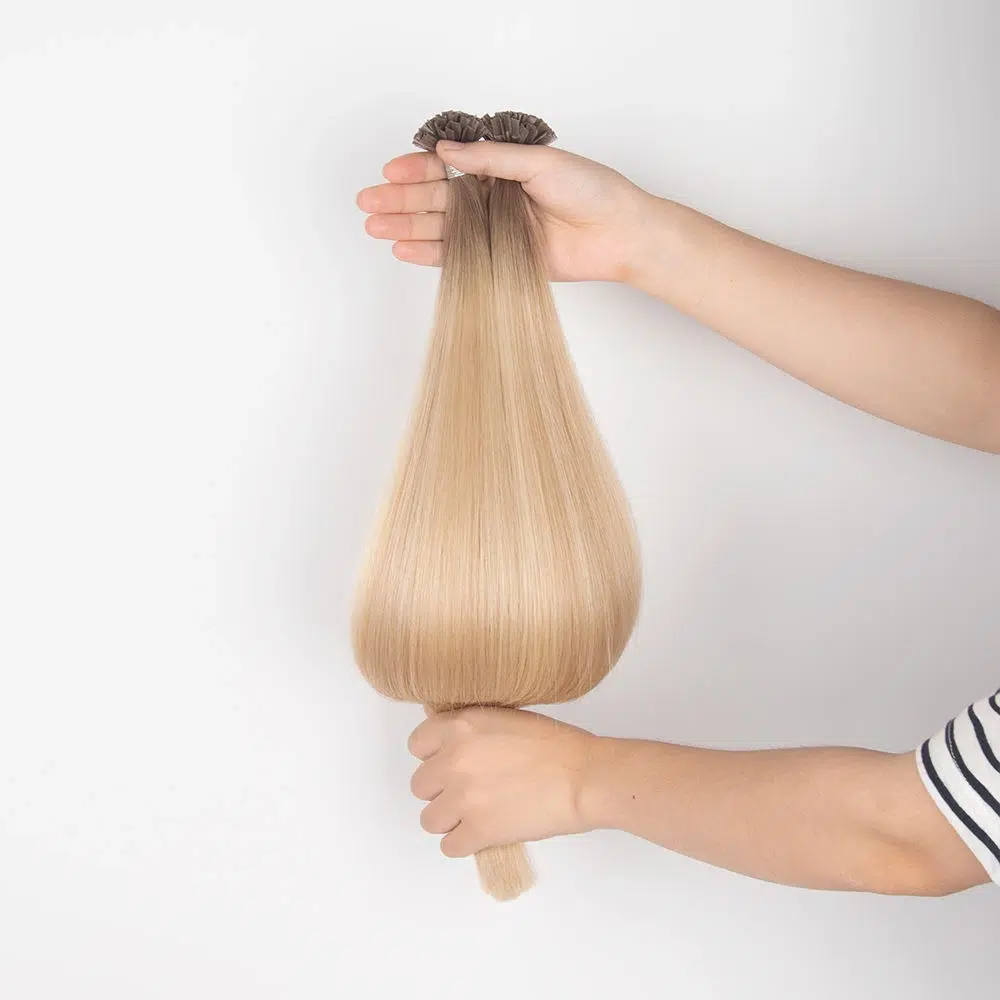
The first step is to ask direct questions. Is the hair full cuticle? Is the hair heavily coated with silicone? Is the texture stable across orders? Can the supplier explain the raw hair source clearly? Honest suppliers should be able to answer these questions in a direct way.
The second step is sample testing. One soft sample is not enough. The hair should be washed, brushed, checked at the ends, and tested after repeated use. This helps reveal whether the softness is natural or only surface deep.
The third step is to compare consistency. This is very important for professional buyers. The same product should feel similar from batch to batch. Color, weight, thickness, and softness should not change too much between orders.
The fourth step is to match the product type to the business model. A salon may focus on hand tied wefts, genius wefts, tape-ins, and keratin hair. A retail seller may need more clip-ins and halo hair. The best quality choice is also the one that fits the real client demand.
The fifth step is supplier stability. A good factory or manufacturing partner usually provides better control over repeat orders, customization, and long-term support. That matters a lot for salon owners, brands, and wholesalers who need reliable supply, not just a one-time purchase.
So the smart choice is not only about finding the best hair. It is about finding the best combination of hair quality, product type, and supplier reliability.
Ask direct quality questions
Clear questions often reveal whether the supplier truly understands premium hair.
Test beyond first touch
Washing and brushing the sample tells much more than a quick first impression.
Compare repeat consistency
Stable orders are a key part of professional-level quality.
Match product to market
The best product is the one that fits the customer and service model.
My opinion
In my view, the market often makes this topic sound more confusing than it really is. The best quality hair extensions are not defined by the loudest marketing words. They are defined by how the hair performs over time.
If the hair has full cuticle integrity, strong raw material, careful processing, and stable production, it usually stands far above average products. That is what gives softness, durability, low tangling, and a better wearing experience.
I also think this topic matters more for professional buyers than for casual buyers. A salon owner is not only buying hair. A salon owner is buying service results. A wholesaler is not only buying bundles. A wholesaler is buying repeat order potential. A hair brand is not only buying stock. A hair brand is buying reputation.
That is why I do not see quality as a small detail. I see it as the center of the business. Better hair supports better installs. Better installs support happier clients. Happier clients support repeat business.
So if the goal is to serve a luxury market, reduce after-sales problems, and build stronger trust, then the answer is very clear to me. Full cuticle hair extensions are the standard that makes the most sense.
FAQ
What is the best quality hair extensions?
The best quality hair extensions are full cuticle human hair extensions because they are softer, more durable, and less likely to tangle.
Is full cuticle hair better than Remy hair?
Yes. Full cuticle hair is usually better because it keeps more of the natural cuticle layer intact.
Which extension type is the highest quality?
Hand tied wefts, genius wefts, tape-ins, keratin hair, and even premium temporary hair extensions can all be high quality if they are made from full cuticle human hair.
How long do the best quality hair extensions last?
They can last 1 to 2 years with proper care if the hair is full cuticle and processed carefully.
Are expensive hair extensions worth it for salons?
Yes, when the higher price reflects real quality. Better hair usually gives fewer complaints and better long-term value.
Conclusion
The best quality hair extensions are full cuticle human hair extensions. They give better softness, longer wear, and stronger business value across many methods, from tape-ins and keratin hair to wefts and temporary pieces.
where to buy Best Quality Hair Extensions
Hibiscus Hair Manufacturer has been dedicated to producing high-quality full cuticle hair extensions for 25 years and is a recognized leader in the industry. If you are interested in finding a reliable hair extensions supplier and wholesale for your brand, please visit our website for more information: