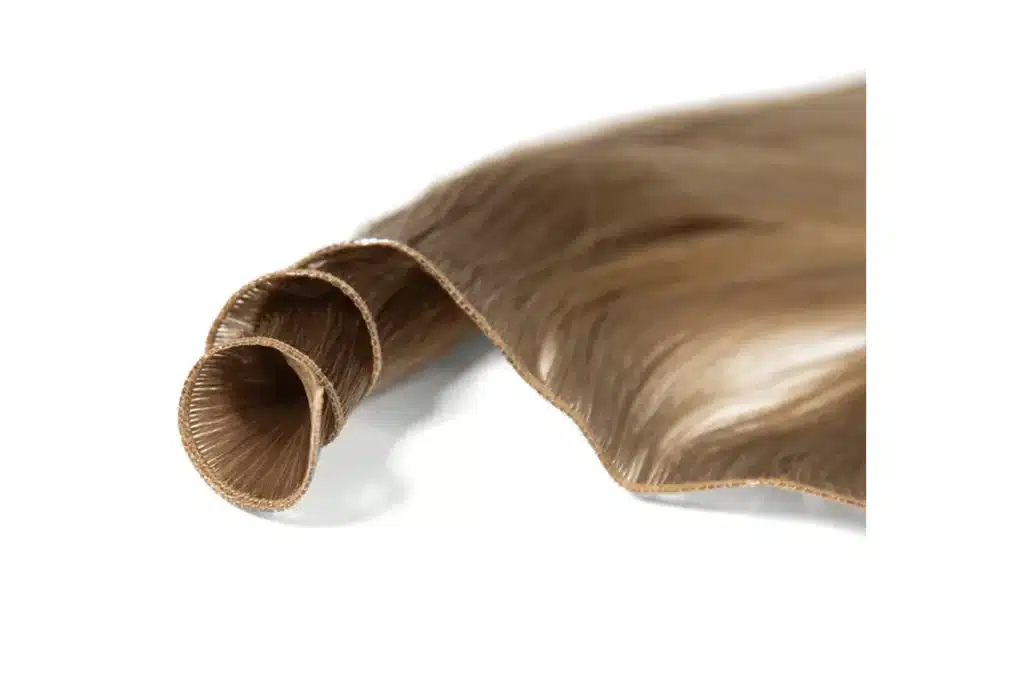
You come home after a long day and you feel exhausted. You just want to close your eyes and sleep immediately. The thought of unclipping your hair extensions feels like a huge task, so you consider leaving them in.
You should not sleep with clip-in extensions because it causes severe damage to your hair and the extensions. The clips are hard and bulky, and they pull on your natural roots while you move in your sleep. This leads to hair loss, bald spots, and tangled knots. It reduces the lifespan of the hair product significantly.
I know how tired you feel after a busy day. I run a large factory and travel often, so I understand the desire to skip a step in your routine. However, as a hair expert with 15 years of experience, I see the bad results of this habit every week. Clients ask me why their extensions are shedding or why their scalp hurts. The answer is often how they treat their hair at night. Let me explain the real risks so you can make the right choice.
Is it bad to sleep in clip-in extensions?
You might think that doing it just one time will not hurt anything. You assume that because the hair is soft, the clips will be fine against your head for a few hours.
Yes, it is very bad to sleep in clip-in extensions. Unlike other methods like tape-ins or hand-tied wefts, clip-ins are designed for temporary wear only. The clips put uneven pressure on your scalp. Sleeping in them creates tension that cuts off blood flow and pulls out your natural hair by the root.
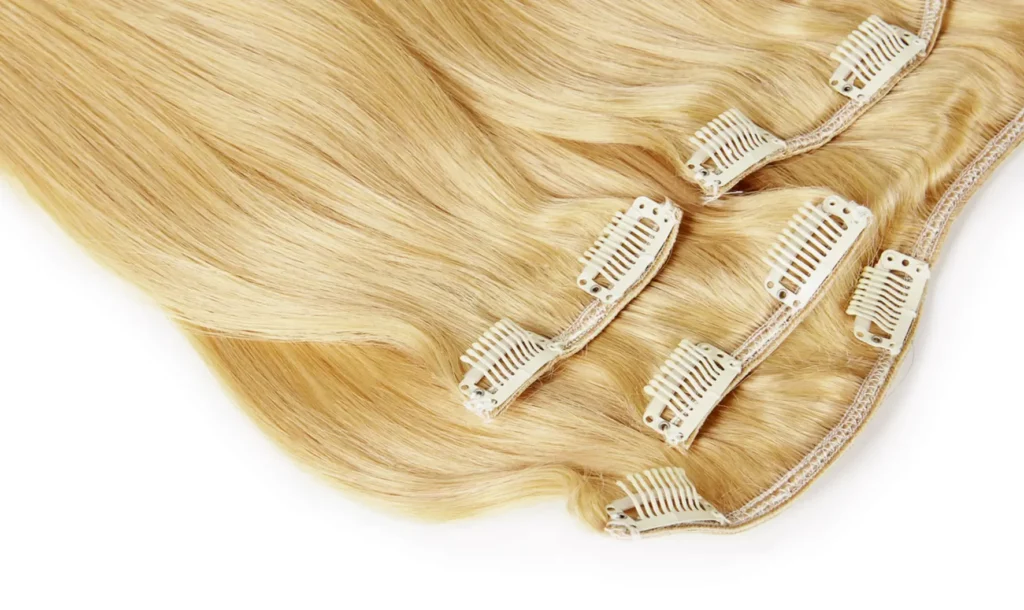
We need to look at the mechanics of why this is dangerous. In my factory, we design clip-in extensions to be sturdy. We sew the clips firmly onto the lace or silicone base. The clips are usually made of metal. They are not flexible like a fabric weft.
When you are awake, your head is upright. Gravity pulls the hair down, and the weight is distributed. But when you lie down, the situation changes completely. Your heavy head presses against the pillow. The clips are trapped between your skull and the pillow.
Here is what happens to your scalp structure:
- Pressure Points: The metal clips dig into your skin. This cuts off circulation to the hair follicles in that specific spot.
- Friction: An average person moves 40 to 50 times a night while sleeping. Every time you turn your head, the clip drags your natural hair with it.
- Traction: The clip is anchored to a small section of your natural hair. When the clip moves, it yanks that small section. This is like someone pulling your hair all night long.
I often compare this to wearing high heels. You wear heels for a party or work, but you take them off when you get home. You would never sleep in your high heels. Clip-ins are the same. They are accessories, not permanent fixtures.
We can compare clip-ins to other types of extensions I manufacture to see the difference in sleep safety:
| Extension Type | Attachment Method | Sleep Safety | Why? |
|---|---|---|---|
| Clip-ins | Metal snaps | Unsafe | Bulky, high tension, causes bald spots. |
| Tape-ins | Medical adhesive | Safe | Flat, flexible, moves with the hair. |
| Hand-tied Weft | Sewn with thread | Safe | Distributes weight evenly across a row. |
| Keratin (U-Tip) | Bonded with heat | Safe | Small bonds, 360-degree movement. |
If you want hair you can sleep in, you should ask your stylist for semi-permanent options. Do not force clip-ins to do a job they were not built for.
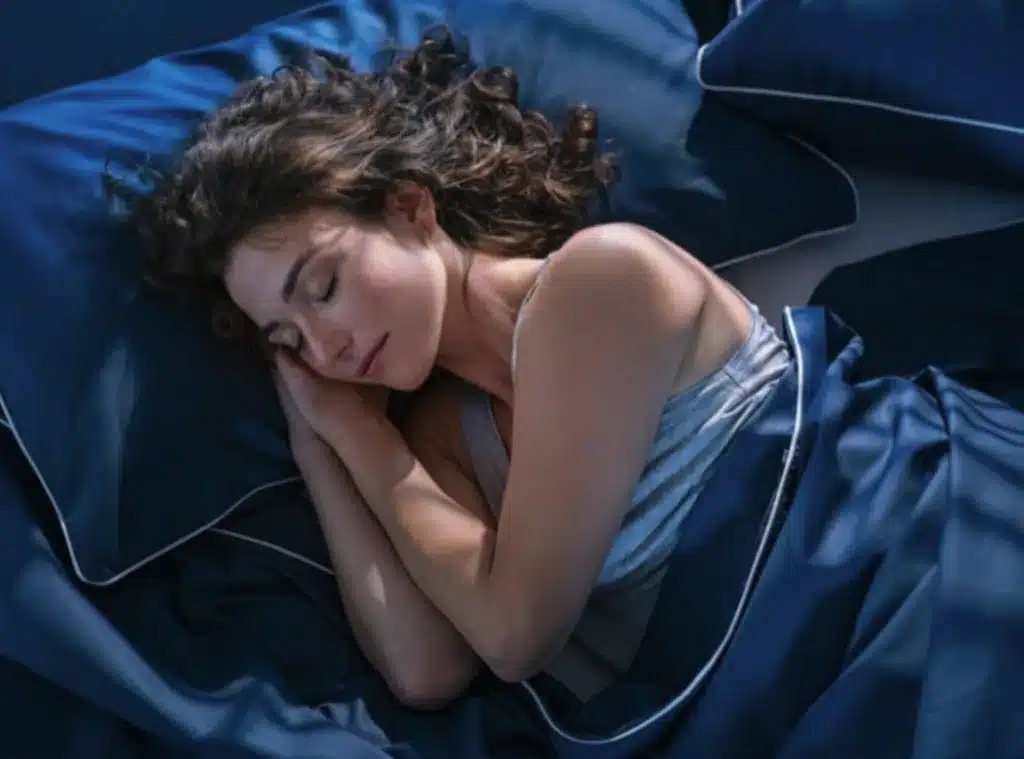
What happens if you sleep with clip in extensions?
You wake up with a headache and your hair looks like a bird’s nest. You might notice some loose strands on your pillow and wonder if that is normal shedding or breakage.
If you sleep with clip-in extensions, you will likely suffer from traction alopecia, matting, and broken clips. The friction rubs the hair cuticles against each other, causing the extensions to lock into your natural hair. You will also experience scalp tenderness and potential bald patches where the clips attach.
Let us dive deeper into the specific damages. I categorize the damage into three areas: your scalp, your natural hair, and the extension itself.
1. Scalp Trauma and Traction Alopecia
This is the most serious issue. Traction alopecia is hair loss caused by pulling. When you sleep in clips, the constant pulling on the root weakens the follicle. At first, you might just feel sore in the morning. If you do this often, the hair will stop growing in those spots. I have seen customers with permanent bald spots in the shape of the clip placement. It is heartbreaking because it is preventable.
2. The Matting Nightmare
Human hair has cuticles. In my factory, we ensure our Hibiscus Hair has cuticles that face the same direction. This keeps it smooth. However, when you toss and turn, you rub the hair vigorously. This creates “back-combing” friction. The extensions wrap around your natural hair near the root. You will wake up with a tight ball of hair that is very hard to untangle. Sometimes, you have to cut the knot out, which means cutting your own hair.
3. Damage to the Product
You pay good money for high-quality extensions. Sleeping in them ruins your investment.
- Bent Clips: The weight of your head can bend the metal snaps. Once they are bent, they will not close tightly anymore.
- Shedding: The friction weakens the thread that holds the hair to the weft. You will notice the extensions start to shed more hair.
- Dryness: Cotton pillowcases absorb moisture from the hair. Since extensions do not get oils from your scalp, sleeping on cotton dries them out faster. They become brittle and straw-like.
Here is a breakdown of the damage timeline:
| Frequency | Likely Consequence |
|---|---|
| 1 Night | Tangled hair, slight headache, bent styling. |
| 1 Week | Scalp tenderness, minor breakage, dry ends. |
| 1 Month | Visible thinning patches, broken clips, matted roots. |
| Long Term | Permanent hair loss (Alopecia), ruined extensions. |
It is not worth the risk. The time it takes to unclasp the hair is much less than the time it takes to fix the damage.
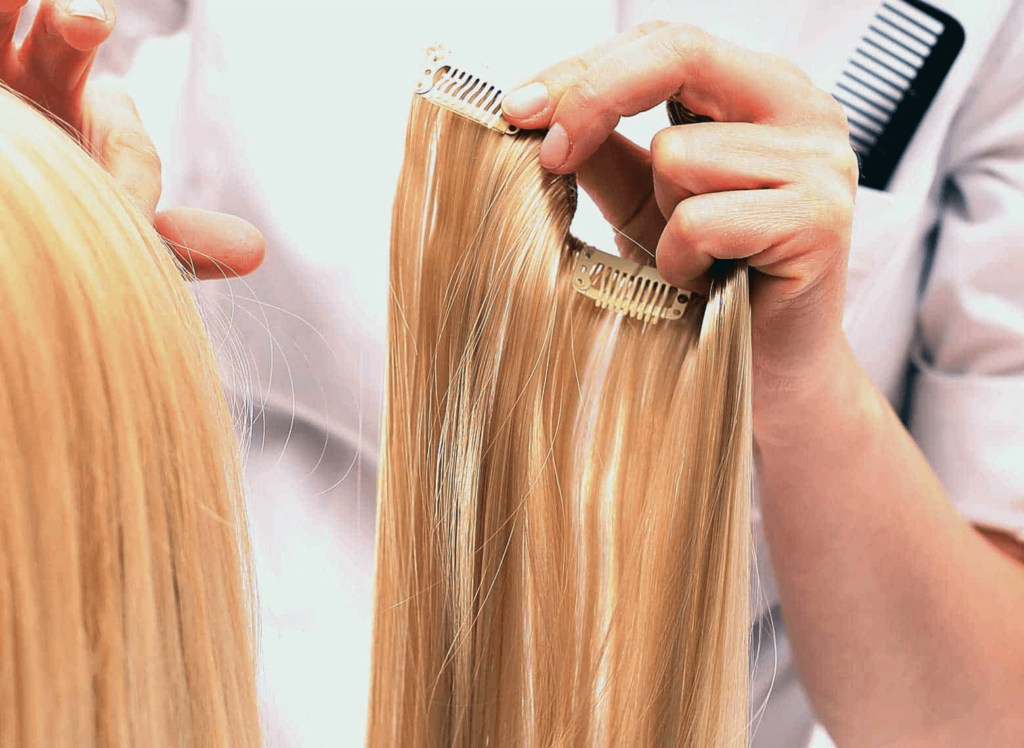
How to sleep with clip in hair extensions?
You are at a sleepover or on a long flight and you simply cannot remove your hair. You need a survival method to minimize the damage for this one special occasion.
If you must sleep with clip-ins, you should braid your hair into a low, loose plait. Use a silk or satin pillowcase to reduce friction against the hair. Check that no clip is pulling tight against your scalp before you lay down. This should only be an emergency solution.
I want to be very clear: I do not recommend this. But I know life happens. Maybe you are on a plane. Maybe you are staying with a new boyfriend for the first time. If you cannot take them out, follow these strict rules to protect your hair.
Step 1: The Pre-Sleep Brush
Before you get into bed, go to the bathroom and brush your hair. Hold the roots with one hand and brush the ends with the other. You must remove all tangles before you lay down. If you sleep on tangled hair, it will mat severely by morning.
Step 2: Secure the Hair
Do not sleep with loose hair. It will wrap around your neck and shoulders.
- The Low Braid: This is the best method. Gather all hair to the side and braid it loosely. A braid keeps all the strands running in the same direction.
- The Low Ponytail: If you cannot braid, use a soft scrunchie (fabric tie) to make a low ponytail. Do not use a tight elastic band.
Step 3: Change Your Surface
Cotton is rough. It grabs the hair. Silk or satin is smooth. The hair slides over it.
- Use a silk pillowcase.
- If you do not have a silk pillowcase, wear a silk bonnet or wrap a silk scarf around your head. This barrier saves the hair cuticles.
Step 4: The Clip Check
Run your fingers along your scalp. Feel where the clips are. If a clip feels tight or is digging into your skin, open it and move it slightly. It is better to have a loose clip than a painful one.
Step 5: Morning Rescue
When you wake up, take the hair out immediately. Do not brush it while the clips are still in, as it might be tangled near the root. Unclip them first, remove the wefts, and then brush your natural hair and the extensions separately. Give your scalp a massage to stimulate blood flow.
Emergency Sleep Checklist:
| Action | Why it helps |
|---|---|
| Loose Braid | Prevents tangling and matting. |
| Silk Pillowcase | Reduces friction and static. |
| Check Tension | Prevents headaches and root pulling. |
| Morning Removal | Stops the damage immediately upon waking. |
Remember, this is for emergencies only. Do not make this a habit.

Can you wear clip in hair extensions everyday?
You love the long, thick look and you want to maintain it for work and social events. You worry that wearing them daily might be too much stress for your hair, even if you take them out at night.
You can wear clip-in hair extensions every day as long as you remove them before bed. You must also maintain a healthy routine by rotating the position of the clips slightly. This prevents repeated stress on the exact same group of hair strands. Daily wear is safe if you are gentle.
Many of my clients wear clip-ins daily. It is a great way to boost confidence. However, “daily wear” requires a different maintenance strategy than “occasional wear.” Since you are my customer, I want to help you keep your hair healthy while looking great every day.
The Rule of Rotation
This is a technique I teach professional stylists. If you place the clip on the exact same spot on your head every single morning, that spot will get weak.
- Monday: Place the clips in your usual spot.
- Tuesday: Move the part line up by half a centimeter.
- Wednesday: Move the part line down by half a centimeter.
Small adjustments make a big difference. It gives the roots a rest.
Support Your Roots
If you have fine or slippery hair, the clip might slide. This causes more damage because it pulls the hair as it slides down. To fix this, you can gently tease (backcomb) the root area before you clip it. You can also use a little texture spray. This creates a cushion for the clip to grip onto. It stops the sliding and reduces the tension on the follicle.
Wash Cycle for Daily Wearers
Even if you wear them every day, you should not wash the extensions every day. Your natural hair gets oily, but the extensions do not. Washing them too often will dry them out.
- Wash your extensions every 15 to 20 wears.
- Brush them gently before and after every use.
- Use a leave-in conditioner to keep the ends soft.
Listen to Your Head
If you feel pain, you must take a break. Pain is your body telling you something is wrong. Maybe you put too many wefts on. Maybe the clips are too tight. If your scalp feels heavy or sensitive, take a day off. Wear your natural hair for a day to let your circulation recover.
My opinion
In my opinion, if you feel you need to sleep in your hair, clip-ins are the wrong product for you.
You should switch to tape-in extensions or genius wefts. My factory produces these specifically for women who want 24/7 volume. They lay flat against the head and are comfortable to sleep on. Clip-ins are wonderful for flexibility—you can change your look in minutes. But they are tools for the daytime. Respect the product and respect your own biology. Take them out, sleep well, and put them back in fresh the next morning.
FAQ
Does sleeping in clip-ins cause headaches?
Yes, it often causes tension headaches. The pressure of the clips against your skull and the pulling of the hair creates constant strain, which leads to pain.
Can I shower with clip-in extensions?
No, you should never shower with them in. The weight of the water makes the hair very heavy. This extra weight will pull out your natural hair roots.
Will the damage from sleeping in extensions go away?
If you stop early, the hair can grow back. However, if you have scarring from long-term traction alopecia, the hair loss might be permanent.
How long do clip-ins last if I take care of them?
If you remove them every night and care for them well, high-quality full cuticle extensions like ours can last 1 to 2 years. If you sleep in them, they might only last 3 months.
Conclusion
You must take out your clip-in extensions before you sleep to avoid pain, hair loss, and damage. It only takes two minutes to remove them, and this simple act saves your hair and your money.