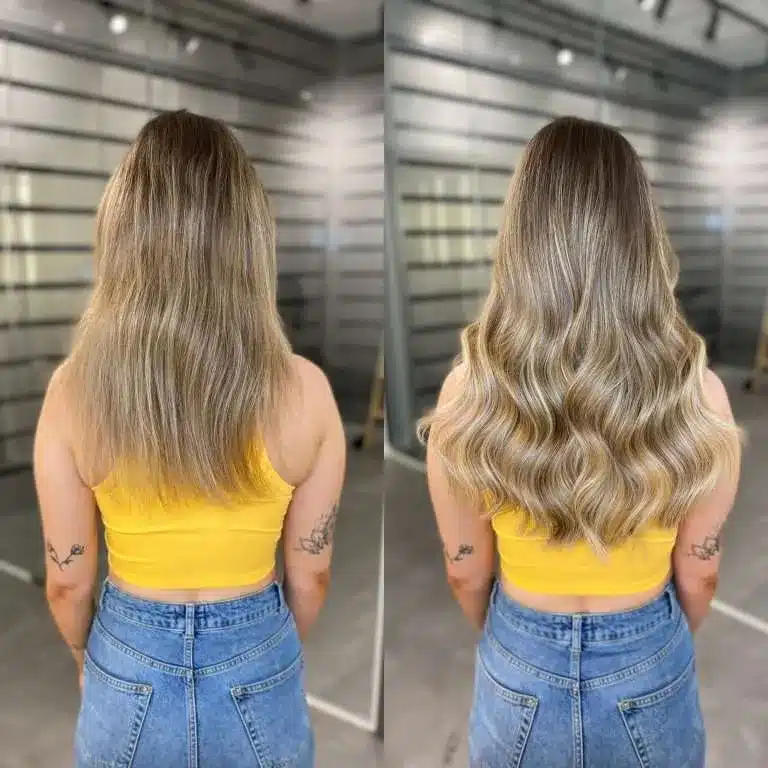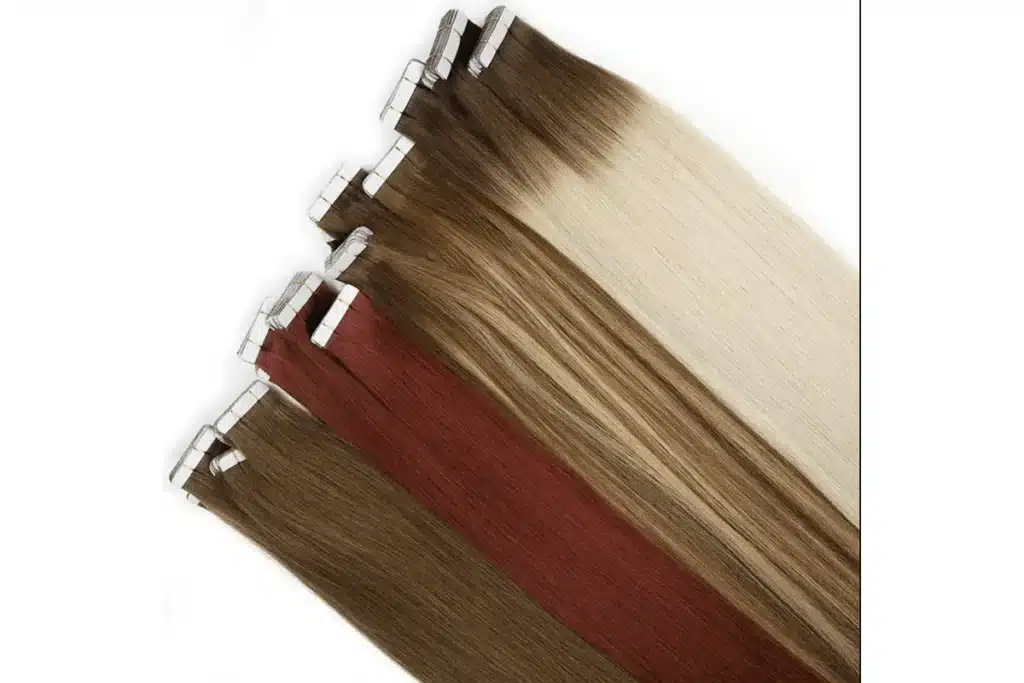
Do your tape ins still look “fine,” but you feel more tangles, more slip, or more itching at the root? Most tape problems start when you leave them in past the safe window, even if the hair still looks good in photos.
Most people should not leave tape in hair extensions beyond one wear cycle. A common safe range is about 6–8 weeks, then you refit. If you push longer, tabs can slip, flip, collect shed hair, and create matting and breakage risk.

If you want a clean look and a healthy scalp, timing matters as much as hair quality. The sections below explain what happens when you wait too long, how long you can realistically wear them, how hair growth works, and the do and don’ts that keep tape stable.
What Happens If You Leave Tape In Extensions In Too Long?
You might think “one more week is fine.” Then you suddenly see tabs, feel sticky roots, or get knots that do not brush out. That shift is not random. It is the effect of overgrowth and friction.
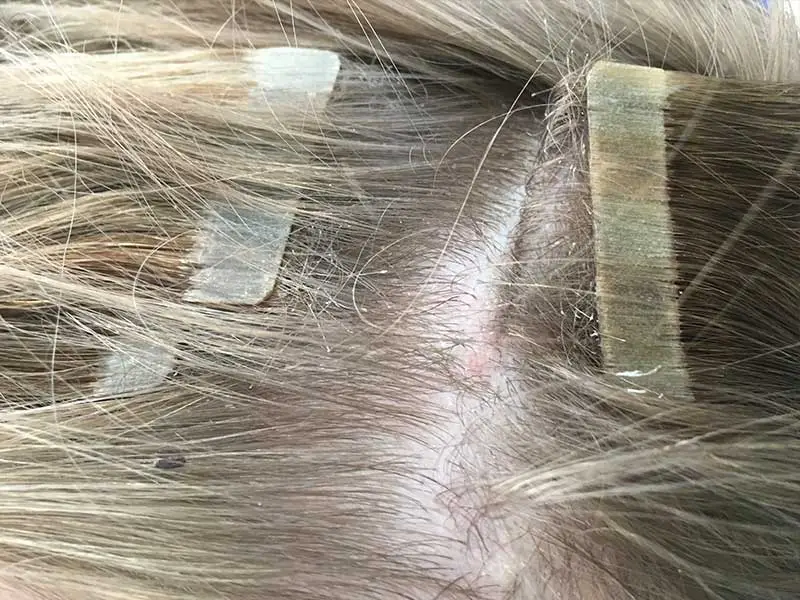
If you leave tape in extensions in too long, the tabs drop lower, they flip more, they trap shed hair, and they start to pull unevenly on your natural hair. You often get more tangling at the tab line, more slipping, and higher risk of breakage during removal.
Dive deeper
When tape ins are fresh, the bond sits close to the scalp but not tight. The hair can move. The tabs stay hidden under your cover hair. Over time, your natural hair grows. The tape does not move with it. That creates a changing angle.
1) Overgrowth changes how the tab behaves
After several weeks, the tab sits farther from the scalp. That creates leverage. Leverage makes the tab flip outward more easily. When a tab flips, you can see it when you part your hair or when wind lifts your top layer. You may also feel it more when you sleep.
2) Shed hair gets trapped at the bond line
Your natural hair sheds daily. Tape installs can trap shed hair near the tab line. When you delay refit, more shed hair stays trapped. Then the trapped hair wraps and tightens. This is how matting starts. Many clients notice it first at the nape and behind the ears.
3) Friction builds faster with grown-out tabs
Longer wear means more friction from collars, hoodies, and daily movement. The tab area becomes a friction zone. Friction turns into tangles. Tangles turn into knots. Knots pull on your natural hair.
4) Removal becomes harder and riskier
When you wait too long, you do not only add tangles. You also increase the chance that hair is wrapped around tabs. That makes removal harder. If removal is rushed, breakage risk goes up. A clean refit is easier than a “late rescue.”
Here is a clear symptom-to-cause map:
| What you notice | What is usually happening | Why it matters |
|---|---|---|
| Tabs feel lower | overgrowth | more leverage and flipping |
| More tangles near roots | trapped shed hair | matting risk increases |
| Sticky feel near tabs | product + residue buildup | slipping risk increases |
| Hair feels pulled | uneven tension | soreness and breakage risk |
| Tabs show when you part hair | flipped tabs | invisibility drops fast |
If you see two or more of these signs, you are not “just being picky.” You are likely past the ideal timing for a refit.
How Long Can You Leave Tape Hair Extensions In?
You want a simple answer because you want to plan your schedule. The realistic answer is a range, not one number. Your hair growth, scalp oil, and lifestyle decide where you land.
Many people can leave tape hair extensions in for about 6–8 weeks before a refit. Some clients need 5–6 weeks. Some can reach 8–10 weeks. If you have fine hair, oily roots, heavy workouts, or fast growth, you usually need earlier maintenance.
Dive deeper
A wear cycle should protect three things:
- your natural hair health
- your comfort
- the look of the install
If you hold tape ins past the safe window, you might save one appointment now, but you often pay later with tangles, slip, and more time in the chair.
1) Why timing differs from person to person
Two clients can wear the same tape hair and get different timing. These factors change timing:
- scalp oil level (oil weakens adhesive grip and attracts buildup)
- sweat and washing frequency (more washing means more movement and product exposure)
- hair density (thin cover hair shows tabs earlier)
- hair growth speed (fast growth creates leverage earlier)
- styling habits (high ponytails can pull cover hair away from tabs)
2) A practical wear-time guide you can follow
This guide is not a promise. It is a planning tool.
| Your situation | More common refit timing | Why timing shifts |
|---|---|---|
| Fine hair, light cover | 5–7 weeks | tabs show earlier |
| Oily scalp | 5–7 weeks | grip and cleanliness drop faster |
| Gym 4–6 days/week | 5–7 weeks | sweat and friction increase |
| Medium density, normal routine | 6–8 weeks | stable balance |
| Dense hair, careful routine | 7–10 weeks | better cover and less visibility |
3) What “too long” looks like in real life
You might still feel okay at week 7. Then at week 9 you feel a sudden change. That is common. Overgrowth reaches a point where the tab flips and tangles accelerate. Many people describe it like this: “It was fine, then it was not.”
4) The best habit: book before problems start
If you book refits as a routine, you avoid rescue appointments. Rescue appointments take more time and cause more stress on hair. Routine refits keep the install predictable.
If you want a clean and luxury finish, you should treat refit timing as part of the method, not an optional add-on.
Will My Hair Still Grow With Tape In Extensions?
You might worry that tape stops growth. Tape does not stop growth. Your hair keeps growing from your scalp. What changes is how you manage the root area and shedding.
Your hair will still grow with tape in extensions. The tape does not block your follicles. You still shed normal hair. Some shed hair gets trapped in the install, so it can look like more shedding at removal, but it is often just collected shed hair.
Dive deeper
This topic matters because many clients panic during removal. They see a clump of hair and think the tape caused hair loss. In many cases, that hair is normal shed hair that stayed trapped.
1) Hair growth continues the same way
Your hair grows from follicles in the scalp. Tape is attached to the hair shaft, not to the follicle. So growth continues. That is why the tab moves downward over time.
2) Shedding is normal, but it behaves differently
People shed daily. When you have tape ins, shed hairs can stay inside the sandwich area or near the tab line. They do not fall away like they do without extensions. When you remove tape, those shed hairs release. The amount can look shocking, but it often matches weeks of normal shedding.
3) When shedding is not normal
You should watch for:
- sore spots that stay sore
- thinning around one row
- broken hairs near the bond line
- repeated tangles that tighten at the tab area
These can signal:
- tension from placement
- delayed maintenance causing matting
- improper removal or residue buildup
4) How to protect growth while wearing tape
You can protect growth by:
- keeping the scalp clean and calm
- avoiding heavy oils near tabs
- brushing correctly (ends first, then up)
- drying the root area after washing
- keeping refit timing consistent
Here is a quick “growth protection” table:
| Goal | What you do | What you avoid |
|---|---|---|
| Reduce tension | low-tension styles most days | tight ponytails daily |
| Protect scalp | gentle shampoo at scalp | heavy root oils |
| Reduce breakage | section brushing | ripping through knots |
| Reduce matting | refit on time | waiting past overgrowth |
If you follow these, tape can be a very stable method for many clients.
Do and Don’ts for Tape In Extensions?
You want rules that are simple and realistic. Tape does not require complicated care, but it does require the right habits around the bond area. The bond area is your “no-mistake zone.”
Do keep the bond area clean and dry, brush in sections, and schedule refits on time. Don’t apply oil or conditioner near tabs, don’t sleep with wet roots, and don’t delay maintenance until tabs flip and matting begins.
Dive deeper
You can think of tape care as two rules:
- protect the adhesive
- protect the hair around the adhesive
That is it. Everything else is details.
Do’s that keep tape stable
- Do brush before showering. This reduces knots that tighten when wet.
- Do wash your scalp gently. You want clean roots without rough scrubbing.
- Do condition the mid-lengths and ends only. This keeps tabs from slipping.
- Do dry the root area after washing. Damp roots create friction and tangles.
- Do sleep with low friction protection. Satin pillowcases help a lot.
- Do use low tension styles most days. It reduces stress on the perimeter.
Don’ts that cause early problems
- Don’t apply hair oil near the tabs. It weakens grip and attracts buildup.
- Don’t use heavy masks at the top area. Keep them on the ends.
- Don’t pile hair on top of your head and rub. That twists hair at tabs.
- Don’t leave tape in far past the refit window. Overgrowth creates leverage.
- Don’t pick residue with nails. It increases breakage risk.
- Don’t ignore early tangles near tabs. Early action prevents matting.
This quick table is easy to add to a client care card:
| Category | Do | Don’t |
|---|---|---|
| Washing | clean scalp gently | rough circular scrubbing |
| Conditioning | mid-lengths and ends | conditioner near tabs |
| Products | light near roots | oil near adhesive |
| Drying | dry root area | sleep with damp roots |
| Styling | low tension often | tight ponytail daily |
| Timing | refit on schedule | “one more month” delay |
If you want to keep tape looking invisible, you should treat the do’s as routine.
How Do You Know It’s Time to Refit Tape Ins?
You do not need to guess. Your hair gives signals. If you learn the signals, you avoid rescue appointments and avoid removal stress.
It’s time to refit when tabs feel lower, you see tabs more in your part, tangles increase near the tab line, or you feel more pulling. Many clients feel the change before they see it.
Dive deeper
A refit should feel routine, not urgent. The goal is to refit before the install becomes unstable.
1) The visibility signals
- you see tabs in bright light
- your part line shows more seams
- wind reveals tabs at the side
These usually mean the tabs have shifted downward and the cover hair is not covering as well.
2) The comfort signals
- you feel pulling when you brush
- you feel soreness in one area
- you feel tabs flipping when you move your head
These often mean overgrowth is creating leverage. It can also mean the install needs adjustment.
3) The tangling signals
- you feel knots close to the tab area
- you feel nape matting more often
- detangling takes longer each day
This often means shed hair is trapped and friction is increasing. Waiting longer usually makes it worse.
Here is a simple “refit readiness” chart:
| Signal | What it suggests | What you should do |
|---|---|---|
| Tabs are lower | overgrowth | book refit |
| More tangles at roots | trapped shed hair | book refit and detangle daily |
| Tabs show in part | reduced cover | book refit and adjust part |
| Sticky or coated feel | buildup | clarify and book cleanup |
| Sore area | tension or leverage | book a quick check |
If you want a stress-free tape experience, you should respond early to these signals.

How Can You Extend Wear Time Without Damaging Your Hair?
You might want longer wear time because you are busy. That is fair. The safe way to extend wear time is not to “ignore it.” The safe way is to reduce the factors that cause slip and matting.
You can extend wear time by controlling scalp oil near tabs, keeping roots dry after washes, brushing in sections daily, reducing friction during sleep, and using low tension styles. Still, you should not extend wear time past what your hair type can handle.
Dive deeper
You can often gain 1–2 weeks safely if your habits are strong. You cannot gain 4–6 weeks safely for most clients. Overgrowth will win.
1) Control product placement
Most slip problems come from product migration. Conditioner and oil travel upward. You should keep heavy products on the ends only.
2) Control moisture at the roots
Damp roots create friction and tangling. If you wash at night, you should dry the root area before bed.
3) Control friction while sleeping
Satin pillowcases reduce drag. Loose braids reduce movement. These two changes help many clients keep their installs neater.
4) Control tension from styling
High-tension styling can pull the tabs and reveal them. Low ponytails and loose buns are safer for daily life.
This table is useful for clients who want longer wear:
| Wear-time goal | Habit that helps most | Why it works |
|---|---|---|
| Reduce slipping | avoid oils near tabs | adhesive grip stays strong |
| Reduce matting | daily section brushing | shed hair releases easier |
| Reduce visibility | low tension styles | cover hair stays in place |
| Reduce tangles | satin sleep protection | friction drops |
If you want longer wear with less risk, you should improve the habits, not push the calendar.
My opinion
I see the best tape results when you treat refits as part of the method, not as an optional cost. A 6–8 week routine often protects your scalp, your natural hair, and the invisibility of the install. When you delay, you usually trade one skipped appointment for bigger problems later.
FAQ
Can you leave tape in extensions for 3 months?
Some people try, but many will get more tangles, more visible tabs, and harder removal. Many clients do better with a refit around 6–8 weeks.
What if tape tabs start slipping before my refit date?
You should check product use near tabs, wash out buildup, and dry roots fully. You should book a quick salon check if slipping continues.
Is it normal for tape ins to feel itchy after a few weeks?
Mild itching can happen from buildup or irritation. You should cleanse the scalp gently and avoid heavy products near tabs. Persistent itching needs a salon check.
Can you wash your hair daily with tape ins?
Some clients can, but daily washing increases movement and product exposure. If you must wash often, your routine must keep tabs clean and your roots dry.
Will tape ins stop hair growth?
No. Your hair still grows. That growth is why you need refits.
Why do tape ins tangle more near the roots over time?
Overgrowth and trapped shed hair increase. Friction also increases. Early refits reduce this.
Can you sleep with wet hair and tape ins?
You should avoid it. Wet roots tangle and can weaken bonds.
What is the safest way to remove tape ins?
Removal should use proper remover and patience. You should never pull tabs off dry.
Conclusion
Most clients can leave tape in hair extensions for about 6–8 weeks before a refit. If you wait too long, tabs drop, flip, trap shed hair, and raise tangling and breakage risk.