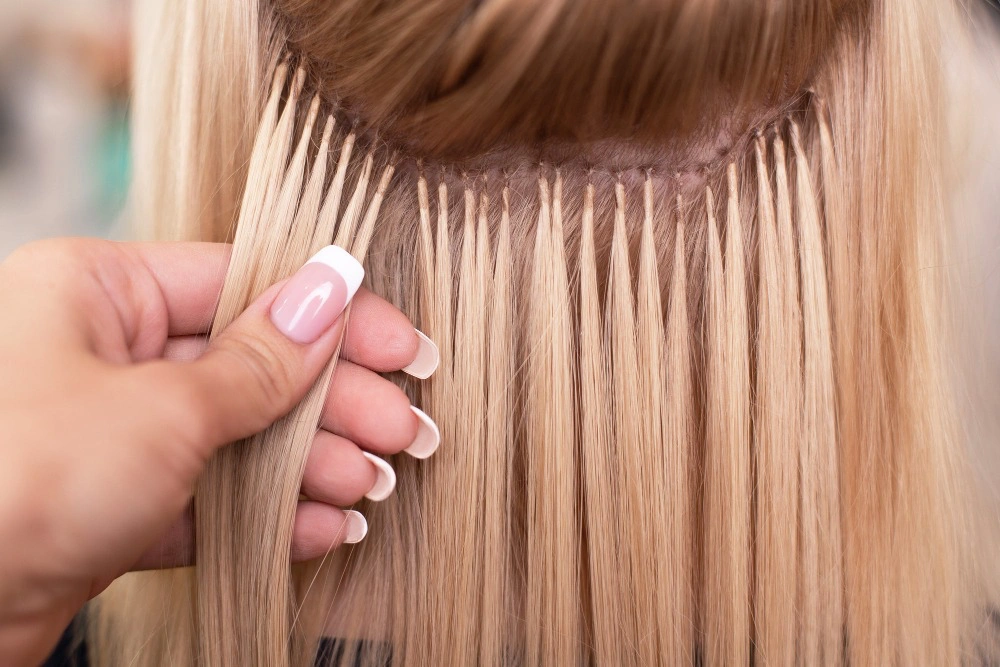
Have you ever looked in the mirror and thought, “Wait… why are my fusion extensions falling out already?” Did you just pay good money, only to find little strands on your sweater, your pillow, or the shower wall? And a quick question. Have you heard of Fusion tip hair before? Do you know how it is supposed to stay in your hair? If you are deciding whether to keep investing in fusion hair, or you are thinking about trying fusion tip hair for the first time, this is the exact stuff you want to understand first.
Fusion extensions usually fall out because the bond did not grip your natural hair well, or the bond got weakened after installation. The most common triggers are oily roots, product buildup, heat problems during installation, the wrong section size, and rough aftercare habits. The good news is that most fallout has a clear reason, and you can spot the reason by looking at how the bond failed.
If you want a simple way to think about it, ask yourself one question: “Did the bond fail, or did my hair break, or was it normal shedding?” Once you know which one it is, the fix becomes much clearer.
Is the bond itself weak or unstable?
When your fusion extensions fall out, your first thought might be, “Did my stylist do something wrong?” But what if the bond material was the real weak point? And what if the bond looked okay on day one, then slowly broke down after washing?
A weak bond can crack, crumble, or turn gummy after heat, water, and products hit it. That kind of bond cannot hold tight for long. A stable bond should stay smooth and flexible. It should not feel sticky. It should not turn chalky white fast. It should also keep a neat shape instead of spreading flat.
How can you tell by looking at the fallen extension?
Pick up one fallen piece and look closely. Do you see the keratin tip still attached? Does it look clean and solid? Or does it look broken and messy?
Here is a quick way you can “read” what happened:
| What you notice on the fallen piece | What it often means | What you can do next |
|---|---|---|
| The keratin bond is still on the extension and looks smooth | It likely slipped out | Focus on root prep + aftercare habits |
| The keratin bond looks white or dusty | It may have been overheated or brittle | Ask your stylist about heat and bond type |
| The bond looks cracked into pieces | The bond may be too dry or overheated | Ask about tool heat and bond quality |
| The bond feels sticky or gummy | Heat may have been too low or the bond type is off | Ask about correct heat range and bond type |
| You see short broken hairs stuck in the bond | It may be breakage, not slipping | Reduce tension and improve placement plan |
A question you should ask your stylist
You can ask: “What keratin type did you use, and what heat range do you normally work with for this bond?” If they cannot explain it clearly, that is a sign the system is not controlled.
What you can do at home right now
You cannot change bond material after it is installed. But you can protect it. You can keep oils away from your root area. You can avoid heat on bonds. You can also stop rubbing your scalp hard when shampooing.
Was the heat too high or too low during installation?
Have you ever smelled something slightly “burnt” during install? Or did you feel too much heat on your scalp? On the other side, did the bonds feel soft or “not fully sealed” at first?
Heat matters more than most people think. If heat is too low, the keratin does not properly fuse with your natural hair. It wraps around hair, but it does not lock in. Then it slides out early. If heat is too high, keratin can scorch and become brittle. Then it cracks later.
Signs heat was too low
- Bonds feel bulky or uneven
- Bonds feel soft and can peel
- Extensions slip out in the first 1–3 weeks
Signs heat was too high
- Bonds turn white quickly
- Bonds crack and snap
- Hair near the bond feels dry or rough
| Heat pattern | What you might notice | What you should ask for |
|---|---|---|
| Too low | Slipping early, bond feels thick | “Can we check your heat and timing?” |
| Too high | White bonds, brittle bonds, breakage | “Can we lower heat and reduce contact time?” |
| Inconsistent | Random fallout in different areas | “Is your tool stable and clean?” |
What you can do as a client
You cannot see the tool settings. But you can watch results. If you lose many pieces early, ask for a bond check appointment. Ask them to inspect 10 bonds and explain what they see.

Were the sections too thick or too thin?
Did your extensions fall out “as a whole piece,” like it simply slid down and came off? Or do you feel pulling and see small broken hairs near the root?
Section size is a major reason fusion extensions fall out. Each extension strand needs the right amount of your natural hair inside the bond. If the section is too thick, the bond cannot hold every hair inside. Then it slips. If the section is too thin, your natural hair carries too much weight. Then it can break.
How this shows up in real life
- Too thick: the bond slides down and falls out with little or no hair attached
- Too thin: you see short broken hairs stuck inside the bond, or you feel pulling
| What you feel or see | Likely cause | What you can do |
|---|---|---|
| Extensions slide out cleanly | Section too thick or roots too oily | Ask for smaller sections and better prep |
| Bonds twist and loosen | Uneven strand balance | Ask for cleaner parting and alignment |
| Tenderness and breakage | Section too thin or too much weight | Ask for lighter strand sizes and safer placement |
| Bulky bonds | Too much keratin or too much hair in bond | Ask for neater bond shaping |
A helpful question to ask
You can ask: “Are you matching the extension strand size to my hair density?” That question alone can improve your outcome, because it forces the install to be customized.
Is your scalp too oily or is there product buildup?
Be honest with yourself. Do you use scalp oil, hair oil, or leave-in spray near your roots? Do you use dry shampoo often? Do you wash your hair less because you want the style to last longer?
Fusion bonds hate oil and residue. Even if your install was perfect, oily roots can slowly weaken grip. Product buildup can also sit around the bond area and make slipping easier.
What buildup usually comes from
- Conditioner touching the root area
- Masks applied too high
- Silicone sprays
- Dry shampoo layering
- Hard water minerals
| Root problem | What you might notice | What to change first |
|---|---|---|
| Oily scalp | Bonds feel slippery after 1–2 weeks | Keep oils mid-length to ends only |
| Dry shampoo buildup | Itchy scalp, dull root area | Use less and cleanse properly |
| Silicone residue | Hair feels “too smooth” and slippery | Avoid silicone near roots |
| Hard water | Hair feels rough and coated | Use a chelating wash sometimes |
What you can do without over-washing
You do not need to shampoo every day. But you do need clean roots. You can wash with controlled technique. You can focus shampoo on scalp and avoid heavy conditioner near bonds.

Are your aftercare habits loosening the bonds?
Do you sleep with wet hair sometimes? Do you go to the gym and leave sweat in your roots? Do you brush fast without holding the roots?
These habits can break down fusion bonds faster than you expect. Not because you did something “wrong,” but because fusion bonds need gentle routine.
The habits that cause the most fallout
- Sleeping with wet hair
- Applying oils near bonds
- Rubbing bonds while shampooing
- Heat tools too close to bonds
- Heavy sweating without rinsing
| Habit | What it does to bonds | What to do instead |
|---|---|---|
| Wet sleep | Tangles and twists bonds | Dry roots before bed |
| Oil near roots | Makes bonds slip | Keep oils away from bonds |
| Rough brushing | Pulls bonds and hair | Brush gently and hold the root |
| Heat near bonds | Softens keratin | Keep tools away from bonds |
| Sweat buildup | Weakens grip over time | Rinse and dry after workouts |
A simple routine you can follow
You can do three things. You can keep products away from bonds. You can dry roots before bed. You can brush with control. If you only do these three, you often see a big difference.
Is it true slipping, normal shedding, or breakage?
When you say “falling out,” what is actually happening? Are you losing full strands with a bond? Or are you seeing hairs shed from the extension? Or are you seeing your natural hair break?
This matters because each cause needs a different fix. If it is slipping, you focus on prep, bond, and aftercare. If it is breakage, you focus on tension, strand weight, and placement. If it is normal shedding, you may just be seeing trapped shed hair release during brushing.
Check the fallen piece like a pro
Look at what is attached.
| What is attached to the bond | What it often means | What you should do |
|---|---|---|
| No natural hair attached | Slipping | Review oils, buildup, and prep |
| Long natural hairs attached | Normal shedding trapped | Ask for a check, but do not panic |
| Short broken hairs attached | Breakage | Reduce tension and adjust plan |
| Bond looks cracked or white | Bond failure | Ask about heat and bond type |
A question that protects your hair health
Ask: “Is this slipping, or is my hair breaking?” A good stylist will show you the piece and explain it.
What is the fastest way to stop fusion fallout?
If you are losing pieces fast, you want a plan, not guesswork. You also want to avoid redoing everything and wasting money.
The fastest fix is a quick diagnosis appointment where your stylist checks a group of bonds and looks for patterns. Then you change one thing at a time. That is how you find the real cause. If you change everything at once, you never know what worked.
The 5-step client action plan
- Save 5–10 fallen pieces in a small bag.
- Take clear photos of the bonds.
- Book a bond check appointment.
- Ask the stylist to identify the failure type.
- Change one factor, then monitor for 2 weeks.
| What your stylist finds | What it points to | What to change first |
|---|---|---|
| Clean slipping bonds | Oil or thick sections | Root prep + section size |
| White brittle bonds | Too much heat or weak bond | Heat and bond selection |
| Sticky uneven bonds | Too low heat or wrong bond | Heat range and timing |
| Short broken hairs | Tension and overload | Strand size and placement |
| Clustered fallout zones | Technique pattern | Re-section and reinstall strategy |
A quick story you can relate to
I once spoke with a client who thought she had “bad hair” because her fusion kept falling out. She felt embarrassed. But the fallen pieces showed clean slipping. She used scalp oil daily. Once she stopped oil at the roots and adjusted washing habits, the set held much better. Her hair was never the problem.

My opinion
I think fusion extensions can be amazing, but only when you treat the bond like a system that needs protection. I also think many clients are never taught what fusion needs. So they use oils, masks, and heavy sprays at the roots, then they feel confused when pieces slip. I believe you deserve clear guidance. You should know what to look for, what to ask, and how to protect your investment. If your fusion keeps failing, I do not think you should blame yourself first. You should inspect the bond, check your routine, and ask for a real diagnosis. When you take this approach, you can often stop the fallout and keep your hair healthy at the same time.
FAQ
Why are my fusion extensions falling out after 2 weeks?
This is usually slipping from oil, buildup, low heat, or thick sectioning. You can check the fallen piece. If there is no natural hair attached, it is likely slipping.
Is it normal for a few fusion extensions to fall out?
A small amount can happen because of normal shedding. But repeated fallout, or a cluster in one zone, is not normal. That needs a bond check.
Can oil make fusion extensions fall out?
Yes. Oils near the root can reduce grip. You can keep oils and serums away from the bond area.
Can conditioner loosen fusion bonds?
Yes, if it touches the bond area often. You can apply conditioner from mid-length to ends only.
Why do my bonds turn white?
This often relates to overheating or bond breakdown. It can also come from product buildup on the bond surface.
Why do my fusion extensions hurt or feel tight?
This may be too much tension, sections that are too small, or placement too close to the scalp. You can book a check and ask for tension adjustment.
Can I use heat tools with fusion extensions?
Yes, but you should keep direct heat off the bonds. You can use a heat protectant on lengths, not on bonds.
Can gym sweat make fusion extensions fall out?
It can weaken bonds over time if sweat stays at the roots. You can rinse and dry after heavy workouts.
Should I dye my hair with fusion extensions installed?
You can, but dye around bonds can weaken them. Many stylists prefer careful technique or removal before major color work.
How long should fusion extensions last when done right?
Wear time varies by hair type and routine. Many clients can get several months when bonds are stable and aftercare is correct.
Conclusion
Your fusion extensions fall out for clear reasons. You can inspect the bond, identify the failure type, then change one factor at a time. This is the fastest path to stable wear.